Scalp Inflammation and Hair Growth: The Evidence-Based Guide
8 min read ·
Discover how scalp inflammation disrupts hair growth cycles, the biology of follicular stress, common scalp conditions, and evidence-based ways to calm irritation.
Quick answer: The relationship between Scalp Inflammation and Hair Growth is direct: chronic inflammation disrupts the biological hair cycle, premature transition into the catagen phase, and can prompt acute hair shedding (telogen effluvium) or progressive follicular miniaturisation. Persistent immune cell infiltration around the hair follicle damages the stem cell niche and extracellular matrix. However, resolving scalp inflammation cannot revive follicles that have undergone permanent scarring or advanced fibrosis, meaning early management is essential for preserving density.
Key takeaways
- Scalp inflammation triggers pro-inflammatory cytokines such as IL-1, TNF-alpha, and IFN-gamma that disrupt normal follicular cycling.
- Conditions like seborrhoeic dermatitis, psoriasis, folliculitis, and central centrifugal cicatricial alopecia (CCCA) induce varying severities of inflammation, from temporary shedding to permanent scarring hair loss.
- Microinflammation around the infundibulum contributes to the progression of pattern hair loss (androgenetic alopecia).
- Clarifying the scalp barrier, regulating microflora, and applying targeted anti-inflammatory agents help restore an optimal environment for growth.
- Cosmetic topicals soothe surface erythema and support fibre retention, but diagnosed dermatological disorders require medical intervention.
Scalp Inflammation and Hair Growth: what the evidence shows
The connection between Scalp Inflammation and Hair Growth centres on the biological sensitivity of the hair follicle. The hair follicle is one of the most metabolically active structures in the human body, cycling continuously through growth (anagen), regression (catagen), and rest (telogen). Research published in journals such as the British Journal of Dermatology and the Journal of Investigative Dermatology demonstrates that sustained inflammatory cascades actively interrupt this cycle.
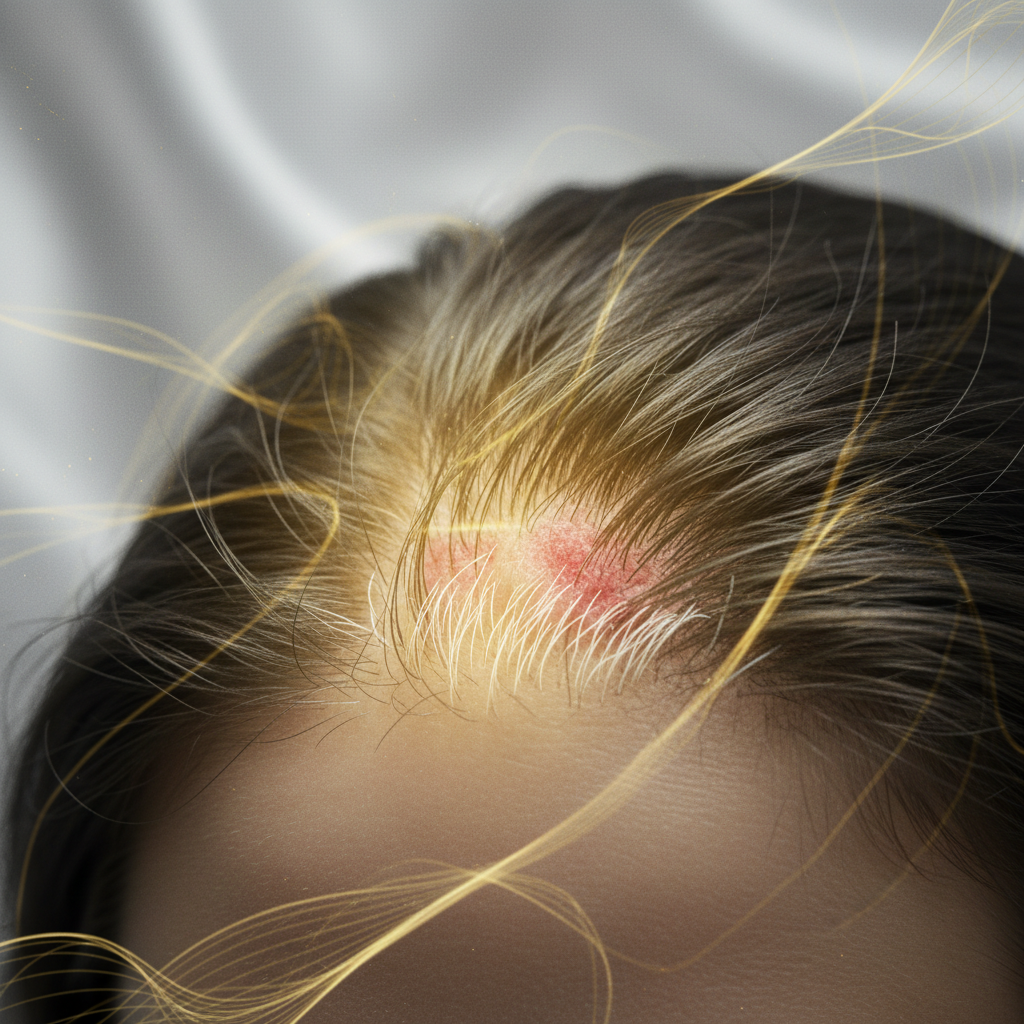
When immune cells infiltrate the perifollicular zone, they release inflammatory mediators including tumour necrosis factor-alpha (TNF-alpha), interleukin-1 beta (IL-1beta), and interferon-gamma (IFN-gamma). These chemical messengers trigger premature apoptosis in hair matrix cells. As a result, actively growing anagen follicles are forced prematurely into the catagen phase. Within two to four months after this inflammatory surge, significant hair shedding occurs as the club hairs enter the exogen phase.
Furthermore, dermatologists recognise the role of "follicular microinflammation" even in conditions traditionally viewed as purely hormonal, such as androgenetic alopecia. In biopsies of pattern balding, lymphocytic infiltrates are routinely identified around the upper follicle (the infundibulum). This low-grade, subclinical inflammation releases matrix metalloproteinases, which slowly degrade surrounding collagen, driving follicular miniaturisation and fibrotic remodelling over time.
Chronic Scalp Inflammation
 │
 ▼
Release of Cytokines (IL-1, TNF-alpha)
 │
 ▼
Matrix Cell Apoptosis & Premature Catagen
 │
 ▼
Accelerated Shedding & Follicular Miniaturisation
What the evidence does not show
Controlled research does not support the idea that everyday scalp redness immediately causes permanent baldness. Mild erythema or transient flaking does not destroy the follicular bulge where stem cells reside.
Equally, there is no evidence that standard anti-dandruff shampoos or cosmetic serums can reverse established scarring alopecias. While lowering inflammatory markers provides a hospitable terrain for hair fibres, cosmetic products do not alter genetic susceptibility to dihydrotestosterone (DHT) or halt auto-immune follicular destruction without targeted medical protocols.
Biological mechanisms: how inflammation damages the follicle
To understand why tissue health dictates hair quality, you must look beneath the skin surface. The follicle relies on a state known as "immune privilege". During anagen, the lower follicle suppresses standard immune surveillance to prevent the body from attacking the rapidly dividing matrix cells.
- Breach of immune privilege: Intense local inflammation breaches this natural barrier. Auto-reactive lymphocytes or inflammatory cascades flood the follicular epithelium, triggering cellular damage.
- Oxidative stress: Activated neutrophils and macrophages generate reactive oxygen species (ROS). These free radicals attack the lipid layers of the scalp and degrade keratinocyte structures.
- Impaired vascular supply: Persistent swelling and cytokine release compromise local microcapillaries, depriving the follicular papilla of essential amino acids, zinc, and glucose.
- Perifollicular fibrosis: As tissues attempt to repair chronic inflammatory damage, normal elastic fibres are replaced by rigid collagen bands. This rigid tissue constricts the follicle, preventing the shaft from expanding back to its original terminal calibre.
Common scalp conditions and their impact on hair
Different inflammatory drivers produce distinct clinical pictures. Identifying the underlying driver determines whether shedding is temporary or at risk of becoming permanent.
| Condition | Primary Inflammatory Mechanism | Clinical Scalp Signs | Effect on Hair Fibre |
|---|---|---|---|
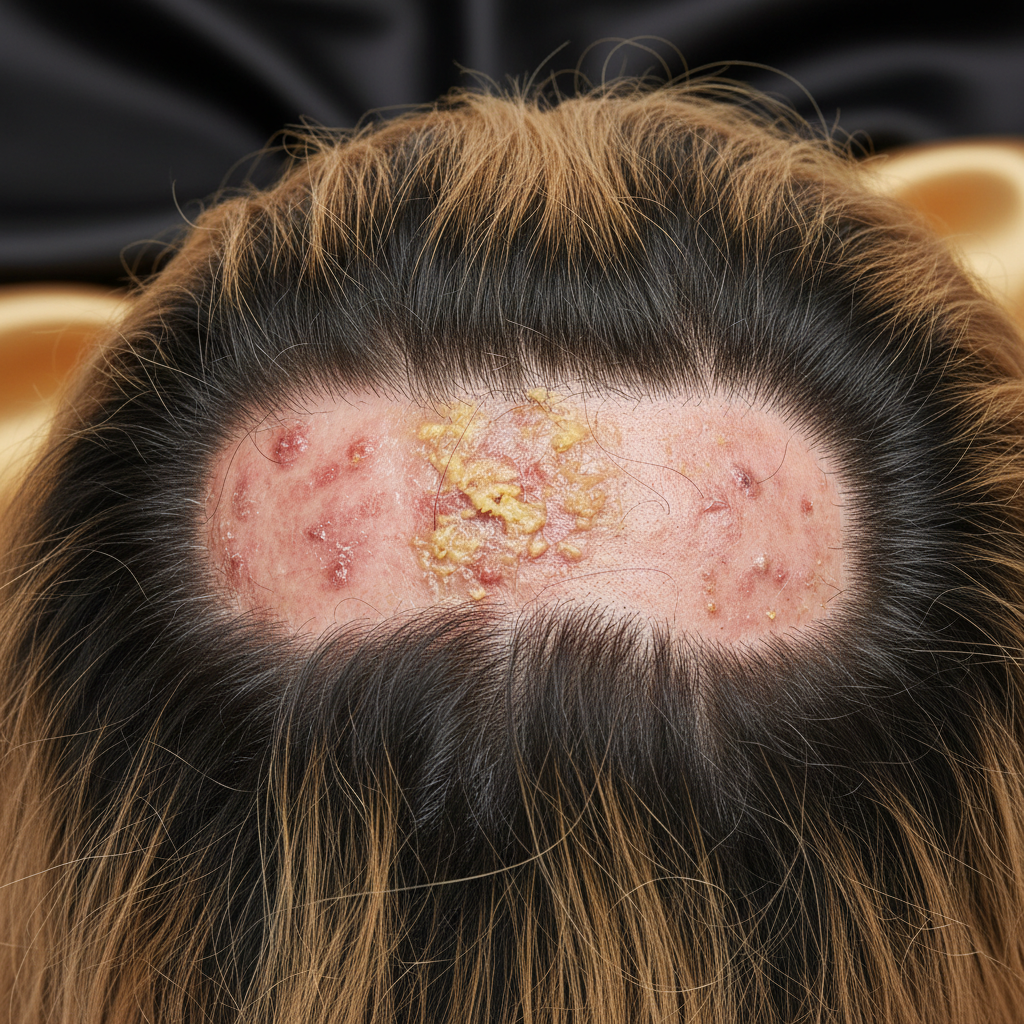
| Seborrhoeic Dermatitis | Malassezia yeast overgrowth triggering oleic acid release and epidermal irritation | Greasy yellowish scales, itchiness, patchy pink erythema | Temporary diffuse shedding (telogen effluvium) |
| Scalp Psoriasis | T-cell-mediated hyperproliferation of keratinocytes | Thick, silvery-white plaques on sharply defined red borders | Mechanical breakage and temporary shedding from plaque removal |
| Folliculitis | Bacterial (Staphylococcus) or fungal invasion of follicular ostia | Tender, erythematous pustules centred on hair shafts | Spot shedding; risk of scarring if deep-seated |
| Lichen Planopilaris (LPP) | T-cell lymphocytic attack destroying follicular stem cells at the bulge | Perifollicular erythema, follicular keratosis, smooth bald patches | Irreversible cicatricial (scarring) alopecia |
| Follicular Microinflammation | Low-grade immune response associated with sebum oxidation and DHT | Often invisible to naked eye; mild itch or trichodynia | Progressive thinning and miniaturisation of hair shafts |
Recognising the signs of inflammatory distress
Scalp inflammation does not always present as angry, weeping sores. In many instances, the early stages are subtle. Stylists and individuals should watch for:
- Trichodynia: A persistent tender, burning, or stinging sensation across the scalp, often described as "hair root pain".
- Perifollicular casting: Tiny white or greyish rings encircling individual hair shafts as they emerge from the skin, indicating hyperkeratosis.
- Persistent erythema: Pinkness or redness that lingers beyond a hot shower or recent heat styling.
- Texture changes: Emerging hairs that appear brittle, dull, or noticeably finer than neighbouring strands.
- Flaking and sebum imbalance: Excessive dry dust or thick oily plaques adhering to the scalp surface.
Practical steps to soothe the scalp and support growth
Addressing scalp inflammation requires a structured routine that respects the skin barrier while calming immune over-activity.
Cleanse methodically
Wash frequently enough to prevent the accumulation of oxidised sebum, sweat, and dead skin cells, which feed Malassezia yeasts. Aim for a scalp-neutral pH of 4.5 to 5.5 to preserve the acid mantle. Avoid aggressive mechanical scrubbing that disrupts weakened follicles.
Introduce anti-inflammatory topicals
Look for soothing cosmetic actives such as niacinamide, which strengthens the epidermal barrier, and caffeine, which improves cutaneous microcirculation. Botanic extracts rich in polyphenols (such as green tea, rosemary, and aloe) offer mild antioxidant defence against ROS without causing dryness.
Support your system internally
Systemic inflammation often mirrors cutaneous inflammation. Diets rich in omega-3 fatty acids, zinc, and antioxidants support normal barrier function. Ensure you manage psychological stress, as elevated cortisol directly impairs follicle recovery and triggers neurogenic inflammation via substance P release.
Minimise chemical and thermal aggression
Avoid high-heat blow drying directly onto bare skin, tight tension styles that induce traction, and harsh chemical relaxers or lighteners during active flare-ups.
The Watermans approach to balanced scalp care
When designing formulas to foster an environment conducive to strong growth, Watermans prioritises the scalp ecosystem. Watermans Grow Me shampoo incorporates ingredients such as caffeine, biotin, rosemary extract, and niacinamide alongside gentle surfactants.
Rather than drying the scalp with harsh detergents, it cleanses environmental debris and excess surface sebum while delivering conditioning agents directly to the roots. By supporting a clean, calm, and hydrated surface, you reduce external stressors that can otherwise contribute to cosmetic breakage and an irritated scalp environment.
When to seek specialist medical guidance
Cosmetic adjustments have limits. If you experience any of the following, seek an evaluation from a GP, dermatologist, or qualified trichologist immediately:
- Bald patches that appear smooth, shiny, or completely devoid of visible follicular pores.
- Pustules, crusting, or open sores that bleed or weep fluid.
- Pain, burning, or itchiness that disrupts your sleep.
- Sudden, dramatic hair loss that leaves wide gaps in your parting within days or weeks.
Diagnosing conditions like lichen planopilaris, frontal fibrosing alopecia, or severe bacterial folliculitis early via dermoscopy or scalp biopsy is vital to prevent irreversible follicular death.
Frequently asked questions about Scalp Inflammation and Hair Growth
Can scalp inflammation cause permanent baldness?
Yes, certain inflammatory conditions can destroy the follicle. If severe inflammation targets the follicular bulge, where epithelial stem cells reside, the follicle is replaced by fibrous scar tissue, resulting in permanent hair loss. However, common inflammatory issues like seborrhoeic dermatitis typically cause only temporary shedding that recovers once irritation subsides.
How quickly does hair grow back after resolving scalp inflammation?
Hair follicles usually require three to six months to re-enter the anagen phase after an inflammatory disruption ends. Because hair grows at an average rate of 1 to 1.25 centimetres per month, noticeable cosmetic density may take six to twelve months to visibly return.
What is the primary connection between Scalp Inflammation and Hair Growth?
The main link between Scalp Inflammation and Hair Growth is cytokine-driven cycle disruption. Inflammatory messengers signal growing anagen hairs to shut down prematurely, prompting widespread telogen shedding, while chronic subclinical inflammation degrades the supportive matrix around the follicle, driving gradual miniaturisation.
Does scratching an inflamed scalp accelerate hair loss?
Yes. Aggressive scratching physically damages the outer cuticle of the hair fibre, causing hair breakage along the shaft. Scratching can also tear the epidermal barrier, introducing secondary bacterial infections that deepen follicle inflammation and exacerbate shedding.
Can diet help reduce scalp inflammation?
Diet plays a supportive role. Consuming foods high in omega-3 fatty acids, polyphenols, and essential minerals helps downregulate systemic inflammatory pathways. While dietary changes cannot replace prescribed treatments for clinical dermatoses, they support baseline barrier integrity and cellular resilience.
Summary
Maintaining a calm, balanced scalp environment is fundamental to the continuous production of strong hair fibres. The physiological balance between Scalp Inflammation and Hair Growth leaves little room for neglect: unmanaged tissue irritation triggers cellular stress, shortens the active growth cycle, and risks gradual follicle miniaturisation. By identifying symptoms early, utilising gentle and restorative cleansing practices, and seeking timely medical advice for persistent inflammatory flare-ups, you protect your follicles and secure optimal conditions for sustained hair vitality.
Sources and references
- British Association of Dermatologists. Clinical Guidelines for the Management of Lichen Planopilaris. British Journal of Dermatology, 2020.
- Trueb, R. M. "Oxidative Stress in Ageing of Hair." International Journal of Trichology, 2009.
- Whiting, D. A. "Diagnostic and predictive value of horizontal sections of scalp biopsy specimens in male pattern androgenetic alopecia." Journal of the American Academy of Dermatology, 1993.
- National Institute for Health and Care Excellence (NICE). "Alopecia areata and other causes of hair loss." CKS Guidelines, 2021.
- Magro, C. M., et al. "The role of microinflammation in androgenetic alopecia." Dermatologic Clinics, 2007.
Find these ingredients in Watermans products
- Zinc: you will find this ingredient in our Hair Vitamins.
- Oleic Acid: you will find this ingredient in our Camellia & Black Castor Hair & Body Oil.
- Niacinamide: you will find this ingredient in our Hair Mask.