Scalp Folliculitis and Hair Loss: Causes, Risks, and Regrowth
9 min read ·
Learn the biological link between Scalp Folliculitis and Hair Loss, how to identify temporary shedding versus permanent scarring, and practical steps for recovery.
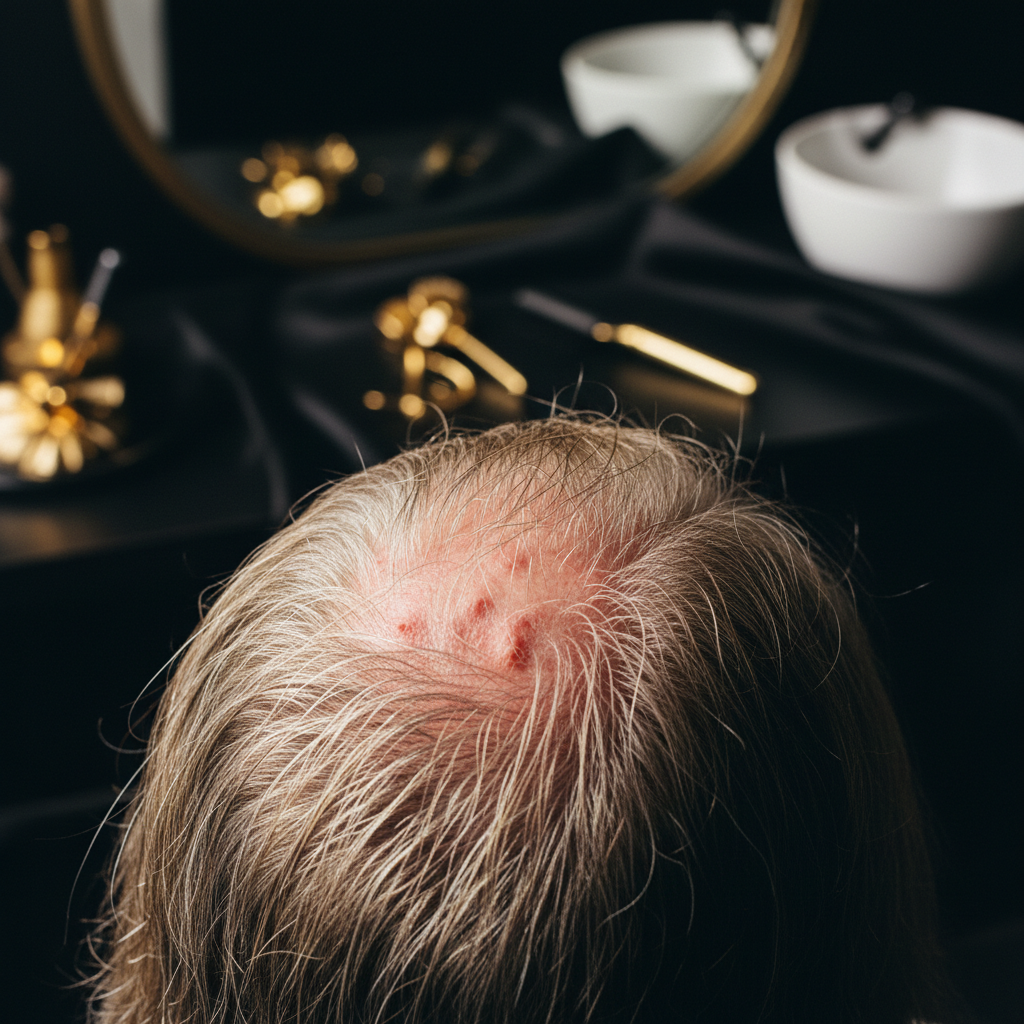
Quick answer: The relationship between Scalp Folliculitis and Hair Loss depends entirely on the depth and severity of the follicular inflammation. Superficial scalp folliculitis causes small pustules and temporary shedding that resolves once treated, with no damage to the follicle itself. However, deep or chronic forms, such as folliculitis decalvans or dissecting cellulitis, destroy the follicular stem cells and cause permanent, scarring alopecia. Early clinical identification separates benign irritation from conditions requiring prescription intervention.
Key takeaways
- Superficial folliculitis triggers temporary telogen shedding due to localised inflammation, but the hair fibres regrow once the infection clears.
- Deep, chronic inflammation can destroy the follicular bulge where stem cells reside, leading to permanent scarring alopecia (cicatricial alopecia).
- Common triggers include bacteria (predominantly Staphylococcus aureus), yeasts (Malassezia), occlusive hair oils, and mechanical friction.
- Distinguishing superficial pustules from severe variants like folliculitis decalvans requires dermatological evaluation, occasionally involving a scalp biopsy or bacterial culture.
- Over-the-counter antimicrobial washes help manage mild flare-ups, while persistent or painful eruptions require prescribed topical or oral medical therapies.
Scalp Folliculitis and Hair Loss: what the evidence shows
Clinical dermatology demonstrates that Scalp Folliculitis and Hair Loss are directly linked through inflammatory tissue responses, though the permanence of the shedding varies. Scalp folliculitis describes an inflammatory or infectious disorder affecting the hair follicle cone. When micro-organisms invade the follicle or when sebum and dead corneocytes cause mechanical occlusion, the local immune system recruits neutrophils and lymphocytes.
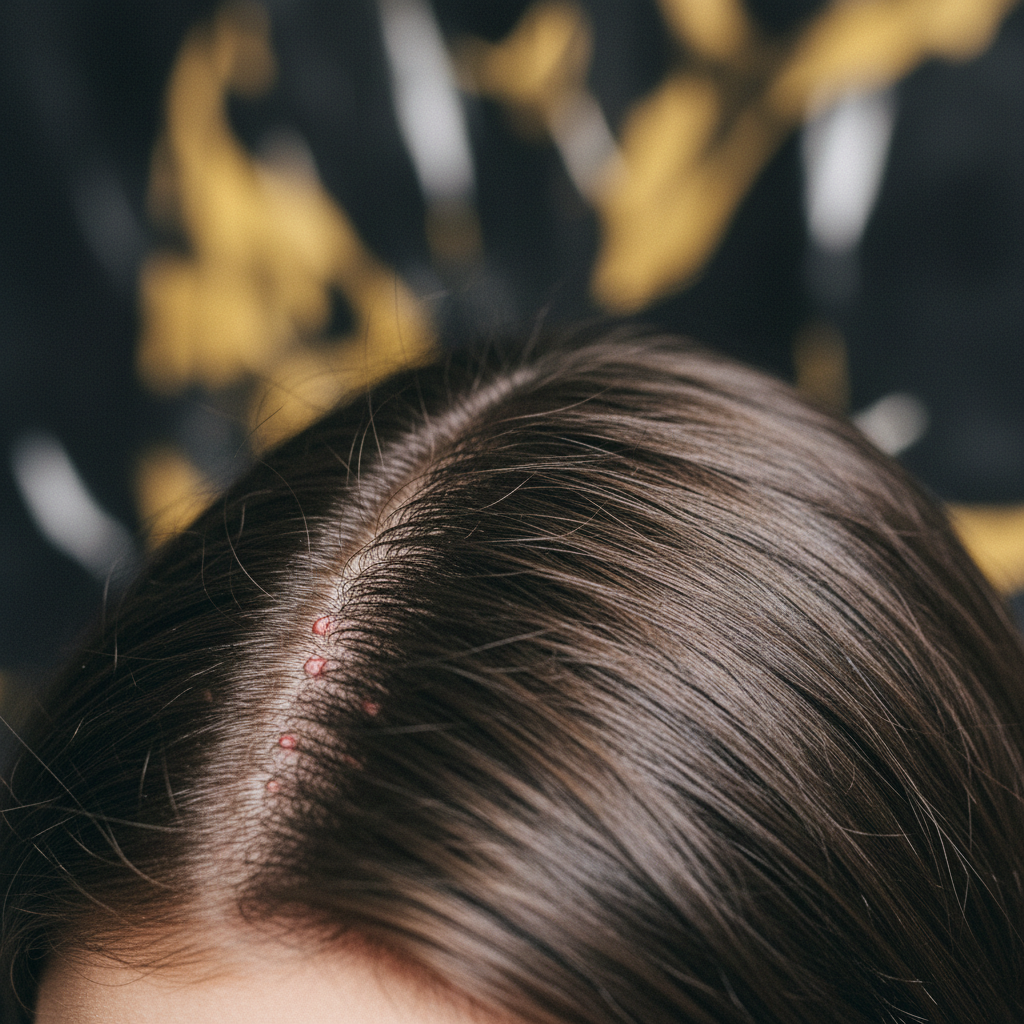
In mild, superficial cases (often termed acute bacterial folliculitis), inflammation remains restricted to the upper portion of the follicle (the infundibulum). Research published in peer-reviewed dermatological literature confirms that superficial infundibular inflammation can trigger premature entry into the catagen (regression) and telogen (resting) phases. This causes reactive telogen shedding. Because the hair follicle bulge and dermal papilla remain intact, hair regrowth occurs naturally over 3 to 6 months once the microbial driver is controlled.
The clinical picture changes dramatically when inflammation extends deeper into the dermis. Conditions such as folliculitis decalvans represent chronic, destructive forms of neutrophilic scarring alopecia. Histopathological studies show that intense neutrophilic infiltration around the follicle destroys the outer root sheath and the stem cell niche located at the bulge area. Once these stem cells are replaced by fibrous scar tissue, the follicular ostium closes permanently. At this stage, hair cannot regenerate.
Superficial Folliculitis (Infundibulum) ➔ Local Cytokine Release ➔ Temporary Telogen Shedding ➔ Full Regrowth
Deep Destructive Folliculitis (Bulge Region) ➔ Stem Cell Destruction ➔ Fibrous Scarring ➔ Irreversible Alopecia
What the evidence does not show
Research does not show that every red spot or pustule on the scalp causes permanent baldness. A widespread misconception exists that ordinary scalp pimples lead inevitably to scarring alopecia. Peer-reviewed cohorts show that the vast majority of folliculitis cases remain superficial, presenting as self-limiting papules or pustules that leave no permanent deficit.
Furthermore, evidence does not show that cosmetic shampoos, hair dyes, or topical serums can cure primary deep cicatricial folliculitis. While gentle, antimicrobial scalp hygiene supports a healthy microbial environment, conditions like folliculitis decalvans or dissecting cellulitis are complex inflammatory diseases. They do not stem from poor personal cleanliness, and cosmetic formulas cannot substitute for targeted oral antibiotics, anti-inflammatories, or corticosteroid treatments.
The biological mechanisms behind follicle disruption
The scalp hosts a dense microbiome consisting of bacteria (Cutibacterium acnes, Staphylococcus epidermidis, Staphylococcus aureus) and fungi (Malassezia species). Folliculitis occurs when this barrier is disrupted, allowing pathogens to proliferate within the follicular canal.
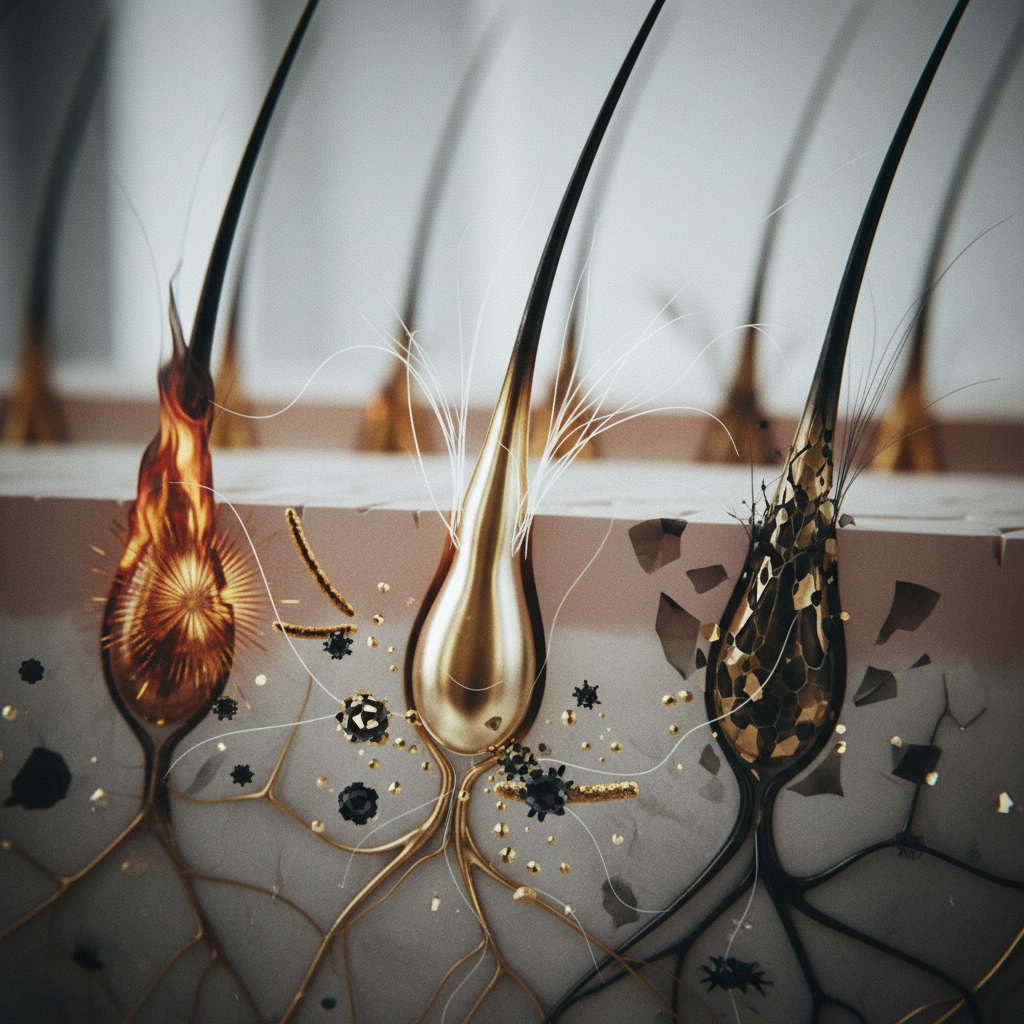
- Microbial overgrowth and barrier disruption: Microtrauma from scratching, tight hairstyles, or heavy pomades breaches the stratum corneum. Staphylococcus aureus or Malassezia yeasts penetrate the follicular opening, releasing lipases and proteases that irritate the surrounding tissue.
- Neutrophilic infiltration: The host immune response delivers an influx of polymorphonuclear leukocytes (neutrophils). These cells produce reactive oxygen species and proteolytic enzymes to eliminate the pathogen.
- Collateral tissue damage: If the infection remains superficial, the inflammatory cytokines (such as IL-1 alpha and TNF-alpha) prompt the hair bulb to abort its active growth phase (anagen) and transition into telogen, casting off the hair shaft.
- Stem cell obliteration (in scarring variants): In deep variants, persistent inflammation breaches the follicular basement membrane. Neutrophils and macrophages attack the bulge area, which sits roughly 1 to 1.5 mm below the skin surface. When follicular stem cells perish, fibroblast proliferation generates dense collagenous scar tissue, permanently sealing the pore.
Comparing common types of scalp pustules and shedding
The table below contrasts common presentations to help you understand the risks of hair loss associated with each condition:
| Condition | Primary Cause | Typical Symptoms | Impact on Hair Follicle | Risk of Permanent Hair Loss |
|---|---|---|---|---|
| Superficial Folliculitis | Staph aureus, occlusive products | Small, red pustules around hairs; mild itch | Temporary telogen shedding; bulb intact | Very low; full regrowth expected |
| Pityrosporum Folliculitis | Malassezia yeast overgrowth | Intensely itchy, uniform papulopustules | Follicular stress; temporary thinning | Extremely low |
| Folliculitis Decalvans | Chronic immune reaction to Staph | Expanding bald patches, crusting, tufted hairs | Destroys stem cell niche; replaces pore with scar tissue | High; irreversible scarring alopecia |
| Dissecting Cellulitis | Follicular occlusion triad | Painful nodules, draining sinuses, interconnecting tracts | Deep dermal destruction across interconnected areas | High; extensive patchy scarring |
| Scalp Acne (Acne Necrotica) | Follicular keratinisation and C. Acnes | Pustules with central necrotic crusts | Variable; can cause small pitted scars | Moderate to high if necrotic form |
The clinical signs to look for
Identifying follicular inflammation early is critical to protecting follicle integrity. Stylists and individuals should monitor for specific physical signs:
- Perifollicular erythema: Redness concentrated tightly in rings around individual hair shafts rather than diffused across the scalp.
- Pustules pierced by hair: Small, yellow or white fluid-filled heads where a hair fibre visibly emerges directly through the centre of the lesion.
- Tufted hair (doll's hair appearance): Multiple hair shafts (often 5 to 20) emerging from a single dilated follicular opening. This is a classic hallmark of advanced folliculitis decalvans.
- Localised pain and bogginess: Tenderness, throbbing, or soft, spongy swelling under the skin surface, pointing to deep nodules or dissecting cellulitis.
- Crusting and bleeding: Yellowish or honey-coloured crusts clinging to the base of the hair fibres, which bleed when disturbed.
What you can do to support scalp recovery
For mild, non-scarring presentations, focused hygiene and over-the-counter adjustments restore the epidermal barrier:
- Cleanse with targeted actives: Use cleansers containing zinc pyrithione, piroctone olamine, or salicylic acid (1 to 2 percent). Salicylic acid gently exfoliates keratin plugs inside the follicular infundibulum, while piroctone olamine regulates yeast populations.
- Eliminate heavy occlusives: Avoid raw vegetable oils (such as coconut or olive oil), waxes, and petroleum-based pomades. These provide lipid substrates for microbial growth and physically block follicular openings.
- Maintain a physiological scalp pH: Use shampoos buffered between pH 4.5 and 5.5 to support the scalp's acid mantle, discouraging pathogenic bacterial colonisation.
- Practise hygienic tool maintenance: Wash combs, brushes, and clippers in hot water and disinfectant after every use. Change pillowcases every 2 to 3 days during an active breakout.
- Avoid mechanical manipulation: Do not scratch, squeeze, or pick pustules. Rupturing the follicular wall underneath the skin forces superficial bacteria into the deeper dermis, escalating the risk of permanent scarring.
When the cause may be something else
Not all scalp bumps accompanied by shedding stem from infectious folliculitis. Several distinct dermatological conditions mimic these symptoms:
- Lichen planopilaris (LPP): An autoimmune lymphocytic condition causing perifollicular redness, scaling, and scarring alopecia, but typically lacking purulent pustules.
- Scalp psoriasis: Produces thick, silvery scales on well-demarcated plaques. While it can cause temporary shedding from friction and plaques, it does not form individual bacterial pustules.
- Seborrhoeic dermatitis: Involves greasy, yellowish flakes and red patches caused by an inflammatory reaction to Malassezia. While it coexists with folliculitis, seborrhoeic dermatitis itself rarely attacks the deep follicle.
- Traction alopecia: Hair loss caused by chronic physical tension. When accompanied by traction folliculitis, pustules appear specifically along the tension line (such as the hairline).
When to seek professional medical advice
You should consult a GP, trichologist, or dermatologist immediately if you experience any of the following symptoms:
- Pustules that fail to resolve within two weeks of basic antimicrobial washing.
- Intense scalp pain, heat, or throbbing sensations.
- Visible patches of smooth skin where hair has fallen out and pores are no longer visible.
- Clusters of hairs emerging from a single pore (tufting).
- Swollen lymph nodes in your neck or behind your ears.
A medical specialist can perform a bacterial swab, fungal scraping, or a 4 mm punch biopsy to identify the exact pathogen and depth of involvement, prescribing oral antibiotics, dapsone, or topical corticosteroids before permanent follicle destruction occurs.
Supporting scalp vitality with Watermans
When managing day-to-day scalp care alongside professional guidance, maintaining a clean, balanced follicular environment is essential. Watermans GrowMe Shampoo is formulated with biotin, rosemary extract, caffeine, and niacinamide to invigorate the scalp surface, clear away daily sebum accumulation, and promote stronger-feeling hair fibres. While cosmetic shampoos cannot treat or cure medical conditions like deep folliculitis or scarring alopecia, incorporating a clarifying, nutrient-rich cleanser into your routine helps maintain optimal surface hygiene and keeps hair looking thick and resilient.
Conclusion
Understanding the dynamic between Scalp Folliculitis and Hair Loss allows you to take swift, decisive action before reversible shedding transforms into permanent damage. Superficial follicular bumps are common and generally benign, resolving without lasting harm to the hair-producing machinery. Conversely, painful, crusting, or tufted presentations signal deep dermal inflammation that demands prompt medical treatment. By prioritising scalp hygiene, avoiding occlusive styling habits, and seeking timely dermatological care, you protect your follicles and secure long-term hair density.
Frequently asked questions about Scalp Folliculitis and Hair Loss
Can scalp folliculitis cause permanent baldness?
Yes, but only if the inflammation penetrates deep into the follicle. Superficial folliculitis affects only the upper pore, causing temporary shedding followed by normal regrowth. Severe variants like folliculitis decalvans destroy the follicular stem cells located in the bulge region, replacing the follicle with scar tissue and causing permanent, patchy baldness known as cicatricial alopecia.
How do I know if my Scalp Folliculitis and Hair Loss is scarring?
Scarring forms typically present with intense pain, thick crusting, oozing pustules, and patches of scalp where the hair pores are completely vanished and replaced by shiny, smooth skin. Another classic sign is "tufting", where multiple hairs emerge from a single opening. If your scalp displays these signs, consult a dermatologist immediately.
Will hair grow back after superficial folliculitis clears?
Yes. In superficial cases, the hair matrix and stem cell niche remain undamaged. The infection and surrounding inflammation may shock the follicle into entering the resting (telogen) phase prematurely, resulting in temporary shedding. Once the infection is eliminated, hair typically resumes its normal growth cycle within 3 to 6 months.
Can I wash my hair daily if I have scalp folliculitis?
Yes, daily washing with a mild, pH-balanced or antimicrobial shampoo is frequently recommended. Regular cleansing removes excess sebum, sweat, dead skin cells, and microbial overgrowth that exacerbate follicular occlusion. Avoid hot water, aggressive scrubbing, and heavily perfumed products, which can further aggravate the inflamed skin.
What ingredients help soothe scalp folliculitis?
Beneficial over-the-counter ingredients include zinc pyrithione, piroctone olamine, salicylic acid, tea tree oil, and niacinamide. Salicylic acid clears cellular debris from the pore opening, while zinc pyrithione and piroctone olamine address fungal and bacterial proliferation. However, these cosmetic and over-the-counter agents should not replace prescribed antibiotics for severe or deep infections.
Sources and references
- British Association of Dermatologists. Folliculitis Decalvans Patient Information Leaflet. 2020.
- National Institute for Health and Care Excellence (NICE). Boils, carbuncles, and staphylococcal folliculitis: antimicrobial prescribing. 2019.
- Otberg, N., Kang, H., Alzolibani, A. A., & Shapiro, J. Folliculitis decalvans. Dermatologic Therapy, 2008.
- Powell, J. J., & Dawber, R. P. R. Cicatricial alopecia: clinicopathological findings and response to treatment. Journal of the American Academy of Dermatology, 2001.
- Harries, M. J., et al. Management of primary cicatricial alopecias: a consensus statement. British Journal of Dermatology, 2008.
Find these ingredients in Watermans products
- Zinc: you will find this ingredient in our Hair Vitamins.
- Niacinamide: you will find this ingredient in our Hair Mask.