Scalp Dysaesthesia Management: Evidence, Causes, and Daily Care
8 min read ·
Scalp dysaesthesia management requires a dual approach targeting nerve irritation and gentle daily care. Learn the clinical causes, evidence-based treatments, and tips.
Quick answer: Effective scalp dysaesthesia management requires a dual medical and physical approach because this condition presents as burning, tingling, stinging, or aching sensations on the scalp without obvious primary skin lesions. Clinical strategies focus on identifying underlying cervical spine issues, calming hyperactive peripheral nerves through low-dose neuromodulators, and eliminating local mechanical or chemical triggers. The primary limitation in scalp dysaesthesia management is that topical cosmetic solutions alone rarely resolve the neurological origin, meaning symptoms can persist without targeted medical evaluation.
Key takeaways
- Scalp dysaesthesia is primarily a neuropathic pain syndrome rather than a dermatological allergy or primary infection.
- Nerve irritation in the cervical spine (C4 to C6) or muscular entrapment frequently drives cutaneous scalp symptoms.
- Medical treatment relies heavily on low-dose neuromodulating oral medications such as tricyclic antidepressants, gabapentinoids, or topical substance-P depleters.
- Daily haircare must shift toward low-friction, pH-balanced routines to minimise mechanical stimulation of hypersensitive scalp nerves.
- Telogen effluvium or early androgenetic alopecia frequently co-occurs with this condition, complicating clinical assessment.
Scalp dysaesthesia management: what the evidence shows
Peer-reviewed dermatological and neurological research establishes that scalp dysaesthesia management succeeds best when clinicians address the sensory nervous system rather than treating the issue as simple skin dryness. Observational studies demonstrate that a high proportion of affected individuals have underlying cervical spine disease, such as degenerative disc disease, osteophytes, or chronic hypertonicity of the neck muscles that impinge the sensory branches of the occipital or trigeminal nerves.
Medical management traditionally begins with low-dose oral neuromodulators. Tricyclic antidepressants, specifically amitriptyline or nortriptyline dosed between 10 mg and 50 mg daily, remain the most documented first-line pharmacological treatment. These agents alter the central perception of pain by inhibiting the reuptake of serotonin and noradrenaline. Alternatively, gabapentin (starting at 100 mg to 300 mg daily) or pregabalin helps suppress abnormal neuronal firing in the peripheral pain pathways.
Topical interventions also demonstrate measured efficacy in the literature. Topical capsaicin cream (0.025% to 0.075%) works by initially stimulating and subsequently depleting substance P in cutaneous nociceptors, though the initial burning during application can limit patient compliance. Compounded topical preparations combining low-concentration lidocaine, gabapentin, or ketamine are increasingly documented as effective alternatives that minimise systemic side effects.
Physical therapy aimed at cervical spine decompression, postural realignment, and myofascial release of the trapezius and sternocleidomastoid muscles has shown reproducible benefit. Addressing cervical root compression frequently leads to sustained reductions in scalp tenderness and paresthesia.
What the evidence does not show
The evidence does not support using strong anti-inflammatory corticosteroids, antifungal washes, or antibacterial agents as primary treatments unless a co-occurring inflammatory scalp disorder is confirmed by physical examination. Scalp dysaesthesia is not an active infection, nor is it an allergic contact dermatitis, even though patients often suspect their shampoo or hair dye is the sole culprit.
Furthermore, clinical trials do not show that standard over-the-counter painkillers, such as paracetamol, ibuprofen, or other non-steroidal anti-inflammatory drugs (NSAIDs), offer meaningful relief. Because the underlying mechanism involves neuropathic signal amplification rather than acute peripheral tissue inflammation, conventional analgesics fail to disrupt the misfiring nerve signals. Finally, despite popular online claims, there is no evidence that intensive scalp scrubbing, exfoliating acids, or microneedling improve the condition; these interventions typically aggravate hypersensitive nerve endings.
Underlying biological mechanisms
The scalp possesses an intricate sensory network supplied anteriorly by branches of the trigeminal nerve (ophthalmic division) and posteriorly by the greater and lesser occipital nerves originating from the C2 and C3 spinal nerves. Scalp dysaesthesia arises when these sensory pathways suffer from physical entrapment, chronic traction, or central sensitisation.
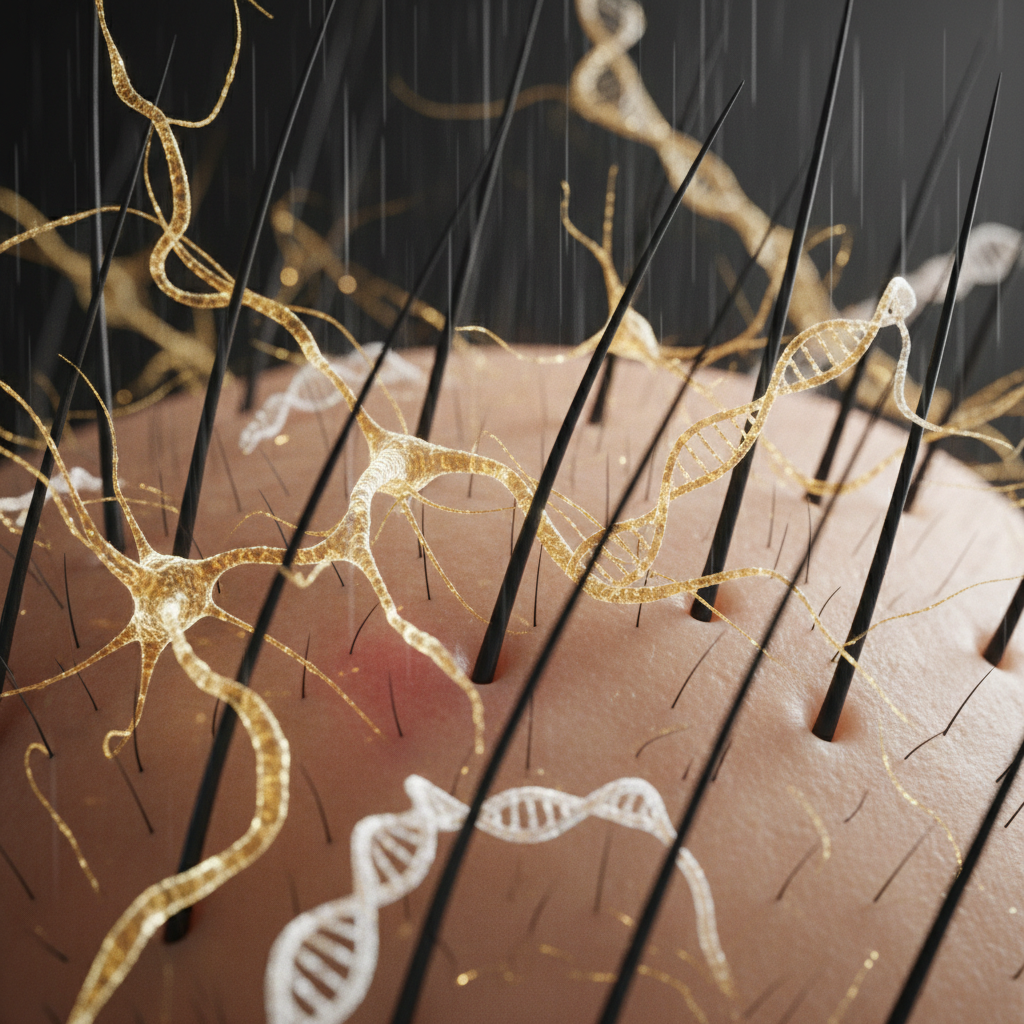
When cervical discs degenerate or neck musculature undergoes chronic spasm, the sensory nerves running toward the crown of the head experience chronic micro-trauma or altered signal transmission. This peripheral input prompts dorsal horn neurons in the spinal cord to enter a hyperexcitable state, known as central sensitisation.
Once sensitisation occurs, normal tactile sensations (such as hair movement, light brushing, or cool air) register in the brain as intense pain, a phenomenon known as allodynia. Cutaneous substance P and calcitonin gene-related peptide (CGRP) accumulate around hair follicles, releasing local neurogenic mediators that cause a sensation of burning, prickling, or phantom insect crawling (formication) in the absence of visible inflammation.
Signs and clinical presentation
To manage this condition successfully, one must distinguish its unique clinical presentation from classic inflammatory dermatoses.
- Subjective sensations: Burning, scalding, severe itching (pruritus), pins and needles, or deep, dull aching across the crown, parietal scalp, or vertex.
- Absence of primary rash: The scalp skin appears completely normal upon visual inspection. There are no primary plaques, erythema, pustules, or heavy scaling.
- Trichodynia: Pain or intense tenderness when hair shafts are touched, moved, or tied back.
- Secondary excoriation: If pruritus is prominent, scratching may cause secondary abrasions, crusting, or mechanical breakage, which can confuse the diagnosis.
- Co-occurring shedding: Patients frequently report concurrent acute hair shedding (telogen effluvium), as the emotional and physical stress of chronic pain alters hair cycle dynamics.
Differentiating scalp dysaesthesia from other conditions
Because scalp discomfort is common across many scalp disorders, careful differential diagnosis is critical before initiating an intensive regimen.
| Condition | Visual Findings | Primary Sensation | Main Origin | Response to Neuromodulators |
|---|---|---|---|---|
| Scalp Dysaesthesia | Normal appearance, secondary scratches only | Burning, tingling, phantom crawling, trichodynia | Neuropathic (cervical spine or central) | High |
| Seborrhoeic Dermatitis | Greasy yellow-white scales, distinct erythema | Pruritus (itching) | Malassezia yeast overgrowth, barrier defect | Low (responds to antifungals) |
| Scalp Psoriasis | Well-demarcated silvery scales, thick plaques | Itching, tightness, occasional soreness | Autoimmune keratinocyte proliferation | Low (responds to steroids/keratolytics) |
| Lichen Planopilaris | Perifollicular erythema, follicular plugging, scarring | Intense burning, tenderness, itching | Lymphocytic destruction of follicles | Moderate (requires immunosuppressants) |
| Contact Dermatitis | Acute swelling, blisters, diffuse redness | Stinging, acute burning, severe itching | Type IV or irritant cutaneous reaction | None (requires allergen removal) |
Practical steps for daily scalp care
While long-term resolution requires clinical support, day-to-day adjustments reduce sensory overload on vulnerable nerve fibres.
- Neutralise hair tension: Avoid tight ponytails, buns, braids, or heavy extensions. Constant traction activates mechanoreceptors that send distress signals directly into the sensitised nerve pathway.
- Wash with lukewarm water: High water temperatures overstimulate thermoreceptors. Keep wash water near 37 degrees Celsius.
- Select mildly acidic, non-stripping cleansers: Choose simple, fragrance-free shampoos formulated at a physiological scalp pH of 4.5 to 5.5. Harsh surfactants strip the protective lipid layer, exacerbating neurogenic sensitivity.
- Minimise blow-drying heat: Air-dry hair whenever feasible, or use the cool-shot setting held at least 15 centimetres from the scalp.
- Apply gentle cold compresses: Applying a cool, damp cloth to the burning zone during acute flare-ups provides temporary relief by dampening peripheral nerve conduction velocity without damaging the skin.
Supporting the scalp environment: the Watermans approach
Maintaining hair fibre health and a balanced, soothed scalp environment is a valuable supportive step alongside clinical care. Watermans focuses on delivering non-irritating, nutrient-dense topical formulas that respect delicate skin. Products like Watermans Grow Me shampoo provide an invigorating yet balanced cleanse using gentle cleansing agents free from harsh sulphates.
Incorporating topical blends featuring ingredients like rosemary, caffeine, and niacinamide supports microcirculation and maintains the condition of the scalp surface. While cosmetic products do not treat or cure underlying neuropathic spinal conditions, keeping the hair follicles clear of sebum build-up and conditioning the hair fibre helps prevent mechanical tangling and breakage. This reduces unnecessary physical strain on an already tender scalp.
When to seek medical advice
You should consult a GP or a consultant dermatologist if scalp tenderness, burning, or tingling persists for longer than two to three weeks without a clear cause. Immediate clinical assessment is crucial if symptoms accompany neck pain, numbness radiating down the arms, sudden unexplained hair shedding, or visible bald patches displaying scarring or pustules. A dermatologist can perform a gentle pull test, dermoscopy, or a small punch biopsy to definitively rule out cicatricial alopecias, while a spinal specialist can evaluate potential cervical nerve compression via imaging.
Frequently asked questions about Scalp Dysaesthesia Management
Can a regular shampoo cure scalp dysaesthesia?
No, a cosmetic shampoo cannot cure this condition. Because the disorder originates in the sensory nerves or cervical spine rather than the superficial layers of the skin, shampoos only serve to cleanse without triggering irritation. They cannot alter neurological signaling.
How long does scalp dysaesthesia management take to provide relief?
Effective scalp dysaesthesia management using prescription oral neuromodulators or targeted physiotherapy typically requires four to eight weeks before patients observe meaningful symptom reduction. Nerve pathways adapt slowly to biochemical changes.
Is hair loss permanent with scalp dysaesthesia?
Hair loss is generally not permanent. Scalp dysaesthesia does not destroy hair follicles. When hair loss occurs, it is usually temporary telogen effluvium driven by physical or emotional stress, or hair breakage caused by repetitive scratching.
Why does my hair hurt when I move it?
This sensation, known as trichodynia, happens because the nerve endings surrounding the hair follicle share pathways with pain fibres. When the central nervous system becomes sensitised, normal mechanical movement of the hair shaft registers as pain.
Does stress make the symptoms worse?
Yes, emotional and physical stress significantly worsens the condition. Psychological stress amplifies central pain processing and increases muscle tension in the neck and upper back, directly worsening the nerve irritation that drives cutaneous symptoms.
Achieving sustained relief
Navigating persistent scalp discomfort demands patience, careful diagnostic separation from inflammatory skin conditions, and an appreciation of the brain-nerve-skin connection. Successful scalp dysaesthesia management hinges on calming the nervous system, addressing musculoskeletal strain in the neck, and handling the hair fibre with gentle, low-friction care to allow hypersensitive nerve pathways the time they need to settle.
Sources and references
- British Association of Dermatologists. Clinical Guidelines for the Management of Scalp Dysaesthesia and Trichodynia.
- American Academy of Dermatology. Neuropathic Pruritus and Scalp Pain Syndromes.
- Journal of the American Academy of Dermatology. Scalp dysesthesia: A neuropathic chronic pain syndrome.
- International Journal of Trichology. Trichodynia and Scalp Dysaesthesia: Review of Pathogenesis and Management.
- National Institute for Health and Care Excellence (NICE). Neuropathic pain in adults: pharmacological management in non-specialist settings.
Find these ingredients in Watermans products
- Niacinamide: you will find this ingredient in our Hair Mask.