Scalp Care After Chemical Services: The Complete Physiological Guide
9 min read ·
Learn evidence-based Scalp Care After Chemical Services. Discover how to soothe irritation, rebuild the skin barrier, and support scalp health post-treatment.
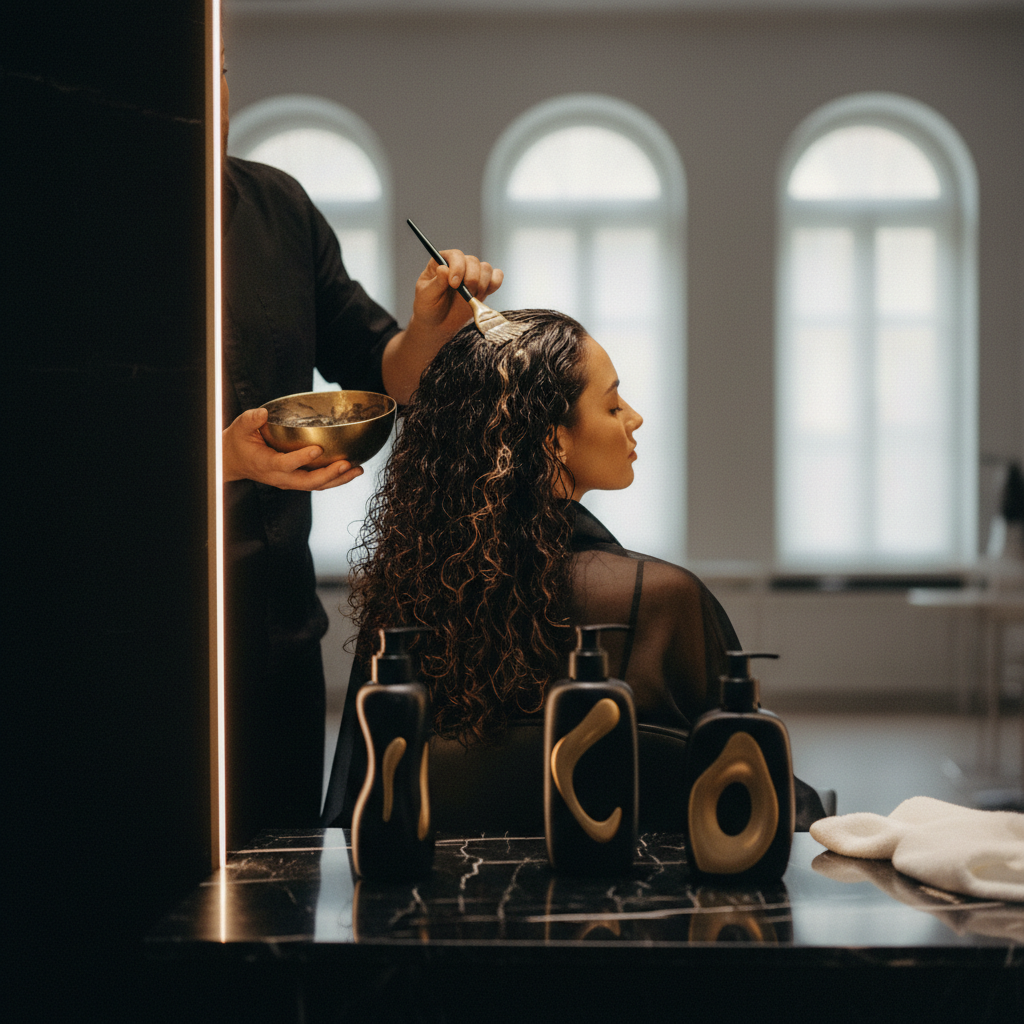
Quick answer: Effective Scalp Care After Chemical Services focuses on restoring the cutaneous acid mantle, reducing barrier disruption, and calming neurosensory irritation. Treatments like bleaching, permanent tinting, chemical relaxing, and perming operate at extreme pH ranges (often pH 9.0 to 13.5) or rely on strong oxidisers like hydrogen peroxide. These chemicals temporarily strip epidermal lipids and irritate nerve endings. Post-service care prioritises gentle, sulphate-free cleansing, barrier-supporting lipids, and pH-balancing formulations, though severe chemical burns or persistent allergic contact dermatitis require immediate clinical intervention rather than cosmetic remedies.
Key takeaways
- Chemical services alter the natural scalp surface pH (typically 4.5 to 5.5), raising it significantly and disrupting the stratum corneum.
- Bleach and high-lift colours degrade the protective lipid layer of the scalp, increasing transepidermal water loss (TEWL) and causing tightness, redness, or peeling.
- Mild burning, itching, or tingling during or right after a service points to irritant contact dermatitis, whereas delayed swelling, weeping, or widespread rash can indicate an allergy to ingredients such as paraphenylenediamine (PPD).
- Cleansing should be paused for 48 to 72 hours where possible, followed only by low-foaming, mildly acidic shampoos that respect the scalp skin barrier.
- Never scratch, pick at flakes, or apply concentrated essential oils to a compromised scalp, as micro-tears raise the risk of secondary bacterial infections.
Scalp Care After Chemical Services: what the evidence shows
High-pH chemical solutions and oxidising agents fundamentally disrupt the epidermal barrier of the scalp. Research in dermatological science demonstrates that permanent hair dyes, bleaching agents (ammonium or potassium persulphate), and chemical relaxers (sodium hydroxide, calcium hydroxide, or ammonium thioglycolate) cause acute physical and chemical stress to the stratum corneum.
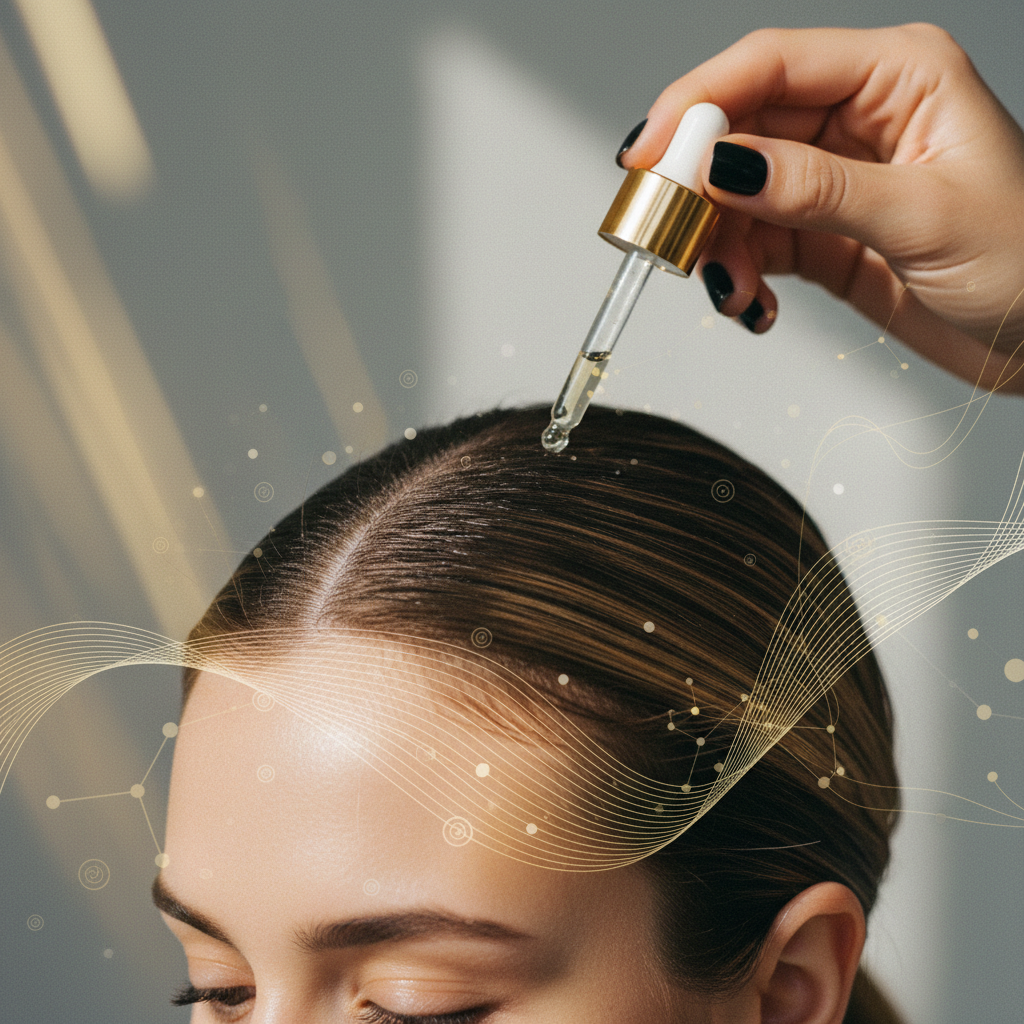
The scalp epidermis consists of corneocytes embedded in a lipid-rich matrix made of ceramides, cholesterol, and free fatty acids. During a chemical service, alkaline agents swell the hair cuticle to allow chemical penetration. Simultaneously, they swell the stratum corneum of the scalp. Hydrogen peroxide and persulphates oxidise structural lipids, stripping away the natural sebum film. This lipid depletion spikes transepidermal water loss. The clinical result is acute irritant dermatitis, which presents as transient erythema (redness), stinging, dryness, and post-service desquamation (flaking).
Rigorous Scalp Care After Chemical Services must address this barrier breakdown. Post-treatment management focuses on re-acidifying the skin surface, replenishing lost physiological lipids, and avoiding further mechanical or chemical trauma while the stratum corneum undergoes its natural 14-day renewal cycle.
| Service Type | Typical Working pH | Primary Scalp Stressor | Common Barrier Impact |
|---|---|---|---|
| Bleaching / Lightening | pH 9.0 to 11.0 | Persulphates, Hydrogen Peroxide | Severe lipid depletion, oxidisation, acute erythema |
| Permanent Hair Colour | pH 9.0 to 10.5 | Ammonia/MEA, PPD, Peroxide | Mild-to-moderate barrier compromise, allergic risk |
| Lye Relaxers | pH 12.0 to 14.0 | Sodium Hydroxide | Deep epidermal erosion, risk of caustic chemical burns |
| No-Lye Relaxers | pH 11.5 to 12.5 | Calcium Hydroxide, Guanidine | Stratum corneum dehydration, calcium salt residue |
| Perms / Texturisers | pH 8.5 to 9.5 | Ammonium Thioglycolate | Keratin swelling, sensory irritation, mild drying |
Understanding the biological mechanism of chemical irritation
The scalp possesses a dense network of sensory C-fibres and transient receptor potential (TRP) channels, notably TRPV1. When alkaline chemicals penetrate the outer epidermal layers, they activate these nociceptive nerve endings directly. This chemical activation triggers the release of substance P and calcitonin gene-related peptide (CGRP), causing immediate neurogenic inflammation: vasodilation, local heat, and intense burning sensations.
Concurrently, shifting the scalp pH from its physiological resting state of roughly 5.0 up to 9.0 or higher impairs the activity of critical enzymes. Acid sphingomyelinase and beta-glucocerebrosidase, which synthesise essential barrier ceramides, function optimally only at an acidic pH. An alkaline shift inactivates these enzymes while activating serine proteases, which degrade the protein bridges (corneodesmosomes) between skin cells. This mechanism explains why post-chemical peeling and shedding of the scalp skin often occurs three to five days after salon appointments.
Recognising the signs: normal irritation versus severe reactions
Distinguishing between anticipated cosmetic sensitivity and a clinical complication is essential for proper care.
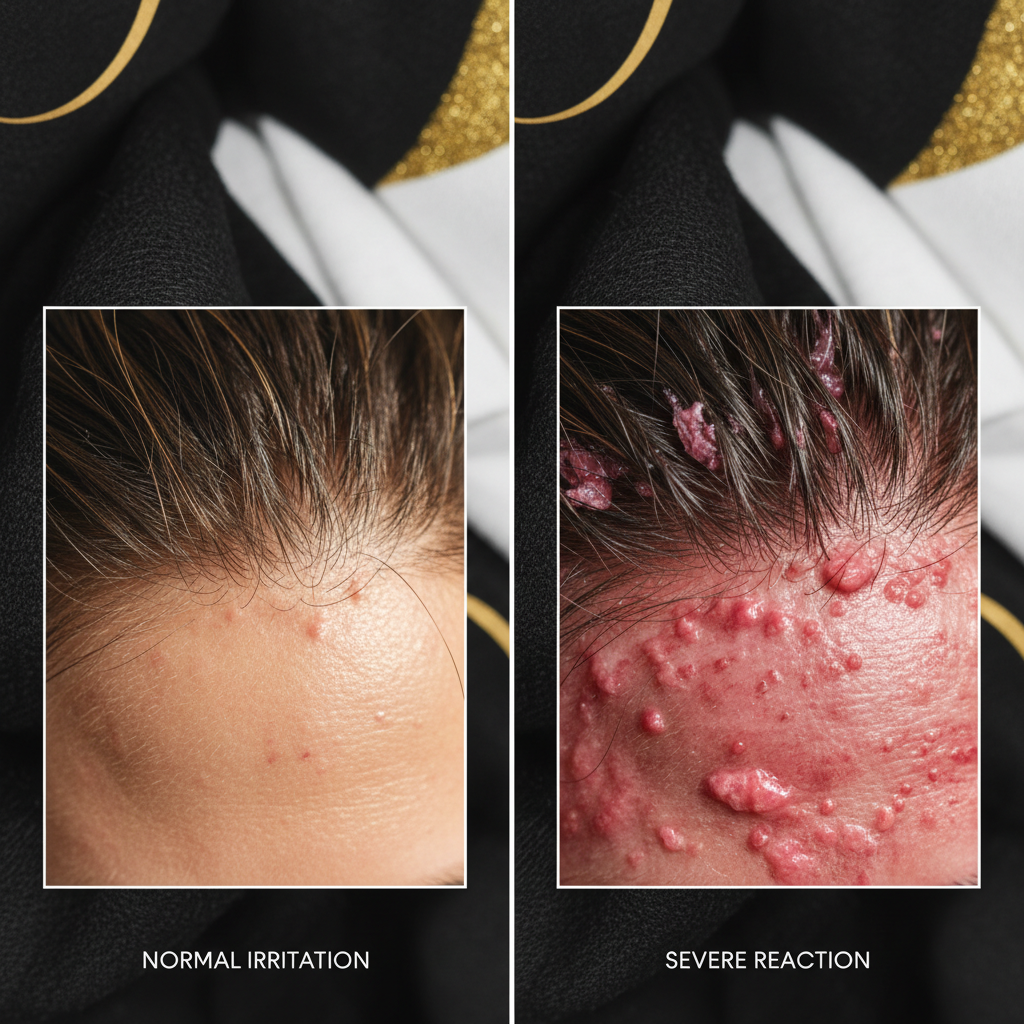
- Normal, self-limiting irritation: Mild pinkness, feeling of tightness, light itching, or fine dusting of dry flakes appearing 48 to 72 hours post-service. These symptoms resolve within three to seven days with conservative care.
- Irritant chemical burn: Well-demarcated areas of bright red, raw skin, pinpoint scabbing, clear weeping, or blistering. This occurs when chemicals are left on too long, formulated too aggressively, or applied to an already compromised scalp.
- Allergic contact dermatitis (ACD): Severe pruritus (itching), oedema (swelling) of the scalp, face, or eyelids, and widespread vesicular eruptions (fluid-filled blisters) that typically develop 24 to 72 hours post-exposure. Oxidative hair dye ingredients, particularly PPD and resorcinol, are frequent triggers.
What you can do: best practice routine
Taking a structured, step-by-step approach gives the scalp barrier the best environment to recover.
1. The initial 48-hour quiet period
Leave the scalp undisturbed for 48 to 72 hours after any major chemical service. Avoid washing, heavy sweating, hot saunas, and intense workouts. Sweat contains sodium chloride and minerals that irritate exposed nerve endings and inflamed skin. Keep styling tools away from the roots and avoid tight hairstyles that place tension on the follicles.
2. Low-friction, pH-balanced cleansing
When it is time to wash, select a gentle, sulphate-free shampoo formulated at pH 4.5 to 5.5. Avoid clarifying shampoos, deeply purifying formulas, or products heavy in synthetic fragrance and drying alcohols. Use tepid water; hot water strips remaining surface lipids and prompts reflex histamine release, worsening itching. Cleanse using only the pads of your fingers, never your fingernails.
3. Barrier re-lipidation and soothing topicals
Apply soothing, non-comedogenic leave-on scalp serums containing ingredients that mimic the natural lipid barrier:
- Niacinamide (Vitamin B3): Shown in dermatological studies to stimulate endogenous ceramide synthesis and lower inflammation.
- Panthenol (Pro-Vitamin B5): A proven humectant that penetrates the stratum corneum, supports hydration, and eases itching.
- Allantoin and Bisabolol: Plant-derived soothing agents that down-regulate inflammatory signalling in skin cells.
- Light physiological oils: Squalane, jojoba, or argan oil contain fatty acids that supplement the lipid bilayer without feeding Malassezia yeast overgrowth when used sparingly.
4. Thermal and physical protection
Protect the newly treated scalp from direct ultraviolet radiation. Sunburn on a chemically compromised scalp dramatically increases inflammation and can impair follicular health. Wear a loose, breathable cotton hat when outdoors in strong sunlight.
What the evidence does not show
There is no scientific evidence that applying raw household oils (such as coconut oil, olive oil, or castor oil) immediately cures chemical burns or neutralises chemical trauma. In fact, applying heavy, unrefined vegetable oils to an acutely burned, weeping, or inflamed scalp can trap heat, occlude the skin, and foster the overgrowth of Malassezia yeasts, triggering secondary seborrhoeic dermatitis.
Furthermore, cosmetic scalp treatments cannot undo permanent follicular scarring caused by deep chemical burns. If a chemical relaxer or lightener causes full-thickness epidermal necrosis, cosmetic serums cannot regenerate lost hair follicles. Prevention during the service remains paramount.
When the cause may be something else
Not all post-treatment flaking or itching stems solely from the chemical service itself. Underlying conditions can be unmasked or aggravated by the procedure:
- Pre-existing seborrhoeic dermatitis: The alkaline disruption of the microbiome can trigger a flare-up of Malassezia yeast, leading to greasy, yellowish flakes rather than dry peeling.
- Scalp psoriasis: Chemical trauma can elicit the Koebner phenomenon, where physical or chemical injury to the skin provokes new psoriatic plaques in genetically predisposed individuals.
- Folliculitis: Bacterial infection of the hair follicles (often Staphylococcus aureus) can occur if clients scratch compromised skin with unwashed hands, creating entry points for microbes.
When to seek medical advice
Seek immediate medical evaluation from a GP, dermatologist, or urgent care clinician if you experience any of the following:
- Swelling around the eyes, forehead, ears, or neck.
- Weeping, oozing yellow fluid, or golden crusting on the scalp (signs of impetigo or secondary bacterial infection).
- Severe blistering, open sores, or necrotic (blackened/white) patches of skin.
- Systemic symptoms including fever, dizziness, or difficulty breathing (which represents a medical emergency).
Supporting long-term scalp health
Once the acute recovery window passes, maintaining a balanced scalp microenvironment ensures that hair grows from strong foundations. Integrating targeted, nutrient-dense scalp serums helps maintain healthy skin turnover.
Watermans focuses on formulas designed to support the scalp environment without using harsh, disruptive additives. Incorporating targeted topical support alongside gentle daily hygiene creates the stable, nourished base necessary for resilient hair growth following salon procedures.
Frequently asked questions about Scalp Care After Chemical Services
How long does the scalp take to heal after a chemical service?
Under normal conditions, mild scalp sensitivity and barrier disruption resolve within three to seven days. The complete cellular turnover of the stratum corneum takes approximately two to three weeks. However, if a chemical burn with blistering or skin erosion has occurred, tissue healing may take three to six weeks depending on the depth of the injury.
What is the most effective approach to Scalp Care After Chemical Services if the skin starts flaking?
Do not pick, scratch, or physically exfoliate the flakes. Post-chemical flaking is simply shed stratum corneum cells detaching after chemical dehydration. Apply a lightweight, humectant-rich scalp serum with panthenol or aloe vera, wash with a mild, sulphate-free, pH 5.0 shampoo, and let the dead skin slough away naturally during gentle washing.
Can I use apple cider vinegar to rebalance my scalp pH after bleaching?
Avoid applying undiluted or poorly diluted kitchen vinegar directly to a raw, recently bleached scalp. While restoring an acidic pH is beneficial, pure vinegars contain volatile acetic acid that can burn inflamed, open, or barrier-compromised skin. Use scientifically formulated, dermatologically tested scalp products balanced to pH 4.5 to 5.5 instead.
Can chemical burns from relaxers or bleach cause permanent hair loss?
Yes, if the chemical causes deep dermal necrosis. Superficial chemical burns typically heal without permanent hair loss, though hair may temporarily shed or snap off at the scalp level due to breakage. However, deep caustic burns that destroy the hair follicle stem cells in the follicular bulge result in cicatricial (scarring) alopecia, which causes permanent hair loss.
Recommended post-service scalp recovery protocol
Proper Scalp Care After Chemical Services requires patience, gentle handling, and an understanding of skin barrier physiology. By avoiding early shampooing, skipping harsh physical friction, and restoring moisture with pH-balanced formulas, you allow the skin to repair its natural defence systems. Protecting the scalp immediately after chemical work ensures long-term hair quality, optimal follicle performance, and comfort.
Sources and references
- British Association of Dermatologists (BAD). Hair Dye Reactions and Contact Dermatitis Guidelines.
- Gavazzoni Dias, M. F. (2015). Hair cosmetics: An overview. International Journal of Trichology, 7(1), 2-15.
- Trüeb, R. M. (2018). Scalp Condition Impacts Hair Growth and Retention via Oxidative Stress. International Journal of Cosmetic Science, 40(6), 556-570.
- National Health Service (NHS). Chemical Burns: Symptoms, Causes, and Treatments.
- Ali, S. Y., & Shan, H. (2020). Adverse effects of chemical relaxers on scalp skin and hair fibre integrity. Dermatologic Therapy, 33(4), e13528.
Find these ingredients in Watermans products
- Castor Oil: you will find this ingredient in our Camellia & Black Castor Hair & Body Oil.
- Niacinamide: you will find this ingredient in our Hair Mask.
- Panthenol (Provitamin B5): you will find this ingredient in our Heat Protection Spray.
- Aloe Vera: you will find this ingredient in our Curly Hair Conditioner.