Chemical Relaxer Safety: Biological Mechanisms, Risks, and Best Practice
9 min read ·
Learn the science of Chemical Relaxer Safety, from internal hair bond alterations and scalp burn prevention to clinical evidence on systemic risks.
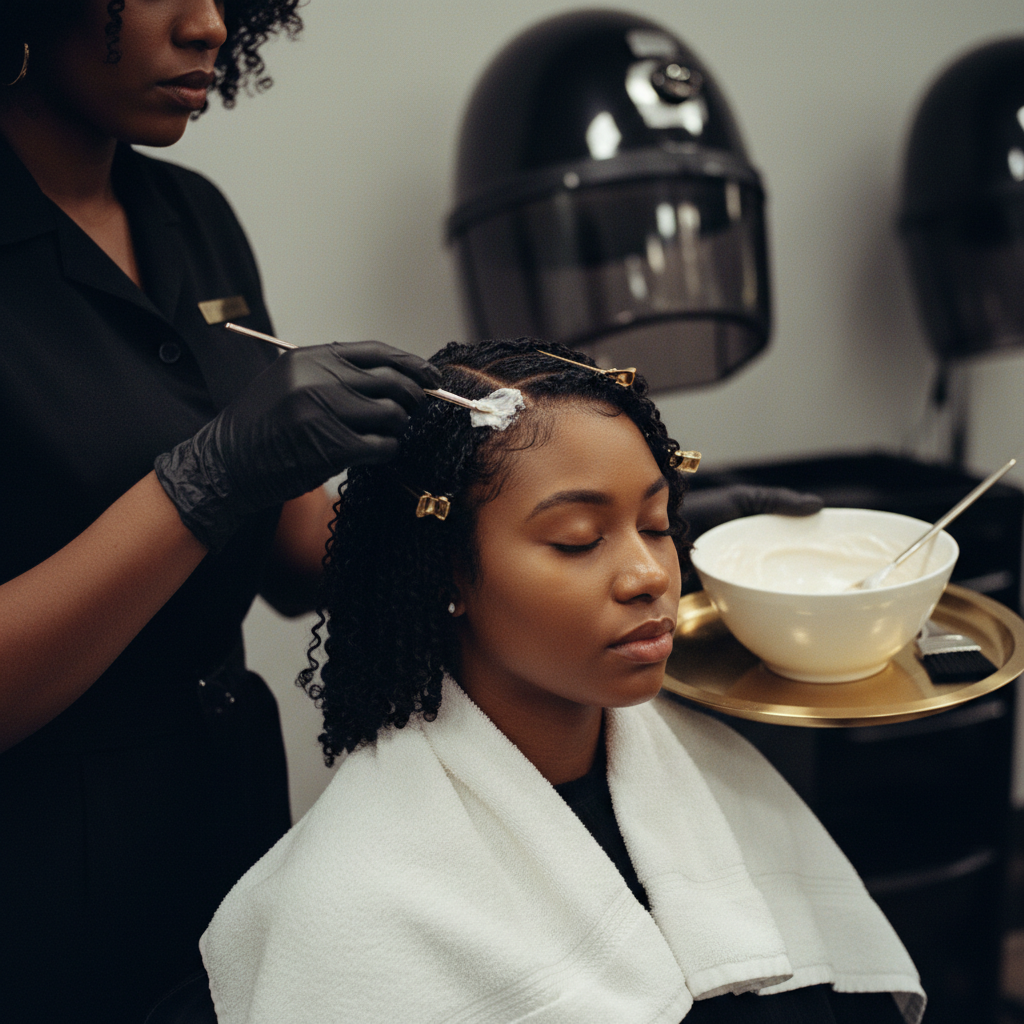
Quick answer: Chemical Relaxer Safety centres on understanding how high-pH formulations alter the hair shaft and how to minimise scalp contact, fibre breakage, and long-term systemic risks. Chemical relaxers straighten tightly curled hair by permanently breaking disulfide bonds using alkaline agents, typically at a pH between 12 and 14. While correct salon application protects the scalp barrier and minimises structural damage, improper processing causes severe hair breakage, chemical burns, and potential exposure to endocrine-disrupting chemicals. The main limitation is that hair once chemically relaxed cannot regain its original strength.
Key takeaways
- Chemical relaxers function at an extreme pH of 12 to 14, breaking structural cystine bonds to permanently straighten the hair fibre.
- The most frequent acute risks are scalp chemical burns, acute contact dermatitis, and severe hair breakage along the boundary between virgin and treated hair.
- Distinguish clearly between hair breakage (snapping of the compromised hair shaft) and true follicular hair loss (scarring or non-scarring alopecia caused by chemical burns and chronic inflammation).
- Large-scale epidemiological studies, including data from the National Institutes of Health (NIH), have linked frequent, long-term relaxer use with an increased risk of uterine fibroids and hormone-sensitive reproductive cancers.
- Risk mitigation relies on protective scalp basing, precise timing, avoiding overlapping onto previously relaxed hair, and thorough neutralisation.
Chemical Relaxer Safety: what the evidence shows
Chemical Relaxer Safety is a critical concern in textured hair care because these formulations cause permanent structural and chemical alterations to the hair and scalp. Research shows that alkaline relaxers, whether formulated with sodium hydroxide (lye) or calcium hydroxide and guanidine carbonate (no-lye), strip away the hydrophobic lipid layer (18-methyleicosanoic acid or 18-MEA) that covers the hair cuticle.
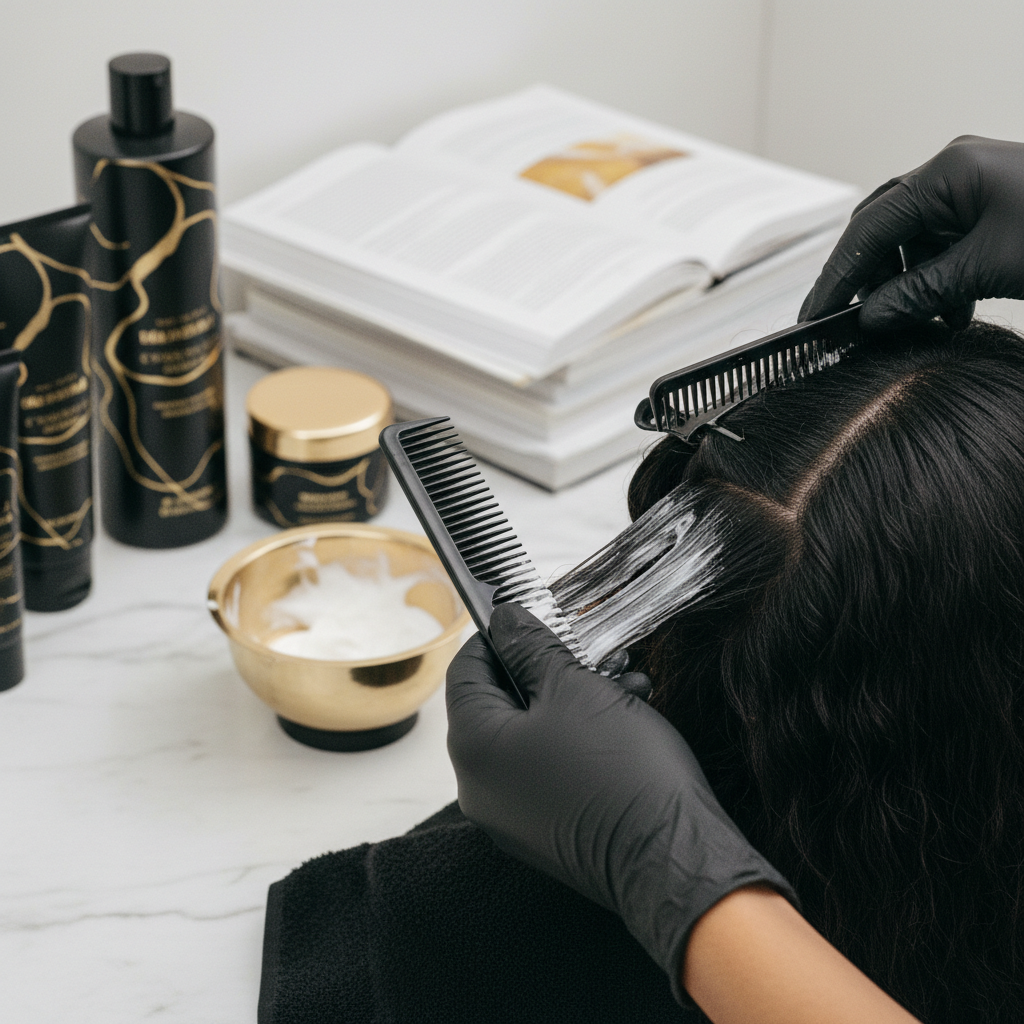
Once inside the cortex, the hydroxide ions break the disulfide bridges that give textured hair its shape. This process, known as lanthionisation, converts cystine into lanthionine. This alteration is irreversible. Studies published in the International Journal of Cosmetic Science confirm that relaxed hair fibres demonstrate up to a 50 percent reduction in tensile strength and significantly higher porosity compared to untreated hair.
Beyond mechanical damage, dermatological evidence demonstrates that scalp burns from chemical relaxers can induce scarring alopecia (central centrifugal cicatricial alopecia, or CCCA). When chemical formulations contact the epidermal skin barrier, high alkalinity causes liquefactive necrosis of skin cells if left unchecked.
At a systemic level, large prospective cohort studies, such as the NIH Sister Study published in the Journal of the National Cancer Institute (2022), identified an association between frequent chemical relaxer use (more than four times per year) and an elevated risk of uterine cancer. The suspected mechanism involves systemic absorption through micro-tears in the scalp of endocrine-disrupting chemicals, including phthalates, parabens, and bisphenol A, which are frequently detected in chemical relaxer mixtures.
| Relaxer Type | Active Chemical Agent | Typical Working pH | Primary Scalp Risk | Primary Fibre Impact |
|---|---|---|---|---|
| Lye (Sodium Hydroxide) | Sodium hydroxide | 13.0 to 14.0 | Rapid chemical burns; irritation | Moderate dryness; high cuticle swelling |
| No-Lye (Guanidine) | Calcium hydroxide + Guanidine carbonate | 12.0 to 13.5 | Slower burning; calcium salt buildup | Severe dehydration; increased brittleness |
| Ammonium Thioglycolate | Thioglycolic acid salt | 9.0 to 9.5 | Contact allergic dermatitis | Keratin softening; lower tensile loss than lye |
| Sulphite / Bisulphite | Sodium bisulphite | 6.5 to 8.5 | Lower irritation risk | Slower processing; weaker straightening power |
What the evidence does not show
Epidemiological studies demonstrate statistical associations, but they do not prove direct causation between casual or infrequent relaxer use and reproductive cancers. Confounding variables, such as shared environmental exposures, genetics, and concurrent use of other endocrine-disrupting personal care items, make isolating a single cosmetic formulation complex.
Furthermore, evidence does not show that no-lye relaxers are inherently safer or milder for the hair fibre than traditional lye relaxers. Many consumers assume that no-lye formulations carry zero risk. In clinical practice, calcium hydroxide formulations cause significant calcium deposition on the hair shaft, leading to chronic dryness, stiffness, and mechanical breakage if chelating shampoos are not used.
Finally, chemical relaxers do not inherently destroy hair follicles during a normal, properly applied service where the product remains strictly on the hair shaft and off the skin. Follicular damage occurs secondary to scalp burns, ulceration, or chronic follicular inflammation, rather than as a direct consequence of the chemical altering the external hair shaft.
The biological and chemical mechanism
The human hair shaft relies on three primary bonds for its structural integrity: hydrogen bonds, salt bonds, and covalent disulfide bonds. Hydrogen and salt bonds are temporary and easily broken by water or heat. Disulfide bonds, formed between two cysteine amino acid residues, provide rigid physical resistance against mechanical force.
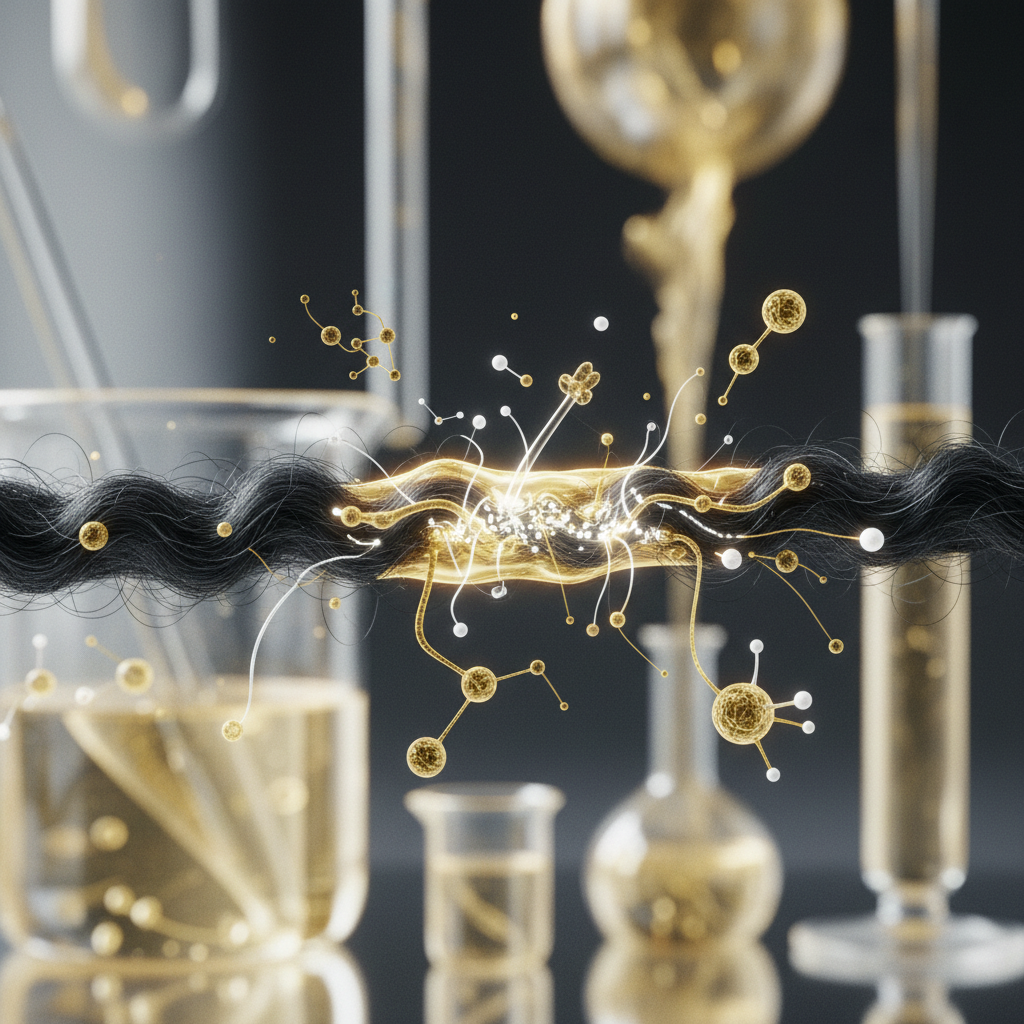
Alkaline relaxers carry an extreme hydroxide ion (OH⁻) concentration. When applied, these ions cause rapid swelling of the cuticle scales, penetrating deeply into the cortex within 5 to 15 minutes. The hydroxide ions attack the disulfide bonds, severing one of the sulfur atoms and producing a dehydroalanine intermediate.
This intermediate reacts with a neighbouring cysteine residue to form lanthionine, a stable monosulfide bridge. Because lanthionine has only one sulfur atom instead of two, the molecular conformation is permanently relaxed into an elongated state. However, lanthionine cross-links lack the elastic recoil of cystine bonds. Consequently, the hair loses its natural elasticity, becoming brittle and highly susceptible to snapping under routine friction or tension.
Identifying the signs of relaxer damage
Distinguishing between hair breakage and follicular hair loss is essential when assessing hair health after a relaxer service:
- Hair breakage: Short pieces of hair shedding without a white bulb at the root. The hair snaps easily during gentle combing, especially at the line of demarcation where newly grown, untreated hair meets previously relaxed strands.
- Scalp chemical burns: Stinging, burning, or redness appearing during or immediately after chemical application. Untreated burns progress to oozing, crusting, and scab formation.
- Scalp tenderness and follicular inflammation: Persistent soreness, pustules, or itching around the follicle openings 24 to 72 hours following treatment.
- Follicular hair loss (scarring or telogen effluvium): Complete patches of bare skin with absent follicular openings, or diffuse shedding from the roots where full-length hairs emerge with intact white bulbs.
Practical steps to minimise chemical relaxer risks
Minimising risk requires strict adherence to salon safety protocols and chemical handling standards.
- Perform a patch and strand test: Always conduct a patch test 48 hours prior to application to screen for contact allergies, and a strand test to determine processing time and structural strength.
- Apply a petrolatum barrier (basing): Thoroughly coat the entire scalp, hairline, nape, and ears with a thick petrolatum base. This creates a physical barrier that prevents direct hydroxide contact with the epidermal barrier.
- Never wash hair beforehand: Avoid shampooing, scratching, or vigorous brushing for at least 72 hours before chemical processing. Micro-abrasions drastically increase the risk of chemical penetration and burns.
- Target the new growth only: Never overlap relaxer onto previously processed hair. Overlapping leads to cumulative lanthionisation, destroying remaining protein bonds and causing snapping along the demarcation line.
- Neutralise completely: Wash thoroughly with an acid-balanced neutralising shampoo featuring a built-in colour indicator. The formulation must bring the hair shaft from pH 13 back down to its physiological isoelectric point of 4.5 to 5.5 to halt the chemical reaction.
When hair issues stem from something else
Not all hair distress following a relaxer service is caused by the chemical itself. Traction alopecia is common among individuals who wear tight braids, weaves, or extensions over freshly relaxed hair. Because relaxed hair has reduced tensile strength, mechanical tension pulls weakened hairs directly from vulnerable follicles.
Diffuse shedding may also stem from systemic triggers entirely separate from cosmetic treatments, such as telogen effluvium induced by severe psychological stress, nutritional deficiencies (low ferritin or vitamin D), hormonal shifts following childbirth, or thyroid disorders. Consulting a registered trichologist or dermatologist allows for accurate diagnosis through dermoscopy and blood testing.
Supporting compromised hair: a balanced approach
Once hair has undergone alkaline straightening, cosmetic maintenance must focus on structural reinforcement and surface lipid restoration. While broken disulfide bonds cannot be rebuilt into cystine, cosmetic agents can dramatically reduce secondary mechanical breakage.
Hydrolysed proteins (wheat, soy, keratin) fill microscopic voids along the chipped cuticle layer, temporarily reinforcing the internal cortex. Emollient conditioning treatments containing natural plant oils and ceramides help mimic the lost 18-MEA layer, smoothing the cuticle and reducing inter-fibre friction.
For ongoing scalp care, gentle cleansing solutions help soothe an easily irritated epidermal barrier. Watermans provides targeted, nutrient-dense hair and scalp solutions formulated with caffeine, biotin, and botanical extracts designed to support a revitalised, healthy-looking scalp environment and help reinforce the appearance of fragile strands. Pairing targeted topical support with low-manipulation styling protects vulnerable hair fibres over the long term.
When to seek professional medical advice
Mild dryness and minor splitting can be managed with professional salon trims and deep conditioning. However, you should consult a doctor or dermatologist immediately if you experience:
- Blistering, open ulcerations, or severe weeping on the scalp following a relaxer service.
- Signs of secondary bacterial infection, such as yellow crusting, intense localised heat, throbbing pain, or swollen lymph nodes.
- Smooth, shiny bald patches where hair fails to regrow, which may indicate permanent scarring alopecia (CCCA).
- Sudden, diffuse shedding from the roots exceeding 100 to 150 hairs daily that persists for more than four weeks.
Frequently asked questions about Chemical Relaxer Safety
What are the main rules for Chemical Relaxer Safety at home?
Chemical Relaxer Safety at home requires strict timing, protective petrolatum base application across the entire scalp, and never overlapping onto previously relaxed strands. Always wear protective gloves, set a strict timer based on a prior strand test, and use a colour-indicating neutralising shampoo to verify that all alkaline residue is fully removed before styling.
How often can you safely relax hair?
Most trichologists and professional stylists recommend waiting a minimum of 8 to 12 weeks between chemical relaxer applications. This interval ensures there is sufficient new growth (at least 2 to 3 centimetres) to apply the chemical precisely without overlapping onto previously treated, fragile hair.
Do no-lye relaxers cause less hair damage?
No-lye relaxers are gentler on sensitive scalps because guanidine carbonate produces less intense stinging than sodium hydroxide. However, they are not inherently gentler on the hair shaft. No-lye relaxers leave calcium mineral deposits that cause chronic dryness and brittle breakage unless routinely cleared with chelating shampoos.
Can a chemical relaxer burn cause permanent hair loss?
Yes. If an alkaline relaxer penetrates through the epidermis to the hair bulb, it can cause deep chemical burns and tissue necrosis. This destructive inflammation can permanently destroy stem cells in the hair follicle bulge, resulting in irreversible scarring alopecia where new hair can no longer grow.
Maintaining Chemical Relaxer Safety moving forward
Prioritising Chemical Relaxer Safety requires balancing personal styling preferences with rigorous hair biology awareness. Chemical relaxers represent some of the most aggressive alkaline formulations used in modern cosmetics, permanently transforming internal keratin architecture. By insisting on skilled professional application, mandatory scalp basing, strictly avoiding overlapping, and supporting treated hair with gentle conditioning care, you can minimise structural breakage and protect your long-term scalp health.
Sources and references
- National Institutes of Health (Sister Study): Use of Straighteners and Other Hair Products and Incident Uterine Cancer, Journal of the National Cancer Institute, 2022.
- British Association of Dermatologists: Guidelines on Central Centrifugal Cicatricial Alopecia and Chemical Hair Relaxers, 2020.
- International Journal of Cosmetic Science: Chemical and Physical Changes in Textured Hair After Hydroxide Relaxing, 2018.
- Journal of the American Academy of Dermatology: Adverse Effects of Chemical Hair Straightening Formulations, 2021.
Find these ingredients in Watermans products
- Vitamin D: you will find this ingredient in our Hair Vitamins.