Scalp Burns from Bleach: Causes, Symptoms, and First Aid
8 min read ·
Scalp Burns from Bleach are serious chemical injuries caused by alkaline agents and peroxide. Learn the biological mechanisms, first aid, and recovery care.
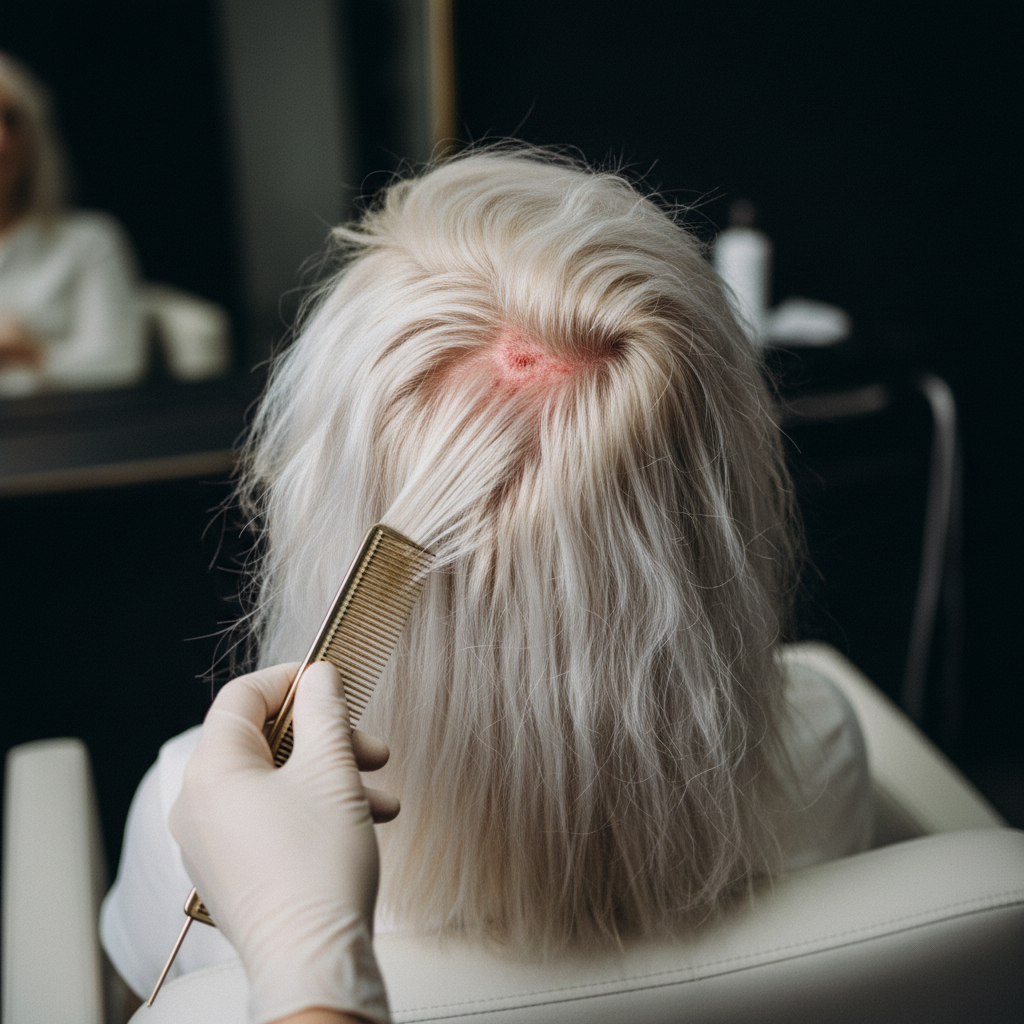
Quick answer: Scalp Burns from Bleach are chemical injuries caused by the alkaline agents and concentrated hydrogen peroxide used during hair lightening. Bleaching mixtures typically possess a high pH of 10 to 11, which dissolves the skin protective lipid barrier and causes acute tissue damage, erythema, and blistering. Immediate removal with cool water is essential. While superficial burns heal within days without permanent follicular harm, severe chemical burns can destroy follicles and lead to permanent cicatricial alopecia.
Key takeaways
- Bleaching mixtures combine persulphates and hydrogen peroxide at a caustic alkaline pH of 10 to 11, creating a high risk of chemical burns if applied improperly.
- Direct contact with high-strength developer (such as 30 or 40 volume) on the skin significantly increases the likelihood of tissue ulceration and chemical injury.
- External heat sources, such as hooded dryers or foils placed directly against the scalp, accelerate exothermic chemical reactions and drastically increase burn severity.
- Superficial injuries typically resolve without long-term damage, but full-thickness burns destroy stem cells in the hair bulge, resulting in permanent scarring alopecia.
- Immediate, prolonged rinsing with cool water is the most critical first-aid step to halt tissue destruction.
Scalp Burns from Bleach: what the evidence shows
Scalp Burns from Bleach represent acute chemical trauma rather than standard cosmetic sensitivity. Clinical literature in dermatology and emergency medicine categorises these injuries as alkaline or mixed chemical burns. Bleaching hair requires two main components: an alkalising agent (frequently ammonium hydroxide or persulphate salts) and an oxidising agent (hydrogen peroxide).
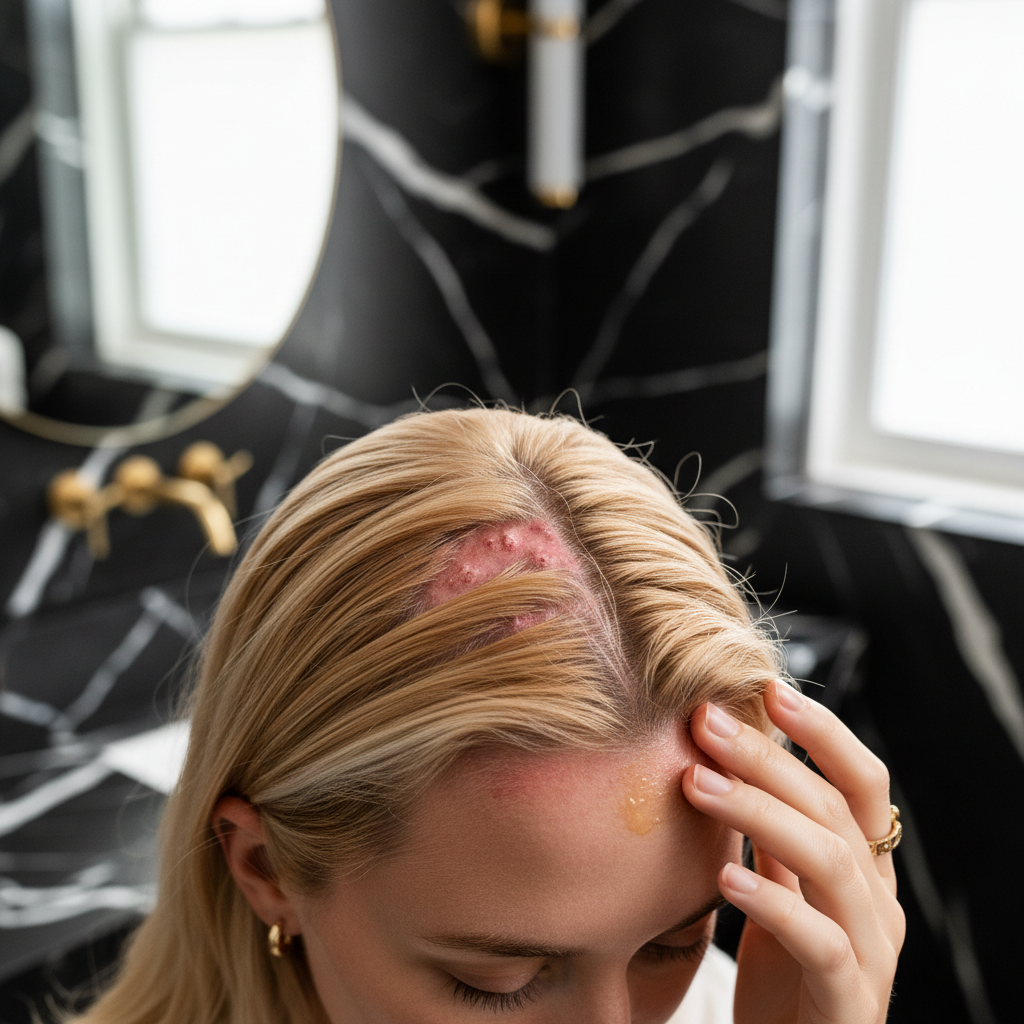
When these substances combine, the pH of the mixture rises to between 10 and 11. Normal scalp skin maintains an acidic mantle with a pH between 4.5 and 5.5. The strong alkaline environment liquefies fatty acids, saponifies intercellular lipids in the stratum corneum, and denatures proteins in skin cells. This process, known clinically as liquefactive necrosis, allows the chemicals to penetrate deeper into dermal layers than acidic burns of equivalent strength.
Medical case reports documented by burn units show that severe injuries often occur when stylists or home users leave bleach on the scalp for extended periods, use enclosed foils at the root, or apply external heat. In severe cases, the chemical reaction causes full-thickness skin death, requiring debridement and dermatological intervention.
The mechanism: why hair bleach burns skin
Hair bleach damages skin through two simultaneous chemical pathways: extreme alkalinity and rapid oxidation.
The alkaline component swells the hair shaft by lifting the cuticle, allowing lightening agents to enter the cortex. However, when applied to the skin, this high pH strips away sebum and disrupts cell membrane integrity. Lipids that bind epidermal cells together dissolve rapidly.
Simultaneously, hydrogen peroxide releases active oxygen free radicals to oxidise and break down melanin pigments in hair. On living skin tissue, these powerful oxidisers attack cellular structures, causing rapid protein coagulation and cell lysis.
When an exothermic reaction occurs, thermal injury compounds the chemical burn. Hydrogen peroxide decomposition releases heat. If trapped beneath plastic wrap, enclosed within foil, or heated with a salon processor, the temperature of the bleach mixture can rise substantially, effectively scalping or cooking the upper layers of the dermis.
Signs to look for: chemical burn stages
Recognising the severity of tissue damage determines the appropriate treatment. Symptoms range from mild irritation to full-thickness burns:
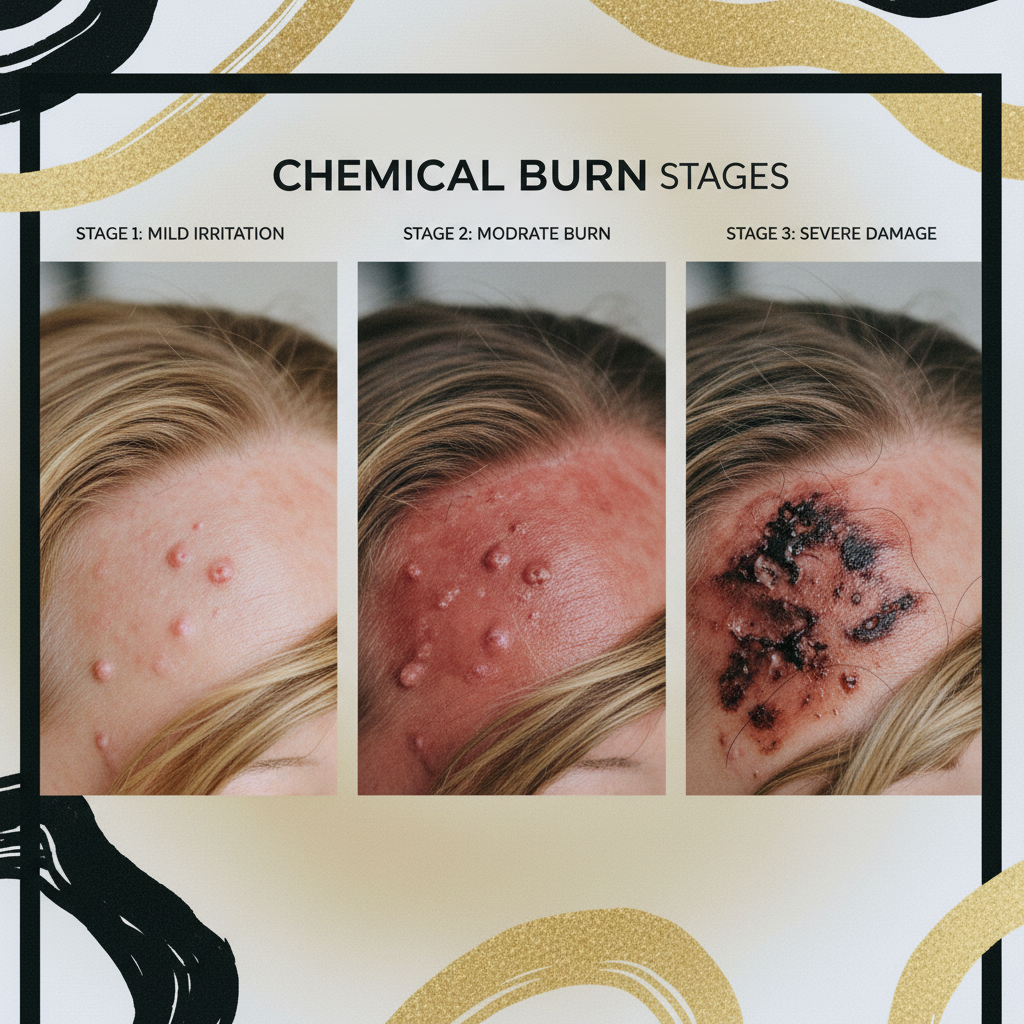
- Superficial (First-Degree) Burns: Redness (erythema), intense stinging or burning during application, tight-feeling skin, and subsequent dry flaking. The epidermal barrier is disrupted, but basal layers remain intact.
- Partial-Thickness (Second-Degree) Burns: Severe pain, swelling (oedema), and fluid-filled blisters (bullae). As blisters break, the area oozes clear serum or forms yellow crusting. The upper dermis is damaged, placing hair follicles at temporary risk.
- Full-Thickness (Third-Degree) Burns: Leathery, white, or charred skin, often accompanied by a loss of local sensation due to destroyed nerve endings. These injuries penetrate the hypodermis, permanently obliterating hair follicle stem cells and leading to irreversible hair loss.
Chemical burn vs allergic contact dermatitis
It is vital to distinguish between a toxic chemical burn and an immunological allergic reaction. While both cause discomfort, their clinical presentations and treatments differ.
| Feature | Chemical Burn (Scalp Burns from Bleach) | Allergic Contact Dermatitis |
|---|---|---|
| Primary Cause | Direct tissue toxicity from high pH (10 to 11) and peroxide oxidation | Immune-mediated (Type IV) hypersensitivity to persulphates |
| Onset | Immediate to a few hours during or after application | Delayed, typically 24 to 72 hours after exposure |
| Primary Sensation | Intense burning, stinging, and sharp pain | Intense itching (pruritus), irritation, and soreness |
| Physical Appearance | Redness, localized erosion, blistering, or ulceration | Diffuse rash, weeping papules, scaling, swelling of eyelids |
| Borders | Sharply demarcated to the exact areas of bleach contact | Can spread beyond contact zones to neck, face, and ears |
| Follicle Risk | Permanent scarring alopecia if full thickness is reached | Rarely damages follicles permanently unless secondary infection occurs |
What you can do: immediate first aid and aftercare
If you or a client experience acute pain during a bleaching service, execute immediate first aid:
- Rinse immediately: Do not wait for the service timer to finish. Rinse the hair and scalp with continuous, gentle streams of cool or tepid water for at least 15 to 20 minutes. Avoid hot water, which accelerates skin inflammation and opens pores.
- Use a gentle, physiological cleanser: Remove all lingering chemical residue using a mild, fragrance-free, pH-balanced shampoo (pH 5.0 to 5.5). Avoid vigorous scrubbing; let the water run through the hair to carry away particles.
- Do not apply home remedies: Keep oils, butter, petroleum jelly, vinegar, or harsh ointments away from broken skin. Occlusive agents trap heat and residual chemicals, worsening tissue necrosis.
- Cool compresses: Apply clean cloths soaked in cold physiological saline to calm inflammation and soothe nerve pain.
- Protect the wound: For superficial raw patches, apply a sterile medical barrier such as pure medical-grade hydrogel or petrolatum only after the chemicals have been completely flushed out and the skin has cooled.
When to seek medical advice
Seek immediate medical attention from an emergency department or general practitioner if you observe:
- Blistering that covers an area larger than a two-pence coin.
- White, blackened, or completely numb patches of scalp.
- Persistent oozing of pus, worsening swelling, spreading redness, or red streaks.
- Systemic symptoms, such as fever, dizziness, or swollen lymph nodes in the neck.
- Severe pain that does not abate within two hours of rinsing.
Medical practitioners may prescribe topical or oral antibiotics to prevent secondary bacterial infection (frequently caused by Staphylococcus aureus), or prescribe targeted corticosteroid creams for controlled, non-infected inflammation.
Managing recovery and hair care
Once medical clearance is achieved, focus shifts to protecting the recovering skin barrier and existing hair fibres. Avoid applying any permanent hair colour, bleach, toners, or chemical relaxers for a minimum of 6 to 8 weeks, or until the scalp has completely healed.
Avoid physical trauma to the scalp. Use a soft, wide-tooth comb, avoid pulling hair into tight styles, and sleep on a smooth silk or satin pillowcase to minimise friction against fragile, healing tissue.
Gentle support from Watermans
During the recovery phase after a scalp injury has fully re-epithelialised and closed, maintaining a calm, clean, and nourished scalp environment is essential for supporting natural hair vitality.
Watermans focuses on non-invasive scalp care formulations designed to invigorate the appearance of thinning or fragile hair. Watermans Grow More Elixir is a targeted, leave-in scalp treatment containing ingredients like biotin, lupin protein, allantoin, and rosemary extract. It delivers hydration and botanical nutrients directly to the scalp without heavy residue.
Once your skin is intact and no longer tender, introducing gentle, sulphate-free options like Watermans Grow Me Shampoo can help keep the scalp clean and the hair feeling thicker and more resilient, supporting optimal cosmetic hair recovery without harsh detergents.
Summary
Scalp Burns from Bleach demand immediate intervention to halt chemical injury and safeguard the underlying follicle structures. Understanding the caustic mechanics of bleaching agents, avoiding aggressive practices like root-level foiling or artificial heating, and acting quickly at the first sign of pain will protect both your scalp skin and your hair.
Frequently asked questions about Scalp Burns from Bleach
What should you do immediately if bleach starts burning your scalp?
Rinse the bleach out immediately using cool running water for 15 to 20 minutes. Do not wait for the processing time to complete. Use a gentle stream of water to thoroughly flush the chemicals from the skin, and wash lightly with a mild, pH-balanced shampoo to remove lingering residue.
Can Scalp Burns from Bleach cause permanent hair loss?
Yes, severe Scalp Burns from Bleach can cause permanent hair loss. If a chemical burn is deep enough to reach the lower dermis (a full-thickness burn), it destroys the follicular stem cells located in the hair bulge. The body replaces this destroyed tissue with fibrous scar tissue, resulting in scarring (cicatricial) alopecia.
How long does it take for a bleach-burned scalp to heal?
Superficial burns typically heal within 7 to 14 days as the epidermis sheds and regenerates. Partial-thickness burns involving blisters and weeping skin can take 3 to 4 weeks to resolve. Full-thickness injuries take considerably longer and often require medical intervention, such as prescription dressings or surgical debridement.
Is it normal for scalp bleach to tingle or burn slightly?
A mild, warm tingling sensation is common due to the oxidation process and skin surface contact. However, sharp, intense burning, stinging, or throbbing pain is not normal. Severe discomfort indicates that the stratum corneum has been compromised and that an acute chemical injury is occurring.
Sources and references
- British Association of Dermatologists. Persulfate salts and cosmetic safety guidelines. 2021.
- National Health Service (NHS). Chemical burns: Signs, first aid and medical management. 2023.
- Journal of Burn Care & Research. Chemical burns caused by hair bleaching agents: Clinical characteristics and management. 2018.
- International Journal of Trichology. Scalp burns secondary to chemical hair treatments: A clinical review. 2020.
- American Academy of Dermatology. Contact dermatitis and chemical injury from salon hair procedures. 2022.