Scalp Barrier Function and Lipids: The Essential Guide
9 min read ·
Learn how Scalp Barrier Function and Lipids work together to protect against flaking, irritation, and hair stress, and how to repair a stripped stratum corneum.

Quick answer: Understanding Scalp Barrier Function and Lipids is essential because your scalp is living skin requiring a precise balance of ceramides, cholesterol, and fatty acids to retain moisture and keep out irritants. When these intercellular lipids degrade, the stratum corneum weakens, leading to trans-epidermal water loss, flaking, pruritus, and follicular inflammation. While topical cosmetic care can rapidly replenish surface hydration, repairing structural lipid depletion requires addressing underlying mechanical, chemical, or microbial triggers over several epidermal turnover cycles.
Key takeaways
- The scalp epidermal barrier relies on a "brick-and-mortar" structure where corneocyte cells sit suspended in an organised matrix of intercellular lipids.
- Intercellular lipids (ceramides, free fatty acids, and cholesterol) differ fundamentally from surface sebum produced by sebaceous glands.
- Disrupted barrier function increases trans-epidermal water loss (TEWL), triggering micro-inflammation that can disrupt the hair growth cycle.
- Harsh surfactants, frequent chemical processing, and alkaline water (above pH 7.0) deplete physiological lipids rapidly.
- Restoring scalp integrity requires gentle cleansing at a physiological pH of 4.5 to 5.5 alongside barrier-supportive lipid ingredients.
Scalp Barrier Function and Lipids: what the evidence shows
Research into dermatology confirms that the human scalp has one of the highest concentrations of sebaceous glands and hair follicles on the body. This complex microenvironment makes the biological study of Scalp Barrier Function and Lipids distinctly different from facial or body skin care.
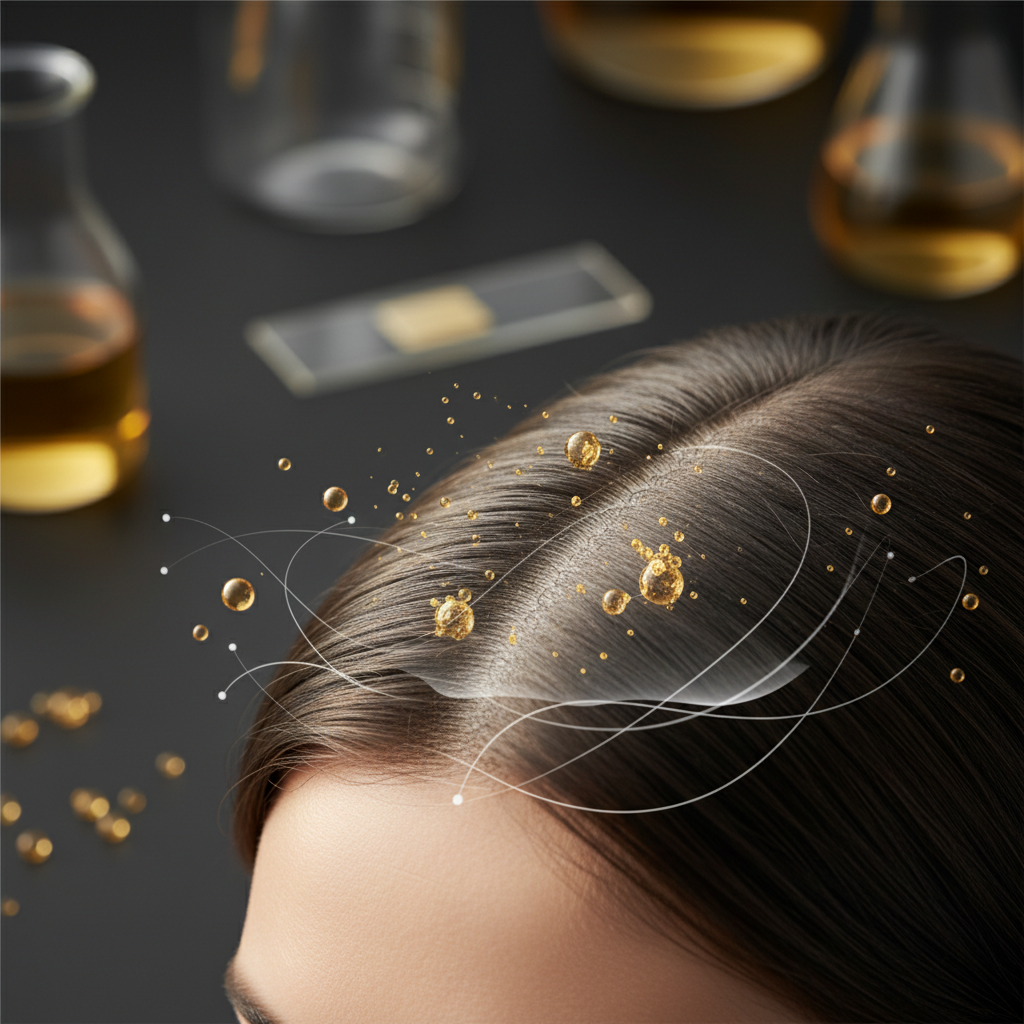
The outermost layer of the scalp, the stratum corneum, serves as the physical shield against environmental insults, microbes, and chemical irritants. This layer functions through an organised matrix often described by dermatologists as the "brick-and-mortar" model. Corneocytes (flattened, keratin-filled cells) act as the bricks, while intercellular lipids form the surrounding mortar.
Dermatological literature, including studies published in the Journal of Investigative Dermatology, establishes that intercellular lipids consist primarily of ceramides (approximately 50%), cholesterol (about 25%), and free fatty acids (around 10 to 15%). When these lipids align in tightly packed lamellar sheets, they prevent water from escaping the lower epidermal layers while physically blocking pathogens and allergens.
Crucially, researchers separate intercellular lipids from sebaceous lipids. Sebum is an oily secretion made of squalene, wax esters, and triglycerides released by the sebaceous glands into the hair canal. While sebum lubricates the hair fibre, the intercellular lipids are what actually maintain the moisture seal within the stratum corneum. If intercellular lipids deplete, even an excessively oily scalp can suffer from acute dehydration, irritation, and barrier failure.
| Lipid Type | Origin | Primary Components | Biological Role |
|---|---|---|---|
| Intercellular Lipids | Keratinocyte lamellar bodies | Ceramides, cholesterol, free fatty acids | Maintains stratum corneum permeability, stops TEWL, blocks irritants |
| Sebaceous Lipids (Sebum) | Sebaceous glands | Triglycerides, wax esters, squalene, free fatty acids | Lubricates the hair shaft, provides surface antimicrobial peptides |
| Cell Envelope Lipids | Corneocyte outer margin | Omega-hydroxyceramides covalently bound to protein | Provides the structural template for intercellular lipid lamellae |
What the biological evidence does not show
There is no credible scientific evidence demonstrating that topical cosmetic lipids can permanently cure chronic dermatological conditions such as scalp psoriasis or seborrhoeic dermatitis on their own. While barrier-supporting formulations reduce discomfort and improve skin hydration, genetic or autoimmune disruptions alter epidermal differentiation at a deeper cellular level.
Furthermore, evidence does not show that simply coating the scalp in heavy plant oils (such as raw olive oil or coconut oil) restores the physiological lipid barrier. In fact, applying pure oils high in oleic acid can disrupt lamellar lipid packing and feed fungal microflora like Malassezia, exacerbating barrier dysfunction rather than resolving it.
Finally, cosmetic barrier repair does not treat androgenetic alopecia (pattern hair loss). A compromised barrier may accelerate shedding through inflammatory pathways, but re-establishing lipid levels will not alter follicular sensitivity to dihydrotestosterone (DHT).
The mechanism: how lipid depletion damages the scalp
The degradation of the scalp barrier begins when the lipid bilayer is physically extracted, chemically altered, or insufficiently synthesised by basal keratinocytes.
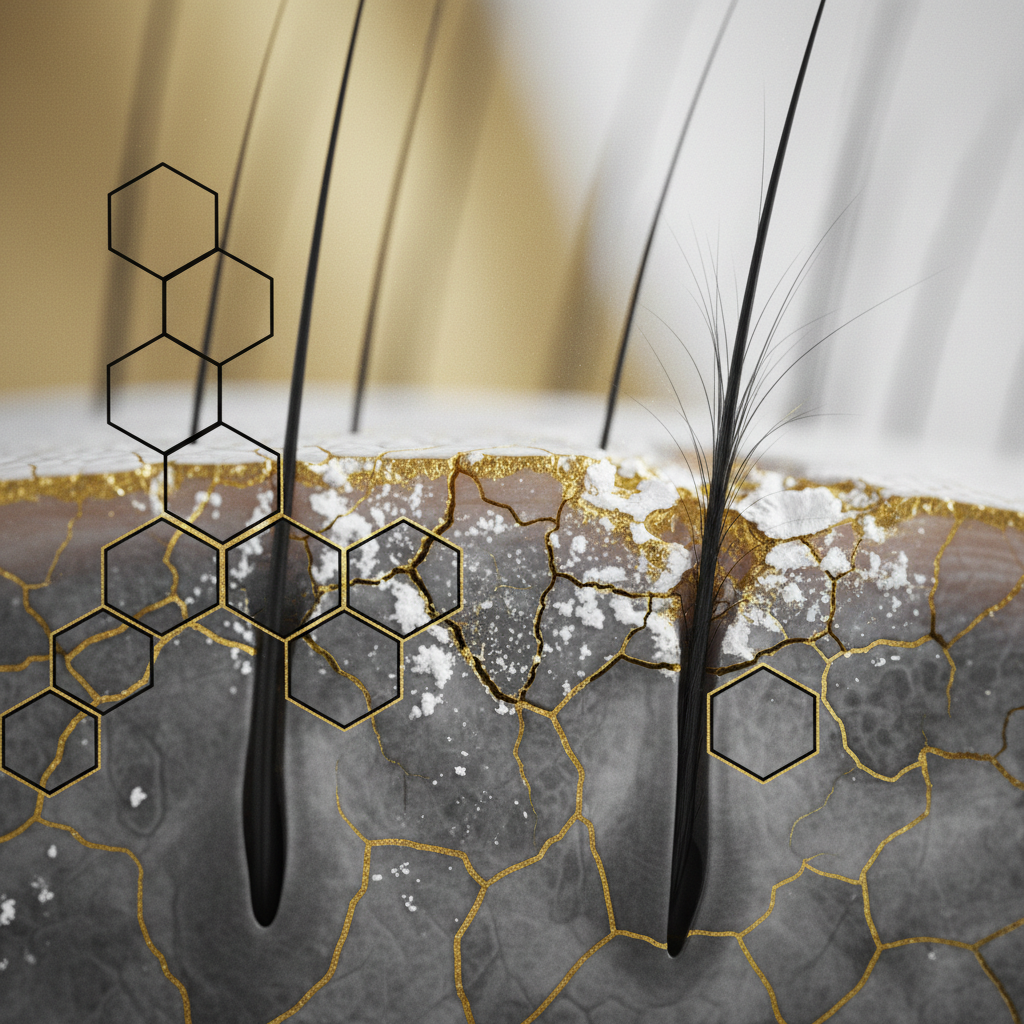
- Surfactant extraction: Strong anionic surfactants, particularly sodium lauryl sulphate (SLS) used at high concentrations, bind to stratum corneum proteins and strip both surface sebum and intercellular lipids. This process denatures the keratin structure and dissolves ceramides.
- Elevated pH disruption: The healthy scalp maintains an acidic mantle with a pH between 4.5 and 5.5. Exposure to alkaline tap water (pH 7.5 to 8.5) or high-pH shampoos swells the stratum corneum, activates destructive neutral endopeptidases, and inhibits the acid-dependent enzymes (such as beta-glucocerebrosidase) responsible for synthesising new ceramides.
- Elevated trans-epidermal water loss (TEWL): Without ceramides and cholesterol to seal the gaps between corneocytes, water evaporates unchecked into the atmosphere. The stratum corneum dehydrates below its critical 10% moisture threshold, causing corneocytes to lose flexibility and shrink.
- Sub-clinical micro-inflammation: When the barrier cracks, environmental allergens, chemical residues, and microbial metabolites penetrate past the stratum corneum. This triggers keratinocytes to release pro-inflammatory cytokines such as interleukin-1 alpha (IL-1α) and tumour necrosis factor-alpha (TNF-α).
- Impact on the hair follicle: Sustained micro-inflammation surrounding the infundibulum (the upper segment of the hair follicle) sends stress signals to the hair bulb. Over time, persistent barrier failure can shift anagen (growth) follicles prematurely into catagen and telogen (resting/shedding) phases, leading to diffuse hair shedding.
Signs of a compromised scalp barrier
Recognising lipid depletion early prevents severe follicular stress. Look for these clinical signs:
- Persistent tightness or stinging: The scalp feels stretched or tender immediately after washing, particularly when exposed to warm water.
- Micro-flaking distinct from dandruff: Fine, powdery, dry flakes that brush off easily, unlike the larger, yellow, adherent flakes associated with seborrhoeic dermatitis.
- Reactive redness (erythema): Visible pink or red patches around the hairline or crown that flare up after applying basic styling products.
- Paradoxical greasiness: The scalp produces excess surface oil within hours of washing while still feeling uncomfortably tight, dry, and irritated underneath.
- Pruritus (itching): A persistent urge to scratch without active fungal infection or parasitic infestation, driven by exposed cutaneous nerve endings.
What you can do: steps to restore scalp lipid integrity
Repairing the stratum corneum requires adjusting your daily habits and introducing targeted topical support to allow the skin to rebuild its lipid lamellae.
1. Adjust cleansing practices
Switch to shampoos formulated between pH 4.5 and 5.5 that rely on mild, non-stripping surfactants like amphoteric betaines or non-ionic glucosides. Wash with lukewarm water rather than hot water, as temperatures above 40 degrees Celsius dissolve physiological fats much faster.
2. Replenish structural lipid building blocks
Seek scalp serums and leave-on treatments that contain nature-identical physiological lipids. The optimal ratio mirrors the epidermal barrier: approximately 3 parts ceramides, 1 part cholesterol, and 1 part free fatty acids. Niacinamide (vitamin B3) applied at concentrations between 2% and 5% is clinically shown to upregulate natural ceramide and free fatty acid synthesis in keratinocytes.
3. Protect against environmental oxidants
Urban pollution and ultraviolet (UV) radiation oxidise surface squalene into squalene monohydroperoxide, a potent inflammatory agent that degrades structural lipids. Use lightweight physical scalp protection, such as hats, or formulations containing topical antioxidants like tocopherol (vitamin E) and rosemary extract.
Supporting the scalp with Watermans
When formulating the Watermans range, maintaining the integrity of the scalp microenvironment is a central focus. Watermans Grow Me Shampoo is designed without harsh, stripping sulphates, working instead with gentle cleansing agents that clean effectively while respecting delicate intercellular lipids.
Alongside its primary task of lifting dirt and excess sebum, Grow Me delivers biotin, rosemary extract, caffeine, and niacinamide directly to the scalp. This thoughtful approach preserves the acidic mantle, nourishes skin comfort, and ensures hair grows from a clean, balanced, and structurally resilient foundation.
When the cause may be something else
If barrier repair measures yield no improvement after 3 to 4 weeks, your symptoms might not stem from basic lipid depletion:
- Seborrhoeic dermatitis: Driven by the overproliferation of Malassezia yeasts feeding on sebum, this condition presents with waxy, greasy scales and intense redness. It requires targeted antifungal actives such as ketoconazole, piroctone olamine, or zinc pyrithione.
- Scalp psoriasis: An autoimmune acceleration of skin cell turnover resulting in thick, silvery-white plaques and well-demarcated margins. Cosmetic moisturising will not resolve the underlying systemic immune response.
- Contact dermatitis: An allergic reaction to specific hair dye ingredients (such as paraphenylenediamine/PPD), preservatives, or fragrance compounds. This requires allergy patch testing to identify and eliminate the trigger.
- Folliculitis: Bacterial or fungal infection within the follicular opening, characterised by small pustules or pimple-like bumps that require medical antimicrobials.
When to seek professional advice
Consult a GP, dermatologist, or qualified trichologist if you notice:
- Bleeding, weeping, or crusting sores on the scalp.
- Sudden, patchy, or focal hair loss leaving completely smooth spots.
- Severe pain, burning, or swelling rather than mild tightness.
- Persistent symptoms that fail to improve after one month of using gentle, pH-balanced hair care.
Frequently asked questions about Scalp Barrier Function and Lipids
What is the primary difference between sebum and scalp barrier lipids?
Sebum is produced by sebaceous glands and coats the outside of the hair shaft and skin surface to provide lubrication and soft protection. Scalp barrier lipids, specifically ceramides, cholesterol, and fatty acids, exist between epidermal cells inside the stratum corneum, creating the vital permeability barrier that prevents dehydration.
Can an oily scalp still have poor Scalp Barrier Function and Lipids?
Yes. Excessive sebum production often masks a dehydrated, stripped stratum corneum beneath. When harsh shampoos strip intercellular lipids, the skin barrier leaks moisture, and the sebaceous glands may react by overproducing surface sebum to compensate, leaving the scalp both oily and inflamed.
How long does it take to repair a damaged scalp lipid barrier?
A normal epidermal turnover cycle takes approximately 28 days in healthy adults. When you remove irritants, balance water pH, and introduce barrier-supportive lipids, noticeable relief from itching and tightness often occurs within 7 to 10 days, but complete structural repair requires a full 4-week cycle.
Does hard water damage the scalp barrier?
Yes. Hard water contains high concentrations of dissolved calcium and magnesium ions alongside an elevated alkaline pH. These minerals disrupt the acidic mantle of the scalp, bind to natural fatty acids to create drying residues, and accelerate the breakdown of the stratum corneum lipid bilayers.
Restoring balance to your scalp barrier
A healthy head of hair relies on the foundation beneath it. When you actively support Scalp Barrier Function and Lipids, you stop chronic water loss, quiet micro-inflammation, and protect the follicular environment from everyday chemical and mechanical wear. Prioritising gentle pH-balanced cleansing, avoiding high heat, and giving your scalp the biological lipids it needs will keep your skin comfortable and your hair resilient for the long term.
Sources and references
- Journal of Investigative Dermatology: "The Stratum Corneum: Structure and Function"
- British Journal of Dermatology: "Ceramides and the Skin Barrier"
- International Journal of Cosmetic Science: "Scalp condition and its impact on hair growth and quality"
- Dermatology and Therapy: "The Role of Scalp Microbiome and Barrier Integrity in Scalp Disorders"
Find these ingredients in Watermans products
- Zinc: you will find this ingredient in our Hair Vitamins.
- Oleic Acid: you will find this ingredient in our Camellia & Black Castor Hair & Body Oil.
- Niacinamide: you will find this ingredient in our Hair Mask.