Scalp Acne Management: The Complete Clinical and Practical Guide
9 min read ·
Learn the science of Scalp Acne Management: how to identify real acne versus folliculitis, unblock follicles with salicylic acid, and restore a clear, healthy scalp.
Quick answer: Effective Scalp Acne Management requires balancing sebum production, clearing follicular occlusion, and controlling microbial overgrowth on the cranium without stripping the epidermal barrier. Management combines clarifying surfactant routines, topical keratolytic agents like salicylic acid, and targeted antimicrobials. However, the main limitation is that bumps on the scalp often mimic genuine acne vulgaris; conditions such as folliculitis, seborrhoeic dermatitis, and dissecting cellulitis require distinctly different clinical treatments, meaning persistent or painful lesions demand professional dermatological diagnosis.
Key takeaways
- Scalp acne forms when excess sebum, dead corneocytes, and styling product residues plug hair follicles, creating an anaerobic environment for microbes.
- Keratolytic agents such as salicylic acid (0.5 to 2 percent) clear lipid-rich follicular plugs effectively because they are oil-soluble.
- Not every bump is acne. Folliculitis (bacterial or fungal) and seborrhoeic dermatitis share visual symptoms but require separate antimicrobial strategies.
- Heavy occlusive oils, waxes, and pomades frequently trigger breakouts along the frontal hairline and vertex, a pattern known as acne cosmetica.
- Severe, cystic, or scarring presentations require medical intervention to prevent permanent follicular destruction (cicatricial alopecia).
Scalp Acne Management: what the evidence shows
Successful Scalp Acne Management relies on restoring the equilibrium of the scalp microbiome and maintaining open follicular ostia. The scalp possesses one of the highest densities of sebaceous glands on the human body, producing significant volumes of sebum rich in squalene, triglycerides, and wax esters. When epidermal cell turnover sheds corneocytes inside the hair canal, these cells can aggregate with sebum, forming a microscopic plug or microcomedone.
Clinical dermatology categorises scalp breakouts into non-inflammatory comedones (blackheads and whiteheads) and inflammatory lesions (papules, pustules, nodules, and cysts). Research published in dermatological literature demonstrates that inflammatory lesions emerge when resident flora, primarily Cutibacterium acnes (formerly Propionibacterium acnes) and Malassezia yeasts, proliferate within the trapped sebum. These organisms metabolise triglycerides into free fatty acids, triggering a localised immune response and neutrophil infiltration.
Evidence strongly supports the use of specific active ingredients for managing non-scarring presentations:
- Salicylic acid (Beta Hydroxy Acid, 0.5 to 2%): Being lipid-soluble, it penetrates the sebaceous environment of the follicular unit to dissolve intercellular cement and exfoliate within the pore.
- Tea tree oil (Melaleuca alternifolia, 5%): Clinical trials indicate broad-spectrum antimicrobial and anti-inflammatory activity against both C. Acnes and Malassezia, offering a natural alternative to synthetic biocides with fewer reports of bacterial resistance.
- Zinc pyrithione and Piroctone olamine: Highly effective when breakouts have a fungal component or overlap with seborrhoeic dermatitis by curbing yeast populations and reducing epidermal scaling.
- Benzoyl peroxide: While potent against C. Acnes, its clinical utility on the scalp is limited because it bleaches hair fibres, making leave-on applications problematic for anyone with pigmented hair.
What the evidence does not show
Controlled research does not support the common belief that scalp acne stems purely from poor personal hygiene. Over-washing the scalp with aggressive, alkaline detergents (pH greater than 7.0) strips the acid mantle, elevating trans-epidermal water loss (TEWL) and prompting reactive hyperseborrhoea, which can worsen breakouts.
Furthermore, evidence does not show that natural plant oils are universally benign. Heavy carrier oils such as coconut oil, cocoa butter, and olive oil possess high comedogenic ratings. Applying these directly to an acne-prone scalp exacerbates follicular occlusion and feeds Malassezia species, worsening both fungal folliculitis and inflammatory papules. Finally, cosmetic shampoos cannot cure severe, nodular scalp conditions; claims that non-prescription products can eliminate chronic cysts lack scientific substantiation.
Understanding the mechanisms of scalp breakouts
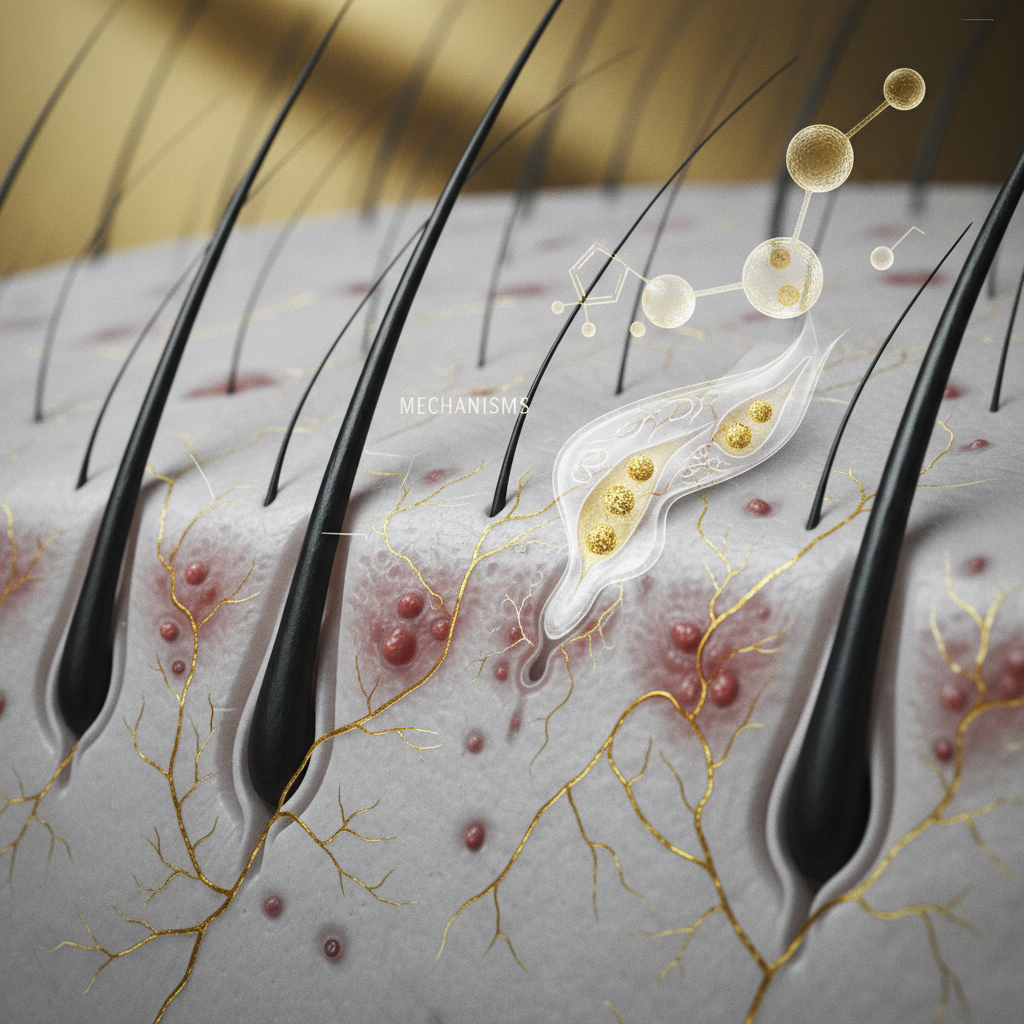
The scalp environment differs fundamentally from facial skin due to hair fibre density, elevated follicle depth, and terminal sweat gland concentration. Breakouts progress through distinct physiological stages:
1. Follicular hyperkeratinisation
Normal scalp desquamation sheds microscopic dead cells seamlessly. Under the influence of local androgens or genetic predisposition, keratinocytes lining the upper follicle adhere to one another instead of shedding, creating a physical barrier at the follicular pore opening.
2. Sebum retention and lipid oxidation
Trapped sebum accumulates beneath the keratin plug. Squalene within the sebum oxidises upon contact with environmental pollutants and reactive oxygen species, generating squalene peroxides. These peroxides are directly comedogenic and provoke an inflammatory cascade in adjacent tissue.
3. Microbial proliferation
The oxygen-depleted, lipid-rich follicle allows Cutibacterium acnes to thrive. In surrounding superficial layers, lipophilic Malassezia yeasts hydrolyse lipids. Both organisms release extracellular enzymes and chemotactic factors that draw white blood cells into the follicle wall.
4. Follicular rupture and inflammation
As leukocytes attack the bacterial colonies, pressure builds within the hair canal. If the follicular wall ruptures, cellular debris, keratin, and bacterial antigens spill into the surrounding dermis. This produces tender, red inflammatory papules or pustules visible on the scalp surface.
Follicular Hyperkeratinisation
 │
 ▼
 Trapped Sebum & Lipids
 │
 ▼
 Microcomedone Formation (Plug)
 │
 ▼
 Microbial Overgrowth
 (*C. Acnes* / *Malassezia*)
 │
 ▼
Localised Inflammation & Rupture
 │
 ▼
 Papule, Pustule, or Nodule
Signs to look for: distinguishing acne from other conditions
Identifying the visual and sensory characteristics of lesions is essential because true acne vulgaris behaves differently from mimics.
| Condition | Primary Visual Signs | Typical Sensation | Primary Trigger | Primary Location |
|---|---|---|---|---|
| Acne Vulgaris | Comedones, papules, pustules | Mild tenderness when inflamed | Sebum hyperproduction, C. Acnes | Frontal hairline, crown |
| Bacterial Folliculitis | Small, uniform yellow pustules pierced by hair | Pruritus (itching), stinging | Staphylococcus aureus | Diffuse across entire scalp |
| Pityrosporum Folliculitis | Monomorphic (uniform) itchy red bumps | Intense itching, worse with heat | Malassezia yeast overgrowth | Crown, nape, upper back |
| Acne Cosmetica | Non-inflammatory closed comedones | Minimal to none | Comedogenic pomades, heavy waxes | Hairline, temples, forehead |
| Folliculitis Decalvans | Crusting, follicular tufting (doll's hair) | Pain, burning, bleeding | Chronic neutrophil inflammation | Vertex, parietal scalp |
Practical steps for managing scalp breakouts
A methodical topical approach clears existing lesions and prevents microcomedones from developing.
Adjust washing frequency and product application
Wash oily hair types daily or every other day using a clarifying, pH-balanced shampoo (pH 4.5 to 5.5). Focus shampoo application directly on the scalp tissue, massaging with finger pads rather than nails to avoid micro-trauma.
Keep rinse-out conditioners, hair masks, and heavy finishing serums at least two inches away from the roots. These products contain conditioning silicones, quaternary ammonium compounds, and fatty alcohols designed to coat hair fibres, but they can easily plug open follicles on the scalp.
Introduce chemical exfoliants
Incorporate a leave-on or pre-wash scalp serum containing 1 to 2 percent salicylic acid once or twice weekly. Salicylic acid dissolves debris without physical scrubbing, which can rupture inflamed papules and spread bacteria across neighbouring follicles.
Scrutinise styling habits
Check your styling inventory for pomades, waxes, and edge controls containing petrolatum, mineral oil, or high concentrations of beeswax. If you experience breakouts around your temples and forehead, switch to water-soluble, lightweight gels. Clean hair wraps, pillowcases, hats, and helmets weekly at 60 degrees Celsius to remove accumulated oils and microbial reservoirs.
Consider targeted botanical support
Formulations containing tea tree oil, niacinamide, and botanical rosemary provide dual benefits: they curb surface microorganisms while down-regulating cutaneous inflammation. Niacinamide also assists in regulating follicular sebum excretion rates without stripping moisture.
When the cause is something else
If bumps do not respond to regular clarifying routines and gentle keratolytic care within three to four weeks, the root cause is unlikely to be simple acne vulgaris.
A condition frequently mistaken for scalp acne is fungal folliculitis (also called Malassezia folliculitis). Unlike genuine acne, it features monomorphic, tiny, intensely itchy pustules that flare up with sweat, humidity, or prolonged antibiotic use. Applying standard facial acne treatments to fungal folliculitis often yields minimal improvement; targeted antifungal shampoos containing ketoconazole (1 to 2 percent) or ciclopirox olamine are typically required.
Another dangerous mimic is dissecting cellulitis of the scalp (perifolliculitis capitis abscedens et suffodiens). This rare, chronic inflammatory condition involves large, painful, fluctuating nodules that connect beneath the skin via sinus tracts. Dissecting cellulitis causes severe destruction of follicles and leads to permanent scarring hair loss (cicatricial alopecia) if left unmanaged.
Professional options and when to seek advice
Consult a doctor, dermatologist, or qualified trichologist immediately if you observe:
- Lesions that drain pus continuously, form thick crusts, or bleed.
- Clumping of hair shafts emerging from a single widened pore (tufted folliculitis).
- Areas of baldness developing over or around the breakouts.
- Deep, throbbing, painful nodules that do not come to a surface head.
- Lack of improvement after six weeks of consistent over-the-counter care.
Clinical interventions may include prescription topical antibiotics (such as clindamycin lotion), prescription topical antifungals, oral antibiotics (such as doxycycline or lymecycline for their anti-inflammatory properties), or oral isotretinoin for stubborn, cystic cases.
Supporting scalp balance with Watermans
When managing an oily, breakout-prone scalp, maintaining follicle cleanliness while supporting natural density is essential. Watermans GrowMe Shampoo provides a revitalising, thoroughly clarifying wash that removes environmental impurities, dead skin debris, and excess surface oils without disrupting the physiological acid mantle. Formulated with balancing botanicals including rosemary extract, biotin, and allantoin, it purifies the follicular environment while nourishing the roots, creating an optimal foundation for clean, fresh scalp comfort and healthy hair vitality.
Frequently asked questions about Scalp Acne Management
How often should I wash my hair when treating scalp acne?
Wash every 24 to 48 hours. Regular cleansing with a gentle, sulphate-free or balanced clarifying shampoo removes surplus sebum and shedding keratinocytes before they consolidate into pore-blocking plugs. Leaving excessive time between washes allows sebum to oxidise and microbial populations to escalate, worsening inflammation.
Can I pop pimples on my scalp?
No. You should never squeeze or pop scalp lesions. The scalp has a deep vascular network and taut dermal structure; picking or squeezing pushes bacteria deeper into dermal layers, increasing the risk of secondary bacterial infections. Popping can also damage the follicle root, leading to permanent localised hair loss.
What is the most effective ingredient for Scalp Acne Management?
Salicylic acid is widely regarded as the most practical primary ingredient for topical Scalp Acne Management. Because it is oil-soluble, it penetrates deep into the sebum-filled follicular ostia to dissolve dead cells and clear obstructions. Unlike benzoyl peroxide, it does not bleach hair strands.
Does sweating from exercise cause scalp breakouts?
Sweat itself does not cause acne, but sweat mixed with natural oils, dead skin cells, and residue from hair styling products creates an ideal breeding ground for bacteria and yeasts. To prevent breakouts, rinse your scalp with clean water or wash with a clarifying shampoo shortly after strenuous exercise, and avoid wearing tight headbands or caps for prolonged periods.
Can hair oiling worsen scalp acne?
Yes. Heavy plant oils, especially coconut, castor, and olive oils, are comedogenic and provide a direct nutritional source for Malassezia yeasts. Applying raw oils to a breakout-prone scalp accelerates follicular plugging and increases the likelihood of both acne vulgaris and fungal folliculitis.
A balanced approach to a clearer scalp
Successful Scalp Acne Management hinges on accurate identification, targeted follicular clearing, and the elimination of heavy comedogenic hair products. By pairing lipid-soluble exfoliants with gentle antimicrobial agents, you can normalise the scalp microenvironment without causing barrier irritation. Keep track of how your skin responds: if tenderness persists, nodules form, or hair shedding accompanies the lesions, seek guidance from a dermatologist to protect long-term follicle health.
Sources and references
- American Academy of Dermatology Association. Acne: Overview and Clinical Presentation. 2023.
- British Association of Dermatologists. Folliculitis: Clinical Guidelines and Management. 2022.
- Del Rosso, J. Q. Management of Truncal and Scalp Acne: Diagnostic and Therapeutic Strategies. Journal of Clinical and Aesthetic Dermatology, 2019.
- National Health Service (NHS). Acne: Symptoms, Causes, and Treatments. 2022.
- Plewig, G., & Kligman, A. M. Acne and Rosacea. 3rd Edition. Springer-Verlag, 2000.
- Zaenglein, A. L., et al. Guidelines of care for the management of acne vulgaris. Journal of the American Academy of Dermatology, 2016.
Find these ingredients in Watermans products
- Zinc: you will find this ingredient in our Hair Vitamins.
- Niacinamide: you will find this ingredient in our Hair Mask.