Hair Follicle Health: A Comprehensive Guide to Follicular Biology and Scalp Care
8 min read ·
Explore the biological foundations of hair follicle health, the growth cycle, signs of follicular miniaturisation, and how to maintain an optimal scalp environment.
Quick answer: Hair follicle health refers to the biological vitality, vascular supply, and cellular integrity of the dynamic mini-organs that produce hair fibres. True hair follicle health governs whether a strand enters an active growth phase (anagen) or sheds prematurely (telogen). However, cosmetic haircare cannot alter underlying genetic programming or reverse chronic follicular scarring; maintaining follicle vitality requires managing scalp inflammation, maintaining systemic nutrition, and protecting the scalp barrier from physical and chemical distress.
Key takeaways
- The hair follicle is one of the most metabolically active mini-organs in the human body, cycling continually through growth, regression, and rest.
- Hair follicle health directly determines hair diameter, growth rate, and shedding cycles, while the hair shaft reflects past mechanical and chemical wear.
- Dihydrotestosterone (DHT) sensitivity, micro-inflammation, oxidative stress, and nutritional deficiencies are the primary disruptors of follicular integrity.
- True hair loss (follicular miniaturisation or destruction) differs fundamentally from hair shedding (telogen effluvium) and hair breakage (mechanical fracture of the shaft).
- Cosmetic products can optimise the scalp surface environment and reduce mechanical strain, but cannot revive fibrosed or dead follicles.
Hair Follicle Health: what the evidence shows
Hair follicle health depends entirely on the biological conditions within the dermal papilla, the follicular bulb, and the surrounding capillary network. Research published in dermatological journals confirms that each human scalp houses roughly 100,000 follicles, which cycle asynchronously. Under optimal conditions, roughly 85 to 90 percent of follicles remain in the anagen (growth) phase, which typically lasts between 2 and 7 years. Approximately 1 to 2 percent occupy the catagen (transition) phase for 2 to 3 weeks, while 10 to 15 percent rest in the telogen phase for 2 to 4 months before shedding naturally via exogen.

The dermal papilla, located at the base of the follicle, acts as the command centre. It receives oxygen, micronutrients, and hormonal signals directly from the perifollicular microcirculation. When systemic circulation or local blood flow diminishes, the germinative cells in the hair matrix slow down their division rates. This cellular slowing leads to finer hair fibres, shorter growth phases, and accelerated progression into telogen.
Dermatological literature also highlights the role of the scalp microbiome and the sebum acid mantle (pH 4.5 to 5.5). When excess sebum oxidises or fungal populations such as Malassezia proliferate uncontrollably, perifollicular micro-inflammation develops. This subclinical inflammation releases cytokines like interleukin-1 alpha and tumour necrosis factor, which can compromise follicular anchorage and stress the stem cell niche in the follicular bulge.
What the evidence does not show
There is no scientific evidence that topical shampoos, oils, or cosmetic serums can alter your genetic programming or reopen follicles that have completely scarred over. In conditions like advanced androgenetic alopecia or cicatricial (scarring) alopecia, the follicular ostium closes and the dermal papilla undergoes irreversible fibrosis. No cosmetic intervention can regenerate lost follicles once connective tissue replaces the stem cell niche.
Furthermore, evidence does not show that frequent hair washing damages hair follicle health or causes shedding. The hairs that dislodge during a shower were already released from the dermal papilla during the telogen phase several weeks prior; washing merely clears away fibres that have completed the exogen phase. Finally, while severe stress can trigger acute shedding, daily emotional tension rarely causes permanent follicular damage without an underlying systemic trigger.
Follicular biology: mechanisms of growth and miniaturisation
A healthy follicle relies on complex cross-talk between epithelial stem cells in the bulge region and mesenchymal cells in the dermal papilla. Growth begins when signals activate the Wnt/beta-catenin pathway, prompting the matrix cells to proliferate and differentiate into the inner root sheath and hair shaft.
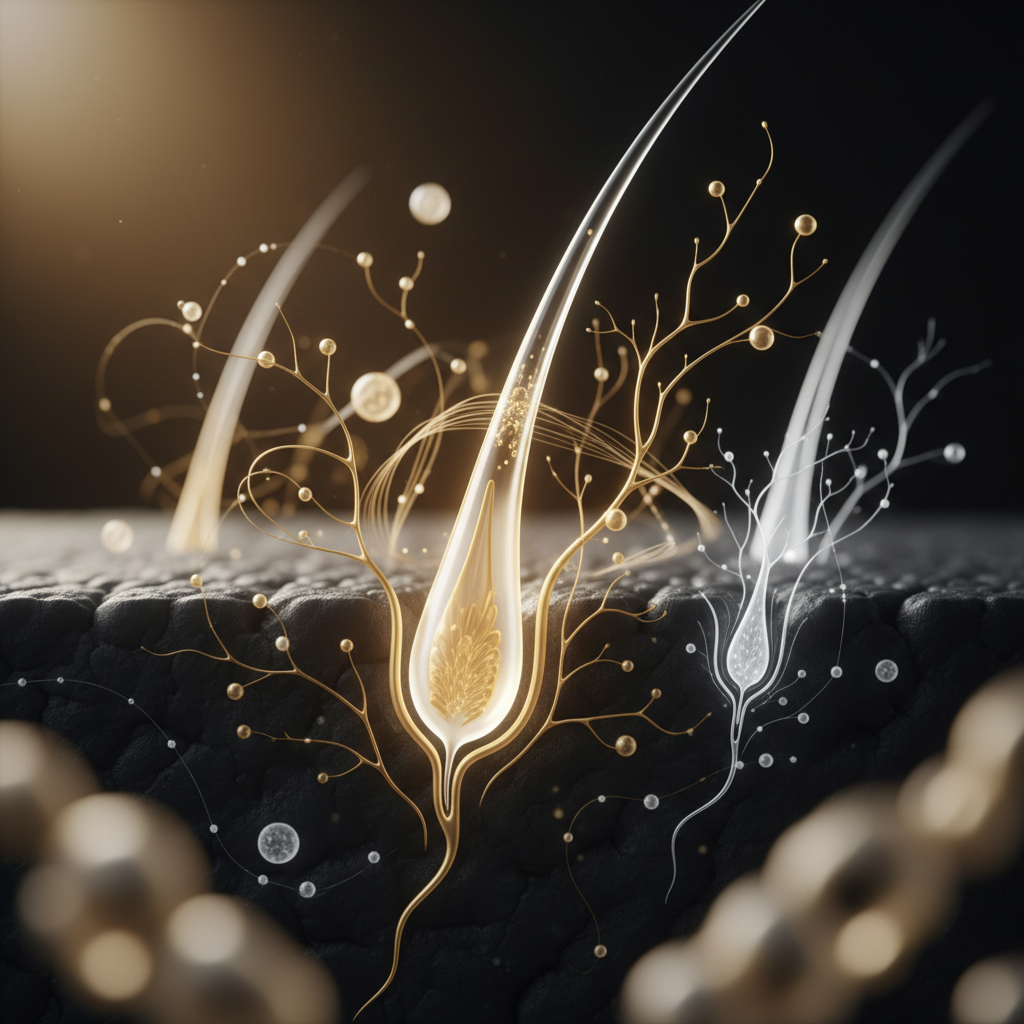
In individuals genetically predisposed to androgenetic alopecia, the enzyme 5-alpha reductase converts circulating testosterone into dihydrotestosterone (DHT) within the follicular tissue. DHT binds to androgen receptors in the dermal papilla, triggering an overproduction of transforming growth factor-beta (TGF-beta). This inhibitory protein shortens the anagen phase and progressively shrinks the follicle through a process known as miniaturisation. Over successive cycles, the terminal hair transforms into a thin, unpigmented vellus hair.
| Characteristic | Healthy Follicle | Miniaturised Follicle | Scarred (Fibrosed) Follicle |
|---|---|---|---|
| Growth Phase (Anagen) | 2 to 7 years | Weeks to months | Absent |
| Hair Diameter | 60 to 100 microns | Less than 30 microns | No fibre produced |
| Microvascular Supply | Rich capillary bed | Reduced perfusion | Obliterated capillaries |
| Stem Cell Niche | Intact in bulge region | Intact but dormant | Destroyed by inflammation |
| Reversibility | Normal maintenance | Potentially reversible | Irreversible |
Signs of declining hair follicle health
Observing changes in hair density and scalp texture helps distinguish between everyday cosmetic concerns and follicular distress:
- Widening parting line or crown thinning: A gradual loss of visual density usually indicates follicular miniaturisation rather than sudden shedding.
- Varying strand thicknesses: If individual strands shed from your scalp vary markedly in diameter, miniaturisation is likely occurring across adjacent follicles.
- Persistent scalp sensitivity or itching: Perifollicular erythema (redness around hair openings) and tenderness often point to micro-inflammation.
- Sudden excessive shedding: Losing significantly more than 100 to 150 hairs daily across the entire scalp typically signals telogen effluvium, where an acute systemic shock forces follicles into rest.
- Lack of visible regrowth: New growth should appear as tapered, healthy tips emerging from follicular openings across the scalp.
What you can do to support follicle vitality
Supporting hair follicle health requires an approach that balances scalp hygiene, mechanical protection, and systemic metabolic support.
1. Maintain a clean scalp environment
Wash regularly with balanced cleansers (pH 5.0 to 5.5) to clear oxidised sebum, sweat salts, pollution particulates, and product residues. Buildup creates an anaerobic environment that fosters microbial dysbiosis, increasing local inflammatory signalling around the follicle bulb.
2. Address nutritional baselines
The hair matrix demands high amounts of iron, protein, and trace elements to sustain rapid cell division. Ferritin levels below 30 to 40 ug/L are frequently linked in clinical literature to diffuse hair shedding. Ensure adequate dietary intake of lean proteins, zinc, vitamin D3, and B vitamins to provide the raw materials required for keratin synthesis.
3. Minimize mechanical and traction stress
Tension styles, tight ponytails, and aggressive brushing cause mechanical micro-trauma to the outer root sheath. Over time, persistent pulling can cause traction alopecia, permanently destroying the hair follicle health around the hairline and temples.
When the cause is something else: loss, shedding, or breakage
Many people confuse the symptoms of hair strand damage with true follicular conditions:
- Hair breakage: The follicle is entirely healthy, but the hair shaft has sustained mechanical or chemical trauma (from bleach, heat tools, or rough detangling). Breakage produces short, jagged fragments without a white bulb at the root.
- Hair shedding (Telogen Effluvium): The follicle remains structurally healthy, but an acute trigger, such as high fever, severe illness, rapid weight loss, or childbirth, pushes an abnormally high percentage of follicles into the resting phase simultaneously. Regrowth usually resumes once the underlying physiological stressor resolves.
- Follicular alopecia: The follicle itself is compromised by hormones, autoimmune attacks (alopecia areata), or inflammatory destruction (lichen planopilaris). This requires medical diagnosis and targeted intervention.
Supporting the scalp ecosystem with Watermans
Cosmetic care cannot alter internal hormones or revive dormant genetic conditions, but maintaining a receptive, clean, and nourished scalp environment supports external hair retention. The Watermans Grow Me range is formulated with topical caffeine, biotin, argan oil, and rosemary extract. These ingredients help clarify the follicular openings, soothe surface dryness, and condition the scalp skin. By keeping the surface micro-environment clean and refreshed, it complements your overall hair care routine, keeping emerging hair looking fuller and resilient against breakage.
When to seek professional advice
Consult a GP, dermatologist, or qualified trichologist if you notice patchy, circular bald spots, sudden rapid thinning, intense scalp burning, scaling, or pustules. Conditions such as scarring alopecias require rapid medical intervention with prescription anti-inflammatories to prevent permanent loss of the follicular stem cells. Blood panels assessing thyroid function, serum ferritin, and hormone balances can clarify systemic drivers that cosmetic measures cannot address.
Frequently asked questions about Hair Follicle Health
How can I tell if my hair follicles are still alive?
A trichologist or dermatologist uses a dermatoscope (trichoscopy) to inspect follicular openings. If the follicular ostium (pore) is visible, the follicle is present and capable of producing hair. If the scalp surface appears smooth and shiny with absent pores, the follicle has likely fibrosed.
Can dead hair follicles be brought back to life?
No. Once a follicle undergoes complete fibrosis and its stem cell niche is replaced by scar tissue, it cannot be regenerated naturally or cosmetically. Medical treatments can only act on living, miniaturised follicles before complete atrophy takes place.
Does scalp massage improve hair follicle health?
Evidence shows that regular, gentle scalp massage can increase local blood flow and mechanical stretch to dermal papilla cells. A small Japanese study demonstrated that 4 minutes of daily massage over 24 weeks increased hair thickness by stimulating mechanosensitive genes in follicular cells.
Can cosmetic shampoos restore hair follicle health?
Cosmetic shampoos cannot treat underlying genetic hair loss or restore scarred follicles. They maintain hair follicle health indirectly by clearing follicle-clogging sebum, reducing microbial overgrowth, and soothing surface inflammation to create an optimal growth environment.
Summary of Hair Follicle Health
True hair follicle health is rooted in cellular vitality, systemic metabolic wellness, and balanced scalp ecology. While hair shafts are dead structures made of keratinised protein, the hair follicle is a living organ that responds actively to your internal and external health. By clarifying the scalp surface, addressing nutritional deficiencies, avoiding damaging physical tension, and seeking early clinical support for persistent shedding, you can safeguard your follicles for long-term growth and density.
Sources and references
- British Association of Dermatologists. Telogen Effluvium Guidelines and Patient Information, 2021.
- Paus, R. And Cotsarelis, G. The Biology of Hair Follicles. New England Journal of Medicine, 1999; 341(7): 491-497.
- Koyama, T. Et al. Standardized Scalp Massage Results in Increased Hair Thickness by Inducing Stretching Forces to Dermal Papilla Cells in the Subcutaneous Tissue. Eplasty, 2016; 16: e8.
- Trüeb, R. M. Oxidative Stress in Ageing of Hair. International Journal of Trichology, 2009; 1(1): 6-14.
- National Institute for Health and Care Excellence (NICE). Alopecia areata and androgenetic alopecia clinical knowledge summaries, 2022.
Find these ingredients in Watermans products
- Biotin: you will find this ingredient in our Hair Growth Shampoo.
- Zinc: you will find this ingredient in our Hair Vitamins.