A Guide to Scalp Acid Mantle Maintenance
8 min read ·
Scalp Acid Mantle Maintenance protects the skin barrier and hair fibre. Learn how pH 4.5 to 5.5 safeguards your scalp, prevents breakage, and stops flaking.
Quick answer: Scalp Acid Mantle Maintenance refers to preserving the fine, slightly acidic film of sebum, sweat, and amino acids that coats the scalp surface, typically sitting between pH 4.5 and 5.5. Effective Scalp Acid Mantle Maintenance prevents opportunistic microbial overgrowth, safeguards the skin barrier, and minimises fibre friction. However, cosmetics cannot cure clinical skin disorders; if chronic inflammation, bleeding, or patchy hair shedding occurs, medical evaluation by a dermatologist or trichologist is necessary.
Key takeaways
- The healthy scalp maintains an acidic surface pH between 4.5 and 5.5, which is slightly more acidic than general facial skin.
- Alkaline cleansers (pH above 6.0) disrupt lipid bilayer organisation, elevate barrier permeability, and cause cuticular swelling.
- Overgrowth of organisms like Malassezia restricta and Staphylococcus epidermidis is kept in check when the acid mantle remains undisturbed.
- Hard water and alkaline soaps can temporarily push the scalp pH above 7.0, causing dryness, itching, and hair fibre friction.
- Restoring acid mantle balance relies on pH-balanced formulations, gentle surfactants, and avoiding aggressive chemical over-cleansing.
Scalp Acid Mantle Maintenance: what the evidence shows
Peer-reviewed dermatological studies consistently demonstrate that the scalp surface thrives in a narrow acidic window, primarily between pH 4.5 and 5.5. The term "acid mantle" was coined by Heinrich Schade and Alfred Marchionini in 1928, describing the protective barrier formed by sebum, eccrine sweat, and dead keratinocytes.
Research published in the International Journal of Cosmetic Science confirms that hair and scalp biology relies heavily on this acidity. The hair fibre itself has an isoelectric point around pH 3.67. When the scalp environment rises toward neutral (pH 7.0) or alkaline levels (pH 8.0 or above), the electrical charge on the hair fibre becomes more negative. This increases static charge, expands the hair fibre, lifts the outer cuticle scales, and leaves the underlying scalp skin prone to transepidermal water loss (TEWL).
Controlled measurements show that cleansing the scalp with alkaline bar soaps (typically pH 9.0 to 10.0) or unbuffered tap water can elevate the skin surface pH for up to six hours after rinsing. During this period, the activity of key lipid-processing enzymes, particularly beta-glucocerebrosidase and sphingomyelinase, drops sharply. These enzymes require an acidic environment of roughly pH 5.0 to assemble the ceramides and fatty acids that hold your scalp barrier intact.
The biological mechanisms behind the acid mantle
Understanding how the acid mantle functions helps clarify why harsh washing routines lead to discomfort and flaking. Three interlinked biological systems maintain and rely on this acidic ecosystem:
1. Barrier integrity and lipid synthesis
The stratum corneum is composed of corneocytes surrounded by an extracellular lipid matrix made of ceramides, cholesterol, and free fatty acids. The enzymes responsible for synthesising these ceramides work optimally at pH 4.5 to 5.5. When alkalinity alters this pH, these enzymes shut down, leaving structural gaps in the lipid envelope. This allows environmental irritants to penetrate deep into the epidermis while internal moisture evaporates.
2. Microbiome regulation
The scalp is home to diverse microorganisms, including Malassezia yeasts, Cutibacterium acnes, and Staphylococcus species. An acidic environment inhibits pathogenic bacterial growth while supporting beneficial commensal flora. When the acid mantle is disrupted and pH shifts above 6.0, opportunistic strains proliferate. This can provoke inflammatory reactions that trigger dandruff, seborrhoeic dermatitis, and pruritus (itching).
3. Hair fibre mechanics
While the acid mantle is a feature of living skin, its secretions wash down the first few millimetres of the hair shaft. Hair cuticles remain flat, compact, and smooth in an acidic state. When exposed to an alkaline wash, the cuticle edges lift. Lifted cuticles dramatically increase combing friction, predisposing the hair fibre to longitudinal splitting and transverse snapping (breakage).
| Factor | Acidic State (pH 4.5 to 5.5) | Alkaline State (pH 7.0 to 9.0+) |
|---|---|---|
| Cuticle Condition | Closed, flat, reflective | Swollen, raised, dull |
| Barrier Enzymes | Active (optimal ceramide production) | Inhibited (depleted barrier lipids) |
| Microbial Flora | Balanced commensal organisms | Risk of dysbiosis (Malassezia flare-ups) |
| Frictional Force | Low combing resistance | High combing resistance, breakage risk |
| Transepidermal Water Loss | Low (moisture retained) | High (dryness and irritation) |
Signs of a disrupted scalp acid mantle
Recognising a damaged acid mantle allows you to intervene before chronic scalp issues develop. Common signs include:
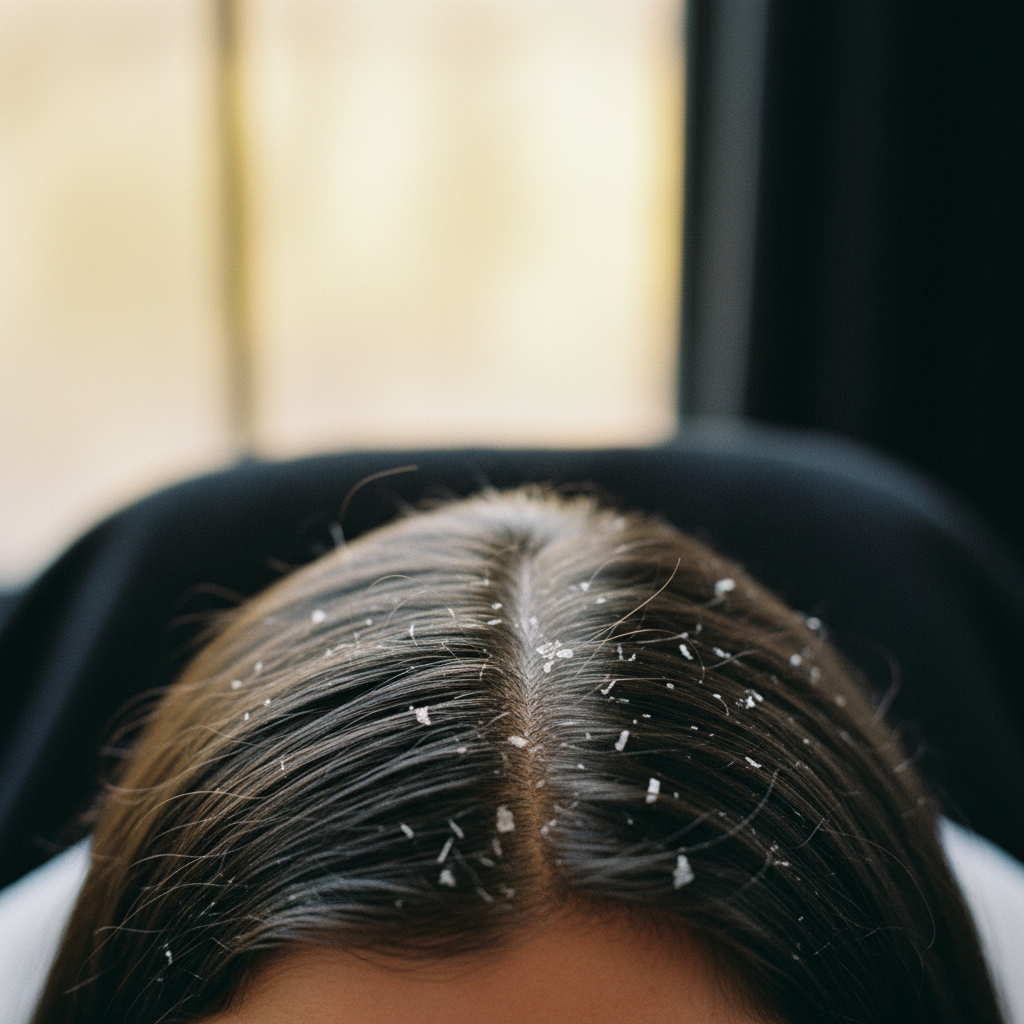
- Persistent tightness and dryness: A sensation of pulling or stretching immediately after washing.
- Fine, powdery flaking: Unlike thick, oily dandruff, acid-mantle damage often manifests as micro-flakes due to premature desquamation of corneocytes.
- Increased itchiness and tenderness: Elevated pH activates Kallikrein enzymes (specifically KLK5 and KLK7), which degrade desmosomes and stimulate nerve endings, causing chronic itch.
- Rough, frizzy root growth: The hair emerging from the scalp feels coarse, tangles easily at the base, and lacks shine.
What the evidence does not show
It is critical to separate established dermatological mechanisms from marketing myths:
First, acid mantle disruption does not directly cause follicular miniaturisation or pattern hair loss (androgenetic alopecia). While severe, chronic scratching can lead to mechanical breakage or temporary inflammation, maintaining a balanced pH will not reverse genetic baldness or revive dormant follicles.
Second, using an extremely low pH product (such as undiluted raw apple cider vinegar, which often has a pH around 2.0 to 3.0) is not beneficial. Excessive acidity can induce chemical burns, protein denaturation, and severe scalp irritation. Balance, not extreme acidity, is the physiological goal.
Finally, cosmetic products cannot cure medical scalp disorders. Conditions such as scalp psoriasis, severe seborrhoeic dermatitis, or lichen planopilaris involve complex immune-mediated pathways that require targeted clinical treatment rather than pH balancing alone.
What you can do: actionable scalp care
Achieving consistent Scalp Acid Mantle Maintenance involves four practical adjustments to your regular regimen:
- Select pH-buffered cleansers: Choose shampoos explicitly buffered to pH 4.5 to 5.5. Look for formulations containing mild surfactants (such as sodium cocoyl isethionate or alkyl polyglucosides) rather than harsh, unbuffered carboxylate soaps.
- Account for water hardness: Hard municipal water contains high concentrations of calcium and magnesium carbonates, which can raise the pH of your wash water to 8.0 or higher. Rinsing thoroughly with a chelating or slightly acidic rinse neutralises mineral deposits on the scalp.
- Avoid stripping clarifyers: Limit deep-cleansing or clarifying shampoos to once every two to three weeks, unless you regularly use heavy silicones, waxes, or styling pastes.
- Moisturise the scalp barrier: Topical formulations containing physiological lipids (ceramides, squalane, linoleic acid) help the stratum corneum re-establish its natural lipid envelope after exposure to stress.
When the cause may be something else
A tight, itchy, or peeling scalp does not always point to a simple pH issue. Several underlying medical conditions present with overlapping symptoms:
- Seborrhoeic dermatitis: Driven by inflammatory responses to Malassezia metabolites, presenting as greasy, yellowish scales over reddened skin.
- Psoriasis: An autoimmune condition causing rapid epidermal turnover, resulting in well-demarcated silvery plaques that can bleed if picked.
- Contact dermatitis: An allergic reaction or chemical irritation from hair dyes, fragrances, or preservatives (such as methylisothiazolinone).
- Folliculitis: Bacterial or fungal infection of individual hair follicles, characterised by small, red, tender pustules around hair bases.
When to get professional advice
If your scalp remains chronically inflamed, sore, or flaky after two weeks of switching to gentle, pH-appropriate products, consult a doctor, trichologist, or dermatologist.
Red flag symptoms requiring clinical attention include:
- Spreading erythema (redness) that feels hot or painful to touch.
- Crusty yellow exudate or weeping sores.
- Localised patches of unexplained hair shedding or complete bald patches.
- Itching that disrupts your sleep or daily function.
The Watermans perspective
Supporting scalp health starts at the roots. Watermans products are formulated to respect the delicate physiological balance of the scalp barrier. By using balanced surfactant systems and skin-compatible conditioning agents, Watermans formulations cleanse without violently shifting the scalp away from its natural, acidic state. This supports a comfortable scalp environment while improving the feel, body, and resilience of the hair fibre from root to tip.
Frequently asked questions about Scalp Acid Mantle Maintenance
What is the ideal pH for Scalp Acid Mantle Maintenance?
The ideal target range for Scalp Acid Mantle Maintenance is between pH 4.5 and 5.5. At this level, barrier lipid synthesis is optimal, commensal microflora thrive, and the hair cuticle remains tightly sealed. Formulations higher than pH 6.0 can disrupt enzyme function, while products below pH 3.5 can irritate delicate scalp tissue.
Can tap water damage the scalp acid mantle?
Tap water typically sits between pH 6.5 and 8.5. Hard tap water contains dissolved minerals that buffer water against acidity. Rinsing with alkaline water temporarily elevates scalp pH, but a healthy scalp usually recovers within two to six hours. Using balanced haircare products speeds up this natural recovery.
Does apple cider vinegar help with acid mantle maintenance?
Undiluted apple cider vinegar has a harsh pH of 2.0 to 3.0, which can burn the scalp and degrade hair proteins. If used at all, it must be diluted substantially (such as one tablespoon per 250 millilitres of water) to hit a safe 4.5 to 5.0 range. Specially formulated cosmetic rinses are safer and more reliable.
Will maintaining the acid mantle stop hair loss?
Scalp Acid Mantle Maintenance supports overall skin barrier health and reduces hair breakage from friction, but it does not stop genetic or hormonal hair loss, such as androgenetic alopecia. True hair loss originates within the follicle beneath the skin, whereas the acid mantle operates on the surface.
Summary
Successful Scalp Acid Mantle Maintenance protects the physiological barrier of the skin, controls opportunistic microbial growth, and keeps the cuticle layer of the hair fibre structurally intact. Maintaining this slightly acidic equilibrium (pH 4.5 to 5.5) through balanced cleansing and conscious product selection provides the ideal environment for healthy hair growth and lasting scalp comfort.
Sources and references
- Ali, S. M., & Yosipovitch, G. (2013). Skin pH: from basic science to basic skin care. Acta Dermato-Venereologica, 93(3), 261-267.
- Gavazzoni Dias, M. F., de Almeida, A. M., Cecato, P. M., Adriano, A. R., & Pichler, J. (2014). The shampoo pH can affect the hair: myth or reality? International Journal of Trichology, 6(3), 95-99.
- Lambers, H., Piessens, S., Bloem, A., Pronk, H., & Finkel, P. (2006). Natural skin surface pH is on average below 5, which is beneficial for its resident flora. International Journal of Cosmetic Science, 28(5), 359-370.
- Proksch, E. (2018). PH in nature, humans and skin. The Journal of Dermatology, 45(9), 1044-1052.
- Tarun, J., Susan, J., Suria, J., Susan, V. J., & Criton, S. (2014). Evaluation of pH of bathing soaps and shampoos for skin and hair care. Indian Journal of Dermatology, 59(5), 442-444.