Seborrhoeic Dermatitis Essentials: Evidence, Care, and Scalp Relief
8 min read ·
Master the Seborrhoeic Dermatitis Essentials: learn the true causes of greasy scalp flakes, evidence-backed anti-yeast washes, and routines for long-term control.
Quick answer: Mastering Seborrhoeic Dermatitis Essentials means understanding that this chronic inflammatory condition is driven by an overgrowth of Malassezia yeast interacting with scalp sebum, not poor hygiene. It causes greasy, yellowish scales, erythema, and intense itching on sebaceous areas of the scalp and face. While antifungal and keratolytic washes successfully suppress flare-ups and calm inflammation, the primary limitation is that seborrhoeic dermatitis cannot be permanently cured; long-term, proactive maintenance is required to prevent recurrent relapses.
Key takeaways
- Fungal-lipid link: Seborrhoeic dermatitis develops when normal skin yeast (Malassezia) metabolises natural sebum into irritating free fatty acids.
- Flake distinction: Flakes are typically oily, thick, and yellowish, contrasting with the dry, fine, white shedding of standard physiological dandruff.
- No permanent cure: Management focuses on periodic control using anti-yeast actives, keratolytic agents, and scalp barrier support rather than total eradication.
- Shedding versus loss: The condition causes temporary telogen effluvium (diffuse shedding) due to localized follicular inflammation, not permanent scarring alopecia.
- Cosmetic care matters: Regular scalp cleansing, avoiding heavy botanical oils that feed yeast, and using pH-balanced clarifying washes keep flare-ups minimal.
Seborrhoeic Dermatitis Essentials: what the evidence shows
Clinical dermatology demonstrates that seborrhoeic dermatitis is an opportunistic inflammatory reaction rather than a simple hygiene failure. The human scalp naturally hosts billions of micro-organisms, including lipophilic yeasts from the genus Malassezia (predominantly M. Globosa and M. Restricta). These yeasts require external lipids to survive because they lack the genes to synthesise their own fatty acids.
When your sebaceous glands produce sebum, Malassezia secretes lipase enzymes. These enzymes break down triglycerides into specific free fatty acids, notably oleic acid and arachidonic acid. In susceptible individuals, these altered fatty acids penetrate the stratum corneum, disrupting the epidermal barrier and triggering an inflammatory cascade.
The physiological result is hyperproliferation: the scalp epidermis accelerates its natural turnover cycle from the standard 28 to 30 days down to just 9 to 14 days. Nucleated, immature corneocytes reach the scalp surface without shedding smoothly, clumping together with excess sebum to form the visible, greasy yellow plaques characteristic of active flares.
What the evidence does not show
Controlled research has consistently debunked several common misconceptions surrounding scalp dermatitis:
- It is not an infection: You cannot catch seborrhoeic dermatitis from shared brushes, hats, or salon equipment. Malassezia is a normal commensal resident of all adult human skin.
- It is not caused by poor hygiene: Washing less frequently can allow sebum to build up and feed the yeast, but skipping a wash is not the root genetic or immunological trigger.
- It does not cause permanent baldness: The inflammation surrounding the infundibulum of the hair follicle can trigger temporary hair shedding (telogen effluvium), but it does not destroy follicular stem cells or cause scarring alopecia.
- Heavy natural oils do not cure it: Applying pure coconut, olive, or argan oil directly to an inflamed scalp often worsens the condition, as Malassezia readily feeds on these specific lipid profiles.
Signs and symptoms: how to spot a flare-up
Recognising the clinical presentation helps distinguish this condition from other scalp complaints. Key markers include:
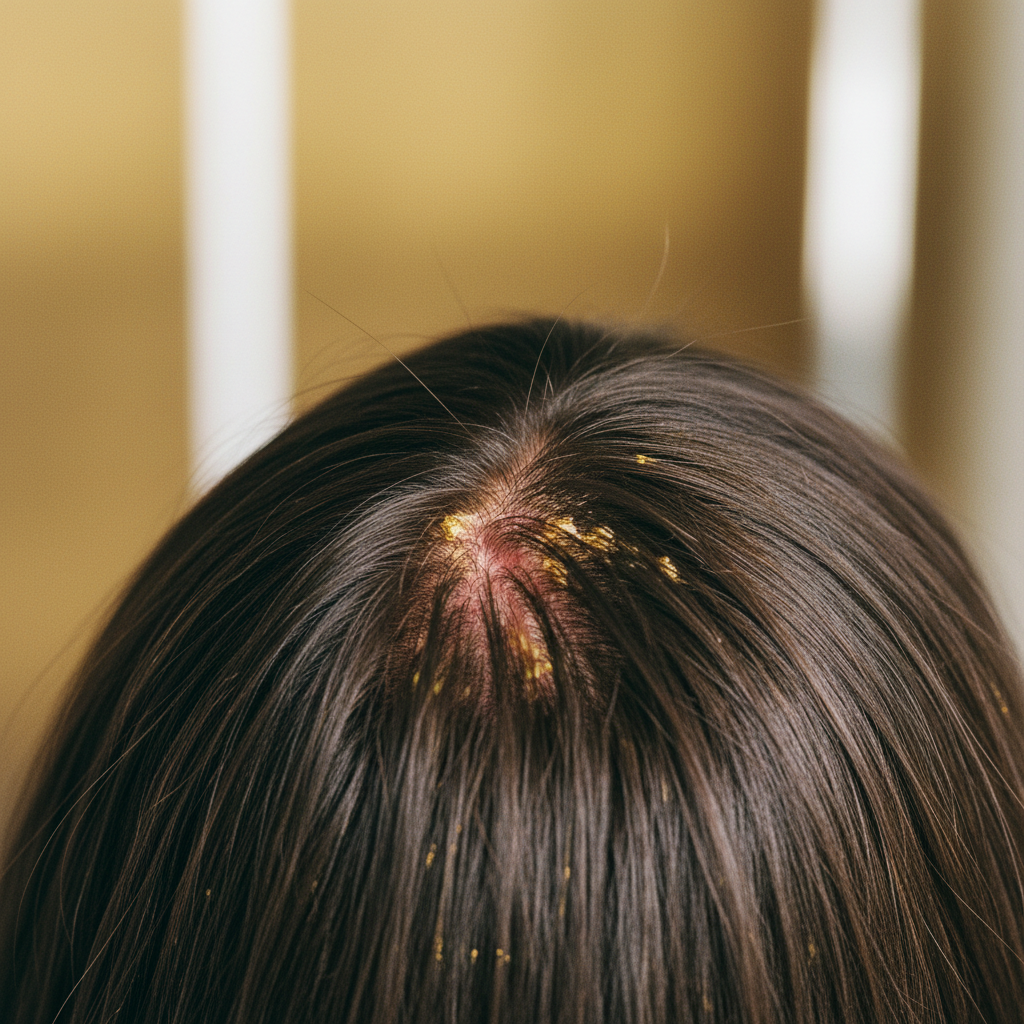
- Plaque appearance: Greasy, sticky, adherent scales ranging in colour from dull white to distinctly yellowish or honey-coloured.
- Erythema: Salmon-pink or red patches on light skin, or hypopigmented to violaceous macules on darker skin tones.
- Sensation: Moderate to intense pruritus (itching), burning, or scalp tenderness, especially when sweating.
- Classic distribution: Primarily the crown, vertex, anterior hairline, and behind the ears. It frequently extends beyond the scalp to the eyebrows, glabella, nasolabial folds, and upper chest.
Comparing common scalp conditions
Because scaling and redness occur across multiple dermatological issues, accurate differentiation ensures you choose the correct care pathway.
| Feature | Seborrhoeic Dermatitis | Scalp Psoriasis | Dry Scalp (Pityriasis Simplex) |
|---|---|---|---|
| Scale type | Greasy, yellowish, moist flakes | Silvery-white, thick, dry, micaceous scales | Small, dry, translucent or white dust-like flakes |
| Inflammation | Mild to moderate pink/red background | Well-demarcated, raised, red or salmon plaques | Little to no underlying redness |
| Primary trigger | Malassezia yeast and sebum interaction | Autoimmune-driven systemic hyperkeratosis | Low humidity, harsh surfactants, barrier dehydration |
| Hair shedding | Mild to moderate temporary shedding during flares | Low risk unless plaques are forcefully picked | None |
| Auspitz sign (pinpoint bleeding if scraped) | Absent | Frequently present | Absent |
Evidence-based management strategies
Achieving control relies on a three-pronged strategy: reducing yeast density, dissolving adherent scales, and calming inflammation.
1. Target the yeast with targeted actives
Medicated washes are the frontline defence. Dermatologists widely recommend cycling between specific evidence-backed ingredients to avoid microbial tolerance:
- Ketoconazole (1% to 2%): A broad-spectrum imidazole that halts fungal cell membrane synthesis.
- Zinc pyrithione (1% to 2%): A coordination complex that disrupts fungal cellular transport and suppresses yeast counts.
- Selenium sulfide (1% to 2.5%): Inhibits epidermal cell proliferation and reduces Malassezia colonisation.
- Ciclopirox olamine (1%): Features both anti-yeast and natural anti-inflammatory actions.
Leave these cleansers in contact with the scalp for 3 to 5 minutes before rinsing thoroughly so the active agent can penetrate the follicular ostia.
2. Dissolve scales with keratolytics
If thick plaques block topical treatments from reaching the scalp surface, apply keratolytic washes containing salicylic acid (1.5% to 3%). Salicylic acid lowers stratum corneum pH, increases hydration of keratin, and gently breaks the desmosome bonds holding oily scales together.
3. Maintain physiological pH
Healthy scalp skin sits naturally at a slightly acidic pH of 4.5 to 5.5. Cleansers formulated within this range help maintain the antimicrobial acid mantle and prevent opportunistic bacterial colonisation.
Daily cosmetic care and supporting the scalp barrier
While medical washes manage active flares, daily haircare habits protect the scalp environment during remission:
- Wash regularly: Daily or alternate-day washing with a gentle, sulphate-free clarifying cleanser prevents excess sebum pools from accumulating.
- Avoid saturated lipid topicals: Avoid applying pure plant butters, olive oil, and heavy pomades directly onto the scalp tissue.
- Dry the scalp promptly: Never sleep with wet hair. A damp, warm micro-environment encourages rapid fungal proliferation. Use a hairdryer on a low, cool setting directed at the roots.
- Support follicular resilience: Chronic scalp inflammation can distress the follicle, accelerating hair shedding. Introducing scalp-supporting cosmetic formulations, such as Watermans Grow Me shampoo, provides caffeine, biotin, and rosemary to invigorate the scalp while maintaining a clean, balanced environment. Watermans products focus on cosmetic conditioning, keeping the scalp refreshed and hair feeling robust without aggravating sensitive, scale-prone skin.
When the cause may be something else
If your scalp fails to improve within four weeks of targeted anti-dandruff care, consider differential diagnoses:
- Tinea capitis: A true dermatophyte fungal infection presenting with brittle hair breakage at the scalp surface, common in children.
- Contact dermatitis: An allergic or irritant response to hair dyes (such as paraphenylenediamine), fragrances, or styling chemicals.
- Discoid lupus erythematosus or lichen planopilaris: Scarring alopecias that exhibit smooth, shiny bald patches where follicular openings are permanently lost.
When to seek medical advice
Consult a GP, dermatologist, or registered trichologist if you experience:
- Severe, painful redness that spreads to the neck or face
- Fluid weeping, crusting, or signs of secondary bacterial infection (impetiginisation)
- Patchy, irregular hair loss rather than diffuse, all-over shedding
- No improvement after regular use of over-the-counter therapeutic washes for 30 consecutive days
Frequently asked questions about Seborrhoeic Dermatitis Essentials
Can seborrhoeic dermatitis cause permanent hair loss?
No. Seborrhoeic dermatitis does not destroy hair follicles or cause scarring alopecia. However, significant inflammation around the hair follicle coupled with vigorous scratching can trigger temporary diffuse shedding (telogen effluvium) or mechanical hair breakage along the shaft. Once the inflammation and flaking resolve through targeted scalp care, natural hair growth resumes normally.
How often should I wash my hair if I have seborrhoeic dermatitis?
Most dermatologists recommend washing every day or every other day during active flares. Frequent washing physically removes excess sebum, environmental debris, and shed keratinocytes, which deprives Malassezia yeast of its food source. Once symptoms settle, washing three times a week with a gentle, pH-balanced cleanser helps maintain clear skin.
Are natural oils safe to use on an affected scalp?
Generally, no. Pure plant oils such as olive, coconut, argan, and almond oil contain fatty acids that feed Malassezia yeast species, frequently worsening scalp flares. If you want to condition your hair, apply oils and rich conditioners solely to the mid-lengths and ends, keeping your scalp surface clear.
What are the core Seborrhoeic Dermatitis Essentials for long-term control?
The core Seborrhoeic Dermatitis Essentials include using an antifungal wash (such as ketoconazole or zinc pyrithione) two to three times weekly during flares, employing a salicylic acid cleanser to dissolve stubborn crusts, washing frequently to remove excess sebum, keeping hair roots dry, and maintaining an acidic scalp pH between 4.5 and 5.5.
Concluding thoughts on scalp balance
Understanding Seborrhoeic Dermatitis Essentials changes how you manage recurring scalp issues, shifting the focus from frustration to predictable control. Because this condition represents an ongoing biological interplay between your natural skin flora and lipid production, success lies in steady, sensible maintenance rather than harsh, reactive scrubbing. By combining proven active washes during active flare-ups with gentle, non-stripping cosmetic cleansers for day-to-day hygiene, you can keep the scalp barrier balanced, quieten inflammation, and ensure hair grows from a clean, healthy foundation.
Sources and references
- British Association of Dermatologists (BAD): Patient Information Leaflet on Seborrhoeic Dermatitis, 2020.
- National Institute for Health and Care Excellence (NICE): Clinical Knowledge Summaries: Seborrhoeic Dermatitis, 2022.
- Journal of Clinical and Investigative Dermatology: The Role of Malassezia in Seborrheic Dermatitis, 2015.
- NHS UK: Overview of Seborrhoeic Dermatitis and Dandruff, updated 2023.
- Dermatologic Clinics: Scalp Seborrheic Dermatitis and Dandruff: Pathogenesis and Treatment Options, 2018.
Find these ingredients in Watermans products
- Zinc: you will find this ingredient in our Hair Vitamins.
- Oleic Acid: you will find this ingredient in our Camellia & Black Castor Hair & Body Oil.