Safe Hair Blow Drying Techniques: Evidence, Methods, and Hair Fibre Health
10 min read ·
Discover the science of Safe Hair Blow Drying Techniques to protect your cuticles, prevent thermal breakage, and maintain stronger, resilient hair.
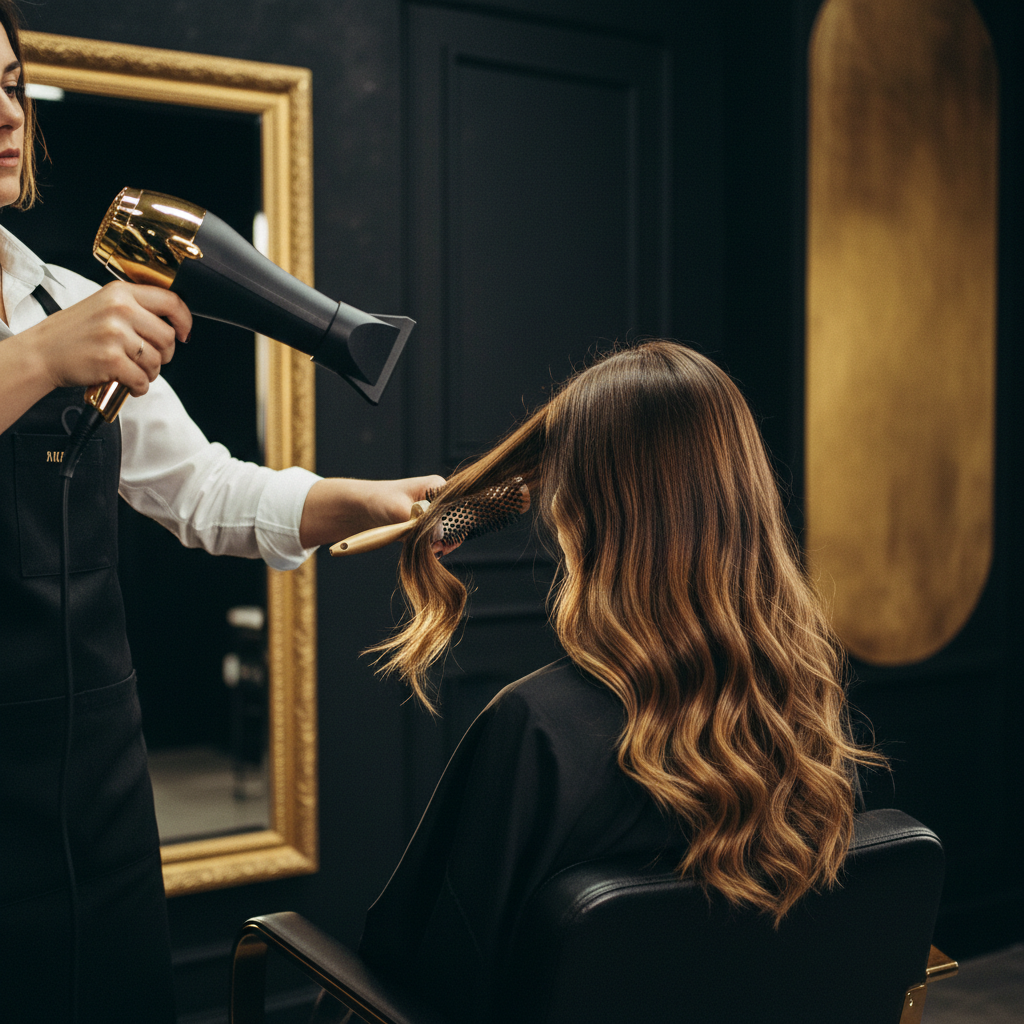
Quick answer: Adopting Safe Hair Blow Drying Techniques means drying hair at a controlled distance of at least 15 cm with continuous movement and moderate heat, rather than blasting wet strands at close range. While air drying avoids thermal stress entirely, prolonged water exposure swells the cell membrane complex of the hair fibre. Using safe blow drying practices reduces this moisture-induced swelling while preventing thermal degradation of the cuticle. However, blow drying cannot repair pre-existing structural fibre breakage or alter follicular growth cycles.
Key takeaways
- Keeping the blow dryer at least 15 cm away from the hair shaft significantly reduces cuticle surface cracking.
- Wet hair is mechanically fragile; removing excess water with a microfibre towel prior to applying heat is essential.
- Continuous movement of the dryer prevents localised hot spots that cause rapid moisture boiling within the hair cortex (bubble hair).
- Thermal protectant formulations reduce heat transfer rates and lubricate cuticles against friction from styling brushes.
- Heat alters the physical structure of the hair shaft (causing fibre breakage), but it does not cause medical hair loss or follicular shedding.
Safe Hair Blow Drying Techniques: what the evidence shows
Research published in the Annals of Dermatology (2011) demonstrated that while air drying causes less thermal surface damage to the hair shaft than high-temperature blow drying, completely air-dried hair experiences prolonged swelling of the cell membrane complex (CMC). Hair fibres remain vulnerable when wet because water temporarily disrupts weak hydrogen bonds within keratin chains. Keeping hair wet for hours allows internal moisture pressure to strain the CMC.
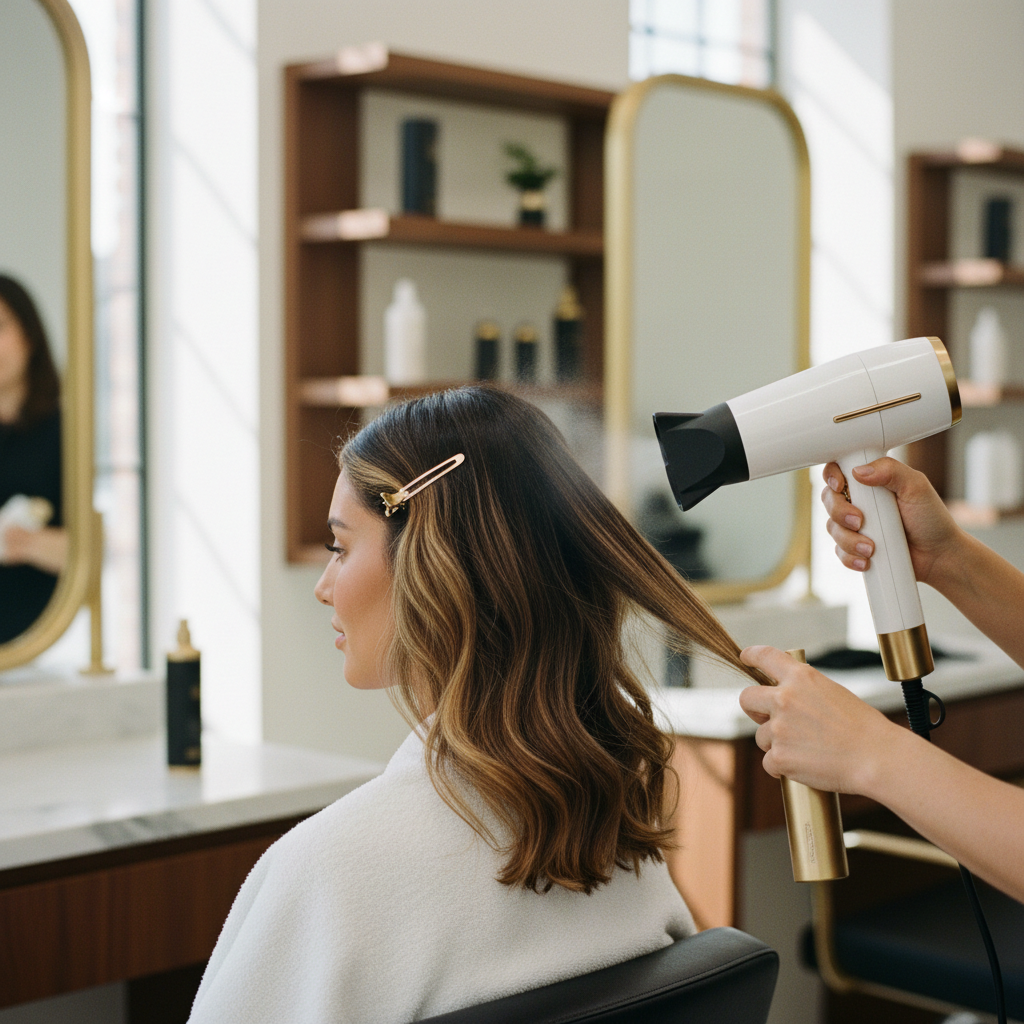
Using Safe Hair Blow Drying Techniques balances thermal and moisture-related damage. The evidence demonstrates that drying hair with a hairdryer held 15 cm away, kept in constant motion on a continuous low-to-medium heat setting, causes less total structural strain than air drying or high-temperature close-proximity drying. The key is minimising the duration of high-temperature contact while clearing excess water quickly.
Thermal damage begins at identifiable thresholds. At temperatures above 140°C, the hair cuticle loses natural moisture and lipids like 18-methyleicosanoic acid (18-MEA). When temperatures exceed 180°C to 200°C, alpha-keratin degrades into amorphous beta-keratin, permanently weakening the hair shaft's tensile strength. A blow dryer held too close can easily produce air output reaching 100°C to 120°C directly on the hair surface, which, combined with brush tension, leads to cuticle chipping and split ends.
Mechanisms: how heat and moisture interact with the hair fibre
To understand why specific drying methods protect hair, you need to examine the hair shaft's internal architecture. The outermost layer is the cuticle, composed of overlapping, flattened scales rich in cysteine. Beneath the cuticle lies the cortex, which accounts for approximately 85 percent of the fibre's mass and contains structural keratin filaments held together by disulphide bonds, salt bridges, and hydrogen bonds.
When hair gets wet, it absorbs up to 30 percent of its dry weight in water. This hydration causes the shaft to swell radially. The swollen cortex forces the protective cuticle scales to lift outward. In this state, the friction coefficient of the fibre doubles, making it exceptionally prone to abrasive damage from brushes, combs, and rough cotton towels.
If intense heat is applied to soaked hair, trapped water within the cortex rapidly expands and can vaporise into steam before it evaporates naturally from the surface. This rapid phase change creates internal cavities and microscopic voids, a clinical condition known as "bubble hair deformity". The hair shaft becomes structurally brittle and snaps under minimal physical manipulation. Safe drying methods ensure water evaporates gradually from the exterior cuticle inward without reaching boiling temperatures inside the cortex.
Safe blow drying protocols versus high-risk practices
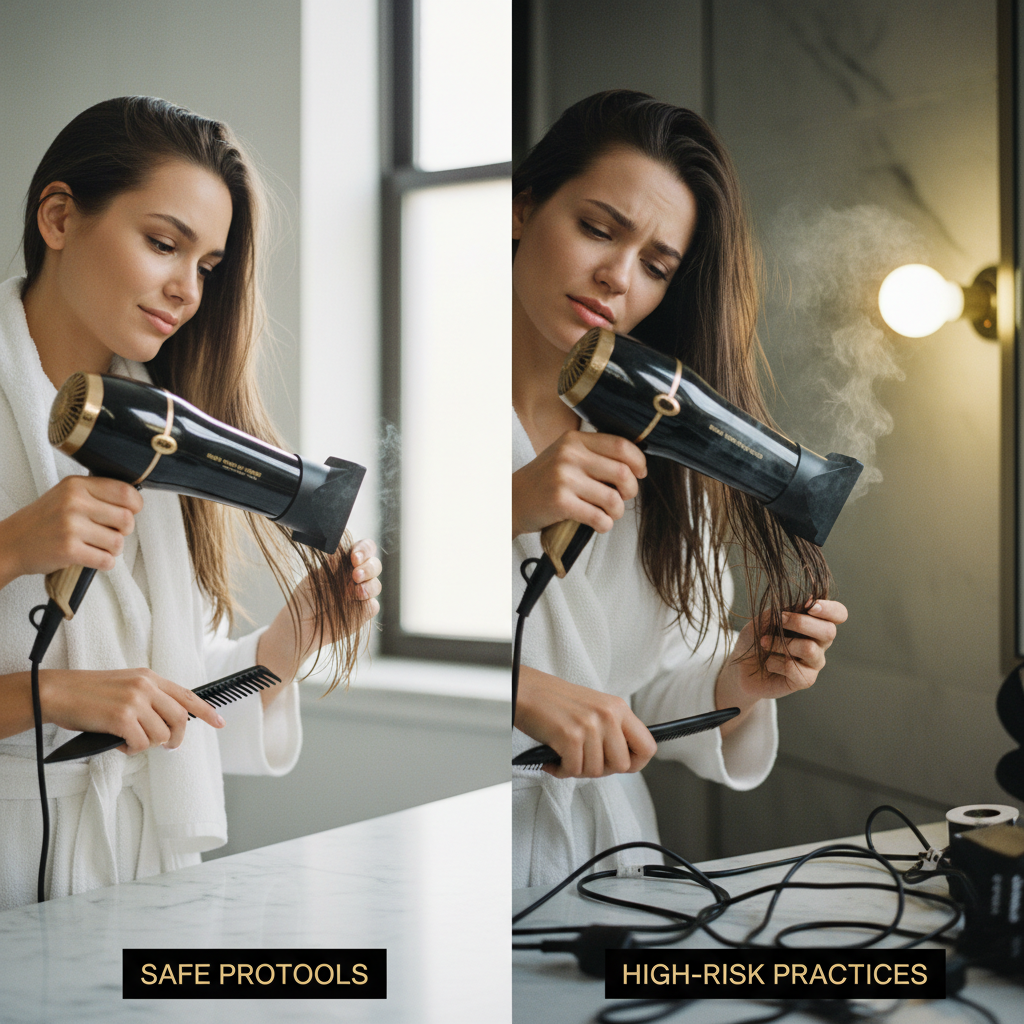
The following table contrasts high-risk blow drying habits with evidence-backed safe methods:
| Technique Element | High-Risk Practice | Safe Blow Drying Technique | Impact on Hair Fibre |
|---|---|---|---|
| Preparation | Blow drying dripping-wet hair directly from the shower | Squeezing excess moisture with a microfibre towel until 70% dry | Reduces total heat exposure time and prevents steam cavities |
| Distance | Holding nozzle 0 to 5 cm from the hair surface | Maintaining a distance of 15 cm or greater | Keeps cuticle temperature below the thermal degradation point |
| Motion | Holding the airflow static over one section | Keeping the nozzle in continuous, rhythmic motion | Prevents heat accumulation and hot spots on the hair shaft |
| Nozzle Direction | Pointing airflow upward against the cuticle scale direction | Directing airflow downward from roots to ends | Smooths cuticle overlap and reduces surface friction |
| Finishing | Ending styling immediately after applying maximum heat | Applying a cool blast for 30 to 60 seconds per section | Re-sets hydrogen bonds into position and locks the style |
| Tension | Vigorous brushing with a round metal brush while wet | Finger detangling or wide-tooth comb with heat protectant | Minimises mechanical traction on weakened, hydrated keratin |
What the evidence does not show
There is no scientific evidence that blow drying causes follicular hair loss, alopecia areata, or telogen effluvium. Heat styling does not affect the dermal papilla beneath the scalp surface unless the heat is so severe that it causes second-degree skin burns. When people notice increased hair on the bathroom floor after blow drying, they are generally observing either normal shedding (the 50 to 100 telogen hairs naturally dislodged each day by physical manipulation) or hair breakage along the shaft caused by thermal weakness and brush friction.
Similarly, no blow drying technique or heat protectant spray can "repair" cuticles that have already fractured or split. Once the keratin structure is broken, cosmetic products and conditioning agents can temporarily coat the fibre and reduce friction, but the dead tissue cannot biologically regenerate.
Signs of heat and blow drying damage to look for
Thermal damage shows distinct clinical and cosmetic signs along the hair shaft:
- Trichorrhexis nodosa: Small, white, bead-like nodes visible along the hair shaft where cortical cells have fractured and separated.
- Cuticle chipping: The edges of individual cuticle cells break off, resulting in a rough, dry texture and a lack of light reflection (dullness).
- Split ends (trichoptilosis): Longitudinal splitting of the distal hair shaft where the protective cuticle has worn away entirely, exposing the cortex.
- Increased tangling: Broken cuticle scales snag against adjacent strands, creating persistent friction knots.
- Loss of elasticity: The hair snaps immediately when stretched gently while damp, rather than stretching and returning to its original length.
Step-by-step: how to dry your hair safely
- Gently remove bulk water: After washing, never rub hair aggressively with a standard terry-cloth towel. Instead, gently squeeze and press sections with a smooth microfibre towel or cotton cloth. Let hair naturally reach roughly 60 to 70 percent dryness before introducing mechanical heat.
- Apply a silicone or polymer-based thermal protectant: Heat protectants containing ingredients like dimethicone, amodimethicone, or polyquaterniums leave a thin film on the hair shaft. This film slows down the rate of heat conduction into the cortex and smooths the cuticle surface, reducing brush drag.
- Attach a concentrator nozzle: Always use the directional nozzle that comes with your blow dryer. It focuses the airflow downward along the cuticle layer rather than creating turbulent air that roughs up cuticles.
- Maintain proper distance and motion: Keep the nozzle at least 15 cm away from your hair. Never leave the dryer focused on a single spot; keep your arm in a steady, sweeping motion.
- Use medium heat: Use medium heat for the majority of drying. Reserve high heat strictly for shaping thick, coarse hair types, and never linger on the ends, which are older and have accumulated more wear.
- Seal with the cool shot: Finish every section by activating your dryer's cool-shot button. Cooling down the keratin resets the temporary hydrogen bonds formed during drying, setting the hair in place and helping cuticles lay flat.
When the issue is not heat damage
If you are experiencing noticeable thinning, diffuse hair loss across the scalp, or distinct bald patches, blow drying is not the underlying cause. True hair shedding (telogen effluvium) is triggered by systemic factors such as hormonal fluctuations, thyroid irregularities, severe nutritional deficiencies (such as iron or ferritin depletion), or acute physiological stress.
Pattern hair loss (androgenetic alopecia) is driven by genetic sensitivity to dihydrotestosterone (DHT) interacting with hair follicles. If your shed hairs contain a small white bulb at the root, the entire hair has left the follicle naturally as part of the hair growth cycle. If the hair pieces falling onto your shoulders have blunt, frayed ends without a root bulb, you are dealing with hair breakage, which points directly to mechanical, chemical, or thermal stress.
Professional advice and when to see a specialist
If your hair is breaking despite using safe drying techniques, consult a certified trichologist or dermatologist. A specialist can perform a trichogram or pull test to examine the hair under a microscope, distinguishing between structural shaft deformities (like bubble hair or pili torti) and follicular cycling disorders.
Salon professionals can trim away unsalvageable split ends to prevent fissures from travelling higher up the fibre, and advise you on tailored heat-styling routines suited to your hair's specific diameter, porosity, and chemical history.
Supporting the hair against physical stress: Watermans haircare
While safe styling practices protect the hair from the outside, maintaining the appearance of resilient, fuller-looking hair also relies on gentle, supportive washday care.
Watermans products are formulated to support the feel and condition of the hair and scalp. Incorporating gentle, nutrient-rich cleansing helps wash away product buildup from thermal protectants without stripping essential surface moisture. Watermans hair formulas include natural ingredients such as biotin, caffeine, rosemary extract, and hydrolysed lupin protein. These ingredients help improve surface texture, improve combability to cut down on mechanical friction during drying, and leave the scalp clean and revitalised.
Frequently asked questions about Safe Hair Blow Drying Techniques
Does air drying hair cause less damage than blow drying?
Evidence shows that air drying prevents thermal degradation of the cuticle, but leaves the hair cortex and cell membrane complex saturated with water for prolonged periods. The safest overall approach combines partial air drying until hair is damp, followed by Safe Hair Blow Drying Techniques at a 15 cm distance on medium heat to minimise both moisture swelling and heat stress.
What is the ideal temperature for blow drying hair safely?
The air temperature reaching the hair surface should remain below 60°C to 70°C. Modern hair dryers often output air at 100°C or higher near the nozzle, which is why maintaining a distance of at least 15 cm is essential to allow surrounding air to cool the stream before contact.
Can blow drying cause permanent hair loss or thinning?
No. Blow drying cannot cause medical hair loss, alopecia, or follicular thinning because the heat does not penetrate deeply enough to alter the dermal papilla. However, incorrect techniques can cause severe hair breakage along the shaft, which can make the overall density of the hair appear thinner.
Why is using a concentrator nozzle recommended for safe drying?
A concentrator nozzle directs airflow down the hair shaft in the natural direction of cuticle overlap (from root to tip). Without a nozzle, turbulent airflow forces cuticle scales upward, increasing surface roughness, friction, and tangles, which elevates the risk of mechanical snapping during styling.
How does a cool-shot button protect hair during blow drying?
The cool-shot button quickly lowers the temperature of the keratin protein. When heated, hair keratin softens and hydrogen bonds are temporarily reshuffled. The cool air rapidly re-hardens the protein, setting the hair into its new shape without prolonged heat exposure, while encouraging cuticle scales to lie flat against the shaft.
Safe blow drying summary
Implementing Safe Hair Blow Drying Techniques is an essential daily practice for maintaining the physical integrity of your hair. By respecting the delicate balance between moisture exposure and heat application, you prevent cuticle degradation, avoid bubble hair formation, and minimise fibre breakage. Keep your dryer moving, maintain a 15 cm distance, use heat protectants consistently, and listen to the mechanical limits of your hair fibre.
Sources and references
- Lee, Y. Et al. (2011). Hair Shaft Damage from Heat and Drying Time of Hair Dryer. Annals of Dermatology, 23(4), pp. 455-462.
- Robbins, C. R. (2012). Chemical and Physical Behavior of Human Hair. 5th ed. Springer-Verlag New York.
- Gummer, C. L. (2001). Bubble hair: a cosmetic abnormality caused by heat and moisture. Journal of the Society of Cosmetic Chemists, 45(4), pp. 201-206.
- British Association of Dermatologists (2020). Hair breakage and cosmetic damage guidelines. Dermatology Clinical Reference.
Find these ingredients in Watermans products
- Biotin: you will find this ingredient in our Hair Growth Shampoo.