The Role of Cysteine in Hair Fibre: Science, Strength, and Bond Care
9 min read ·
Discover the role of cysteine in hair fibre, how disulphide bonds dictate hair strength, and how to protect your strands from breakage and chemical damage.
Quick answer: The Role of Cysteine in Hair Fibre is to provide structural strength, elasticity, and chemical resilience by forming covalent disulphide bonds between keratin protein chains. Accounting for roughly 10 to 18 percent of hair's total amino acid content, cysteine is the single most important building block determining whether hair resists breakage or snaps under stress. However, topical cysteine treatments cannot permanently rebuild fully severed disulphide bonds within the cortex; they provide cosmetic reinforcement rather than a biological cure for chemical damage.
Key takeaways
- Cysteine is a sulphur-containing amino acid that makes up 10 to 18 percent of the total amino acid profile of human hair fibre.
- Pairs of cysteine molecules oxidise to form cystine, creating rigid disulphide bridges (covalent bonds) that give hair its tensile strength and shape memory.
- Chemical treatments like bleaching, permanent dyeing, and alkaline relaxers permanently sever these disulphide bonds, leaving hair porous and prone to snapping.
- Topical cysteine and amino acid treatments temporarily coat and patch the cuticle and outer cortex, improving manageability, but cannot biologically regenerate severed cortical bonds.
- Dietary intake of sulphur amino acids supports normal hair synthesis in the follicle, though consuming excess cysteine beyond nutritional needs will not thicken established hair shafts.
The Role of Cysteine in Hair Fibre: what the evidence shows
Human hair fibre consists of approximately 65 to 95 percent protein by weight, predominantly keratin and keratin-associated proteins (KAPs). Keratin relies on high concentrations of cysteine to maintain its mechanical integrity. In intact human hair, cysteine residues oxidise during keratinisation in the hair follicle to form cystine, producing stable covalent bonds known as disulphide bridges (-S-S-).
These disulphide linkages act as cross-links between neighbouring polypeptide chains. Unlike hydrogen bonds or salt bridges, which break easily in the presence of water or temporary heat, covalent disulphide bonds require aggressive chemical reduction (such as thioglycolates in perms) or strong oxidising agents (such as alkaline hydrogen peroxide in hair bleach) to break down.
Research published in textile and cosmetic dermatology journals shows that the cortex of healthy human hair contains between 140 to 180 micromoles of cystine per gram of dry hair. This high concentration is what allows hair fibres to stretch up to 30 percent of their original length when dry, and up to 50 percent when wet, before snapping.
Furthermore, cysteine resides abundantly in the hair cuticle, particularly in the A-layer and exocuticle. The A-layer contains upwards of 30 percent cystine, forming an intensely cross-linked, resilient barrier that protects the inner cortex from mechanical friction, ultraviolet radiation, and moisture loss.
How chemical and thermal damage degrades hair cysteine
When hair undergoes chemical processing, the primary chemical target is often cystine. Understanding this degradation explains why over-processed hair loses its curl pattern, elasticity, and shine.
During hair bleaching, hydrogen peroxide oxidises the disulphide bonds of cystine. Instead of reverting to healthy cysteine, these bonds degrade irreversibly into cysteic acid residues (sulphonate groups). A single intensive bleaching session can destroy 15 to 45 percent of the fibre's total disulphide bonds. The accumulation of cysteic acid introduces negative electrical charges to the hair shaft, repelling neighbouring proteins, lifting the cuticle scales, and creating microscopic voids inside the cortex.
In chemical relaxing and perming, reducing agents split the disulphide bonds intentionally to reshape the fibre. While neutralizing solutions re-oxidise many of these bonds into their new configuration, roughly 10 to 20 percent of the original bonds fail to reform, permanently weakening the hair shaft.
High-heat styling tools operating above 185 degrees Celsius also induce thermal oxidation and cross-link degradation, causing the protein structure to denature and lose its natural elasticity.
Comparing bond types in the hair fibre
The hair shaft relies on several chemical forces to hold its shape. Understanding how cysteine-derived bonds compare to other bonds clarifies why hair behaves the way it does during washing and styling.
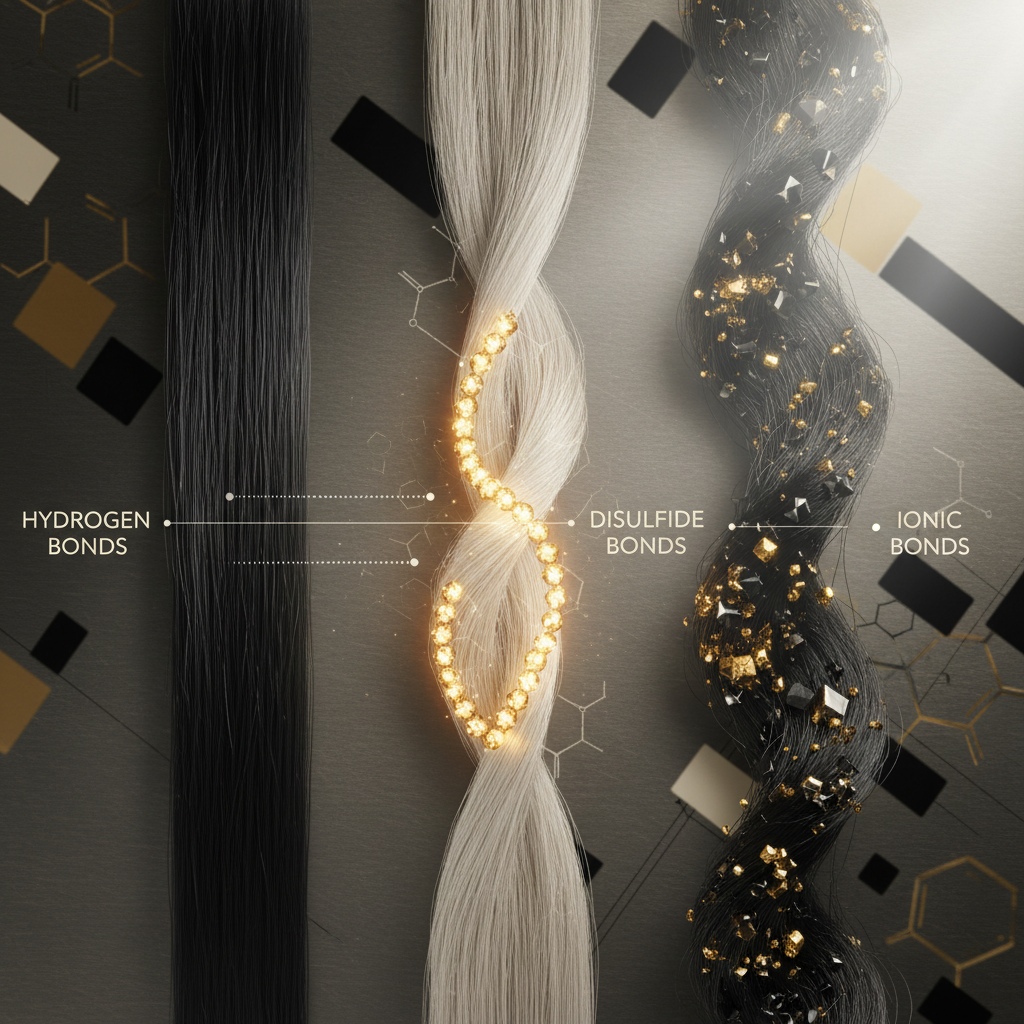
| Bond Type | Chemical Nature | Relative Strength | Broken By | Reformed By |
|---|---|---|---|---|
| Disulphide Bonds (Cystine) | Covalent bond between two cysteine sulphur atoms | Extremely strong (primary structural backbone) | Bleach, relaxers, perms, extreme UV, temperatures over 200°C | Neutralising oxidisers (only partially after reduction); irreversible after bleaching |
| Hydrogen Bonds | Physical attraction between polar groups | Weak individually, strong in aggregate | Water and moisture | Drying and cooling the hair |
| Salt (Ionic) Bridges | Electrostatic attraction between positive and negative amino acid side chains | Moderate | Shifts in pH (acids below 3.5 or alkalis above 5.5) | Returning hair to its isoelectric point (pH 3.67 to 5.5) |
| Peptide Bonds | Covalent bonds linking amino acids in the main chain | Very strong (the fibre's backbone) | Extreme chemical depilation (strong sodium hydroxide) | Irreversible; broken peptide chains mean permanent fibre loss |
Signs of depleted cysteine and disulphide bond loss
Because disulphide bridges govern mechanical tensile strength, bond degradation shows distinct physical signs.
- Loss of wet elasticity: Healthy wet hair stretches and snaps back like a healthy elastic band. When cysteine bonds are depleted, wet hair stretches excessively without returning to its original length, or it snaps instantly under light tension.
- Gummy or spongy texture when wet: Severely oxidised hair with high cysteic acid content absorbs excessive amounts of water (hygral stress), feeling mushy or slimy between your fingertips.
- Chronic split ends and mid-shaft fractures: With the cross-linked protective A-layer and exocuticle stripped away, mechanical friction from brushing shears cortex fibrils directly, resulting in breakage rather than natural hair shedding.
- Altered curl patterns: Wavy or curly hair that has lost its disulphide integrity goes limp, developing uneven, frizzy, or straightened sections that refuse to hold a wave.
It is vital to distinguish between hair shedding and hair breakage here. When hair snaps mid-shaft due to depleted cysteine bonds, that is fibre breakage. When hair falls out from the root with a white bulb attached, that is follicular shedding (such as telogen effluvium or natural hair cycling), which topical protein treatments cannot resolve.
What you can do to protect and support cysteine levels
Once a hair fibre grows past the scalp surface, it is biologically dead tissue. It cannot heal, repair, or regenerate internal cysteine stores via cellular division. Care strategies must therefore focus on preservation, low-friction handling, and cosmetic reinforcement.
Limit chemical oxidation
If you colour or lighten your hair, work with a professional colourist who monitors development time and uses gentle developers. Spacing chemical treatments by at least 8 to 12 weeks gives the hair time to recover surface lubrication through natural lipids, reducing mechanical vulnerability.
Minimise thermal degradation
Keep heat tools below 185 degrees Celsius. Above this threshold, the keratin protein matrix experiences accelerated thermal denaturation, causing irreversible cystine breakdown. Always apply a film-forming heat protectant containing silicones, polyquats, or hydrolysed proteins to buffer heat transfer.
Use targeted amino acid and protein formulations
Cosmetic products formulated with low-molecular-weight amino acids (including cysteine, arginine, and glycine) or hydrolysed keratin can temporarily penetrate the outer cortex and coat surface micro-fissures. While these products do not weld broken covalent bonds permanently back together, they increase the fibre's resistance to tensile stress, temporarily reduce porosity, and smooth down lifted cuticles.
Maintain the hair's isoelectric point
Washing hair with mildly acidic shampoos and conditioners (pH 4.5 to 5.5) keeps the cuticle scales closed and prevents excessive swelling of the cortex. This physical tightness shields internal disulphide bonds from water-induced mechanical stress during detangling.
When the cause is something else
If your hair feels brittle, dry, or weak despite zero chemical processing or heat styling, the root issue is unlikely to be depleted cysteine from external damage.
- Nutritional deficiencies: Severe systemic protein malnutrition or restrictive crash dieting can starve hair follicles of essential sulphur amino acids (methionine and cysteine), leading to structural defects during hair formation.
- Underlying health conditions: Thyroid dysfunction, iron deficiency anaemia, and hormonal imbalances can cause hair to emerge from the scalp with a finer, weaker structural diameter.
- Genetic hair shaft disorders: Rare conditions such as trichorrhexis nodosa, monilethrix, or trichothiodystrophy involve congenital abnormalities in the hair's sulphur content or keratin synthesis, causing severe structural fragility from birth or early childhood.
- Scalp disorders: Conditions such as seborrhoeic dermatitis or psoriasis disrupt healthy follicular emergence, producing fibres that are structurally compromised at the root.
If you notice rapid thinning, patchy loss, or widespread breakage close to the scalp without a history of harsh chemical styling, consult a GP or a qualified trichologist for an accurate diagnosis.
Supporting hair health with Watermans
While damaged dead hair cannot biologically regenerate internal bonds, maintaining an optimal scalp environment ensures that emerging hair receives the foundational support it needs. Watermans GrowMe Shampoo and ConditionMe Conditioner are formulated to nourish the scalp and support the feel and appearance of natural hair fullness.
Enriched with biotin, rosemary, hydrolysed lupin protein, and natural oils, Watermans hair products help improve manageability, add surface shine, and reduce mechanical breakage during everyday detangling. When used as part of a consistent hair routine, these non-medicinal cosmetic formulas leave hair feeling stronger, thicker, and visibly revitalised from root to tip.
Frequently asked questions about The Role of Cysteine in Hair Fibre
Can topical treatments restore The Role of Cysteine in Hair Fibre?
Topical treatments cannot permanently recreate original disulphide bonds inside the hair cortex. While hydrolysed proteins and amino acid complexes can temporarily fill gaps in the damaged cuticle, they wash out over time. They restore surface smoothness and temporary tensile strength, but they cannot reverse chemical oxidation permanently.
What is the difference between cysteine and cystine?
Cysteine is a single amino acid containing a thiol (sulphur-hydrogen) group. When two cysteine molecules come together and oxidise, they form a covalent disulphide bond, creating a single dimeric molecule known as cystine. Cystine is the bonded form that gives hair its physical rigidity.
Will taking oral cysteine supplements stop hair breakage?
Oral supplements cannot repair hair that has already emerged from the scalp. If your diet is deficient in sulphur-containing amino acids, dietary improvements can support the quality of new hair being produced by the follicle. However, taking extra cysteine when you already eat adequate protein will not strengthen existing lengths.
Why does bleaching destroy cysteine bonds?
Bleaching uses alkaline hydrogen peroxide to degrade melanin pigments inside the cortex. As a side effect, the powerful oxidiser breaks down cystine's disulphide bonds, oxidising them into cysteic acid. Once converted to cysteic acid, these sulphur bonds can no longer cross-link the keratin chains, leaving hair brittle.
How does hair pH affect cysteine and disulphide bonds?
Mildly acidic pH levels (4.5 to 5.5) keep the hair cuticle closed, protecting the internal protein structure. Highly alkaline environments (pH 9.0 and above) cause the hair shaft to swell dramatically, stretching the internal network and making disulphide bonds highly susceptible to chemical severance during colouring or perming.
Conclusion
Understanding The Role of Cysteine in Hair Fibre highlights why gentle handling and chemical moderation are vital for long-term hair health. As the primary amino acid responsible for cross-linking keratin chains through disulphide bridges, cysteine provides the fundamental resilience, bounce, and strength of every strand. Because severed disulphide bonds cannot be biologically remade once hair has grown, preserving these delicate sulphur bridges through sensible heat management, protective styling, and pH-balanced care remains the most reliable path to strong, breakage-resistant hair.
Sources and references
- International Journal of Cosmetic Science: Chemical and physical properties of human hair fibres, 2012.
- Journal of Cosmetic Dermatology: Structural changes in human hair induced by chemical treatments, 2018.
- Robbins, C. R.: Chemical and Physical Behavior of Human Hair, 5th edition, Springer, 2012.
- British Association of Dermatologists: Hair breakage and cosmetic damage guidelines, 2020.
- PubMed Central: The role of amino acids and keratin cross-linking in hair mechanics, 2015.
Find these ingredients in Watermans products
- Biotin: you will find this ingredient in our Hair Growth Shampoo.