The Vital Role of Ceramides in Hair Care: Science, Cuticle Health, and Fibre Strength
9 min read ·
Discover the true role of ceramides in hair care, from sealing the cuticle to preventing breakage, and learn how lipid restoration transforms damaged hair.
Quick answer: The primary role of ceramides in hair care is acting as a lipid intercellular cement that binds the cuticle cells together, sealing moisture inside the hair shaft and protecting the cortex from structural damage. While natural ceramides deplete through bleaching, heat styling, and UV exposure, topical synthetic ceramides can temporarily patch these lipid gaps, reduce porosity, and lower breakage from friction. However, ceramides cannot permanently repair broken disulphide bonds or reverse genetic hair loss.
Key takeaways
- Natural ceramides make up a critical portion of the hair fibre's cell membrane complex (CMC), anchoring overlapping cuticle scales flat.
- Chemical processing like bleaching, alkaline perms, and frequent heat styling strip natural lipids, leaving hair porous and brittle.
- Topical synthetic or plant-derived ceramides help restore surface barrier function, decreasing combing force and moisture loss.
- Ceramides target hair breakage and fibre integrity; they do not stimulate hair growth or resolve hormonal hair loss.
- Routine use alongside hydrolysed proteins and fatty acids yields the best cosmetic resilience for damaged hair.
Role of Ceramides in Hair Care: what the evidence shows
Understanding the role of ceramides in hair care begins with the architecture of human hair. The hair shaft consists of three main components: the inner medulla, the structural cortex, and the outer protective cuticle. Between these dead keratin cells lies the cell membrane complex (CMC), a lipid-rich layer that functions like mortar between bricks.
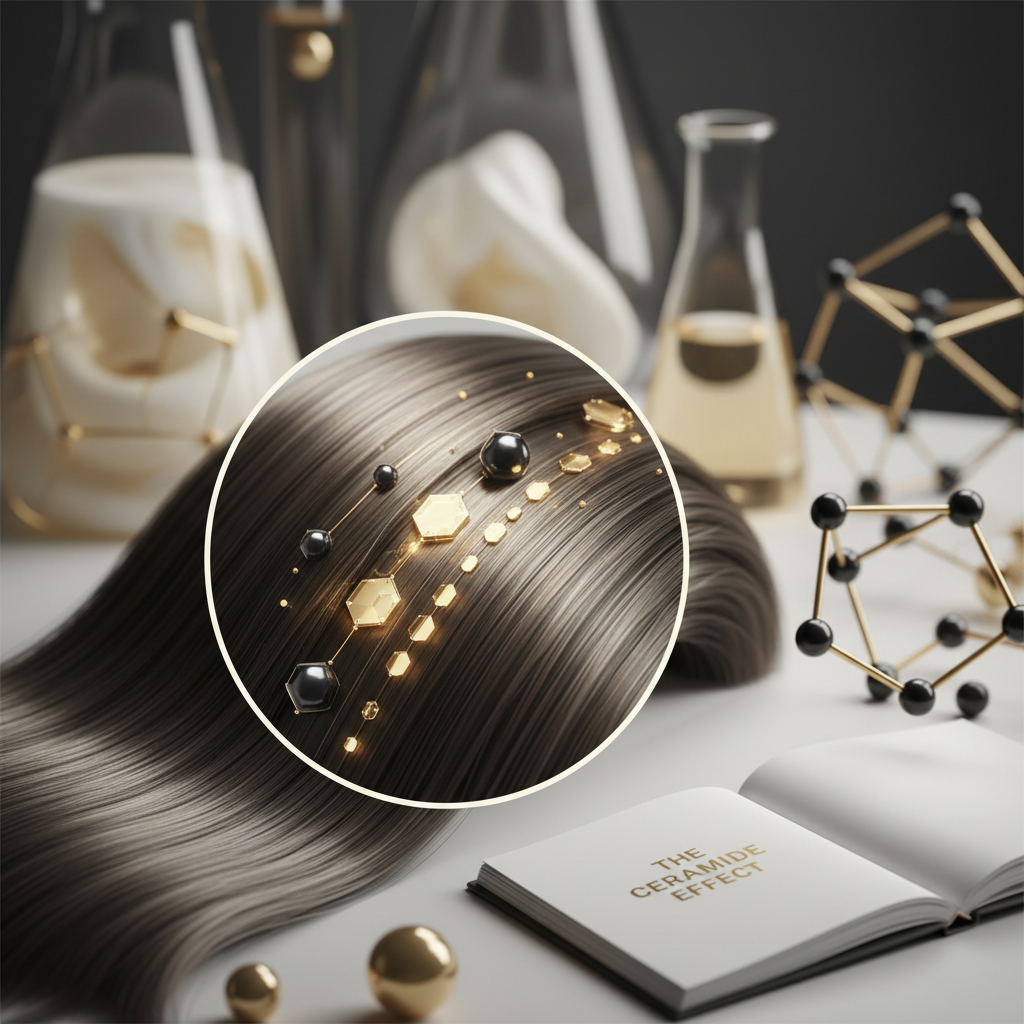
Natural ceramides are waxy sphingolipids found within this intercellular cement. Although total lipids account for only about 1% to 3% of the hair fibre's overall weight, their presence dictates cuticle cohesion, flexibility, and impermeability. Research published in cosmetic and dermatological literature demonstrates that when hair is treated with bio-identical or biomimetic ceramides (such as Ceramide 2, Ceramide 3, or pseudo-ceramides), these molecules integrate into the depleted intercellular spaces.
By filling microscopic gaps in the CMC, ceramides help keep cuticle scales lying flat. This mechanical smoothing delivers distinct, measurable benefits:
- Reduced friction and combing forces: Flatter cuticles snag less against adjacent fibres and styling tools, preventing mechanical breakage.
- Controlled porosity: Intact lipid barriers stop excessive water absorption (hygral fatigue) and reduce the rapid evaporation of internal hydration.
- Enhanced tensile resilience: By reinforcing the cuticle envelope, ceramides indirectly protect the inner cortical proteins from oxidative and thermal stress.
What the evidence does not show
Because ceramides are celebrated for skin barrier repair, marketing claims frequently exaggerate what they can accomplish on hair fibres. Clarifying these boundaries protects consumers from unrealistic expectations:
- Ceramides do not reverse hair loss: Hair shedding (telogen effluvium) and hair thinning (androgenetic alopecia) originate deep inside the dermal papilla and living follicle. Topically applying ceramides to the hair length cannot alter hormonal sensitivity or jumpstart hair cycles.
- They cannot permanently mend split ends: Once the distal tip of a hair shaft frays completely, no lipid can permanently weld the split back together. Ceramides provide temporary cohesion, but a trim remains the only permanent fix.
- They do not reconstruct broken disulphide bonds: Bleaching and relaxers cleave chemical bonds inside the cortex. Ceramides reinforce the lipid cement outside and around cells; they do not cross-link keratin chains like bond-building chemistry does.
- More is not always better: Overloading fine or low-porosity hair with heavy lipid preparations can lead to greasy build-up, limp strands, and dullness.
The mechanism: how ceramides protect hair fibres
At the molecular level, ceramides consist of a sphingoid base linked to a fatty acid. This amphiphilic structure gives them both water-attracting and water-repelling properties, allowing them to form neat, multi-lamellar lipid sheets.
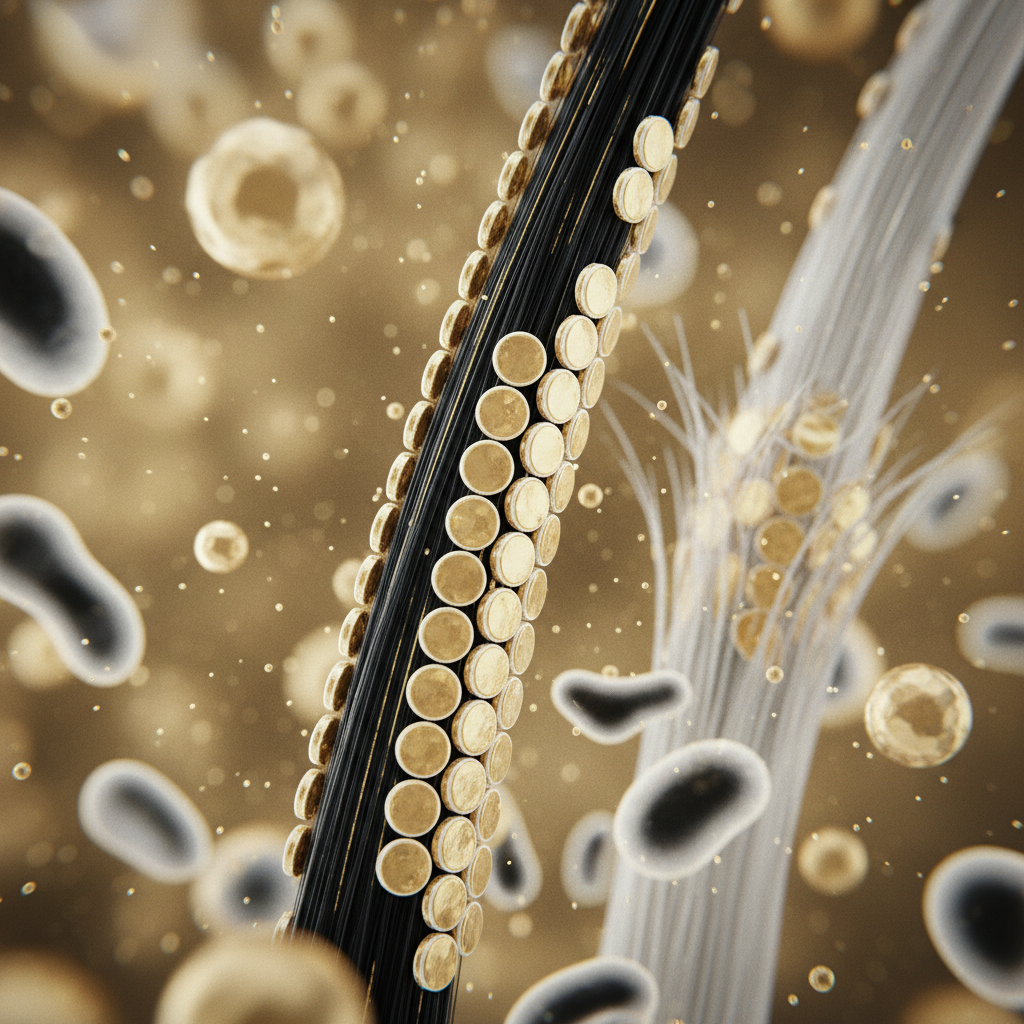
In virgin hair, natural lipids, notably 18-methyleicosanoic acid (18-MEA) and structural ceramides, coat the cuticle surface and fill the intercellular gaps of the CMC. When hair is exposed to alkaline solutions (such as hair bleach at pH 9.5 to 11.0 or permanent dyes), the lipid layer is stripped. Sunlight (specifically UVA and UVB radiation) also photo-oxidises these delicate lipids.
When you apply a conditioner or treatment containing ceramides, the lipid molecules anchor to the hydrophobic regions of the damaged cuticle. By reinforcing the delta layer of the CMC, ceramides re-establish hydrophobic balance. This prevents water from rushing into the cortex when wet, which swells the fibre and stretches the cuticle, and prevents rapid drying when moving into arid environments.
Intact Cuticle: [ Scale ] ==(Ceramide / Lipid Cement)== [ Scale ]
Depleted Cuticle: [ Scale ] .......... Gaps / Loss .......... [ Scale ]
Treated Cuticle: [ Scale ] ==(Topical Ceramide Patch)== [ Scale ]
Signs your hair lacks lipid cohesion
Unlike scalp conditions that cause itchiness or flaking, lipid loss manifests directly along the fibre. Common indicators that your hair could benefit from lipid and ceramide reinforcement include:
- High porosity: Hair absorbs water almost instantly when wet, yet dries out rapidly into a stiff, straw-like texture.
- Rough tactile sensation: Running your fingers upwards from tip to root feels distinctively bumpy or abrasive.
- Severe tangling: Cuticle scales remain lifted, catching on neighbouring hairs and causing stubborn knots.
- Increased mechanical snapping: Hair breaks off in short fragments during brushing or blow-drying, distinct from shedding whole strands with a white bulb attached.
- Dullness: A compromised, uneven cuticle surface scatters light in all directions rather than reflecting it smoothly.
Ceramides vs other haircare lipids and proteins
Different restorative ingredients target different structural layers of the hair shaft. Understanding these distinctions ensures you build an effective routine.
| Ingredient Class | Typical Examples | Target Hair Zone | Primary Mechanism | Best Used For |
|---|---|---|---|---|
| Ceramides | Ceramide NP, Ceramide AP, Ceramide 2, Pseudo-ceramides | Cell Membrane Complex (CMC), outer cuticle edges | Restores intercellular lipid cement; seals cuticles down | High-porosity, bleached, and heat-damaged hair |
| Fatty Acids / Esters | 18-MEA, Stearic acid, Oleic acid | F-layer (cuticle exterior) | Re-establishes hydrophobicity; repels excess water | Restoring virgin surface slickness after colour services |
| Hydrolysed Proteins | Hydrolysed wheat protein, Keratin peptides | Cortex and cuticle gaps | Temporarily fills structural protein voids; adds tensile body | Fine, chemically weakened, or elastic, mushy hair |
| Heavy Plant Oils | Argan oil, Coconut oil, Jojoba oil | Cuticle surface and partial cortex penetration | Lubricates fibre surface; provides occlusive slip | Thick, coarse, or afro-textured hair prone to dryness |
What you can do to restore lipid balance
Repairing compromised hair requires an intentional approach that combines lipid replacement with mechanical gentleness:
- Check ingredient labels: Look for terms such as
Ceramide NP,Ceramide AP,Ceramide EOP,Phytosphingosine, orSphinganinein the middle or upper section of ingredient lists on leave-in conditioners and deep masks. - Layer with hydrolysed proteins: If hair has undergone chemical lightening, alternate between protein masks (which shore up cortical strength) and ceramide-rich treatments (which seal the cuticle over that newly reinforced cortex).
- Minimise high-alkaline exposure: Use pH-balanced shampoos formulated between pH 4.5 and 5.5 to avoid forcing the cuticles open unnecessarily during washing.
- Reduce thermal stripping: Direct heat above 185°C degrades both keratin proteins and lipid layers. Always use thermal protectants before applying heat stylers.
- Support from roots to ends: Healthy new hair growth emerges with an intact lipid envelope. Maintaining balanced scalp hygiene ensures the follicle produces hair under optimal metabolic conditions.
For individuals seeking comprehensive hair support, products from Watermans provide targeted topical formulations. Watermans blends revitalising scalp ingredients, botanical extracts, and conditioning agents designed to promote a healthier-looking scalp environment while reinforcing the feel and resilience of thinning, fragile strands prone to breakage.
When the cause may be something else
If your hair continues to snap, thin, or deteriorate despite using ceramide treatments, the root cause may lie elsewhere:
- Diffuse follicular shedding: If you are finding full-length hairs on your pillow, in the shower drain, or on your clothes with tiny white bulbs at the end, you are experiencing shedding, not breakage. Common triggers include post-illness telogen effluvium, nutritional deficiencies (such as iron or vitamin D), thyroid imbalances, or acute physiological stress.
- Excessive protein build-up: Overusing heavy keratin treatments without adequate moisturising lipids can leave fibres stiff, brittle, and prone to snapping.
- Mineral accumulation: Hard water minerals (calcium and magnesium) bind to hair strands, creating an impermeable barrier that mimics cuticle damage and prevents conditioning agents from penetrating.
When to consult a professional
You should consider seeing a qualified trichologist, dermatologist, or GP if:
- You notice sudden, patchy hair loss (e.g., circular bald patches indicative of alopecia areata).
- Hair shedding exceeds normal levels (over 100 strands per day) for more than two to three months.
- Your scalp presents with inflammation, intense itching, burning, redness, or scabbing.
- Breakage is widespread and sudden despite no recent chemical treatments, which may indicate structural hair shaft disorders.
Frequently asked questions about Role of Ceramides in Hair Care
What is the primary role of ceramides in hair care products?
The core role of ceramides in hair care formulations is replenishing the lost lipids of the cell membrane complex. They lock the cuticle shingles down against the hair shaft, smoothing the surface, minimising friction-induced breakage, and helping damaged fibres retain essential hydration.
Can ceramides help fine or thinning hair?
Yes, but they should be used in lightweight formulations. Ceramides strengthen the cuticle without swelling the shaft or leaving excessive grease, which makes hair feel resilient and smooth without weighing down delicate, thinning strands.
Are natural ceramides better than synthetic ceramides?
Not necessarily. Most cosmetic haircare products utilise nature-identical synthetic ceramides or bio-fermented pseudo-ceramides. These lab-engineered versions are pure, highly stable, and designed specifically to mimic the exact binding properties of human sphingolipids within the hair fibre.
How often should you use ceramide hair treatments?
For moderately dry or colour-treated hair, using a ceramide-infused conditioner or leave-in serum two to three times a week provides sufficient protection. Severely bleached or chemically straightened hair may benefit from incorporating ceramide treatments into every wash cycle.
Can ceramides regrow hair that has fallen out?
No. Ceramides act cosmetically and structurally on the non-living hair shaft. They do not penetrate living follicular stem cells or modify the androgenic pathways responsible for genetic hair thinning or telogen effluvium.
Summary
The role of ceramides in hair care is distinct, essential, and grounded in hair lipid chemistry. While they cannot alter follicular growth cycles or fuse broken split ends indefinitely, their capacity to replenish the cell membrane complex makes them indispensable for damaged, bleached, and high-porosity hair. By smoothing raised cuticles, trapping moisture, and shielding fragile inner cortices from everyday mechanical stress, ceramides keep hair resilient, soft, and visibly healthy.
Sources and references
- International Journal of Cosmetic Science: Hair lipids and their role in fibre structure and cosmetic properties (2010).
- Journal of Cosmetic Dermatology: The role of ceramides and lipids in the restoration of damaged hair fibres (2018).
- British Association of Dermatologists: Hair shaft abnormalities and weathering (2021).
- Cosmetic, Toiletry and Perfumery Association (CTPA): Understanding hair structure and conditioning ingredients (2022).
- PubMed Central: Lipids of the human hair fibre: distribution, composition, and functions (2015).
Find these ingredients in Watermans products
- Argan Oil: you will find this ingredient in our Hair Growth Shampoo.
- Vitamin D: you will find this ingredient in our Hair Vitamins.
- Oleic Acid: you will find this ingredient in our Camellia & Black Castor Hair & Body Oil.
- Wheat Amino Acids: you will find this ingredient in our Heat Protection Spray.