Repairing Damaged Hair Shafts: The Trichological Evidence
9 min read ·
Understanding the science of repairing damaged hair shafts: discover what cosmetic treatments can fix, what they cannot, and how to stop breakage.
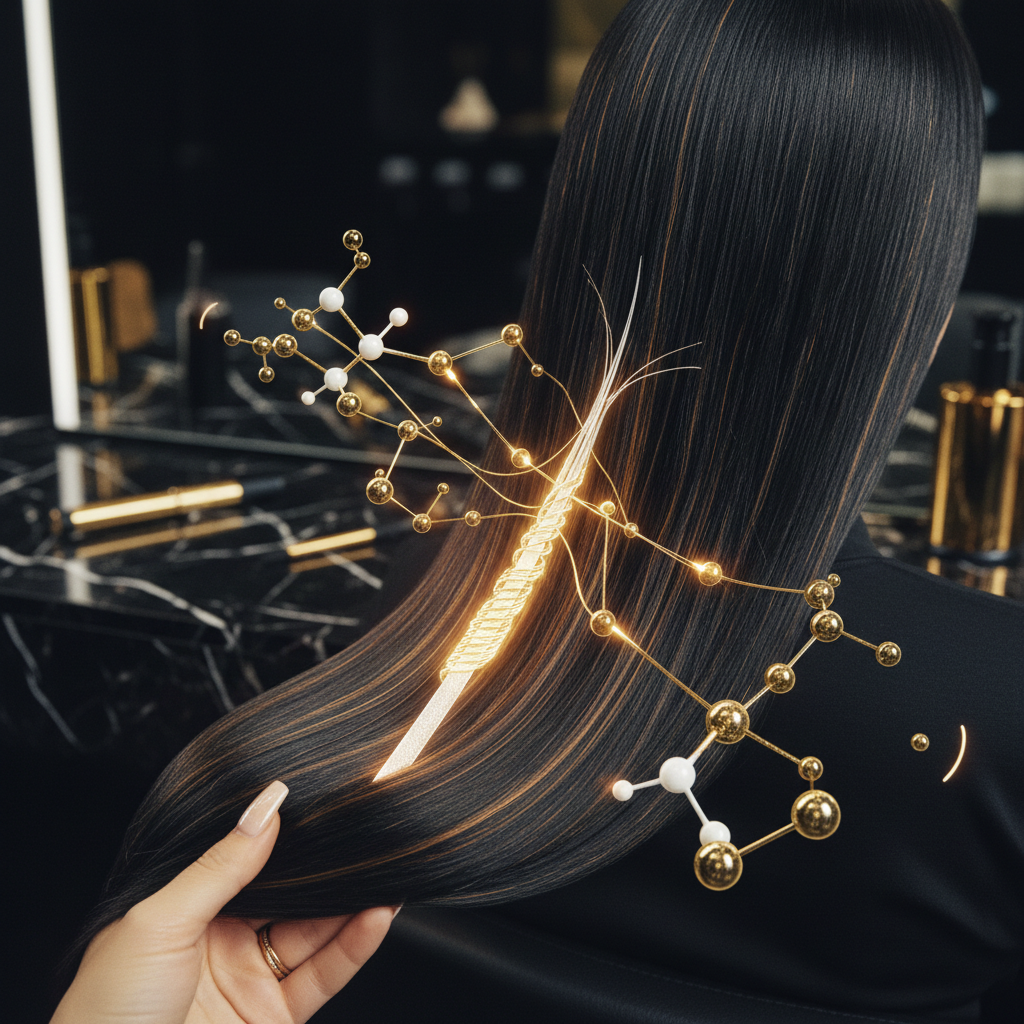
Quick answer: When discussing repairing damaged hair shafts, it is essential to understand that hair fibres are non-living biological structures without living cells to regenerate tissue. True biological healing is impossible. Instead, cosmetic repair relies on physically reinforcing the internal cortex, smoothing lifted cuticle scales, and replacing lost surface lipids (primarily 18-methyleicosanoic acid). While deep conditioning, protein treatments, and bond-building agents can temporarily restore tensile strength and reduce breakage, severely fractured hair shafts ultimately require trimming to prevent progressive splitting.
Key takeaways
- Hair is physiologically non-living, meaning a fractured hair shaft cannot heal or regrow lost biological material in the way skin does.
- Cuticle weathering lifts the protective outer scales, exposing the fibrous cortex to protein loss, moisture depletion, and mechanical breakage.
- Cosmetic interventions work by temporarily patching structural gaps using hydrolysed proteins, film-forming conditioning agents, and synthetic bond multipliers.
- Chemical bleaching, excessive heat above 180°C, and alkaline processing permanently deplete 18-MEA, the hair shaft's natural hydrophobic lipid layer.
- Mechanical breakage along the shaft is fundamentally distinct from root hair loss (alopecia) and requires topical fibre management rather than follicle treatments.
Repairing Damaged Hair Shafts: what the evidence shows
Scientific research into repairing damaged hair shafts reveals a clear distinction between cosmetic patching and true biological regeneration. Once a hair fibre emerges from the scalp, its metabolic activity ceases. The fibre consists of keratinised protein, water, lipids, and trace minerals. Consequently, no topical formula, supplement, or serum can physically fuse a fully severed split end or revive a broken keratin matrix permanently.
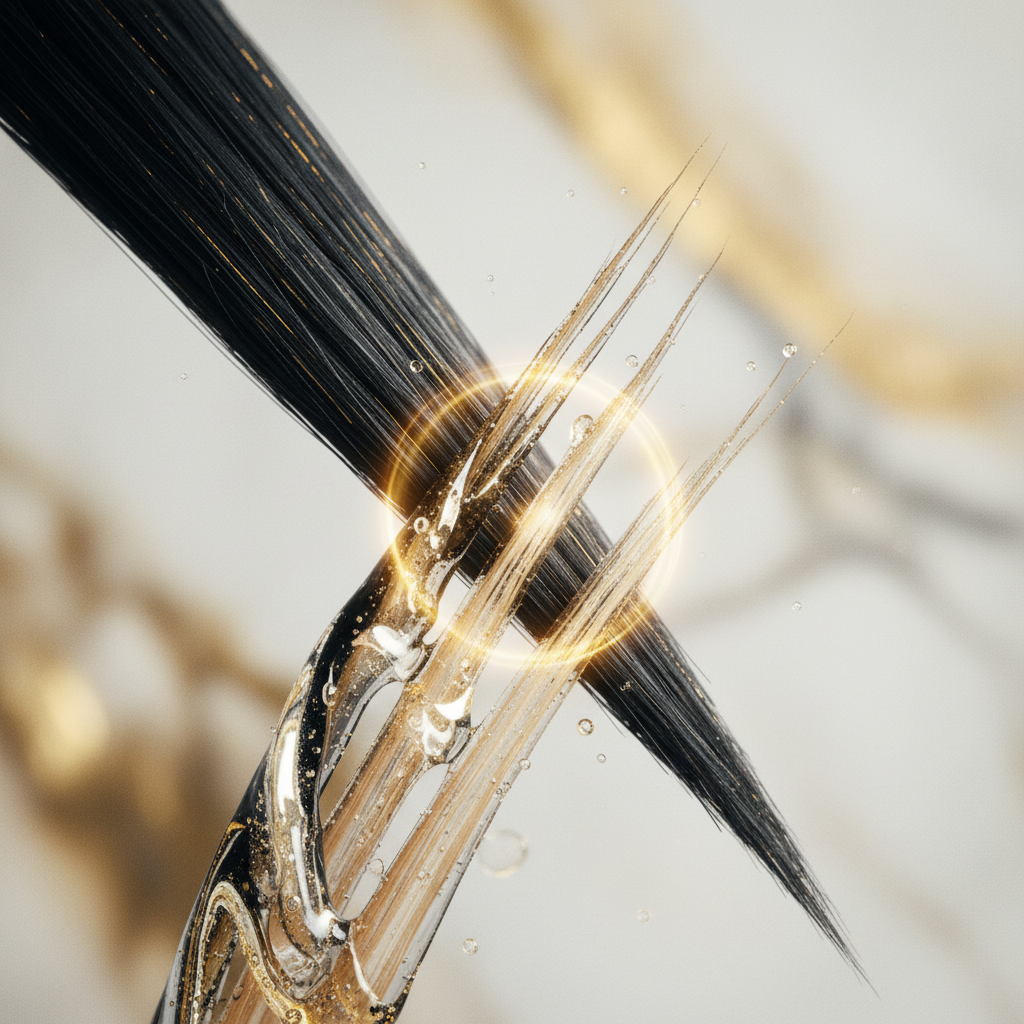
Cosmetic chemistry, however, provides measurable ways to restore fibre performance. Peer-reviewed trichological studies show that specialised conditioning molecules can deposit into the porous cortex and adhere to the cuticle surface. Ingredients such as hydrolysed wheat protein, amino acids, and polyquaternium polymers temporarily increase tensile strength, improve elasticity, and lower the friction coefficient between individual strands. This reduces combing forces, which prevents the secondary breakage that commonly ruins compromised hair.
Recent cosmetic innovations focus on cross-linking technologies, commonly referred to as bond builders. Formulations using dicarboxylic acids (such as maleic acid or itaconic acid) create artificial ionic or covalent bridges across severed disulfide bonds. While these treatments significantly reduce wet-combing friction and restore temporary structural integrity after chemical processing, their effects are temporary and degrade with repeated washing.
Anatomy of shaft damage: cuticle to cortex
To understand the reality of fibre repair, you need to examine the three distinct layers of the hair shaft.
1. The Cuticle
The outermost shield consists of 6 to 10 overlapping cellular scales, resembling tiles on a roof. Intact cuticles are coated with a protective lipid monolayer dominated by 18-methyleicosanoic acid (18-MEA). This fatty acid layer gives virgin hair its natural water-repellent (hydrophobic) quality, high shine, and low surface friction. When physical friction, UV light, or alkaline chemicals strip this lipid layer, the cuticles lift, chip, and peel away. The fibre becomes hydrophilic, absorbing water rapidly, swelling unevenly, and tangling easily.
2. The Cortex
Beneath the cuticle lies the cortex, representing roughly 80 to 90 percent of the total fibre mass. It consists of long keratin polypeptide chains bundled together by three types of chemical bonds:
- Disulfide bonds: Strong covalent bonds between cysteine amino acids that determine overall fibre strength and permanent curl shape.
- Hydrogen bonds: Weak, temporary bonds broken by water and reset by heat drying.
- Salt (ionic) bonds: pH-dependent linkages between acidic and basic amino acid side chains.
When cuticular erosion exposes the cortex, environmental stressors break disulfide bonds and leach low-molecular-weight proteins from the cortex, leaving internal voids that invite structural snapping.
3. The Medulla
The central core of the shaft consists of an irregular, porous column of cells. It is often absent in fine hair and contributes minimally to the mechanical durability of the fibre.
| Damage Type | Primary Cause | Structural Impact | Proven Remediation Strategy |
|---|---|---|---|
| Cuticle Weathering | Daily combing, UV exposure, hard water minerals | Stripping of 18-MEA, raised cuticle scales, dullness | Cationic surfactants, silicones, natural plant oils |
| Thermal Degradation | Hot styling tools exceeding 180°C | Denatured keratin proteins, bubble hair formation | Heat protectant polymers, lower styling temperatures |
| Chemical Porosity | Bleaching, permanent hair colour, relaxers | Cleaved disulfide bonds, severe cortex protein depletion | Acidic pH balancing, bond builders, hydrolysed protein |
| Mechanical Fracture | Aggressive wet brushing, tight elastic ties | Transverse cuticle cracking, longitudinal splitting | Wide-tooth detangling, leave-in friction reducers, trimming |
What the evidence does not show
Marketing campaigns often make extraordinary promises that exceed the physical realities of fibre science. Controlled laboratory testing has consistently failed to demonstrate several common assertions:
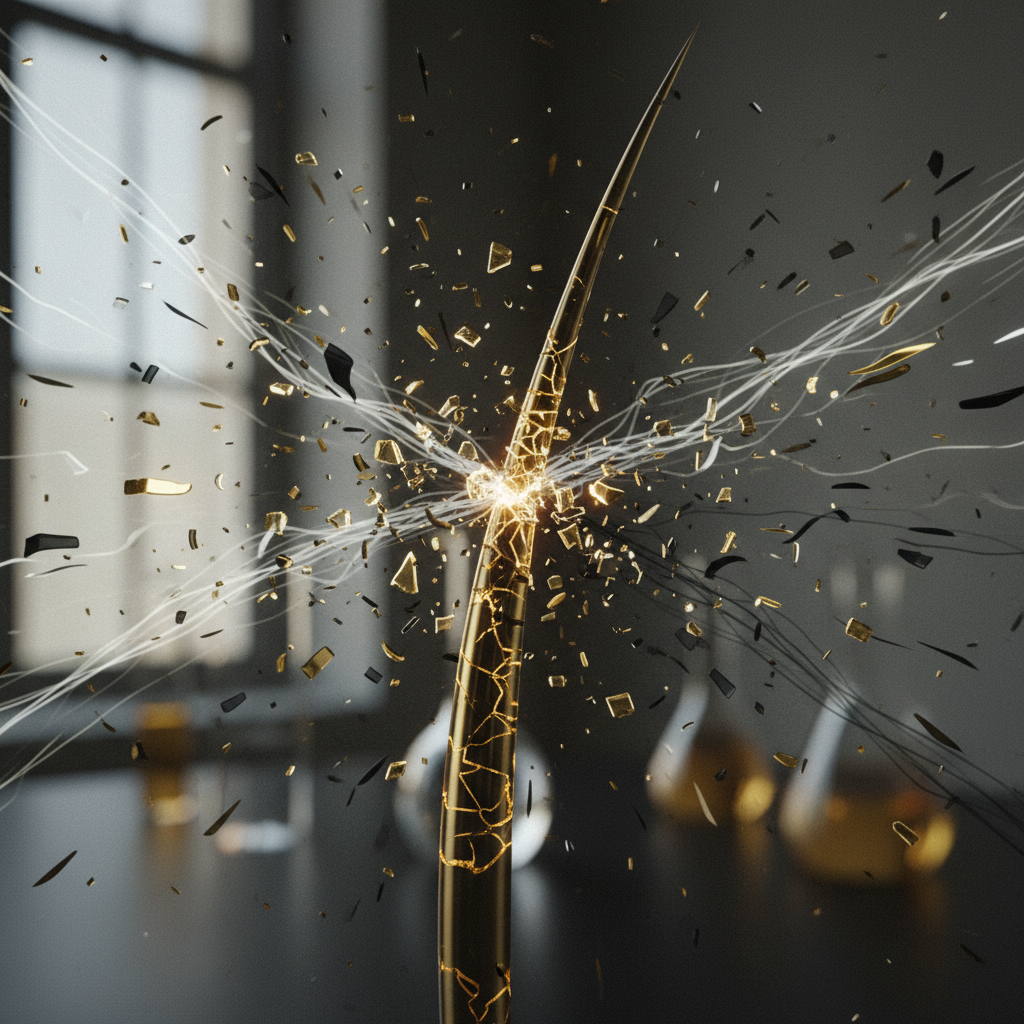
- Split ends cannot be permanently mended: While certain polyelectrolyte complexes can physically glue split ends together across a wash cycle, the structural fissure remains. The bond breaks again under standard mechanical brushing.
- Internal vitamins do not rebuild already grown shafts: Ingesting biotin, collagen, or multivitamin complexes does not deliver nutrients to the dead, extruded hair shaft. Nutritional support only influences new cellular development inside the living follicle beneath the skin.
- Natural oils do not replace internal proteins: Although plant oils like coconut or argan oil provide lubricity and reduce moisture-related swelling, they cannot reconstruct cleaved disulfide bonds or supply structural amino acids.
Signs of a compromised hair shaft
Recognising structural damage early lets you alter styling routines before breakage occurs. Key signs include:
- The wet stretch failure: Wet virgin hair can safely stretch roughly 30 percent of its resting length and bounce back. Damaged hair either stretches excessively without returning to shape (indicating lost protein) or snaps immediately (indicating extreme moisture depletion and bond damage).
- High porosity and rapid saturation: If your hair absorbs water instantly upon contact but dries within minutes into a rough, straw-like texture, the protective cuticle is severely compromised.
- Increased knotting and friction: Raised cuticles act like microscopic hooks, catching on adjacent strands and causing persistent tangling.
- White bulb absence: If short hairs shed with no tiny white bulb at either end, the hair did not shed naturally from the scalp follicle. It fractured along the shaft.
Evidence-based strategies for fibre repair
While you cannot biologically heal keratin fibres, you can dramatically improve their durability and appearance using targeted interventions.
Acidic pH restoration
Natural hair sits at an acidic isoelectric point of approximately pH 3.67, while the skin of the scalp rests around pH 5.5. Alkaline salon treatments and harsh surfactants swell the hair and force cuticle scales outward. Using pH-balanced cleansers and conditioning rinses formulated between pH 3.5 and pH 5.0 neutralises static electrical charges, flattens cuticle scales against the shaft, and seals in internal moisture.
Strategic protein replenishment
Hydrolysed proteins derived from wheat, silk, or soy have molecular weights small enough (typically under 1,500 Daltons) to penetrate underneath lifted cuticle scales. They sit within porous cortical voids, temporarily improving tensile strength. However, over-application of protein without balancing moisturising agents can cause fibre stiffness, increasing the risk of brittle snaps.
Cationic lipid conditioning
Because damaged hair carries a negative electrical charge due to exposed cysteic acid groups, positively charged (cationic) conditioning agents adhere strongly to the compromised zones. Ingredients such as behentrimonium methosulfate and cetrimonium chloride coat damaged areas, mimic lost 18-MEA lipids, and cut wet-combing friction by more than 80 percent.
Protective habits and tools
- Maintain hot styling tools below 180°C, as temperatures above 200°C melt hair keratin and degrade internal protein structures.
- Switch to microfiber towels or gentle cotton pressing rather than rough towel-drying.
- Detangle starting at the tips, working gradually toward the roots using a flexible, wide-tooth tool or detangling brush on wet hair coated with conditioner.
When the problem is not shaft damage
It is critical not to confuse shaft breakage with true follicular shedding or alopecia. If you notice wide gaps along your parting, a receding hairline, or round patches of bare skin, the issue resides within the scalp follicle, not the hair shaft. Hair shedding where strands consistently carry a white keratin bulb at the root indicates natural telogen phase release, telogen effluvium, or androgenetic thinning. Topical conditioning regimens cannot treat internal hormonal, autoimmune, or nutritional causes of hair loss.
Supporting compromised hair with Watermans
When managing hair that feels weak, brittle, or prone to snapping along the shaft, your product choice makes a measurable difference to fibre maintenance. Watermans develops formulas that support both scalp hygiene and cosmetic strand condition without aggressive sulphates that strip delicate cuticles.
Watermans GrowMe Shampoo is formulated at a hair-friendly pH, providing a gentle cleansing action enriched with hydrolysed lupin protein, biotin, rosemary, and niacinamide. This supports a clean, balanced scalp environment while depositing lightweight structural reinforcement onto delicate fibres.
Complementing the wash step, Watermans ConditionMe Conditioner brings together cholesterol, caffeine, and hydrolysed keratin. Cholesterol acts as a vital physiological lipid, filling microscopic gaps along stripped hair shafts to restore suppleness and bounce. This rich conditioning blend reduces wet friction, detangles fragile ends without mechanical pulling, and strengthens the hair fibre against everyday physical styling damage.
Frequently asked questions about Repairing Damaged Hair Shafts
Can you permanently reverse damage to hair shafts?
No. Because hair fibres consist of non-living keratin, they lack living cells to repair structural cracks. When repairing damaged hair shafts, treatments can only patch cortical voids and smooth cuticle scales temporarily. Damaged sections eventually need to be trimmed away to stop fractures travelling upward.
How do bond-building products work on broken hair?
Bond-building formulations introduce reactive chemical compounds that link across severed disulfide bonds inside the cortex. These create artificial bridges that temporarily restore tensile strength, elasticity, and structure to chemically over-processed strands until the treatment gradually washes out.
What is the difference between hair breakage and hair shedding?
Breakage occurs when the hair shaft snaps horizontally along its length due to physical or chemical stress, showing no root bulb. Shedding is the natural biological release of a full hair from the scalp follicle, which leaves a visible white bulb on the end.
Does hard water cause permanent damage to hair shafts?
Hard water contains calcium and magnesium ions that bind to the hair shaft, leaving mineral deposits that feel rough and dull. While these minerals do not permanently alter keratin, they increase surface friction and stiffness, making the hair far more vulnerable to mechanical breakage during everyday combing.
Can coconut oil repair internal hair bonds?
Coconut oil cannot repair broken internal disulfide bonds. However, because it contains lauric acid, it has a low molecular weight and linear chain that lets it penetrate the hair shaft. This reduces water absorption and cuticle swelling during washing, which helps prevent hygral fatigue and subsequent mechanical breakage.
Realities of fibre restoration
Managing compromised hair requires separating biological myth from cosmetic reality. You cannot regenerate dead keratin, but by treating hair as a delicate textile, you can protect what remains. Focus on reducing mechanical friction, keeping heat styling under 180°C, and using acidic, protein-balanced conditioners. Approaching the task of repairing damaged hair shafts through evidence-based cosmetic reinforcement and preventive trims will preserve length, retain natural movement, and keep your hair looking its healthiest.
Sources and references
- Robbins, C. R. (2012). Chemical and Physical Behavior of Human Hair. 5th ed. Springer-Verlag.
- Cruz, C. F., et al. (2016). "Human Hair Keratin after Chemical Degradation: Structural and Physicochemical Insights." Journal of Cosmetic Science, 67(4), 263-272.
- Syed, A. N., et al. (2002). "Effects of Hair Relaxers on the Tensile Properties of Caucasian and Afro-American Hair." Journal of Cosmetic Science, 53(5), 287-295.
- International Journal of Trichology. (2015). "Hair Cosmetics: An Overview." Int J Trichology, 7(1), 2-15. DOI: 10.4103/0974-7753.153450.
- British Association of Dermatologists. (2021). "Hair Breakage and Common Shaft Disorders." Patient Information Guide.
Find these ingredients in Watermans products
- Niacinamide: you will find this ingredient in our Hair Mask.