Preventing Hygral Fatigue in Damaged Hair: Science, Signs, and Solutions
10 min read ·
Learn the science of Preventing Hygral Fatigue in Damaged Hair. Discover how to protect the hair shaft from excessive water swelling, reduce breakage, and restore strength.
Quick answer: Preventing Hygral Fatigue in Damaged Hair requires stopping the repetitive swelling and contracting of the hair shaft caused by excessive water absorption. Damaged hair lacks a protective lipid layer, allowing water to flood the cortex and weaken internal keratin bonds. You can protect compromised fibres by applying penetrating pre-shampoo oils, maintaining an acidic pH between 4.5 and 5.5, using hydrolysed proteins, and reducing prolonged water contact. However, these cosmetic measures reinforce the fibre structure but cannot permanently repair severed chemical bonds.
Key takeaways
- Hygral fatigue occurs when the hair cortex repeatedly swells with water and contracts during drying, weakening keratin fibres.
- Chemically treated, bleached, or heat-damaged hair has high porosity, making it exceptionally vulnerable to excessive water uptake.
- Classic symptoms include a limp, mushy, or gummy texture when wet, extreme elasticity, and breakage along the hair shaft.
- Pre-shampoo oiling with penetrating lipids like coconut oil significantly reduces water absorption and cuticle swelling.
- Cosmetic treatments can rebuild temporary tensile strength, but heavily fractured fibres ultimately require physical trimming.
Preventing Hygral Fatigue in Damaged Hair: what the evidence shows
Preventing Hygral Fatigue in Damaged Hair centres on controlling how much water enters and exits the hair fibre. Healthy virgin hair possesses a natural, hydrophobic lipid barrier known as the 18-methyleicosanoic acid (18-MEA) layer, bound covalently to the outer cuticle surface. Chemical bleaching, permanent colouring, alkaline relaxers, and excessive heat strip this lipid coating away.
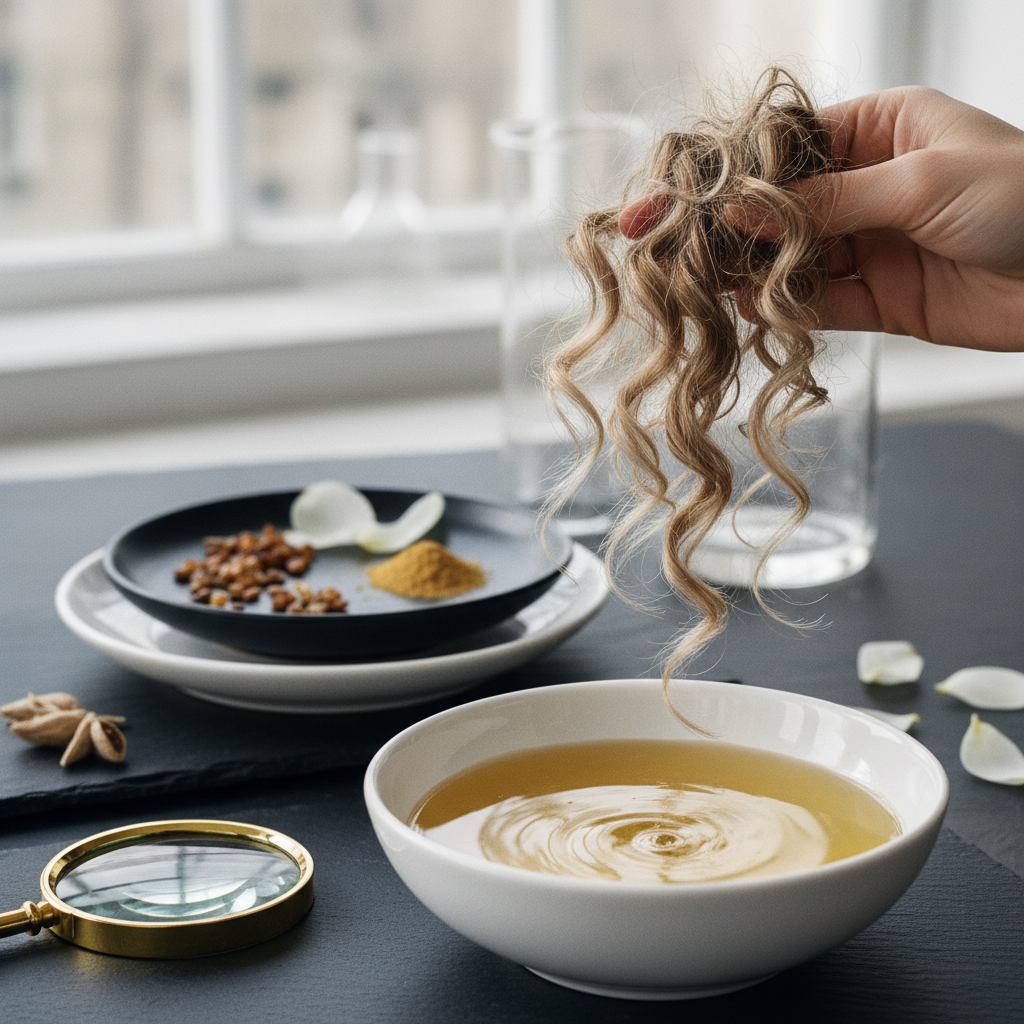
When the 18-MEA layer disappears, the hair switches from hydrophobic (water-repelling) to hydrophilic (water-loving). Without its protective seal, water rushes past the lifted cuticle scales directly into the cortex. Human hair can absorb up to 30 percent of its own dry weight in water under normal ambient conditions, expanding its diameter by roughly 14 to 16 percent. In damaged, hydrophilic hair, this swelling can exceed normal physiological thresholds.
As water floods the cortex, it temporarily disrupts the secondary hydrogen bonds that give keratin its stability. When the hair dries, the fibre contracts back down. Repeated cycles of excessive swelling and rapid contraction physically exhaust the protein matrix. Cosmetic science terms this mechanical breakdown hygral fatigue. Peer-reviewed studies in cosmetic dermatology confirm that limiting this moisture cycling preserves mechanical integrity and decreases breakage.
The biological and physical mechanism of fibre fatigue
To understand hygral fatigue, you must separate surface moisture from internal structural water. Hair is composed primarily of alpha-keratin chains bundled together inside cortical cells, surrounded by an amorphous protein-rich matrix.
When submerged in water, water molecules diffuse into this matrix, forcing the keratin protofibrils apart. In healthy hair, the intact cuticle limits how quickly and deeply liquid water penetrates. In damaged hair, the cuticle tiles are chipped, raised, or stripped entirely:
- Cuticle flaking and delamination: Repeated expansion forces the cuticle scales to lift outward. Over multiple wash cycles, these scales crack and break off.
- Loss of endocuticle integrity: The endocuticle, which is high in non-keratin proteins and low in cystine cross-links, swells more readily than the outer exocuticle layer. This differential swelling creates immense shear stress within the fibre wall.
- Hydrogen bond disruption: Water actively competes with the natural hydrogen bonds holding keratin coils together. With these bonds displaced, wet hair stretches abnormally under minimal tension.
- Permanent plastic deformation: Once hair stretches beyond its elastic limit (typically past 30 percent of its length for compromised fibres), the internal keratin chains slide past one another and cannot snap back. The fibre remains stretched, weak, and brittle.
Signs of hygral fatigue in compromised hair
Hygral fatigue does not appear overnight. It is the result of chronic, unmitigated water damage combined with an already compromised cuticle. Look for these hallmark signs:
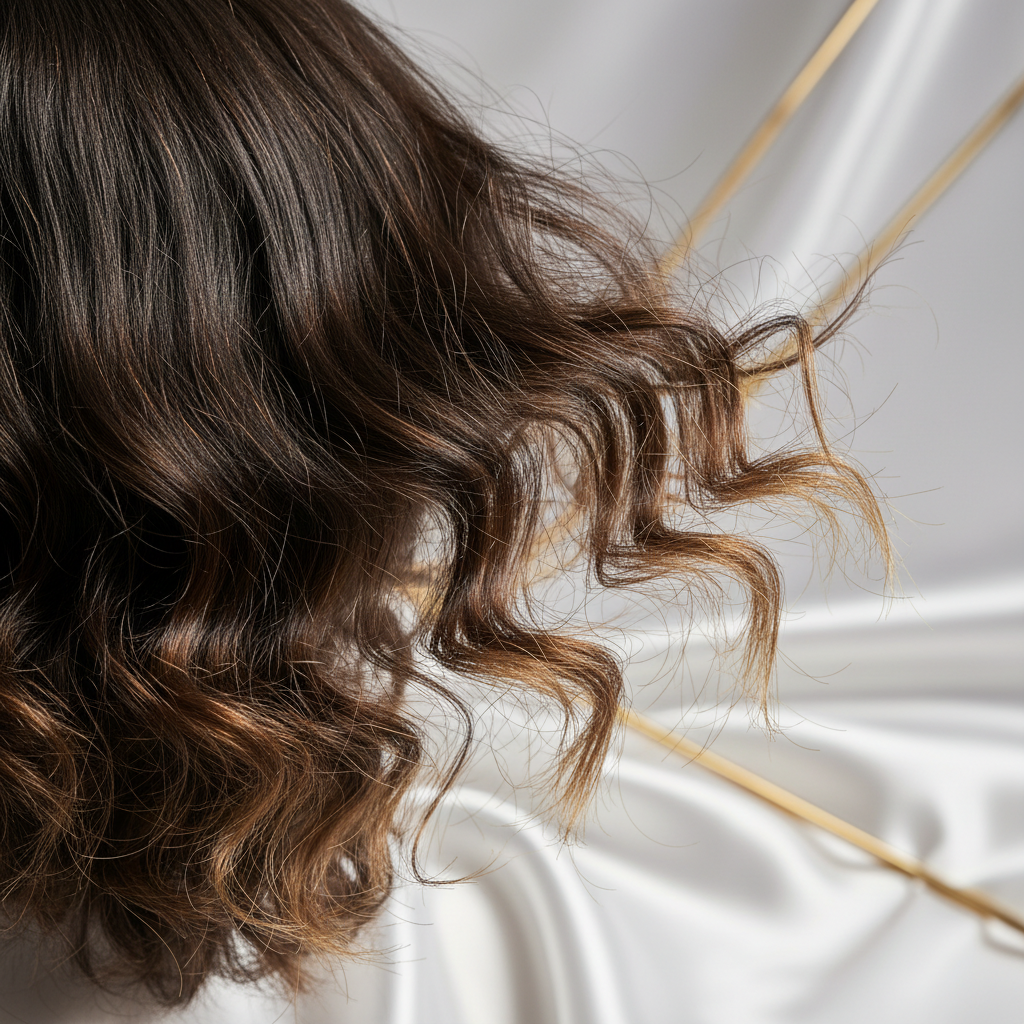
- Mushy or gummy wet feel: When wet, the strands feel unusually soft, spongy, or sticky between your fingers, lacking all firm resistance.
- Excessive, non-rebounding elasticity: If you gently stretch a wet strand, it extends significantly further than normal but fails to bounce back, snapping with minimal pull.
- Severe post-wash dullness: Hair looks frizzy, dull, and lifeless once dry because missing cuticle scales can no longer lie flat to reflect light.
- Tangling and matting: Exposed, lifted cuticles snag on neighbouring strands, causing persistent knotting during washing and rinsing.
- Fibre snapping: You notice short, clean-broken pieces of hair in the sink or brush rather than full-length hairs with root bulbs attached.
Structural differences: hygral fatigue vs. protein overload vs. hair shedding
It is easy to misdiagnose damaged hair. The table below outlines how hygral fatigue differs from other common hair shaft issues:
| Characteristic | Hygral fatigue | Protein overload / stiffness | Hair shedding (Telogen effluvium) |
|---|---|---|---|
| Primary location | Hair shaft (cortex and cuticle) | Hair shaft surface and cortex | Hair follicle (scalp level) |
| Wet texture | Mushy, gummy, limp, excessively soft | Stiff, rough, wire-like, brittle | Normal, depending on baseline fibre condition |
| Elasticity | Overly stretchy with zero snap-back | Zero stretch; snaps immediately under tension | Normal tensile behaviour for the individual |
| Root bulb present? | No (snaps mid-shaft) | No (snaps mid-shaft) | Yes (white keratin bulb visible) |
| Underlying mechanism | Repeated swelling/shrinking from water | Excess protein deposits reducing flexibility | Premature shift of follicles into resting phase |
| Primary fix | Penetrating oils, low pH, protein | Deep clarifying, humectants, emollient conditioners | Dermatological evaluation, addressing internal trigger |
Proven strategies for preventing hygral fatigue in damaged hair
Managing and preventing hygral fatigue requires a calculated balance of hydrophobic protection, pH management, and structural reinforcement.
1. Apply penetrating pre-shampoo oils
Standard cosmetic mineral oils coat the outside of the hair shaft, but small, non-polar triglycerides can actually penetrate through the cuticle into the cortex. Scientific investigations published in the Journal of Cosmetic Science demonstrated that coconut oil has a high affinity for hair proteins and a low molecular weight, allowing it to enter the fibre core.
Applying coconut oil as a pre-shampoo treatment 30 to 60 minutes before washing reduces water absorption during cleansing. The hydrophobic oil physically occupies voids in the cortex, preventing water from flooding the interior and limiting radial swelling by up to 50 percent.
2. Formulate with an acidic wash routine
Normal scalp and hair surface pH sits between 4.5 and 5.5. Alkaline environments (such as basic soaps or poorly formulated clarifying shampoos above pH 7.0) increase the negative electrical charge on the hair surface, which causes the cuticle scales to flare open and facilitates water absorption.
Always select shampoos and conditioners buffered to a pH of 4.5 to 5.5. Mild acidity keeps the cuticle shingles tightly compacted, minimises friction between wet fibres, and reduces the rate of water ingress.
3. Incorporate hydrolysed proteins and amino acids
Hydrolysed keratin, wheat protein, silk amino acids, and collagen help shore up damaged hair. Because damaged hair carries a net negative charge due to the oxidation of cystine into cysteic acid, positively charged (cationic) hydrolysed proteins bind electrostatically to damaged sites.
These proteins form a semi-occlusive, strengthening film over the cracked cuticle, temporarily bridging fissures and reinforcing tensile resistance when the hair is wet. Use protein-containing treatments every two to three washes, adjusting based on whether the fibre feels balanced or overly stiff.
4. Limit water exposure times
The longer damaged hair sits fully submerged or soaked, the more extensive the water-induced swelling.
- Keep shower times moderate and avoid soaking hair under running water longer than necessary.
- Discontinue the practice of overnight deep conditioning or leaving wet masks on under plastic caps for hours; modern cosmetic conditioning agents achieve maximum deposition within 5 to 15 minutes.
- After washing, immediately blot (do not rub) hair with a smooth microfibre towel or cotton T-shirt to wick away surface water rapidly.
5. Dry hair efficiently
Allowing damaged hair to air-dry for four to six hours keeps the internal cortex swollen and vulnerable for an extended period. Controlled blow-drying using medium heat and continuous motion from a distance of 15 centimetres has been shown in dermatological studies to cause less cell membrane complex damage than leaving wet hair saturated for prolonged hours. Always apply a silicone- or lipid-based heat protectant first.
What the evidence does not show
There is no scientific evidence that hygral fatigue causes hair loss from the scalp. It is entirely a hair shaft phenomenon. Water does not damage the living dermal papilla or miniaturise the hair follicle. If you are experiencing diffuse thinning across the scalp, widening parts, or clumps of hair coming out with intact white bulbs, hygral fatigue is not the cause.
Furthermore, no topical cosmetic oil, butter, or bonding mask can restore severed disulphide bonds to a permanently virgin state. While bond-building additives create artificial cross-links and oils reduce water ingress, damaged keratin cannot biologically regenerate. Treatments manage symptoms and reduce ongoing mechanical wear; they do not reverse severe structural degradation.
When to seek professional advice
If your hair crumbles between your fingers or snaps off in mass quantities upon touching it, cosmetic adjustments at home may be insufficient. A qualified hair colourist or trichologist can perform a wet tensile test and microscopic fibre assessment. When chemical damage has disintegrated the cuticle completely, the only permanent solution to stop structural splitting is a progressive blunt cut to remove the most compromised lengths.
For overall fibre maintenance and scalp care, look for balanced formulations. Products like Watermans GrowMe Shampoo and ConditionMe Conditioner are designed with gentle surfactants, hydrolysed proteins, and cholesterol to support a balanced moisture-to-protein ratio and maintain cuticle smoothness without stripping natural surface lipids.
Frequently asked questions about Preventing Hygral Fatigue in Damaged Hair
Can regular tap water worsen hygral fatigue?
Yes. Hard water containing high levels of calcium and magnesium can deposit mineral salts onto the hair shaft. These minerals crystallise, making the cuticle rough, brittle, and prone to snagging. While minerals do not cause swelling directly, the abrasive friction they produce accelerates cuticle loss, facilitating hygral fatigue.
How does porosity influence hygral fatigue?
High-porosity hair absorbs water instantly because of gaps, holes, and lifted scales along the cuticle layer. Because high-porosity hair takes in excessive water rapidly yet fails to retain internal bound hydration, it suffers the most acute swelling cycles, making it the primary candidate for hygral fatigue.
What is the most effective step in Preventing Hygral Fatigue in Damaged Hair?
The single most effective physical intervention is applying a penetrating oil, particularly coconut oil, before shampooing. By filling the cortex voids with hydrophobic lipids, you physically impede excessive water absorption, dampening the destructive cycle of cuticle swelling and drying shrinkage.
Will hygral fatigue make my hair fall out at the roots?
No. Hygral fatigue is strictly a hair shaft mechanical issue that results in mid-shaft fibre breakage. It does not cause hair shedding or follicular hair loss. If you see white bulbs at the ends of fallen strands, you are shedding from the root, which requires separate evaluation.
How long does it take to correct hygral fatigue?
You can dramatically improve fibre handling and wet tensile strength in two to four weeks by eliminating prolonged water exposure, introducing penetrating oils, and using balanced protein conditioners. However, split or heavily frayed ends caused by past fatigue must be trimmed away.
Conclusion
Preventing Hygral Fatigue in Damaged Hair requires deliberate management of water exposure and fibre porosity. When chemical processing or thermal styling strips hair of its natural protective lipids, water ceases to be benign; excessive uptake swells the cortex, disrupts hydrogen bonds, and degrades mechanical strength. By integrating penetrating pre-shampoo oils, maintaining an acidic pH, using hydrolysed proteins, and drying hair efficiently, you preserve the internal architecture of compromised fibres and protect your hair from preventable structural breakage.
Sources and references
- Journal of Cosmetic Science: "Effect of mineral oil, sunflower oil, and coconut oil on prevention of hair damage", 2003.
- International Journal of Cosmetic Science: "Hair breakage: A review of the mechanics and causes of fibre failure", 2009.
- Annals of Dermatology: "Hair Shaft Damage from Heat and Water Exposure", 2011.
- Journal of the Society of Cosmetic Chemists: "Chemical and physical properties of human hair: Swelling and sorption dynamics", 1998.