Premature Greying Causes and Care: The Evidence-Based Guide
8 min read ·
Premature Greying Causes and Care explained: discover the biological mechanisms, genetic triggers, nutritional deficiencies, and evidence-based ways to care for silver strands.

Quick answer: Understanding Premature Greying Causes and Care begins with biology: hair turns grey when melanocytes in the hair follicle reduce or stop melanin production, typically driven by genetics, oxidative stress, or nutritional deficiencies. While genetic greying cannot be reversed naturally, addressing underlying medical issues like vitamin B12 deficiency or thyroid dysfunction can sometimes restore pigment. Effective care focuses on gentle scalp maintenance, antioxidant protection, and managing altered hair texture to keep unpigmented strands hydrated, supple, and resistant to breakage.
Key takeaways
- Premature canities (greying) is clinically defined as losing pigment before age 20 in white people, before 25 in Asian populations, and before 30 in people of African descent.
- Genetics dictate the vast majority of cases, controlling the lifespan and stem cell reserves of follicular melanocytes.
- Oxidative stress, smoking, and systemic deficiencies (notably vitamin B12, ferritin, and copper) accelerate pigment loss.
- Grey hair lacks melanin, making it structurally more porous, drier, and significantly more vulnerable to ultraviolet (UV) radiation and heat damage.
- Watermans hair products offer external cosmetic support by nurturing the scalp environment and fortifying delicate fibres, though topical products cannot alter inherited genetic code.
Premature Greying Causes and Care: what the evidence shows
When examining Premature Greying Causes and Care, the medical literature distinguishes between chronological ageing and secondary systemic triggers. Every hair follicle contains melanocyte stem cells located in the bulge region. During the anagen (growth) phase, these cells produce mature melanocytes that migrate to the hair bulb, synthesising eumelanin (black or brown pigment) and pheomelanin (red or yellow pigment) to colour the keratin shaft.
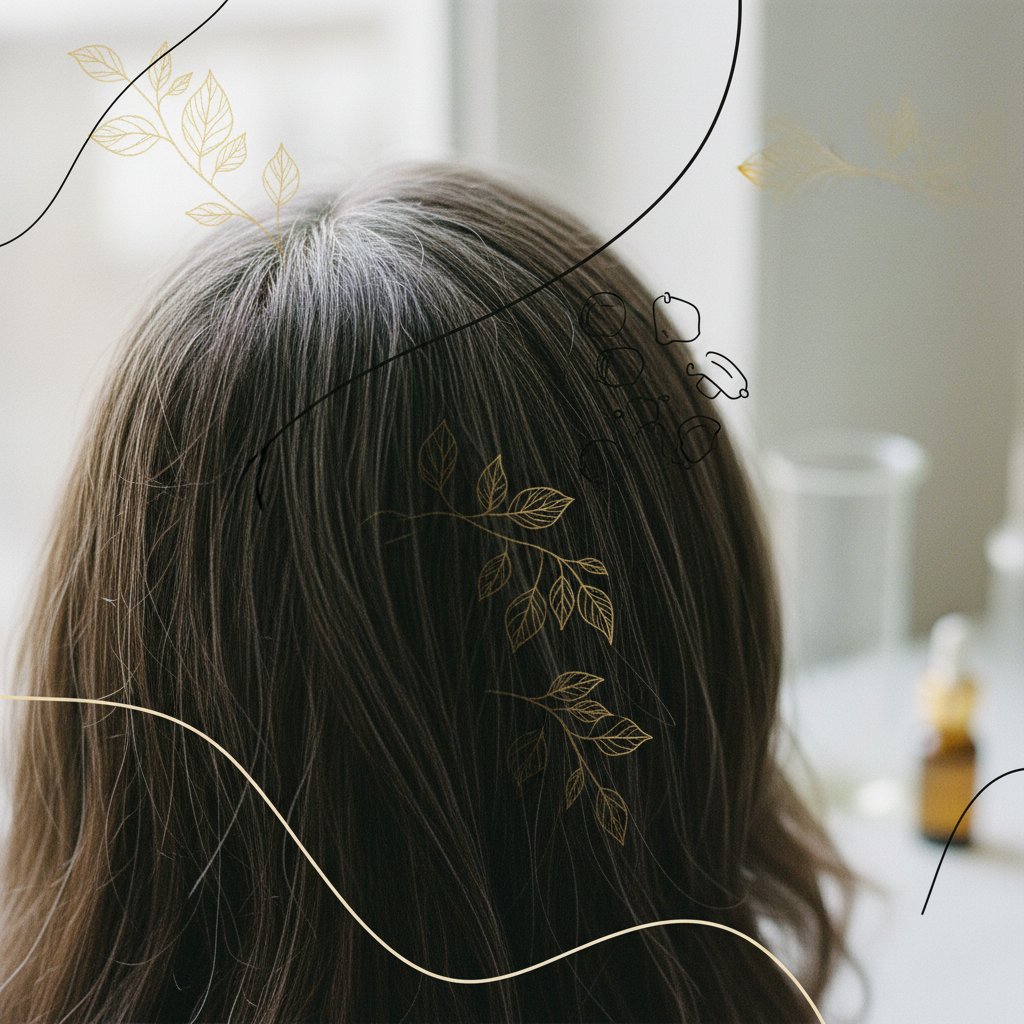
Premature greying occurs when this melanogenic system fails early. Over time, follicular melanocytes undergo programmed cell death (apoptosis) or experience stem cell depletion. Studies published in journals such as the British Journal of Dermatology indicate that while polygenic inheritance is the primary driver, environmental and metabolic stressors create reactive oxygen species (ROS) that overwhelm the follicle's internal antioxidant defences.
A 2013 cross-sectional study published in the Indian Dermatology Online Journal demonstrated a significant statistical correlation between cigarette smoking and the onset of grey hair before the age of 30. Nicotine and smoking-derived toxins induce systemic oxidative stress, directly damaging melanocyte cell membranes and speeding follicular senescence.
What the evidence does not show
There is no credible scientific evidence that topical shampoos, oils, or supplements can reverse genetically programmed grey hair. Once the follicular melanocyte stem cell reservoir is completely depleted, pigment synthesis ceases permanently in that specific follicle.
Similarly, the popular belief that severe psychological stress can turn an entire head of hair white overnight is biologically impossible. Hair outside the scalp is non-living keratin; it cannot change colour instantaneously. While intense acute stress can push pigmented hairs prematurely into the telogen (shedding) phase, unmasking existing white hairs, it does not strip melanin from an existing hair shaft. Finally, eating specific copper-rich foods or applying herbal pastes will not restore colour unless a documented, severe clinical deficiency caused the greying initially.
Biological mechanisms of premature greying
To understand why hair loses colour early, one must look at cellular metabolism inside the dermal papilla. Three distinct mechanisms explain why hair turns silver or white before its time:
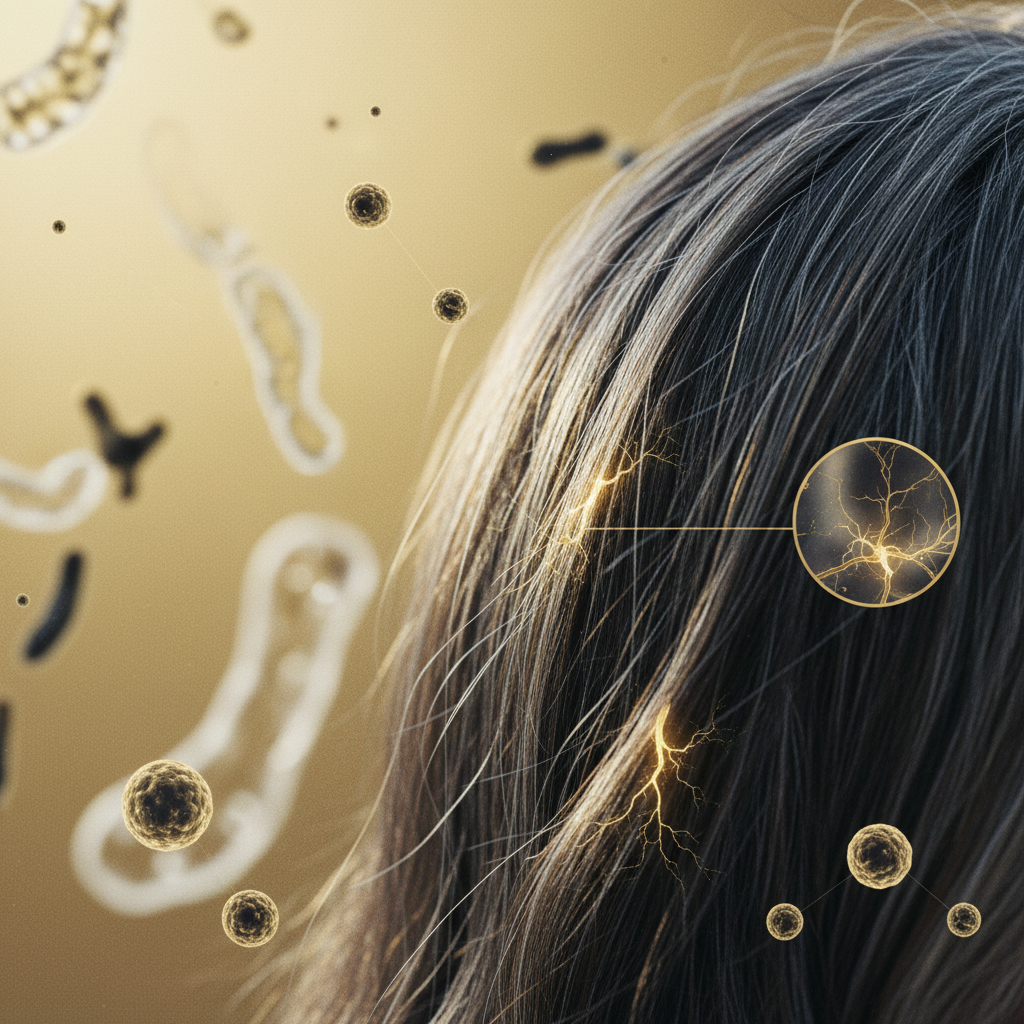
- Hydrogen peroxide accumulation: Healthy hair follicles produce small amounts of hydrogen peroxide during cellular metabolism. They clear this via the enzyme catalase. When catalase levels fall, hydrogen peroxide builds up in the follicle, literally bleaching the hair from the inside out and damaging the enzyme tyrosinase, which is essential for melanin production.
- Melanocyte stem cell (McSC) failure: Research from NYU Grossman School of Medicine demonstrates that melanocyte stem cells must move continuously between the follicular bulge and the germ compartment to mature. When they become physically trapped in the bulge, they fail to receive the signals needed to generate pigment for new growth cycles.
- Nutritional and endocrine disruption: Melanin synthesis requires essential cofactors. Vitamin B12, iron, and copper are critical for cellular division and enzymatic processes. Disruptions in thyroid hormone levels (both hypothyroidism and hyperthyroidism) also alter follicular metabolism, slowing pigment transfer to cortical keratinocytes.
| Factor | Primary mechanism | Reversibility status | Care strategy |
|---|---|---|---|
| Genetics (Hereditary) | Inherited melanocyte stem cell exhaustion | Irreversible | Textural care, UV defence, gentle colour services |
| B12 / Iron deficiency | Disrupted red blood cell synthesis and metabolic signalling | Potentially reversible with medical intervention | Serum blood tests, targeted medical supplementation |
| Smoking / Environmental | Systemic oxidative stress and catalase depletion | Halts accelerated progression | Smoking cessation, topical and dietary antioxidants |
| Thyroid dysfunction | Altered hormone signalling in dermal papilla | Occasionally reversible upon endocrine balance | Medical diagnosis, endocrine management, scalp support |
| Autoimmune (Vitiligo/Alopecia Areata) | Autoimmune destruction of follicular melanocytes | Variable; requires clinical treatment | Dermatological therapy, medical supervision |
Structural signs and changes to look for
Prematurely grey hair is fundamentally different from naturally pigmented hair. The loss of melanin leaves structural voids in the hair cortex, changing both how the fibre feels and behaves:
- Altered texture: White and grey hairs often feel coarser, wirier, and stiffer than pigmented strands. This occurs because the hair shaft has a larger cross-sectional area and altered cuticle lipid distribution.
- Increased porosity: Without melanin granules acting as structural fillers and natural UV absorbers, grey hair absorbs and loses moisture rapidly.
- Dryness and lack of shine: Follicles producing grey hair often produce less sebum, leading to surface roughness and light scattering rather than clean reflection.
- UV vulnerability: Melanin serves as an endogenous shield against ultraviolet radiation. Grey hair oxidises rapidly under sunlight, which can cause unpigmented keratin to develop an unwanted yellowish, brassy tinge.
What you can do: practical care for prematurely grey hair
Caring for premature greying requires a dual approach: internal health optimisation and external structural maintenance.
1. Screen for underlying deficiencies
If you notice substantial greying before age 20 or 25, visit a GP. Request a full blood count, serum ferritin, vitamin B12, folate, and thyroid stimulating hormone (TSH) panels. If an underlying deficiency is detected and treated early, some follicles may resume pigment production in future anagen cycles.
2. Shield the hair fibre from environmental damage
Because unpigmented strands lack natural photoprotection, use leave-in treatments containing protective conditioning agents when spending prolonged periods in strong sunlight. Minimise high-heat styling tools, which easily singe delicate, unpigmented hair cuticles.
3. Replenish surface lipids
Incorporate deep-conditioning masks formulated with natural fatty acids and hydrolysed proteins once or twice weekly. These treatments smooth the lifted, irregular cuticles characteristic of grey hair, restoring softness, elasticity, and manageable movement.
4. Support the scalp environment
Cosmetic care cannot rewrite genetics, but maintaining a balanced, nourished scalp helps new fibres emerge under optimal conditions. Using fortifying products, such as those from Watermans, provides vital nutrients, botanical extracts, and gentle cleansing agents that support overall scalp vitality and keep the emerging fibre looking resilient and dense.
When the cause may be something else
Sometimes, what looks like typical premature canities is a distinct clinical entity:
- Poliosis: A circumscribed patch of white hair that appears suddenly, often near the frontal hairline. This can occur in isolation or accompany genetic conditions like Waardenburg syndrome.
- Alopecia areata: An autoimmune condition that typically attacks pigmented follicles first. If pigmented hairs fall out rapidly, an underlying scattering of existing grey hairs is suddenly revealed, giving the false impression that the hair turned white in days.
- Vitiligo: An autoimmune condition causing depigmented patches on the skin that frequently affects hair follicles within those areas.
When to get professional advice
Consult a GP or registered trichologist if you observe:
- Sudden, patchy greying or rapid loss of pigment over weeks rather than years.
- Greying accompanied by physical symptoms such as unexplained fatigue, cold intolerance, brittle nails, or sudden weight fluctuations.
- Concurrent sudden hair shedding (telogen effluvium) or circular patches of hair loss.
- Scalp inflammation, itching, or scaly patches surrounding the depigmented follicles.
Frequently asked questions about Premature Greying Causes and Care
Can stress cause premature greying?
Yes, severe physiological or psychological stress can accelerate pigment loss. Acute stress releases noradrenaline from the sympathetic nervous system into hair follicles. Studies show noradrenaline drives rapid depletion of melanocyte stem cells, permanently reducing pigment production in affected follicles.
Does plucking a grey hair make multiple grow back?
No. Only one hair can grow from a single follicle. Plucking does not cause surrounding follicles to turn grey. However, repeated plucking can permanently damage the follicular wall, potentially causing scarring, ingrown hairs, or localized traction alopecia.
Can diet reverse premature grey hair?
Diet can only reverse grey hair if pigment loss stems directly from a diagnosed nutritional deficiency, such as insufficient vitamin B12, copper, or iron. If greying is driven by hereditary factors, dietary changes will not restore natural melanin synthesis.
What products help Premature Greying Causes and Care?
Managing grey hair requires products that hydrate, shield from UV radiation, and support scalp health. While topical formulas cannot restore lost genetic pigment, specialised botanical shampoos and fortifying treatments improve suppleness, combat wiry textures, and keep fragile unpigmented strands resilient.
Why do some grey hairs feel so coarse?
Grey hairs lack melanin granules, which alters the internal protein matrix and cuticle architecture. The hair shaft frequently grows with irregular thickness and reduced surface sebum, creating a wirier, less pliable texture that feels stiffer than neighbouring pigmented hairs.
Modern perspectives on grey hair management
Addressing Premature Greying Causes and Care requires separating biological realities from marketing myths. Inherited canities is a natural, genetically governed event that reflects cellular maturation rather than poor health. By ruling out systemic deficiencies, adopting proactive fibre care to compensate for the loss of natural melanin, and keeping the scalp thoroughly nourished, prematurely grey hair can remain remarkably strong, soft, and vibrant.
Sources and references
- British Association of Dermatologists. Guidelines on the Management of Canities and Pigmentary Disorders. bad.org.uk
- Zayed, A. A., et al. (2013). Smokers' hair: Does smoking cause premature hair graying? Indian Dermatology Online Journal, 4(2), 90-92.
- Zhang, B., et al. (2020). Hyperactivation of sympathetic nerves drives depletion of melanocyte stem cells. Nature, 577, 676-681.
- Sun, Q., et al. (2023). Dedifferentiation maintains melanocyte stem cells in a dynamic niche. Nature, 616, 774-782.
- National Health Service (NHS). Overview: Vitamin B12 or folate deficiency anaemia. nhs.uk