Postpartum Hair Loss and Recovery: Clinical Causes, Timelines, and Scalp Care
7 min read ·
Understand the biological causes, timelines, and practical care steps for Postpartum Hair Loss and Recovery, from hormonal shifts to full regrowth.

Quick answer: Postpartum Hair Loss and Recovery refers to the sudden, temporary shedding of hair that occurs two to four months after giving birth, followed by gradual natural regrowth. Clinically termed postpartum telogen effluvium, it happens because high pregnancy oestrogen levels suddenly drop after delivery, pushing prolonged growing hairs into a resting and shedding phase simultaneously. The main limitation is that topical treatments cannot prevent this hormonal reset, though gentle care supports normal regrowth within six to twelve months.
Key takeaways
- Postpartum hair loss is excessive physiological shedding (telogen effluvium), not permanent follicular loss or breakage.
- Up to 90 percent of women experience some degree of altered hair shedding after giving birth.
- Excessive shedding typically peaks around three to four months postpartum and subsides by six months.
- Normal hair density usually returns naturally between nine and twelve months postpartum.
- Blood tests can identify secondary drivers such as postpartum thyroiditis or iron deficiency ferritin levels below 30 micrograms per litre.
Postpartum Hair Loss and Recovery: what the evidence shows
Postpartum Hair Loss and Recovery follows a predictable physiological pattern driven by endocrine shifts. During pregnancy, high circulating levels of oestrogen and progesterone prolong the anagen (growth) phase of the hair cycle. Normally, roughly 85 to 90 percent of scalp hairs are growing, while 10 to 15 percent sit in the telogen (resting) phase. In the third trimester, anagen hairs can rise to over 95 percent, leading to noticeably thicker, fuller hair with minimal daily shedding.

At birth, the expulsion of the placenta triggers an abrupt drop in circulating oestrogens. This sudden withdrawal shocks a large proportion of follicles into the catagen (transition) phase, which quickly transitions into telogen. Because the telogen phase lasts approximately 100 days (three months), the resulting hair shed does not begin at birth. Instead, it starts abruptly between eight and sixteen weeks later.
Clinical studies report that daily shedding during the peak can exceed 300 to 400 hairs per day, compared to the normal physiological baseline of 50 to 100 hairs. Dermatological evidence confirms that this shedding is diffuse, though it frequently presents with noticeable thinning around the bitemporal regions and the frontal hairline. For most women, the recovery phase begins spontaneously as follicles re-enter the anagen phase, with full aesthetic recovery typically accomplished within six to twelve months postpartum.
What the evidence does not show
Controlled dermatological studies have not found evidence that topical cosmetics, special shampoos, or hair oils can arrest or prevent the hormonal trigger of postpartum shedding. Because the follicle transition was determined by systemic endocrine changes months prior, nothing applied to the scalp surface can force those telogen hairs to remain anchored.
Furthermore, evidence does not show that breastfeeding worsens or prolongs postpartum shedding. While prolactin levels remain elevated during lactation, studies demonstrate that the onset, duration, and severity of postpartum telogen effluvium do not differ significantly between exclusively breastfeeding mothers and formula-feeding mothers.
Finally, hair shedding must not be confused with hair breakage. Shed hairs from telogen effluvium have a small, white, bulbous keratinised root at the base. If hairs snapping off lack this bulb, the issue is structural fibre breakage caused by mechanical or chemical stress, rather than true postpartum shedding.
Distinguishing shedding from other postpartum issues
While diffuse shedding is expected, postpartum mothers are also susceptible to nutritional depletions and autoimmune shifts. The table below contrasts normal physiological shedding with other conditions that present similarly.
| Condition | Primary Trigger | Shedding Pattern | Diagnostic Marker | Typical Recovery Timeline |
|---|---|---|---|---|
| Normal Postpartum Shedding | Oestrogen withdrawal | Diffuse shedding, visible temporal recession | Telogen bulbs present, normal bloods | 6 to 12 months postpartum |
| Postpartum Thyroiditis | Autoimmune thyroid inflammation | Diffuse thinning, brittle fibre, extreme fatigue | Abnormal TSH and Free T4 | Resolves in 12 to 18 months, often needs monitoring |
| Iron Deficiency | Blood loss at delivery, low intake | Diffuse thinning, reduced density | Serum ferritin below 30 mcg/L | Regrowth begins 2 to 3 months after iron repletion |
| Female Pattern Hair Loss | Genetic sensitivity to androgens | Widening central part, crown preservation | Miniaturised follicles on dermoscopy | Progressive without intervention |
What you can do during recovery
While you cannot pause the biological shed, you can protect emerging hairs and optimise the scalp environment for strong regrowth.
Practise low-tension styling
New anagen hairs emerging around the temples and crown are fine and fragile. Avoid tight ponytails, slick buns, braids, or extensions that create traction. Chronic tension on healing follicles can provoke traction alopecia on top of existing telogen effluvium.
Minimise thermal and chemical stress
Blow-drying on high heat, flat-ironing, and bleaching weaken the hair shaft cuticle. When existing hair density is low, mid-shaft breakage makes hair look significantly thinner. Use lower heat settings and avoid chemical processing until baseline density stabilizes.
Check nutritional baselines
Postpartum blood loss and the demands of recovery can deplete key micronutrients. Have your general practitioner check serum ferritin, vitamin D, zinc, and a full blood count. Iron deficiency is particularly common; dermatologists generally aim for serum ferritin levels above 50 micrograms per litre to support robust anagen growth.
Use gentle volumising scalp care
Cleansing the scalp regularly prevents sebum build-up, desquamation, and microbial imbalance (such as Malassezia overgrowth), which can create subclinical inflammation around recovering follicles.
To help existing hair feel thicker during this transition, cosmetic support can make a genuine difference. Watermans produces specialised scalp and hair formulations, including their Grow Me shampoo and Condition Me conditioner. These products are formulated with ingredients such as biotin, caffeine, rosemary extract, niacinamide, and argan oil. While cosmetics do not alter systemic postpartum hormones, they help keep the scalp clean, condition the hair fibre to reduce mechanical breakage, and provide immediate cosmetic body and fullness while natural recovery takes place.
When to seek professional advice
Consult a doctor or dermatologist if you observe any of the following signs:
- Shedding continues unabated beyond twelve months postpartum.
- The scalp shows patchy, circular bald spots (which may indicate alopecia areata).
- You experience scalp pain, burning, redness, or severe scaling.
- You experience accompanying symptoms such as unexplained weight changes, chronic heat or cold intolerance, heart palpitations, or profound exhaustion.
- The hair loss is concentrated primarily as a widening of the central part line with visible follicle miniaturisation.
Frequently asked questions about Postpartum Hair Loss and Recovery
How long does Postpartum Hair Loss and Recovery usually take?
The shedding phase typically lasts between two and four months, peaking at month four. Recovery begins as follicles re-enter the anagen phase, with new short hairs visible along the hairline by six months. Most women see their pre-pregnancy hair density return completely between nine and twelve months after delivery.
Can vitamins stop postpartum hair loss?
No vitamin or supplement can stop postpartum hair loss, because it is triggered by an unavoidable drop in pregnancy hormones. However, correcting documented nutritional deficiencies, such as low ferritin or vitamin D, helps ensure that new follicles have the raw metabolic resources needed to grow back at a normal rate.
Does breastfeeding make postpartum hair loss worse?
Research shows that breastfeeding does not worsen postpartum hair loss. Although nursing sustains prolactin and alters gonadotropin release, the timing and intensity of postpartum telogen effluvium remain essentially identical between women who nurse and women who bottle-feed.
How do I know if my postpartum loss is actually my thyroid?
Postpartum thyroiditis affects roughly 5 to 10 percent of women in the first year after giving birth. Unlike uncomplicated postpartum shedding, thyroid-related loss is often accompanied by pronounced fatigue, unexpected weight fluctuations, mood changes, and temperature sensitivity. A simple blood test measuring TSH and Free T4 confirms the diagnosis.
A realistic perspective on postpartum hair health
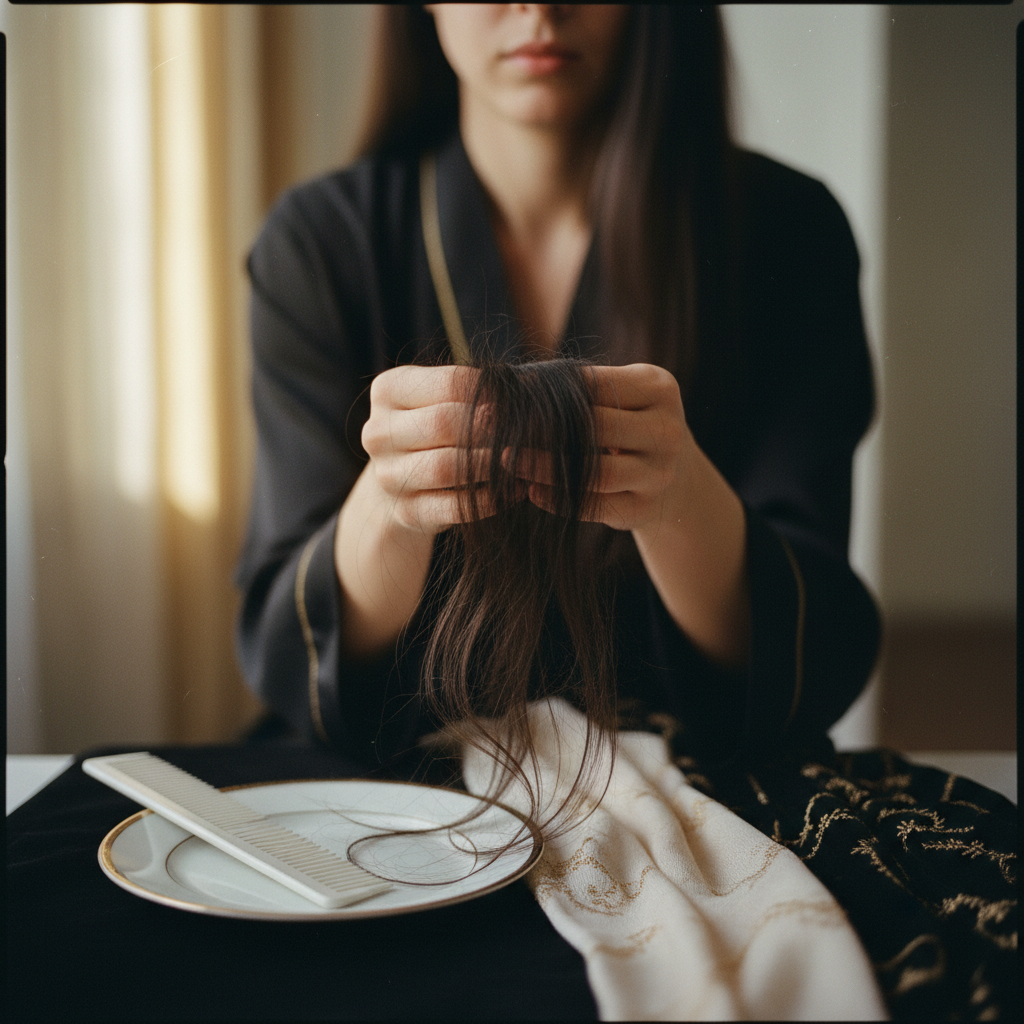
Experiencing sudden, dramatic clumps of hair coming out in the shower or on your brush can be unsettling, especially during an already demanding phase of life. Understanding that Postpartum Hair Loss and Recovery is a normal biological shedding event rather than a permanent loss helps alleviate anxiety. The follicles remain alive, healthy, and anchored beneath the skin. By supporting your body with adequate nutrition, avoiding harsh mechanical styling, and using gentle scalp care, you provide your hair with the ideal conditions to complete its natural cycle of renewal.
Sources and references
- British Association of Dermatologists: Telogen Effluvium Guidelines (2021).
- American Academy of Dermatology: Hair loss in new moms (2022).
- National Institute for Health and Care Excellence (NICE): Alopecia - hair loss clinical knowledge summary (2023).
- Journal of the European Academy of Dermatology and Venereology: Postpartum telogen effluvium: an update (2020).
- NHS: Common hair loss causes and postpartum shedding (2023).
Find these ingredients in Watermans products
- Zinc: you will find this ingredient in our Hair Vitamins.
- Niacinamide: you will find this ingredient in our Hair Mask.