The Role of pH in Hair Care
4 min read ·
Understanding pH is crucial for maintaining hair health and integrity, influencing everything from cuticle strength to product efficacy.
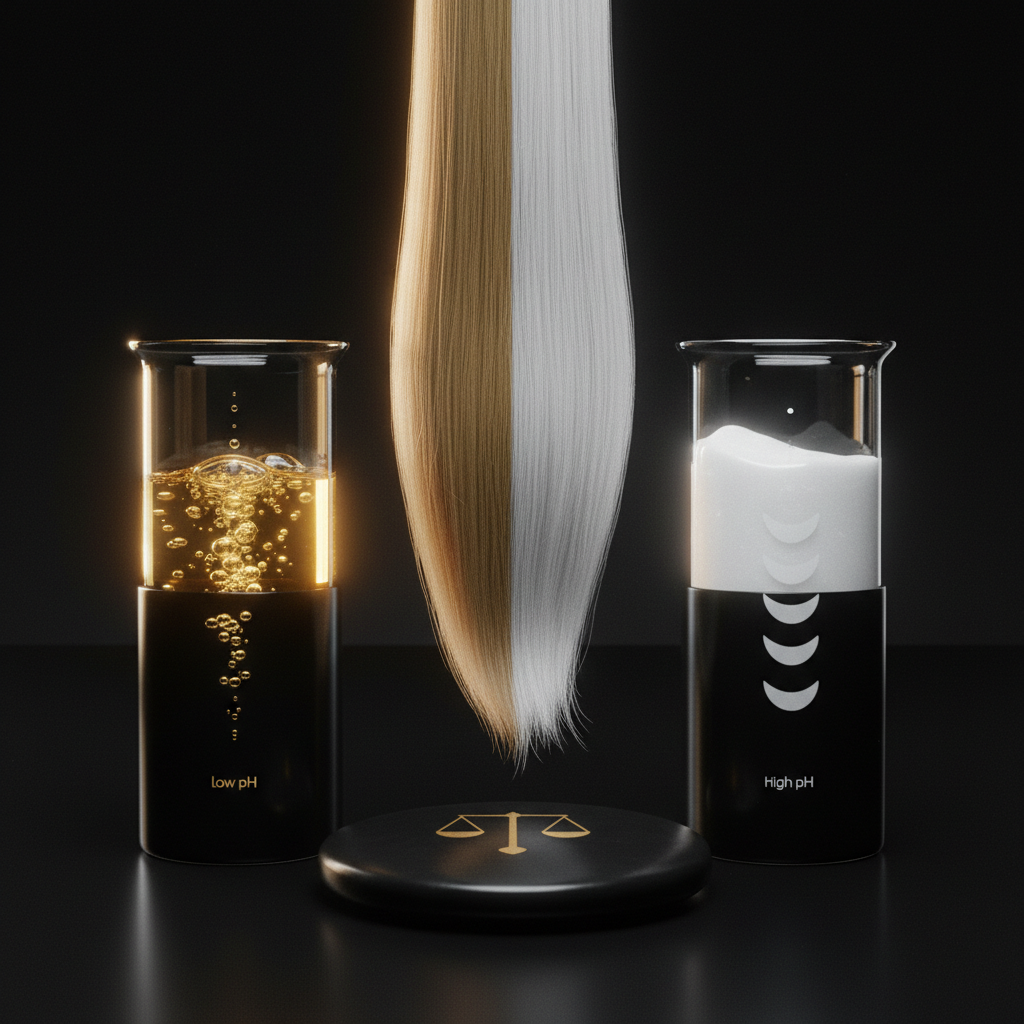
What is pH?
PH stands for “potential of hydrogen” and is a scale used to specify the acidity or alkalinity of a water-based solution. The scale ranges from 0 to 14. A pH of 7 is considered neutral. Solutions with a pH below 7 are acidic, while solutions with a pH above 7 are alkaline, or basic. Each whole number on the pH scale represents a tenfold change in acidity or alkalinity. For example, a solution with a pH of 4 is ten times more acidic than a solution with a pH of 5.
The pH of healthy hair and scalp is slightly acidic, typically ranging between 4.5 and 5.5. This natural acidity is often referred to as the acid mantle. The acid mantle plays a vital role in protecting the hair and scalp from bacterial and fungal growth, sealing the cuticle, and preventing moisture loss. When the acid mantle is disrupted, hair can become vulnerable to damage.
How pH Affects Hair Structure
The primary way pH affects hair is through its influence on the hair's cuticle. The cuticle is the outermost layer of the hair shaft, composed of overlapping, scale-like cells that protect the inner cortex. In healthy hair, these cuticle scales lie flat, creating a smooth surface that reflects light and locks in moisture.
Acidic pH (below 7)
Acidic solutions cause the cuticle to contract and flatten. This tightens the cuticle scales, making the hair shaft smoother, shinier, and less prone to tangling. It also helps to seal in moisture and strengthen the hair. Many hair conditioners and finishing products are formulated to be acidic to achieve these effects. For chemically treated hair, acidic rinses can help to close the cuticle after alkaline processes like colouring or perming, reducing damage and increasing colour retention.
Alkaline pH (above 7)
Alkaline solutions cause the cuticle to swell and open. While this allows products to penetrate the hair shaft more easily, prolonged exposure to high alkalinity can lead to significant damage. When the cuticle is lifted and remains open, the hair becomes more porous, leading to moisture loss, frizz, and increased susceptibility to breakage. Chemical treatments such as relaxers, permanent dyes, and perms are inherently alkaline, as they need to open the cuticle to penetrate the hair shaft and alter its structure.
The Impact of pH on Hair Health
Maintaining the natural pH balance of hair and scalp is fundamental to overall hair health. Products with an inappropriate pH can disrupt this balance, leading to various issues.
- Damage and Breakage: Highly alkaline products can strip the hair of its natural oils, leaving it dry, brittle, and prone to breakage. The lifted cuticle can snag and fracture more easily.
- Frizz and Dullness: An open cuticle disrupts the smooth surface of the hair, leading to frizz and a lack of shine.
- Colour Fading: For colour-treated hair, an alkaline environment can cause premature colour fading as the dye molecules leach out of the open cuticle.
- Scalp Irritation: An unbalanced pH can also irritate the scalp, leading to dryness, itchiness, or even increased oil production as the scalp tries to rebalance itself.
Common Hair Products and Their pH
Understanding the typical pH ranges of common hair products can help in making informed choices for hair care.
| Product Type | Typical pH Range | Effect on Hair |
|---|---|---|
| Shampoos | 5.5 to 7.0 | Cleanse, can slightly open cuticle |
| Conditioners | 3.5 to 5.0 | Smooth cuticle, add shine, detangle |
| Permanent Hair Dyes | 9.0 to 11.0 | Lift cuticle for colour penetration |
| Hair Relaxers | 12.0 to 14.0 | Open cuticle, break disulfide bonds |
| Perm Solutions | 8.0 to 9.5 | Open cuticle, reshape hair |
| Leave-in Treatments | 3.5 to 5.5 | Seal cuticle, protect, add moisture |
Shampoos
Most shampoos are formulated to be slightly acidic to neutral (pH 5.5-7.0) to effectively cleanse the hair and scalp without overly disrupting the acid mantle. However, some clarifying or strong cleansing shampoos can be more alkaline. It's often recommended to follow an alkaline shampoo with an acidic conditioner.
Conditioners
Conditioners are typically acidic, with a pH between 3.5 and 5.0. This acidity helps to flatten and close the hair cuticle that might have been slightly raised during shampooing, leading to smoother, shinier, and more manageable hair. This is why conditioning is crucial after shampooing.
Chemical Treatments
Chemical processes such as permanent hair colouring, perming, and relaxing use highly alkaline solutions to open the cuticle and penetrate the hair shaft. While necessary for these treatments, it's vital to follow up with acidic post-treatment products to help restore the hair's natural pH and seal the cuticle, minimizing damage.
Restoring pH Balance
If your hair feels dry, brittle, or frizzy, or your scalp is irritated, an imbalanced pH may be a contributing factor. Here are ways to help restore and maintain your hair's optimal pH:
- Choose pH-Balanced Products: Look for shampoos, conditioners, and styling products explicitly labeled as