Peptides for Hair Health: An Evidence-Based Reference Guide
9 min read ·
Discover how peptides for hair health support follicle vitality, strengthen roots, and improve scalp condition, alongside clinical evidence, limitations, and usage tips.

Quick answer: Using Peptides for Hair Health involves applying short chains of amino acids designed to signal cellular repair, improve scalp condition, and support follicular protein synthesis. Research shows certain synthetic and copper peptides can calm scalp inflammation, increase hair shaft diameter, and encourage the anagen (growth) phase in laboratory models. However, peptides are not a miracle cure for pattern baldness or scarring alopecia. Their main limitation lies in variable scalp penetration and a lack of large-scale, independent human clinical trials compared to pharmaceutical treatments.
Key takeaways
- Peptides are short-chain amino acids that act as biochemical messengers, encouraging structural protein production like collagen and keratin.
- Copper tripeptides (GHK-Cu) and synthetic signal peptides (such as acetyl tetrapeptide-3 and biotinoyl tripeptide-1) are the most studied forms for topical scalp care.
- Topical peptides can help reduce oxidative stress, support microcirculation, and improve the anchorage of existing hair fibres to reduce excess shedding.
- Peptides cannot revive dead, scarred, or completely miniaturised follicles, nor do they replace medically prescribed therapies for progressive androgenetic alopecia.
- Visible improvements in hair density, texture, and breakage reduction generally require consistent, daily scalp application for 12 to 24 weeks.
Peptides for Hair Health: what the evidence shows
Research into Peptides for Hair Health reveals genuine cosmetic and biological potential, particularly regarding the follicular environment. Hair follicles undergo continuous cycles of growth (anagen), regression (catagen), and rest (telogen). Signal peptides work by mimicking natural protein fragments that tell cells to build, repair, or regenerate extracellular matrix tissues around the dermal papilla.
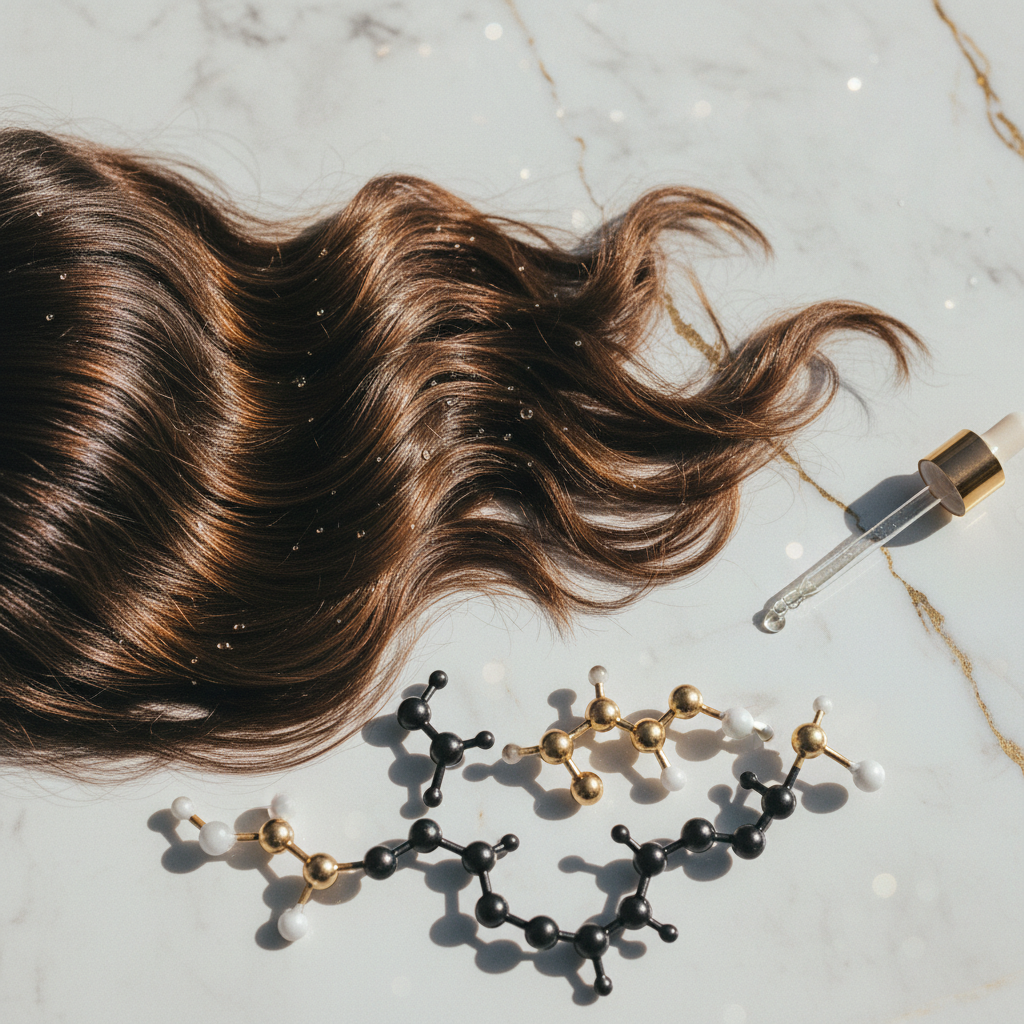
The most widely researched compound is GHK-Cu, a naturally occurring copper tripeptide. Studies published in dermatological literature indicate that GHK-Cu stimulates dermal papilla cells, enhances collagen and elastin synthesis, and suppresses key inflammatory cytokines such as tumour necrosis factor alpha (TNF-alpha). By dampening chronic micro-inflammation around the follicle, copper peptides help maintain a stable follicular foundation.
Other popular synthetic compounds include biotinoyl tripeptide-1 and acetyl tetrapeptide-3. In vitro and small-scale ex vivo studies show that biotinoyl tripeptide-1 can promote cellular adhesion proteins like laminin-5 and collagen IV at the dermal-epidermal junction. This structural reinforcement helps anchor the hair root, which can reduce premature shedding. Acetyl tetrapeptide-3, often combined with red clover extract, has demonstrated an ability in preliminary trials to stimulate extracellular matrix proteins and enhance hair follicle length compared to baseline controls.
While these findings are promising, dermatologists point out that in vitro cell cultures do not always translate perfectly to complex human scalps. Most published studies on commercial peptide blends are funded by ingredient manufacturers, highlighting the need for more independent, randomized controlled trials.
What the evidence does not show
Topical peptides are frequently marketed with inflated claims, so it is vital to understand their biological boundaries.
- They do not cure androgenetic alopecia: Male and female pattern hair loss is driven by genetic sensitivity to dihydrotestosterone (DHT). While some peptides exhibit weak 5-alpha reductase inhibitory activity in laboratory dishes, they do not match the systemic hormone-blocking efficacy of proven medical interventions.
- They cannot restore scarred follicles: Conditions such as lichen planopilaris or frontal fibrosing alopecia destroy the stem cell niche in the hair follicle bulge. Peptides cannot regenerate dead tissue or reverse scarring.
- They do not produce overnight results: Hair grows at an average rate of 1 to 1.25 cm per month. Anyone expecting thicker hair within two weeks will be disappointed, as cellular signalling requires months to reflect in visible fibre density.
- They do not permanently change your genetics: If an underlying systemic issue (such as thyroid dysfunction or ferritin deficiency) causes shedding, peptides will not stop the problem without addressing the root medical cause.
How peptides work: biological mechanisms
Peptides influence hair quality through distinct biological pathways depending on their molecular structure.

Topical Peptide Application
 │
 ▼
 Stratum Corneum
(Penetration facilitated by liposomes or small Dalton weight)
 │
 ▼
 Follicular Bulge & Dermal Papilla
 │
 ┌───────┴────────────────────────┐
 ▼ ▼
Signal Peptides: Carrier Peptides (e.g., GHK-Cu):
• Stimulate collagen IV • Deliver trace copper ions
• Upregulate laminin-5 • Accelerate tissue repair
• Strengthen root anchor • Suppress inflammatory markers
 │ │
 └───────┬────────────────────────┘
 ▼
Improved Scalp Environment & Anagen Support
Cellular signalling and extracellular matrix repair
Signal peptides instruct fibroblasts and dermal papilla cells to produce structural components. By boosting collagen and glycosaminoglycans around the follicle, these molecules prevent perifollicular fibrosis (the stiffening of connective tissue that chokes aging follicles).
Microcirculation and nutrient delivery
Certain peptides act as vasodilators or upregulate vascular endothelial growth factor (VEGF). Enhanced microcapillary circulation around the dermal papilla ensures that dividing matrix cells receive adequate oxygen, amino acids, and micronutrients during active growth.
Trace element transport
Carrier peptides, such as copper complexes, stabilise and deliver copper ions into cellular compartments. Copper is an essential cofactor for superoxide dismutase (a potent antioxidant enzyme) and lysyl oxidase (which cross-links elastin and collagen). Neutralising free radicals shields delicate follicle cells from UV and pollution-induced oxidative stress.
Common peptide types compared
Different peptide classes serve unique roles in scalp and hair formulations. The table below outlines how common peptides function.
| Peptide Name | Category | Primary Mechanism | Target Benefit |
|---|---|---|---|
| GHK-Cu (Copper Tripeptide-1) | Carrier / Remodelling | Delivers copper, reduces inflammatory cytokines, stimulates collagen | Healthier scalp, reduced oxidative stress, follicle vitality |
| Biotinoyl Tripeptide-1 | Signal Peptide | Upregulates collagen IV and laminin-5 synthesis | Stronger root anchorage, reduced mechanical shedding |
| Acetyl Tetrapeptide-3 | Signal Peptide | Stimulates extracellular matrix proteins around the dermal papilla | Fuller-looking hair, improved hair diameter |
| Palmitoyl Pentapeptide-4 | Signal / Matrix | Enhances fibroblast collagen production | Scalp barrier reinforcement, improved skin elasticity |
| Keratin-mimetic Peptides | Structural / Conditioning | Binds to negatively charged damage sites on the cuticle | Reduced fibre breakage, improved tensile strength |
Distinguishing hair loss, shedding, and breakage
To set realistic expectations for peptide treatments, you must correctly identify what your hair is experiencing:
- Hair loss (alopecia): Follicular miniaturisation or destruction, often showing as a widening parting, receding hairline, or smooth bald patches. Peptides offer supportive care here but rarely reverse genetic balding alone.
- Hair shedding (telogen effluvium): Excessive daily loss (more than 100 to 150 hairs) where bulbs are intact, usually triggered by illness, stress, hormonal shifts, or nutritional deficits. Peptides help nourish the recovering scalp once the trigger resolves.
- Hair breakage: The hair fibre snaps along the shaft due to heat, bleach, or mechanical friction. Cosmetic peptides in conditioners patch porous gaps in the cuticle, boosting tensile strength, but this is a structural hair-shaft fix, not a follicular one.
How to integrate peptides into your routine
To get the most out of peptides, application technique and formulation stability matter.
- Apply directly to the scalp, not just the lengths: Unless using a keratin-repair mask for fibre breakage, leave-on peptide serums must contact the scalp skin to reach follicular targets.
- Work with a clean, damp or dry scalp: Excess sebum and heavy silicones create a barrier that blocks peptide absorption. Apply serums after washing or onto a clean, dry scalp before bed.
- Massage thoroughly: Spend two to three minutes gently pressing and moving the scalp with your fingertips. This aids distribution and stimulates local blood flow.
- Pair with supporting ingredients: Look for formulations that combine peptides with humectants (glycerin, hyaluronic acid), niacinamide, and caffeine to enhance the barrier without creating greasy buildup.
- Maintain patience: Use the product daily for a minimum of 3 to 6 months. Take clear reference photos in consistent lighting to evaluate your progress objectively.
Watermans: Supporting the follicular environment
A healthy scalp environment is the bedrock of vibrant hair. Watermans focuses on premium, botanical-rich formulas that nurture the scalp barrier and fortify strands against daily wear. The Watermans Grow Me range brings together functional ingredients such as biotin, rosemary, caffeine, and hydrolyzed lupin protein alongside essential vitamins.
While topical cosmetics cannot alter genetic conditions, using a targeted, sulphate-free, nutrient-dense regimen helps keep the scalp clean, balances natural oils, and reinforces the hair fibre to minimise breakage and support fuller-looking hair.
When shedding has a different cause
Peptide serums cannot overcome internal imbalances. If you are experiencing diffuse thinning or sudden shedding, investigate these common underlying factors:
- Nutritional deficiencies: Low serum ferritin (stored iron), vitamin D, zinc, or insufficient dietary protein directly disrupt hair cycling.
- Thyroid imbalances: Both hypothyroidism and hyperthyroidism trigger prolonged telogen phases.
- Hormonal fluctuations: Postpartum hormonal drops, perimenopause, or stopping oral contraceptives commonly induce temporary shedding.
- Autoimmune conditions: Alopecia areata causes patchy loss when the immune system attacks pigmented hair follicles.
When to seek professional advice
Consult a GP, dermatologist, or qualified trichologist if you notice:
- Sudden, rapid shedding or clumps of hair falling out.
- Discrete round or oval smooth patches on the scalp.
- Scalp symptoms such as burning, itching, tenderness, redness, or scaling.
- Significant thinning accompanied by changes in your menstrual cycle or fatigue.
A medical professional can order blood panels (full blood count, ferritin, thyroid stimulating hormone) and use dermoscopy to inspect your follicles for signs of scarring or active miniaturisation.
Frequently asked questions about Peptides for Hair Health
How long does it take for Peptides for Hair Health to work?
Visible results from peptides require consistency. Because hair follicles cycle over months, you typically need 12 to 24 weeks of daily topical application to notice less shedding, better root anchorage, and improved density. Breakage-repair peptides applied to the hair shaft show cosmetic smoothing effects immediately.
Can peptides regrow hair in bald areas?
No. Peptides cannot revive hair in areas where the follicle has completely vanished, scarred over, or miniaturised beyond recovery. They work best on viable, active follicles by supporting cellular health, reducing micro-inflammation, and improving the surrounding extracellular matrix.
Are copper peptides better than synthetic signal peptides?
Neither is universally superior; they perform different tasks. Copper peptides excel at calming oxidative stress, delivering trace minerals, and supporting tissue healing. Synthetic signal peptides (like biotinoyl tripeptide-1) are designed specifically to boost root anchoring proteins and keratin production. Many advanced formulas combine both.
Do peptide hair serums cause shedding when you start?
Mild, transient shedding can occasionally occur when starting any scalp-stimulating active. As sluggish follicles are encouraged into a new anagen phase, resting telogen hairs may shed slightly faster. This should settle within 2 to 4 weeks. If heavy shedding continues past six weeks, stop use and see a specialist.
Can you use peptides alongside minoxidil?
Yes. Peptides and minoxidil operate via distinct mechanisms. Minoxidil acts primarily as a potassium channel opener and vasodilator, while peptides supply cellular signals and amino acid building blocks. Many dermatologists approve using them together, provided your scalp tolerates both without contact dermatitis.
Summary
Adopting Peptides for Hair Health offers an intelligent, science-led way to support the scalp barrier, reduce mechanical breakage, and optimise the growth environment of active hair follicles. While they cannot replace medical interventions for severe genetic or scarring alopecias, high-quality peptide formulations provide valuable reinforcement for everyday hair vitality, density, and resilience.
Sources and references
- Pickart, L., & Margolina, A. (2018). Regenerative and Protective Actions of the GHK-Cu Peptide in the Light of the New Gene Data. International Journal of Molecular Sciences, 19(7), 1987.
- Uno, H., & Kurata, S. (1993). Chemical agents and peptides affecting hair growth. Annals of the New York Academy of Sciences, 642, 465-475.
- British Association of Dermatologists (BAD). (2021). Telogen Effluvium: An Overview and Management Guidelines.
- National Institute for Health and Care Excellence (NICE). (2022). Alopecia - androgenetic: Clinical Knowledge Summaries.
- Bernard, B. A. (2012). The hair follicle: a dynamic, self-renewing tissue. International Journal of Cosmetic Science, 34(3), 199-204.
- Lee, W. J., et al. (2016). The effect of tripeptide complexes on dermal papilla cells and hair growth stimulation. Journal of Dermatological Science, 84(1), e112.
Find these ingredients in Watermans products
- Biotin: you will find this ingredient in our Hair Growth Shampoo.
- Zinc: you will find this ingredient in our Hair Vitamins.