A Professional Guide to Patch Testing Protocols in Haircare
9 min read ·
Discover evidence-based patch testing protocols for hair dyes and cosmetic treatments to prevent irritant reactions and allergic contact dermatitis safely.
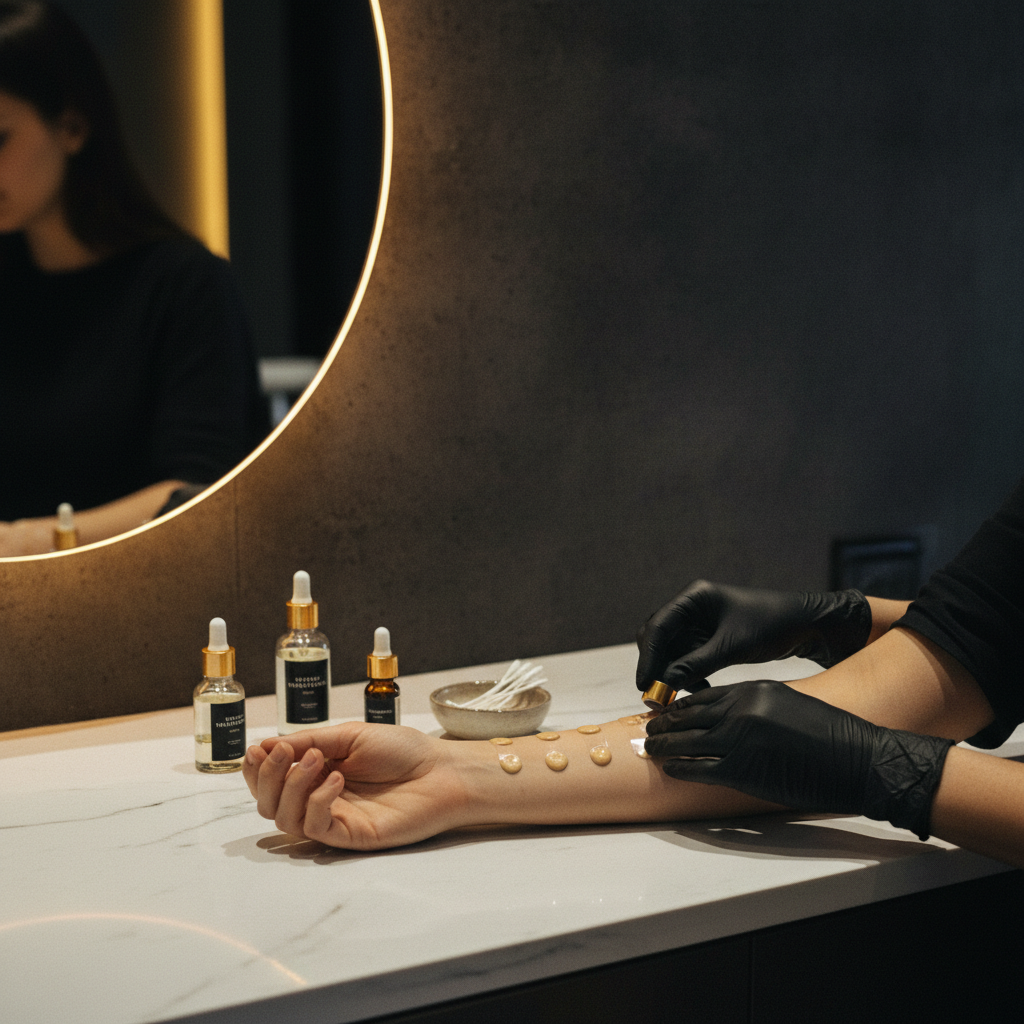
Quick answer: Patch Testing Protocols are structured, preventative safety checks used to identify cutaneous adverse reactions before applying cosmetic products, hair dyes, or topical treatments to the scalp. By applying a diluted or neat sample of a formulation to a discreet area of skin for 24 to 48 hours, users screen for immediate irritant responses and delayed allergic contact dermatitis. However, domestic screening cannot match diagnostic clinical patch testing, which uses standardised allergen panels under controlled dermatological occlusion.
Key takeaways
- Professional salon regulations and manufacturer instructions generally mandate allergy alert tests at least 48 hours before oxidative colour services.
- An open application test identifies both immediate contact urticaria and delayed cell-mediated (Type IV) allergic hypersensitivity.
- A patch test screens for individual contact allergies, but it cannot predict non-immune irritant reactions caused by prolonged barrier disruption or product misuse.
- Key sensitising agents in haircare include paraphenylenediamine (PPD), methylisothiazolinone (MI), fragrance mixes, and specific surfactant bases.
- Any redness, swelling, burning, itching, or blistering during the evaluation window constitutes a positive result, requiring immediate cessation of use.
Patch Testing Protocols: what the evidence shows
Robust clinical evidence demonstrates that Patch Testing Protocols significantly reduce severe adverse cutaneous events from cosmetic formulations. Hair dyes, bleaching agents, chemical straighteners, and leave-on scalp serums carry varying degrees of sensitisation risk.
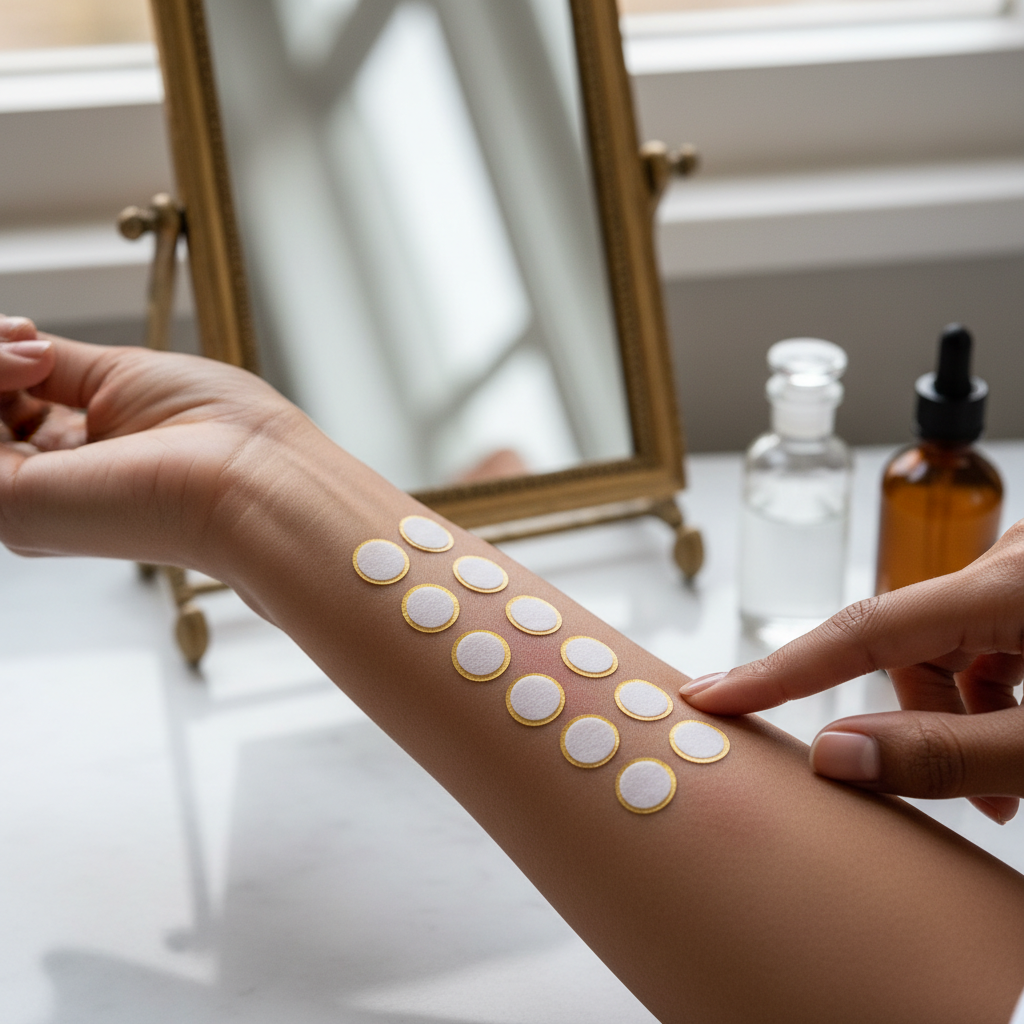
Dermatological literature, including guidelines from the British Association of Dermatologists (BAD) and the European Society of Contact Dermatitis (ESCD), confirms that contact dermatitis falls into two distinct physiological categories:
- Irritant Contact Dermatitis (ICD): A non-immunological reaction caused by direct physical or chemical damage to the stratum corneum. It occurs quickly when barrier lipids are depleted by high alkalinity, strong oxidisers, or high surfactant concentrations.
- Allergic Contact Dermatitis (ACD): A delayed Type IV cell-mediated hypersensitivity reaction. T-lymphocytes recognise a specific chemical hapten bound to epidermal proteins, creating an immunological memory that triggers cutaneous inflammation upon subsequent exposure.
Industry allergy alert tests (AATs) primarily detect pre-existing sensitisation to potent haptens such as paraphenylenediamine (PPD), resorcinol, and toluene-2,5-diamine (PTD). Peer-reviewed surveys in contact dermatitis journals demonstrate that standardising the application to a 48-hour observation period catches delayed T-cell responses that remain completely silent at 12 or 24 hours.
Mechanisms: how cutaneous reactions develop
The skin acts as an active biological shield. When you apply a topical formula to the skin during screening, chemical agents penetrate the stratum corneum to reach viable epidermal cells.
Product Application -> Stratum Corneum Penetration -> Haptenation (Chemical binds to protein) -> Langerhans Cell Activation -> T-Cell Recruitment -> Inflammatory Response (Redness, Papules, Itching)
In allergic reactions, Langerhans cells internalise the chemical hapten and migrate to regional lymph nodes, presenting the antigen to naive T-cells. Once sensitised, re-exposure prompts an influx of effector T-cells into the dermis within 24 to 72 hours. These cells release pro-inflammatory cytokines (such as interferon-gamma and interleukin-2), resulting in erythema, oedema, and microvesiculation.
In irritant reactions, the immune system plays a secondary role. Alkaline compounds (pH above 8.5) or acidic solutions (pH below 3.5) directly denature keratin filaments and dissolve intercellular lipids, causing cellular lysis. The damaged keratinocytes immediately release pre-formed interleukin-1-alpha, creating local stinging, burning, and dry erythema without clonal T-cell involvement.
Differences between testing methods
Home users and salon professionals perform screening tests, whereas dermatologists perform diagnostic patch testing. Understanding the differences between these testing methods prevents misinterpretation of results.
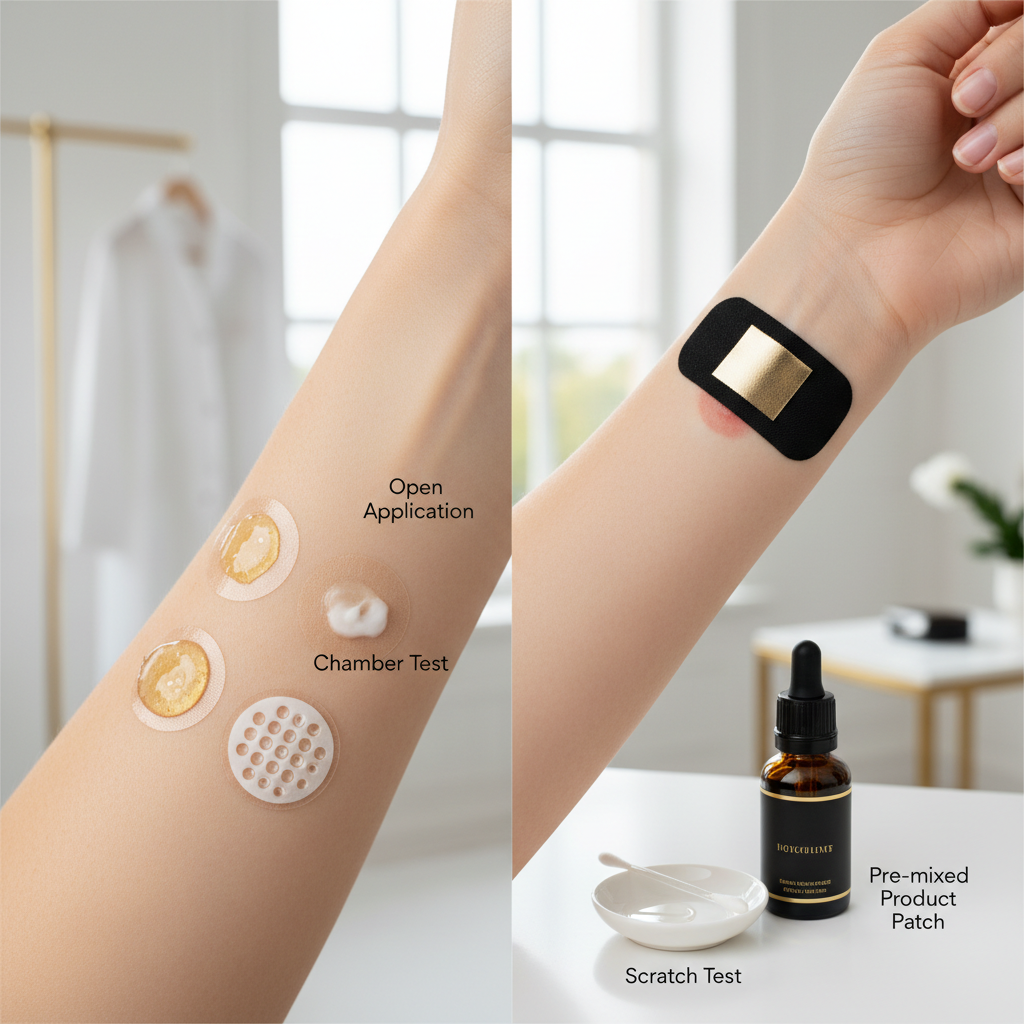
| Parameter | Domestic / Salon Allergy Alert Test | Diagnostic Clinical Patch Test | Repeated Open Application Test (ROAT) |
|---|---|---|---|
| Primary Purpose | Screen for acute allergy to a finished product | Identify specific chemical allergens | Assess low-grade sensitisation to leave-on cosmetics |
| Method | Open or semi-occluded application on intact skin | Occluded aluminium chambers (Finn Chambers) | Open application twice daily for up to 14 days |
| Application Site | Inner forearm or retroauricular (behind the ear) | Upper back | Inner aspect of the antecubital fossa |
| Duration | 48 hours continuous observation | 48 hours occluded; readings at 48, 72, and 96 hours | Up to 14 days |
| Standardisation | Variable (uses finished commercial product) | Highly standardised (known concentrations in petrolatum) | Semi-standardised (finished product, controlled area) |
| Supervision | Self-administered or salon operator | Consultant Dermatologist or allergy nurse | Dermatologist-directed home protocol |
Step-by-step screening protocol for cosmetics and hair dye
To conduct a reliable screening test at home or in a salon environment, execute these steps systematically:
- Select the site: Choose a clean, hair-free area of skin measuring roughly 2 cm by 2 cm. The inner crook of the elbow (antecubital fossa) or the skin directly behind the ear (retroauricular) are the most suitable anatomical sites.
- Cleanse the area: Wash the test site gently with warm water and neutral soap. Pat dry with a clean towel. Do not apply moisturisers, barrier creams, or perfumes to the area.
- Prepare the formula:
- For oxidative hair colour: Mix the dye component and developer in the precise ratio specified by the manufacturer (commonly 1:1 or 1:2) using a plastic utensil.
- For rinse-off products (shampoos, strong treatments): Dilute the formula to a 1% to 2% aqueous solution to prevent direct irritation that mimics allergy.
- For leave-on products (scalp oils, serums, tonics): Use the formula neat (undiluted) as intended for consumer use.
- Apply the sample: Using a cotton bud, apply a thin, even layer across the 2 cm square patch.
- Allow to dry: Let the product dry completely for 10 to 15 minutes. For hair dyes, leave the area uncovered and undisturbed for 48 hours. Avoid washing or rubbing the patch.
- Observe for signs: Check the site at 24 hours and 48 hours for any reaction.
Interpreting signs: what to look for
A negative result shows clear, calm skin matching the surrounding tissue. If you observe any of the following cutaneous changes, the test is positive:
- Erythema: Definite pinkness, redness, or dark hyperpigmentation that does not fade after 30 minutes.
- Pruritus and burning: Active itching, intense stinging, or local heat.
- Papules and oedema: Raised bumps, local swelling, or a thickened, spongy texture.
- Vesicles: Tiny blister formations, weeping fluid, or skin crusting.
If a positive reaction occurs, wash the site thoroughly with cool water and do not apply the product to your hair or scalp.
What the evidence does not show
Screening protocols have clear biological limits. A negative allergy alert test does not guarantee zero risk when treating the entire scalp. The scalp possesses a higher density of sebaceous glands and hair follicles, which can alter absorption kinetics compared to the forearm.
Furthermore, a screening test does not:
- Prevent future sensitisation (a person can tolerate a dye today and become sensitised on the next application).
- Differentiate between cross-reacting allergens (such as an allergy to black henna or benzocaine mimicking a PPD reaction).
- Detect phototoxic or photoallergic responses, which require ultraviolet light exposure to trigger inflammation.
- Diagnose systemic causes of hair shedding or breakage.
When adverse reactions stem from other factors
Not all scalp irritation indicates an allergy to a cosmetic ingredient. In practice, non-allergic factors frequently cause post-application discomfort:
- Follicular or scalp disorders: Pre-existing conditions such as seborrhoeic dermatitis, scalp psoriasis, or active eczema disrupt the barrier, allowing harmless formulations to sting.
- Mechanical trauma: Aggressive brushing, tight tension, or coarse towel drying creates micro-abrasions that react to cosmetic preservatives.
- Thermal or chemical burns: Over-processing with 40-volume (12%) hydrogen peroxide or leaving chemical relaxers on beyond the contact window damages tissue directly.
- Water hardness: Rinsing with hard water (high in calcium and magnesium ions) leaves mineral deposits that trap surfactant residues on the skin, causing dryness and pruritus that mimic allergic contact dermatitis.
When to seek medical advice
Discontinue use and consult a doctor or dermatologist if you experience:
- Severe spreading erythema that extends well beyond the application area.
- Widespread hives (urticaria), facial swelling, swollen eyelids, or difficulty breathing (which requires immediate emergency medical attention).
- Blistering, weeping, or secondary bacterial infection at the test site.
- Persistent chronic dermatitis that does not clear within 7 to 10 days of removing the product.
A dermatologist can perform formal, occluded epicutaneous patch testing using the British or European Standard Baseline Series to pinpoint the exact molecular trigger.
Scalp wellness and gentle formulation
Maintaining a healthy scalp barrier minimises the risk of non-allergic irritant flare-ups. Formulations that avoid aggressive drying surfactants, volatile solvents, and synthetic dyes support the acid mantle (natural skin pH 4.5 to 5.5).
Watermans designs haircare products with high-performance, skin-friendly cosmetic ingredients suited for ongoing scalp balance. Their nutrient-rich blends nourish the scalp environment and condition the hair fibre to minimise hair breakage, creating optimal conditions for stronger, fuller-looking hair. When introducing any new active scalp product, following proper screening steps ensures that your individual skin biology tolerates the formulation comfortably.
Frequently asked questions about Patch Testing Protocols
How long should I wait before evaluating an allergy test?
You should observe the skin for a full 48 hours when completing Patch Testing Protocols. While irritant responses or immediate contact urticaria often appear within the first few hours, allergic contact dermatitis is a delayed Type IV cell-mediated response that frequently takes 24 to 48 hours, and occasionally up to 72 hours, to manifest as redness or itching.
Can I cover the patch with an adhesive bandage?
Unless the product manufacturer specifically instructs you to use an occluded method, do not cover the test site with a plaster or bandage. Occlusion dramatically increases moisture, heat, and transdermal penetration, which can cause false-positive irritant reactions from otherwise safe, open-air cosmetic products.
Do I need to test every time I dye my hair?
Yes. Professional guidelines and manufacturers mandate repeating the test before every single application, even if you have used the exact same brand and shade for years. The immune system can develop sensitisation to chemical haptens like PPD at any point in life, turning previously safe exposures into acute allergic reactions.
Does a patch test prevent hair loss or shedding?
No. An allergy screen checks for skin surface tolerability, contact allergies, and direct irritation. It does not assess, cause, or treat hair shedding (such as telogen effluvium) or follicle-driven hair loss (such as androgenetic alopecia). It simply protects the scalp barrier from acute inflammatory dermatitis.
Conclusion
Implementing systematic Patch Testing Protocols provides an indispensable defensive barrier between complex cosmetic formulations and vulnerable cutaneous tissue. Whether screening permanent oxidative hair dyes for potent aromatic amines or checking an active botanical scalp serum for preservative tolerance, dedicating 48 hours to careful observation protects the skin barrier. Integrating deliberate, evidence-based testing into your routine ensures that every beauty service prioritises skin health and long-term scalp resilience.
Sources and references
- British Association of Dermatologists. Guidelines for the management of contact dermatitis. 2017.
- European Society of Contact Dermatitis (ESCD). Guidelines for diagnostic patch testing. 2015.
- McFadden, J. Et al. Allergy to hair dye: clinical aspects, epidemiology, and risk factors. Contact Dermatitis, 2018.
- National Institute for Health and Care Excellence (NICE). Dermatitis - contact: Scenario: Allergic contact dermatitis. 2021.
- Cosmetics Europe. Guidelines on the safety assessment of cosmetic products. 2019.