Patch Testing for Hair Products: The Clinical Guide to Scalp Safety
9 min read ·
Learn how patch testing for hair products prevents scalp irritation and allergic dermatitis. Discover standard testing protocols, key culprits, and clinical signs.
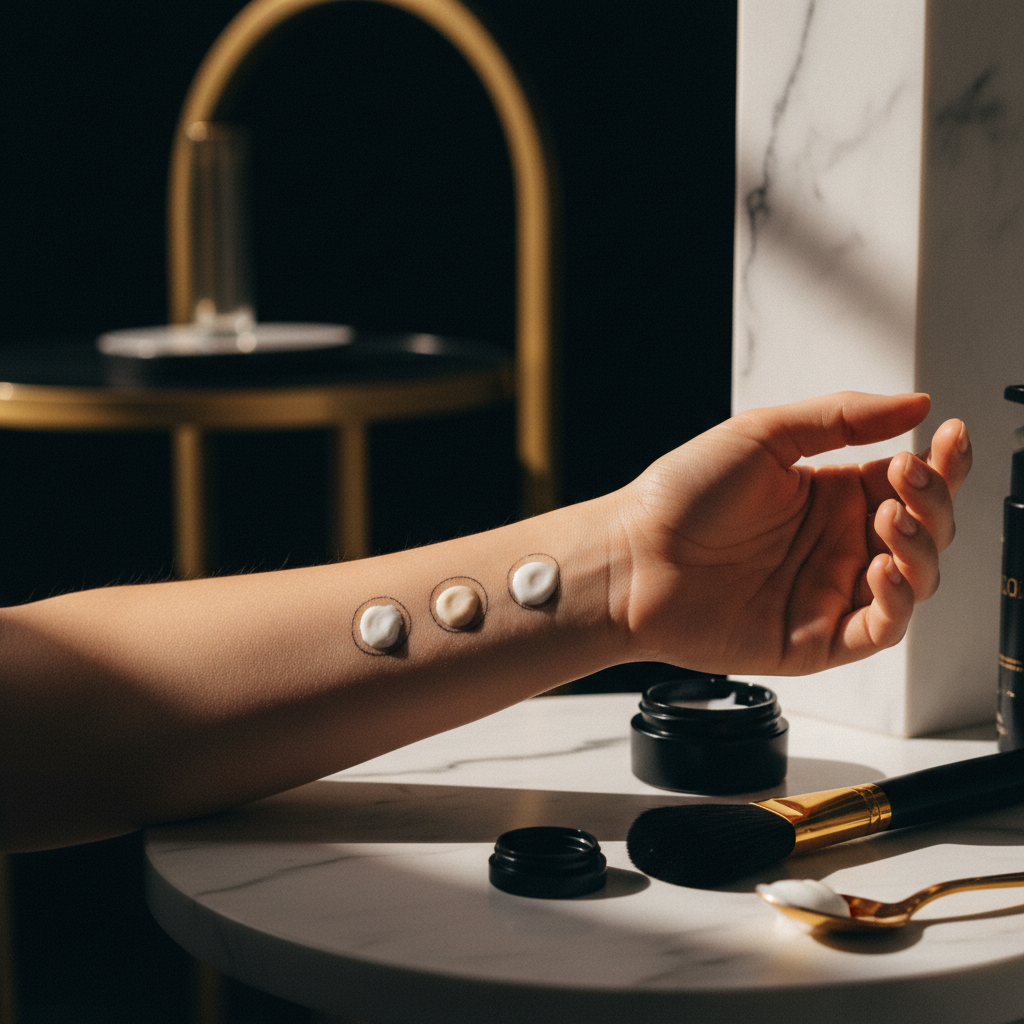
Quick answer: Patch testing for hair products is a preventative screening method used to identify adverse cutaneous reactions, such as irritant or allergic contact dermatitis, before applying a formulation across the entire scalp. Performing patch testing for hair products involves applying a small amount of diluted or leave-on cosmetic to a discreet area of skin, such as the inner crook of the elbow or behind the ear, and monitoring it for 24 to 48 hours. Its main limitation is that home patch tests cannot fully replicate medical diagnostic epicutaneous testing or predict systemic anaphylaxis.
Key takeaways
- Patch testing helps distinguish between mild chemical irritation and true cell-mediated allergic contact dermatitis.
- The most common reactive culprits in hair formulations include paraphenylenediamine (PPD), synthetic fragrances, and isothiazolinone preservatives.
- A standard open home patch test requires 24 to 48 hours of observation without washing the test site.
- A negative result lowers your risk substantially, but it does not completely rule out delayed hypersensitivity or irritation on a compromised scalp.
- Professional dermatological patch testing uses standardised Finn Chambers and validated concentrations to diagnose specific allergen profiles.
Patch testing for hair products: what the evidence shows
Clinical dermatology confirms that adverse reactions to cosmetic hair preparations are among the most frequent causes of cosmetic contact dermatitis. Patch testing for hair products serves as an indispensable frontline defence against preventable inflammatory scalp conditions. The European Society of Contact Dermatitis (ESCD) and the British Association of Dermatologists (BAD) frequently highlight hair dyes, preservatives, and fragrances as primary sensitisers.
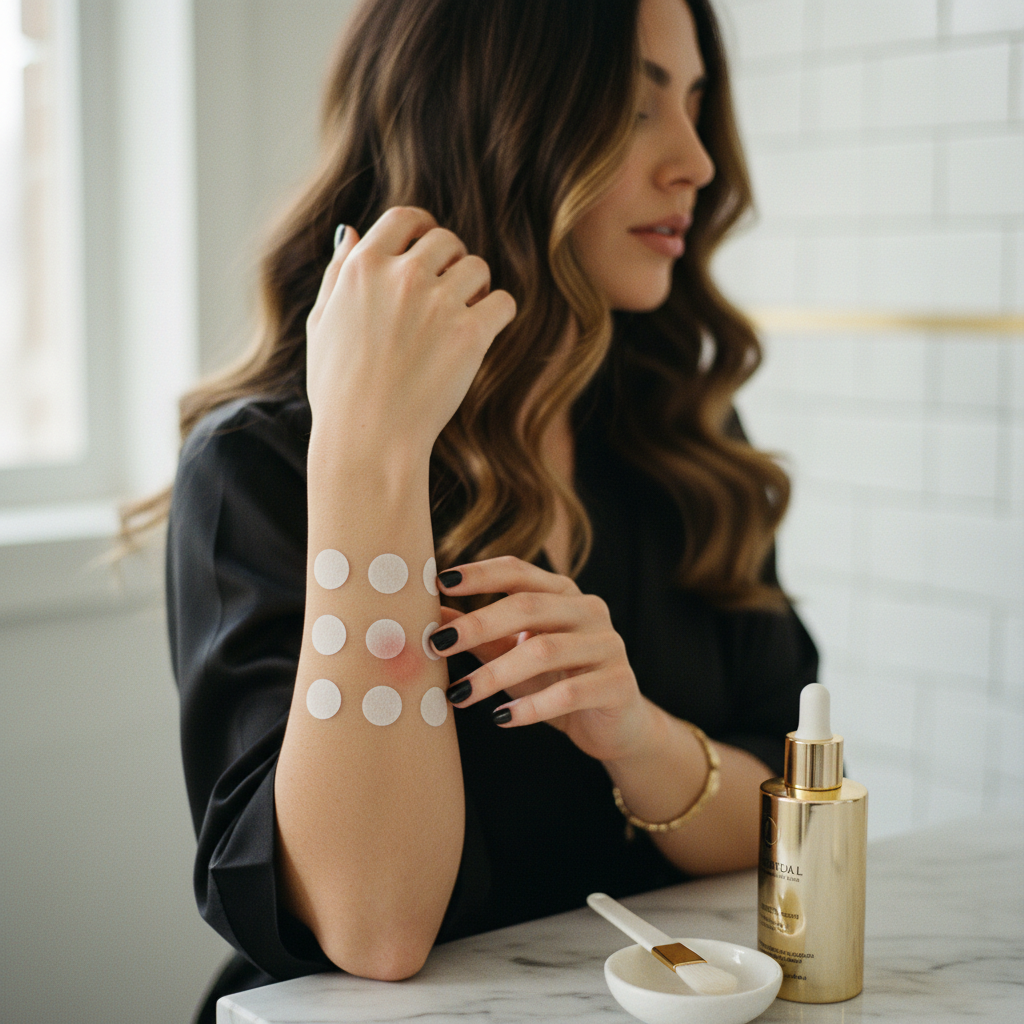
When you apply a cosmetic product to your scalp, the stratum corneum acts as a primary physical barrier. However, the scalp contains a dense network of hair follicles, sebaceous glands, and blood vessels, making it relatively permeable to low molecular weight chemical compounds. A controlled test on a smaller, less visible skin surface allows you to observe your cutaneous tolerance before committing an entire cosmetic formulation to thousands of follicular units.
Dermatological research shows that reactive responses generally fall into two distinct pathophysiological categories:
- Irritant Contact Dermatitis (ICD): This is a non-immunological reaction caused by direct physical or chemical damage to the skin barrier. It accounts for up to 80 percent of all contact dermatitis cases. Strong surfactants, alkaline perms, bleaches, or high concentrations of alcohol can strip cellular lipids and provoke localized stinging, dryness, or erythema within minutes to hours.
- Allergic Contact Dermatitis (ACD): This is a Type IV, cell-mediated, delayed hypersensitivity reaction. It requires prior sensitisation to an allergen. In this process, Langerhans cells capture the hapten, travel to regional lymph nodes, and prime antigen-specific T-lymphocytes. When re-exposed, these T-cells trigger an inflammatory cascade that peaks between 48 and 72 hours later.
What the evidence does not show
While patch testing is highly effective, clinical literature emphasizes its clear scientific boundaries.
First, a negative home patch test does not guarantee lifelong immunity to an ingredient. Sensitisation can develop at any point in life, meaning a formula you used safely for years may suddenly trigger an allergic cascade upon your next application.
Second, home testing does not reliably detect immediate Type I hypersensitivity (IgE-mediated reactions), such as acute urticaria or systemic anaphylaxis. Although rare with standard hair cosmetics, severe reactions can occur, especially with oxidative hair colour containing oxidative intermediates.
Finally, an open skin patch test on the inner forearm does not perfectly replicate the microenvironment of the scalp. The scalp possesses a distinct sebum profile, a lower barrier resistance around follicular infundibula, and an intricate microbiome dominated by Cutibacterium acnes and Malassezia species. A product that appears benign on the arm can occasionally produce follicular irritation on a warm, occlusion-prone scalp.
Common culprits in haircare formulations
Hair products contain complex mixtures of active cleansers, conditioning agents, preservatives, and aesthetic additives. Some classes of ingredients carry a significantly higher statistical incidence of cutaneous reactivity:
- Oxidative Dyes: Paraphenylenediamine (PPD) and toluene-2,5-diamine (PTD) are potent contact allergens widely studied for eliciting acute eczematous reactions.
- Preservatives: Methylisothiazolinone (MI), methylchloroisothiazolinone (MCI), and formaldehyde-releasing agents (such as DMDM hydantoin) have historically driven peaks in allergic contact dermatitis statistics across the UK and Europe.
- Surfactants: While modern amphoteric surfactants are gentle, excessive concentrations of anionic surfactants (such as sodium lauryl sulphate) can disrupt the intercellular lipid bilayers, causing non-allergic barrier compromise.
- Fragrance Mixes: Both synthetic aromatics and natural essential oils contain volatile terpenes (such as limonene and linalool) that oxidise upon air exposure, forming highly allergenic hydroperoxides.
| Reaction Characteristic | Irritant Contact Dermatitis (ICD) | Allergic Contact Dermatitis (ACD) |
|---|---|---|
| Immune Involvement | Non-immunological; direct barrier toxicity | Type IV cell-mediated hypersensitivity |
| Onset Time | Minutes to a few hours post-exposure | 24 to 72 hours (delayed response) |
| Symptoms | Burning, stinging, tight sensation | Intense itching, weeping, tenderness |
| Physical Appearance | Well-demarcated redness, dry peeling | Spreading erythema, papules, vesicles, swelling |
| Threshold Effect | Dose-dependent (concentration and exposure time) | Can occur at miniscule allergen concentrations |
| Skin Area Affected | Confined strictly to the contact site | Can spread beyond original contact boundary |
Step-by-step protocol: how to patch test safely
Carrying out patch testing for hair products correctly requires strict adherence to contact duration and clean observation protocols. The methodology differs slightly depending on whether the product is designed to be rinsed off or left on the scalp.
1. Leave-on products (serums, oils, scalp tonics, styling creams)
- Cleanse a 2 cm patch of skin on your inner forearm or behind your ear using plain water and mild soap, then pat dry.
- Apply 2 to 3 drops (or a pea-sized amount) of the unadulterated product to the test site.
- Allow the product to dry. Do not cover it unless you are following specific manufacturer instructions.
- Leave the area undisturbed and unwashed for 24 to 48 hours.
- Inspect the skin under neutral, bright light at 24 hours, 48 hours, and 72 hours for signs of reactivity.
2. Rinse-off products (shampoos, intensive clarifying washes, bleaches)
High-surfactant or chemically reactive products should not be left on bare skin for 48 hours without dilution, as this causes false-positive chemical burns.
- Dilute the shampoo or rinse-off treatment in a small bowl (approximately 1 part product to 10 parts clean water).
- Apply the diluted solution to the inner forearm using a clean cotton swab.
- Allow it to sit on the skin for 15 to 30 minutes (mirroring prolonged salon exposure).
- Rinse thoroughly with lukewarm tap water and pat dry.
- Monitor the site over the subsequent 48 hours.
What to do if you react
If you notice burning, acute pruritus (itching), redness, or small blister-like vesicles during the test window, wash the site immediately with cool running water. Do not apply further cosmetic products to the site. A thin layer of unfragranced petrolatum or an over-the-counter 1 percent hydrocortisone cream can soothe localized, uncomplicated inflammation.
Document the reaction with clear photographs and retain the ingredient packaging. If the reaction involves facial swelling, hives extending across the body, wheezing, or dizziness, seek urgent emergency medical evaluation, as these represent immediate hypersensitivity requiring clinical intervention.
When the cause is something else
Not all adverse scalp symptoms stem from cosmetic ingredient allergies. Several underlying dermatological and systemic conditions mimic contact dermatitis:
- Seborrhoeic Dermatitis: An inflammatory skin condition linked to overgrowths of Malassezia yeast, presenting as greasy, yellowish scales and mild erythema along the hairline and crown.
- Scalp Psoriasis: An autoimmune condition driven by rapid keratinocyte turnover, causing sharply defined, silvery-white plaques that may itch or bleed if picked.
- Folliculitis: A bacterial or fungal infection of individual hair follicles causing tender, pimple-like pustules.
- Physical Traction or Heat Damage: Mechanical pulling from tight hairstyles or excessive heat from salon blow dryers can inflame follicles, leading to soreness that closely resembles chemical irritation.
Professional options: Watermans formulations
For individuals seeking well-tolerated daily haircare formulations that maintain scalp comfort, Watermans offers balanced options designed around healthy scalp maintenance. Watermans GrowMe Shampoo is formulated as a revitalising cosmetic wash that integrates premium ingredients such as biotin, rosemary extract, niacinamide, and argan oil within a balanced pH range.
Because Watermans products contain active botanical compounds, conducting a standard patch test before broad application remains a sensible precaution for anyone with known ingredient sensitivities or hyper-reactive skin. Clean cosmetic design combined with simple home patch testing ensures a comfortable scalp routine.
Frequently asked questions about patch testing for hair products
Why is patch testing for hair products necessary if I have never had allergies?
Sensitisation is an acquired immune response that can occur spontaneously, even after years of using a specific formula. Environmental shifts, hormonal changes, or minor micro-abrasions in the skin barrier can allow common cosmetic chemicals to trigger an immune reaction. Testing beforehand prevents widespread scalp flare-ups.
How long should I wait before deciding a patch test is negative?
You should wait a minimum of 48 hours, and ideally 72 hours, before concluding a patch test is negative. Irritant contact reactions appear quickly, but allergic contact dermatitis is mediated by T-cells and frequently takes 2 to 3 days to manifest as visible erythema or itching.
Can I patch test permanent hair dye at home using this method?
You must always follow the precise instructions on the dye manufacturer's leaflet. Permanent oxidative hair dyes usually require a specific 48-hour open patch test behind the ear using a tiny, mixed droplet of colourant and developer. Never skip this test, as PPD reactions can be severe.
Does a negative patch test guarantee my hair won't fall out?
No. Patch tests assess epidermal and cutaneous tolerance to prevent dermatitis; they do not assess hair shedding or follicular cycles. Hair shedding (such as telogen effluvium) is typically driven by systemic triggers, nutritional shifts, or illness, rather than surface cosmetics.
What is the difference between an open test and a closed patch test?
An open patch test leaves the applied cosmetic exposed to ambient air, mimicking normal leave-on product wear. A closed patch test seals the substance under an adhesive chamber or occlusive tape. Closed testing is typically performed by dermatologists using calibrated allergen panels to maximise sensitivity.
Safer hair habits through careful testing
Adopting patch testing for hair products into your regular beauty regimen protects your skin barrier from severe disruptions. Contact dermatitis on the scalp can cause prolonged discomfort, secondary bacterial infections, and temporary telogen effluvium if severe, widespread inflammation interrupts normal follicular rest states. By taking 48 hours to evaluate new formulas on a discreet area of skin, you ensure that your journey toward healthier, fuller-looking hair remains safe, comfortable, and scientifically grounded.
Sources and references
- British Association of Dermatologists (BAD): Guidelines for the management of contact dermatitis (2017).
- European Society of Contact Dermatitis (ESCD): Guidelines for diagnostic patch testing (2015).
- National Health Service (NHS): Contact dermatitis diagnosis and treatment overview (2022).
- McFadden, J. Et al. Common Contact Allergens: A Practical Guide to Understanding and Managing Contact Dermatitis. Wiley-Blackwell (2020).
- World Health Organization / International Programme on Chemical Safety: Dermatological evaluation of cosmetics and personal care formulations (2018).
Find these ingredients in Watermans products
- Niacinamide: you will find this ingredient in our Hair Mask.