Niacinamide for Scalp Health: The Dermatological Guide
8 min read ·
Discover the science behind Niacinamide for Scalp Health, from ceramide synthesis and oil control to soothing irritation for stronger-looking hair.

Quick answer: Using Niacinamide for Scalp Health delivers proven dermatological benefits by reinforcing the epidermal skin barrier, regulating excess sebum production, and calming inflammatory irritation. As a bioactive form of vitamin B3, it boosts ceramide synthesis and supports microcirculation around the hair follicles. However, its primary limitation is that topical niacinamide cannot cure genetic pattern hair loss (androgenetic alopecia) or revive dead follicles. It acts purely as a scalp skin conditioning agent, creating optimal physiological conditions for healthy hair fibre growth.
Key takeaways
- Niacinamide (nicotinamide) is a water-soluble form of vitamin B3 essential for cellular energy metabolism (NAD+ and NADP+).
- It strengthens the scalp barrier by stimulating ceramide and fatty acid synthesis, reducing transepidermal water loss.
- Clinical trials show concentrations between 2% and 5% effectively regulate sebum output without drying the skin.
- It downregulates pro-inflammatory cytokines, making it useful for flaking, redness, and mild seborrhoeic dermatitis.
- Niacinamide improves the follicular environment and reduces hair breakage, but it does not treat genetic alopecia on its own.
Niacinamide for Scalp Health: what the evidence shows
Applying Niacinamide for Scalp Health rests on decades of clinical dermatology research originally conducted on facial skin and subsequently translated to trichology. The scalp is an extension of the facial skin, but it features a higher density of sebaceous glands and hair follicles, making it uniquely vulnerable to barrier breakdown, microbial dysbiosis, and oxidative stress.
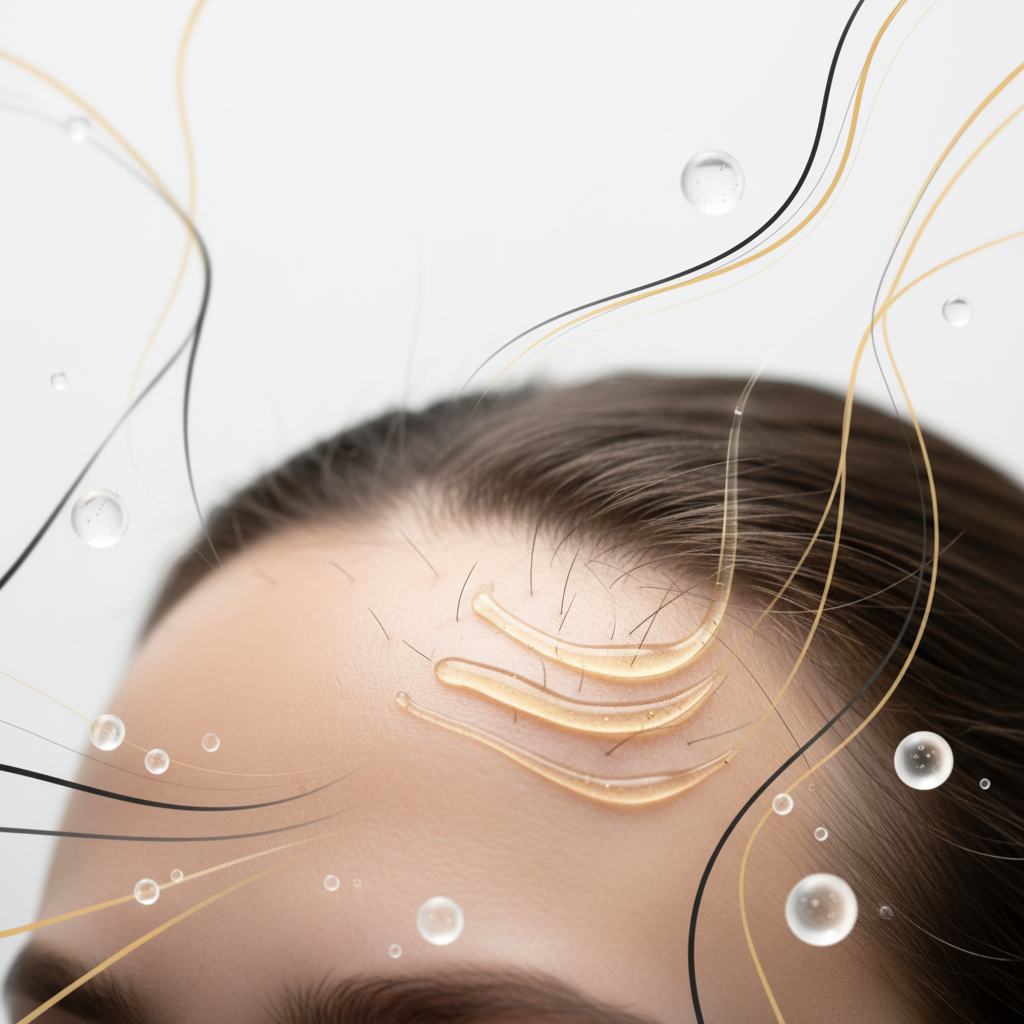
Niacinamide acts as a direct precursor to the coenzymes nicotinamide adenine dinucleotide (NAD+) and nicotinamide adenine dinucleotide phosphate (NADP+). These cofactors drive cellular repair, DNA maintenance, and ATP production within rapidly dividing scalp epithelial cells and hair matrix keratinocytes. When topically applied, niacinamide diffuses into the stratum corneum and follicle infundibulum to execute several distinct functions:
1. Barrier repair and moisture retention
Research published in the British Journal of Dermatology demonstrated that topical niacinamide dramatically increases the biosynthesis of ceramides, glucosylceramides, and free fatty acids in the stratum corneum. In scalp tissue, this translates to a marked reduction in transepidermal water loss (TEWL). A robust lipid barrier prevents external irritants, pollution particles, and harsh surfactants from triggering sub-clinical micro-inflammation around the follicle collar.
2. Sebum regulation
Excess sebum (hyperseborrhoea) alters the scalp microbiome, encouraging the overgrowth of Malassezia yeasts which cause dandruff and inflammation. Controlled clinical trials indicate that a 2% topical niacinamide application significantly reduces sebum excretion rates after two to four weeks of daily use. Unlike aggressive clarifying agents that strip the scalp and cause rebound oiliness, niacinamide balances lipid production at the sebocyte level.
3. Anti-inflammatory and antioxidant action
Micro-inflammation around the follicular infundibulum is an established contributor to premature hair shedding (telogen effluvium) and exacerbated hair thinning. Niacinamide suppresses the release of inflammatory mediators, including interleukin-8 (IL-8) and tumour necrosis factor-alpha (TNF-alpha). It also mitigates oxidative damage generated by UV radiation and environmental pollutants.
Niacinamide (Topical B3)
 │
 ▼
Increases NAD+ / NADP+ Pool
 │
 ┌─────┴───────────────────────────┐
 ▼ ▼
Lipid Synthesis (Ceramides) Sebocyte Regulation
 │ │
 ▼ ▼
Restored Epidermal Barrier Reduced Surface Greasiness
 │ │
 └─────────────┬───────────────────┘
 ▼
 Decreased Scalp Inflammation & Calmer Follicular Environment
What the evidence does not show
While the biological activity of niacinamide is impressive, clarity regarding its limitations is essential. Topical niacinamide does not block dihydrotestosterone (DHT) at the androgen receptor, nor does it inhibit 5-alpha reductase in the manner of approved pharmaceutical hair loss treatments.
If you are experiencing androgenetic alopecia, niacinamide will not halt follicular miniaturisation driven by hormonal sensitivity. Furthermore, cosmetic solutions containing vitamin B3 cannot reopen scarred or fibrotic follicular ostia (cicatricial alopecia). Claims that topical niacinamide triggers rapid, dramatic new hair growth are unsupported by peer-reviewed human trials. Its proven role is preventative, supportive, and restorative to the scalp skin barrier.
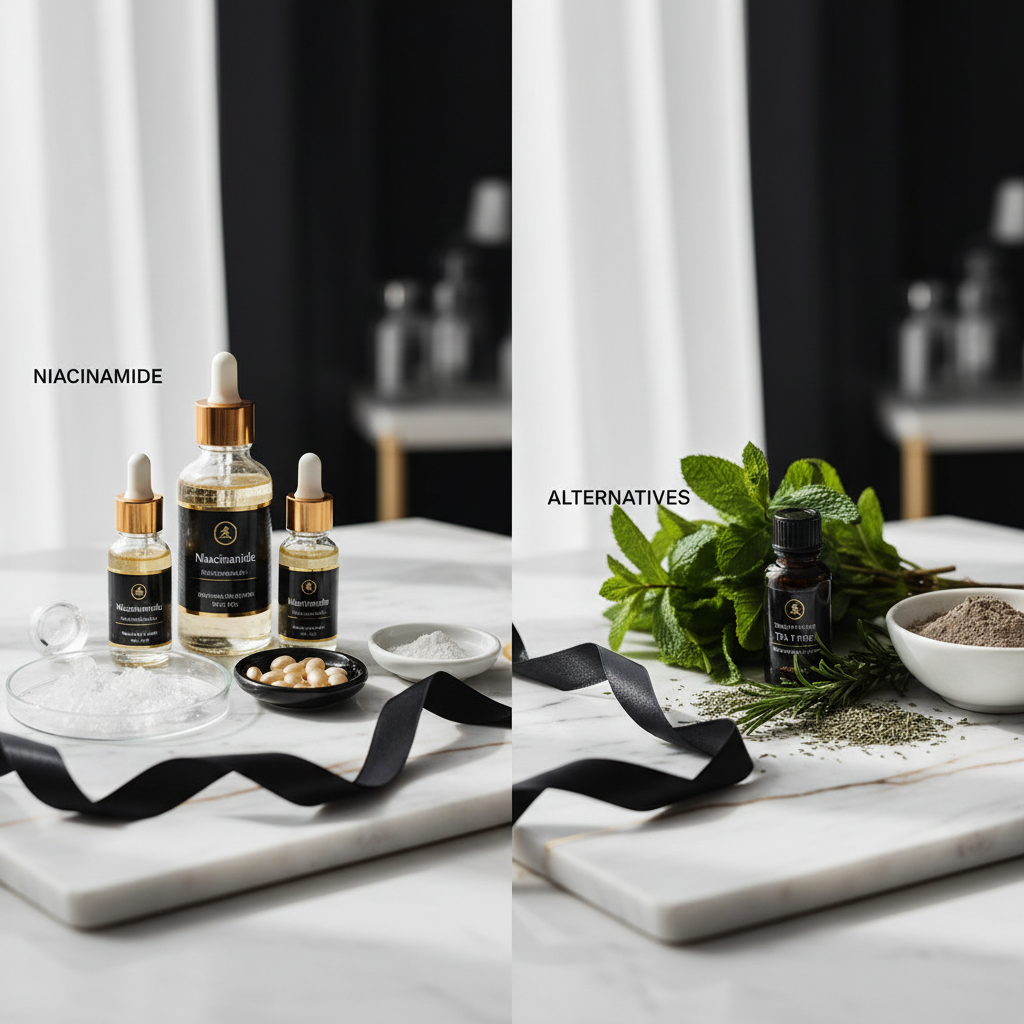
Comparing scalp ingredients: Niacinamide vs alternatives
Understanding where niacinamide sits relative to other common scalp actives helps you formulate an effective regimen tailored to your specific scalp symptoms.
| Active Ingredient | Primary Target | Mechanism | Best For | Typical Tolerated Range |
|---|---|---|---|---|
| Niacinamide | Barrier integrity and sebum | Ceramide synthesis; cytokine reduction | Greasy, sensitive, or dehydrated scalps | 2% to 5% |
| Salicylic Acid | Hyperkeratosis and flaking | Desmolytic keratolysis (loosens dead cells) | Thick scale, product build-up, dandruff | 0.5% to 2% |
| Zinc Pyrithione / Piroctone Olamine | Fungal overgrowth | Antifungal; inhibits Malassezia cell division | Active dandruff, seborrhoeic dermatitis | 0.5% to 1% |
| Hyaluronic Acid | Surface hydration | Humectant water binding | Tight, dry, moisture-depleted scalp | 0.1% to 1.5% |
| Caffeine | Follicle stimulation | Phosphodiesterase inhibition; microcirculation | Sluggish follicles, shedding support | 0.2% to 1% |
Signs of a compromised scalp that benefit from Niacinamide
A damaged scalp barrier manifests in subtle physiological signs before obvious hair changes occur. You may benefit from introducing niacinamide if you observe:
- Pruritus and tightness: A persistent sensation of itching or tension shortly after washing, signalling high transepidermal water loss.
- Rapid greasiness combined with dry flakes: A classic hallmark of an impaired moisture barrier where the scalp overproduces sebum to compensate for dehydration.
- Perifollicular erythema: Pinpoint redness or sensitivity at the base of the hair fibres, visible under bright lighting or trichoscopy.
- Elevated mechanical breakage: When the scalp skin is inflamed, emerging hair fibres often suffer structural cuticular defects, leaving the shaft prone to snapping during routine styling.
Practical steps: how to incorporate Niacinamide into your routine
To get the most out of niacinamide for your scalp, consistency and formulation compatibility are vital.
- Select leave-on serums or balanced cleansers: Rinse-off shampoos deliver short contact times, which can be useful for minor soothing. However, leave-on scalp tonics, drops, or serums provide prolonged contact, maximising absorption into the follicular epidermis.
- Look for 2% to 5% concentrations: Clinical dermatological data indicates that 2% is sufficient for barrier repair and sebum moderation. Formulations exceeding 10% do not offer superior scalp results and increase the risk of transient irritation or flushing.
- Apply to clean, damp scalp tissue: Part your hair into clean sections. Dispense several drops directly along the parting lines and gently press the serum in with your fingertips. Avoid vigorous rubbing, which can disrupt delicate hair roots.
- Pair with complementary actives: Niacinamide plays exceptionally well with humectants like panthenol (vitamin B5) and glycerin, as well as soothing botanicals.
The Watermans approach to follicular nourishment
At Watermans, we focus on formulating products that respect the complex biology of the scalp. We recognise that vibrant, resilient hair relies on an optimal, balanced foundation. Rather than relying on a single ingredient in isolation, our Grow Me Shampoo and scalp treatments unite revitalising compounds, including biotin, caffeine, rosemary extract, and essential vitamins. This multi-targeted approach works to soothe surface irritation, clear follicular debris, and reinforce the hair fibre against everyday mechanical breakage.
When the cause may be something else
Scalp irritation, scaling, and shedding are not always solvable via cosmetic barrier support. Systemic imbalances frequently manifest in the scalp environment:
- Nutritional deficiencies: Inadequate ferritin, serum zinc, or vitamin D levels disrupt the normal anagen phase of the hair cycle, leading to acute or chronic telogen effluvium.
- Thyroid dysfunction: Both hypothyroidism and hyperthyroidism produce coarse, dry, or excessively shedding hair, accompanied by an unstable scalp barrier.
- Psoriasis: Characterised by silvery, thick plaques with well-demarcated borders, scalp psoriasis requires targeted medical therapies such as topical corticosteroids or vitamin D analogues.
- Severe microbial infection: Extensive crusting, purulent exudate, or painful folliculitis warrant immediate antimicrobial intervention rather than cosmetic serums.
When to seek professional advice
Consult a general practitioner, dermatologist, or qualified trichologist if you encounter any of the following symptoms:
- Sudden, patchy hair loss creating smooth, round bald areas (indicative of alopecia areata).
- Severe burning, tenderness, or swelling across the scalp surface.
- Thick, adherent yellow scaling that fails to clear after four weeks of targeted anti-dandruff care.
- Noticeable widening of your natural parting accompanied by visible scalp shine and follicle loss.
Frequently asked questions about Niacinamide for Scalp Health
Does Niacinamide for Scalp Health help with hair loss?
Topical niacinamide supports scalp barrier integrity, calms micro-inflammation, and improves blood flow around follicles. This helps minimise excessive shedding caused by environmental stress and reduces fibre breakage. However, it does not cure androgenetic alopecia or alter systemic hormone levels.
Can niacinamide make your scalp breakout or cause irritation?
Niacinamide is generally well-tolerated. However, using high concentrations (above 10%) can cause transient cutaneous flushing, itching, or contact dermatitis in sensitive individuals. Stick to balanced formulations containing between 2% and 5% for optimal scalp comfort.
How long does it take to see results on the scalp?
Barrier improvements and reductions in scalp dryness or tightness typically appear within 2 to 4 weeks of regular use. Normalisation of sebum output usually requires 4 to 6 weeks. Any secondary benefits to hair fibre quality and breakage reduction take 3 to 6 months to emerge.
Can I use niacinamide on my scalp every day?
Yes. Water-soluble niacinamide does not build up on the scalp or leave a greasy residue. Applying a lightweight leave-on serum once daily to a clean scalp provides sustained anti-inflammatory and barrier-strengthening benefits.
Can I pair niacinamide with exfoliating acids like salicylic acid?
Yes, they complement each other well. Salicylic acid removes dead stratum corneum cells and clears the follicular opening, while niacinamide soothes the underlying skin and prevents barrier disruption. Many advanced scalp treatments combine both ingredients.
Supporting strong foundations
Maintaining optimal epidermal balance through targeted ingredients is one of the most reliable strategies for long-term hair wellness. Integrating Niacinamide for Scalp Health gives your skin the cellular fuel, lipid support, and anti-inflammatory defence needed to thrive under daily environmental demands. By calming surface irritation, moderating excess sebum, and reinforcing the epidermal barrier, you establish a resilient foundation that allows your hair to grow and look its absolute best.
Sources and references
- British Journal of Dermatology, "Nicotinic acid/niacinamide and the skin", 2006.
- Journal of Cosmetic Dermatology, "How much do we really know about our favourite cosmeceutical ingredients?", 2010.
- International Journal of Toxicology, "Final Report on the Safety Assessment of Niacinamide and Niacin", 2005.
- Journal of Investigative Dermatology, "Niacinamide stimulates ceramide synthesis and improves the epidermal permeability barrier", 2000.
- Experimental Dermatology, "Scalp condition impacts hair growth and retention via oxidative stress", 2018.
Find these ingredients in Watermans products
- Zinc: you will find this ingredient in our Hair Vitamins.
- Niacinamide: you will find this ingredient in our Hair Mask.
- Panthenol (Provitamin B5): you will find this ingredient in our Heat Protection Spray.