Seborrhoeic Dermatitis and Flaking: Science, Signs, and Management
9 min read ·
Understand the causes and clinical treatments for Seborrhoeic Dermatitis and Flaking, from Malassezia overgrowth to targeted antifungal routines.

Quick answer: Seborrhoeic Dermatitis and Flaking describes a common, inflammatory scalp condition driven by an overgrowth of Malassezia yeast interacting with natural sebum, leading to greasy, yellowish scales, erythema, and persistent itching. While regular washing and active antifungal agents reliably suppress the inflammation, the condition is a chronic, relapsing disorder rather than a curable infection, meaning ongoing maintenance is usually required to keep symptoms at bay.
Key takeaways
- Seborrhoeic Dermatitis and Flaking stems from an inflammatory response to byproducts produced when Malassezia yeast metabolises sebum.
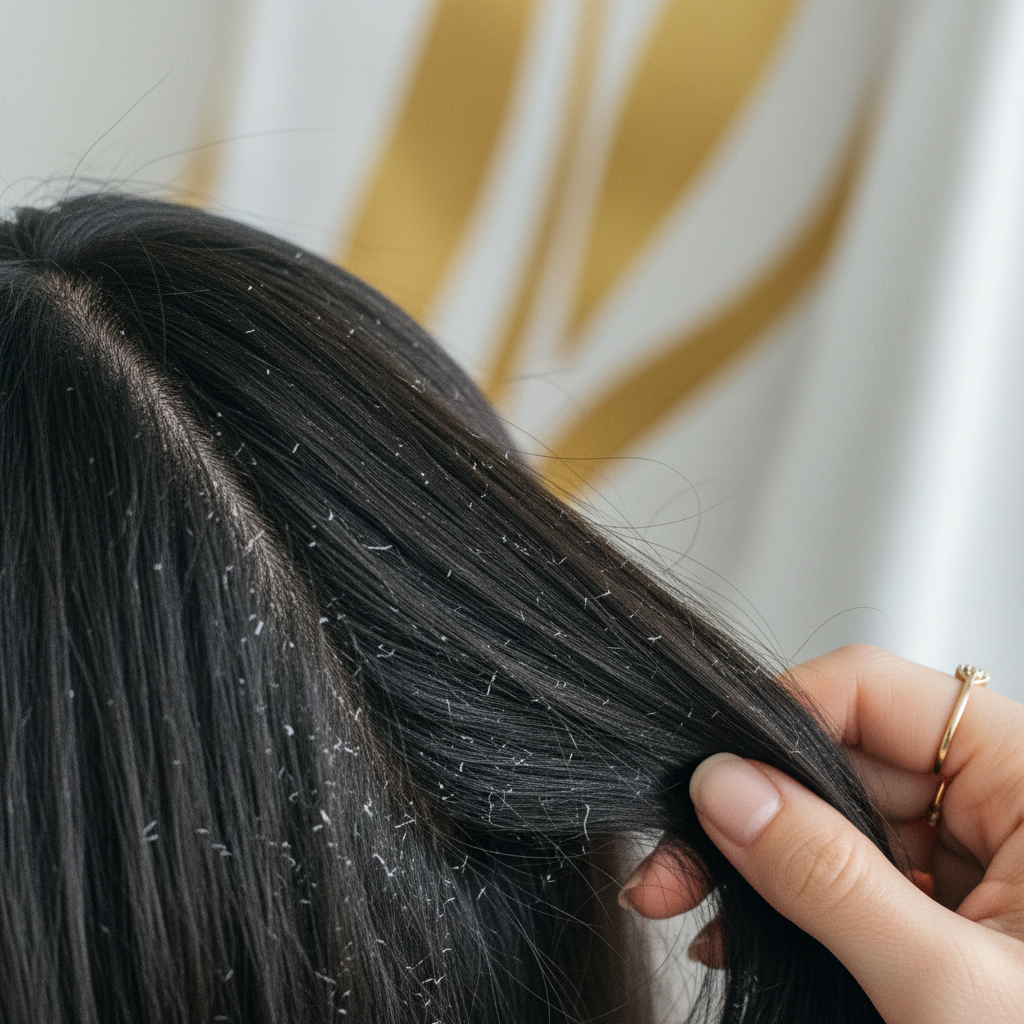
- The flakes are typically oily, thick, and yellowish, distinguishing them from the dry, fine, white shedding seen in simple dry scalp.
- Standard cosmetic shampoos may remove loose debris temporarily, but medicated antifungal ingredients such as ketoconazole, zinc pyrithione, or ciclopirox olamine are required to target the underlying yeast.
- Scratching inflamed plaques can cause mechanical hair breakage and temporary telogen shedding, though the condition itself does not permanently destroy hair follicles.
- True cure does not exist; management focuses on cycling maintenance washes and preserving the skin barrier.
Seborrhoeic Dermatitis and Flaking: what the evidence shows
Clinical dermatology categorises seborrhoeic dermatitis as a chronic, superficial inflammatory dermatosis that preferentially targets sebum-rich zones, including the scalp, eyebrows, nasolabial folds, and chest. In the context of the scalp, Seborrhoeic Dermatitis and Flaking represents an intensified manifestation of pityriasis capitis (dandruff), sharing biological mechanisms but presenting with marked erythema, follicular plugging, and thicker, adherent plaques.
Epidemiological data indicates that seborrhoeic dermatitis affects roughly 3 to 5 percent of the global population, with milder forms such as simple dandruff affecting up to 50 percent of adults. It displays a bimodal age distribution, frequently appearing in infants under three months (cradle cap) and resurfacing during post-pubertal years, peaking between 30 and 40 years of age. Research demonstrates that fluctuating hormone levels, which increase sebaceous gland activity, directly influence the onset and severity of flare-ups.
The biological mechanism behind the flakes
To understand why the scalp sheds visible scales, you must look at the interaction between skin lipids and the scalp microbiome.
Sebaceous glands secrete sebum, a lipid complex made of squalene, wax esters, triglycerides, and cholesterol. Commensal yeasts belonging to the genus Malassezia (predominantly M. Restricta and M. Globosa) reside naturally on human skin. Because these yeasts lack their own fatty acid synthase, they rely entirely on external lipids for survival.
The yeast secretes lipase enzymes that cleave triglycerides from your sebum into free fatty acids. It consumes the saturated fatty acids it requires, leaving behind unsaturated fatty acids, notably oleic and arachidonic acids. In susceptible individuals whose epidermal barrier is vulnerable, these unsaturated fatty acids penetrate the stratum corneum.
This penetration triggers an immune response. The skin releases pro-inflammatory cytokines, initiating local erythema and accelerating keratinocyte turnover. Normal scalp epidermis takes approximately 28 days to complete its lifecycle from basal layer to shedding. During seborrhoeic inflammation, this transit accelerates to as few as 7 to 14 days. Keratinocytes arrive at the surface improperly cornified, retaining their nuclei (parakeratosis) and clumping together with excess sebum to form visible, greasy flakes.
What the evidence does not show
There is no clinical evidence showing that Seborrhoeic Dermatitis and Flaking is caused by poor personal hygiene. Washing less frequently can allow sebum and yeast metabolites to accumulate, which exacerbates symptoms, but the root cause is biochemical and immunological rather than environmental dirt.
Similarly, the evidence does not show that seborrhoeic dermatitis directly destroys hair follicles or causes permanent scarring alopecia. When patients notice increased hair loss during a flare-up, it is almost exclusively secondary: intense itching leads to vigorous scratching, which fractures the hair shaft (breakage) or shocks hairs into a premature resting phase (telogen effluvium). Once inflammation subsides, normal follicular cycling resumes.
Finally, diet alone has not been proven to cause or cure the disorder. While systemic inflammation and metabolic health play broader roles in immune regulation, eliminating specific food groups rarely clears active seborrhoeic plaques without topical intervention.
Signs to look for: seborrhoeic dermatitis vs other scalp conditions
Misidentifying the source of scalp flakes leads to incorrect treatment. Applying heavy oils to soothe what you assume is a dry scalp, for example, feeds Malassezia and worsens seborrhoeic dermatitis.
| Feature | Seborrhoeic Dermatitis | Dry Scalp (Pityriasis Sicca) | Scalp Psoriasis |
|---|---|---|---|
| Flake Texture | Greasy, thick, adherent, yellowish | Dry, fine, loose, white or grey | Dense, dry, thick, silvery-white |
| Underlying Skin | Erythematous (red, pink, or inflamed) | Normal skin colour or mild pinkness | Well-demarcated, raised red plaques |
| Sebum Levels | High; oily scalp surface | Low; underactive sebaceous production | Variable; often normal |
| Distribution | Diffuse patches; hairline, ears, brows | Across entire scalp evenly | Sharp borders, often extends beyond hairline |
| Sensation | Pruritus (mild to intense itching), burning | Tightness, minor irritation | Itching, tightness, sometimes soreness |
| Auspitz Sign | Negative (scales do not leave pinpoint bleeds) | Negative | Positive (pinpoint bleeding when scraped) |
What you can do to manage the condition
Evidence-based management targets three main goals: reducing yeast density, lowering inflammation, and removing built-up keratolytic debris.
1. Antifungal washes
Medicated shampoos represent the first-line therapeutic approach. Active ingredients with substantial clinical support include:
- Ketoconazole (1% to 2%): An imidazole that disrupts fungal cell wall synthesis. Use 2 to 3 times weekly for 2 to 4 weeks, leaving on the scalp for 3 to 5 minutes before rinsing.
- Zinc Pyrithione (1% to 2%): Normalises epithelial keratinisation and delivers broad antifungal and antibacterial activity.
- Ciclopirox Olamine (1%): A hydroxypyridone antifungal that alters membrane transport and exerts anti-inflammatory properties.
- Selenium Sulfide (1% to 2.5%): Slows epidermal cell turnover and inhibits yeast, though it can leave an odour or loosen dyed hair pigment.
2. Keratolytic agents
Thick, adherent crusts block antifungal agents from reaching the skin surface. Shampoos or scalp serums containing salicylic acid (2% to 3%) or urea break down intercellular bonds between dead corneocytes, allowing gentle chemical desquamation without aggressive scrubbing.
3. Gentle daily hygiene
When not using medicated formulas, wash with a mild, sulphate-conscious cleanser formulated around skin-neutral pH (5.0 to 5.5). Avoid applying heavy vegetable oils such as olive or coconut oil directly to an inflamed scalp; while popular in home care, olive oil is rich in oleic acid, which directly fuels the Malassezia inflammatory cycle.
Supporting a healthy scalp environment with Watermans
Between medicated treatment cycles, using supportive haircare products helps maintain a refreshed scalp ecosystem and strengthens hair that has suffered mechanical stress. Watermans Grow Me Shampoo and Condition Me Conditioner provide a nutrient-rich, balanced environment using ingredients like rosemary extract, caffeine, and niacinamide. These cosmetic formulas help clear daily scalp residue and fortify fragile strands against breakage without overloading the scalp with heavy, occlusive plant fats.
When the cause may be something else
If scalp scaling does not improve within three to four weeks of consistent over-the-counter antifungal treatment, reconsider the diagnosis. Several conditions mimic seborrhoeic dermatitis:
- Contact Dermatitis: An allergic reaction to hair dye (such as paraphenylenediamine), preservatives, or fragrances causes acute redness, flaking, and severe itching without oily scales.
- Tinea Capitis: A true dermatophyte fungal infection, more common in children, which causes scaling alongside patchy, circular hair breakage at the scalp level.
- Atopic Dermatitis: Eczema affecting the scalp often features intense itch and dryness without the greasy, yellow character of seborrhoeic plaques, and usually coexists with flexural eczema elsewhere on the body.
When to seek professional advice
You should arrange an evaluation with a GP, dermatologist, or qualified trichologist if:
- Redness and inflammation spread beyond the scalp to your face or body.
- Lesions crack, weep serous fluid, or develop golden crusting, which points to a secondary bacterial infection (Staphylococcus aureus).
- Over-the-counter anti-dandruff and antifungal shampoos cause burning, stinging, or fail to produce improvement after four weeks.
- Flaking is accompanied by distinct patches of hair loss rather than generalised, minor shedding.
Medical professionals can prescribe short courses of topical corticosteroids or calcineurin inhibitors (such as tacrolimus) to calm acute, severe flares before transitioning back to an antifungal maintenance plan.
Frequently asked questions about Seborrhoeic Dermatitis and Flaking
Can Seborrhoeic Dermatitis and Flaking cause permanent hair loss?
No. Seborrhoeic Dermatitis and Flaking does not attack or destroy hair follicles. Any shedding linked to the condition is usually temporary telogen effluvium caused by severe inflammation, or physical hair breakage caused by vigorous scratching. Once the inflammatory cascade is resolved with targeted antifungal washes, normal hair density typically recovers.
How often should I wash my hair if I have seborrhoeic dermatitis?
Most dermatologists recommend washing your hair every day or every other day during an active flare. Frequent cleansing removes the excess sebum that feeds Malassezia yeast and washes away irritating free fatty acids. Leaving long gaps between washes allows yeast metabolites to accumulate, which invariably intensifies scalp flaking.
Can natural oils like coconut or olive oil cure seborrhoeic flaking?
No, and they often make the problem worse. Malassezia thrives on fatty acids with carbon chain lengths between 11 and 24. Olive oil contains high amounts of oleic acid, a known trigger for seborrhoeic inflammation. If you need to loosen tight flakes, use formulas with mineral oil or salicylic acid rather than natural plant oils.
Why does my scalp condition flare up when I am stressed?
Stress elevates systemic cortisol and neuroendocrine signals, which alter your immune response and increase sebaceous gland activity. This surge in sebum provides extra fuel for yeast proliferation, while temporary immune suppression diminishes your skin barrier's ability to resist fungal metabolites, triggering a rapid flare-up.
Effective maintenance for Seborrhoeic Dermatitis and Flaking
Living with Seborrhoeic Dermatitis and Flaking requires treating the condition as an ongoing biological characteristic rather than a short-term infection. Because Malassezia is a normal, permanent resident of the human microbiome, clearing symptoms does not eliminate the organism entirely. Long-term success relies on stepping down from intensive antifungal washes to a weekly maintenance routine, using gentle, scalp-friendly cleansers in between, and avoiding rich lipid topicals that feed yeast proliferation. By maintaining barrier integrity and keeping surface oils balanced, you can achieve a clear, comfortable scalp and support resilient hair growth.
Sources and references
- British Association of Dermatologists. Seborrhoeic Dermatitis Patient Information Leaflet. 2020.
- National Institute for Health and Care Excellence (NICE). Seborrhoeic Dermatitis: Clinical Knowledge Summaries. 2022.
- Borda, L. J., & Wikramanayake, T. C. Seborrheic Dermatitis and Dandruff: A Comprehensive Review. Journal of Clinical and Investigative Dermatology, 2015. DOI: 10.13188/2373-1044.1000019.
- Dawson, T. L. Malassezia globosa and restricta: Breakthrough Understanding of the Etiology and Treatment of Dandruff and Seborrheic Dermatitis through Whole-Genome Analysis. Journal of Investigative Dermatology Symposium Proceedings, 2007. DOI: 10.1038/sj.jidsymp.5650049.
- Gaitanis, G., et al. The Malassezia Genus in Skin and Systemic Diseases. Clinical Microbiology Reviews, 2012. DOI: 10.1128/CMR.00061-11.
Find these ingredients in Watermans products
- Zinc: you will find this ingredient in our Hair Vitamins.
- Oleic Acid: you will find this ingredient in our Camellia & Black Castor Hair & Body Oil.
- Niacinamide: you will find this ingredient in our Hair Mask.