Minoxidil Mechanism and Scalp Side Effects: Evidence and Management
9 min read ·
Explore the Minoxidil Mechanism and Scalp Side Effects, including sulfotransferase pathways, contact dermatitis triggers, and practical ways to manage flaking.
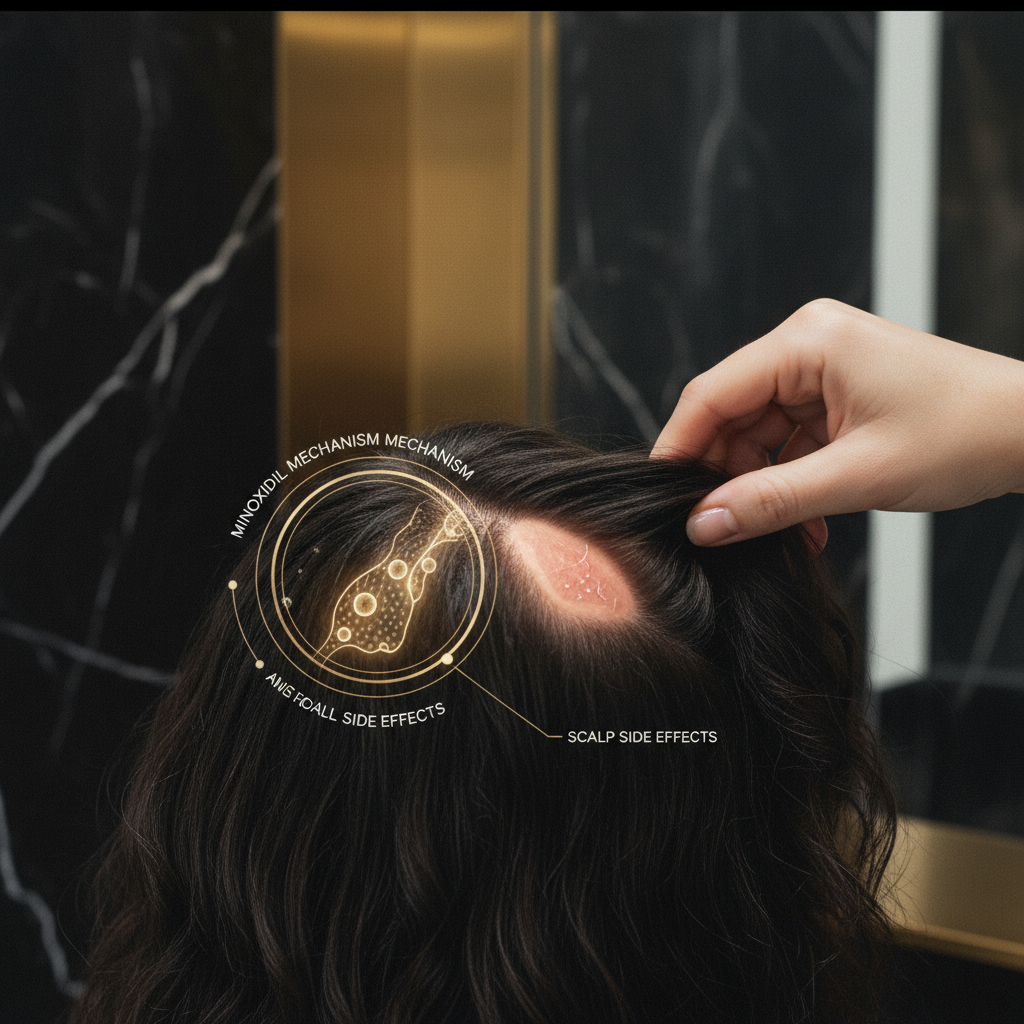
Quick answer: Understanding Minoxidil Mechanism and Scalp Side Effects helps you distinguish expected treatment responses from adverse reactions. Minoxidil works primarily as an adenosine triphosphate-sensitive potassium channel opener that stimulates the hair follicle microcirculation, prolongs the anagen growth phase, and enlarges miniaturised follicles. However, common cutaneous reactions such as pruritus, flaking, and contact dermatitis frequently occur, largely triggered by formulation vehicles like propylene glycol rather than the active drug itself. Treatment must be maintained continuously to preserve any regrown hair.
Key takeaways
- Minoxidil requires enzymatic conversion by follicular sulfotransferase into minoxidil sulfate to stimulate hair growth.
- The drug extends the anagen (growth) phase, shortens the telogen (resting) phase, and encourages miniaturised follicles to produce thicker terminal hairs.
- A transient shedding phase often occurs 2 to 8 weeks after starting treatment as telogen hairs are shed to make way for new anagen growth.
- Scalp irritation, erythema, and flaking are predominantly caused by propylene glycol in liquid formulations rather than the active molecule.
- Switching from a liquid solution to a propylene-glycol-free 5% foam preparation often resolves irritant contact dermatitis.
- Minoxidil does not alter the underlying hormonal cause of androgenetic alopecia; stopping application causes shedding of maintained hair within 12 to 24 weeks.
Minoxidil Mechanism and Scalp Side Effects: what the evidence shows
Clinical trials dating back to the late 1980s establish topical minoxidil as a primary pharmacological intervention for pattern hair loss (androgenetic alopecia) in both men and women. When evaluating Minoxidil Mechanism and Scalp Side Effects, dermatological research indicates that approximately 6% to 10% of users experience local cutaneous reactions.
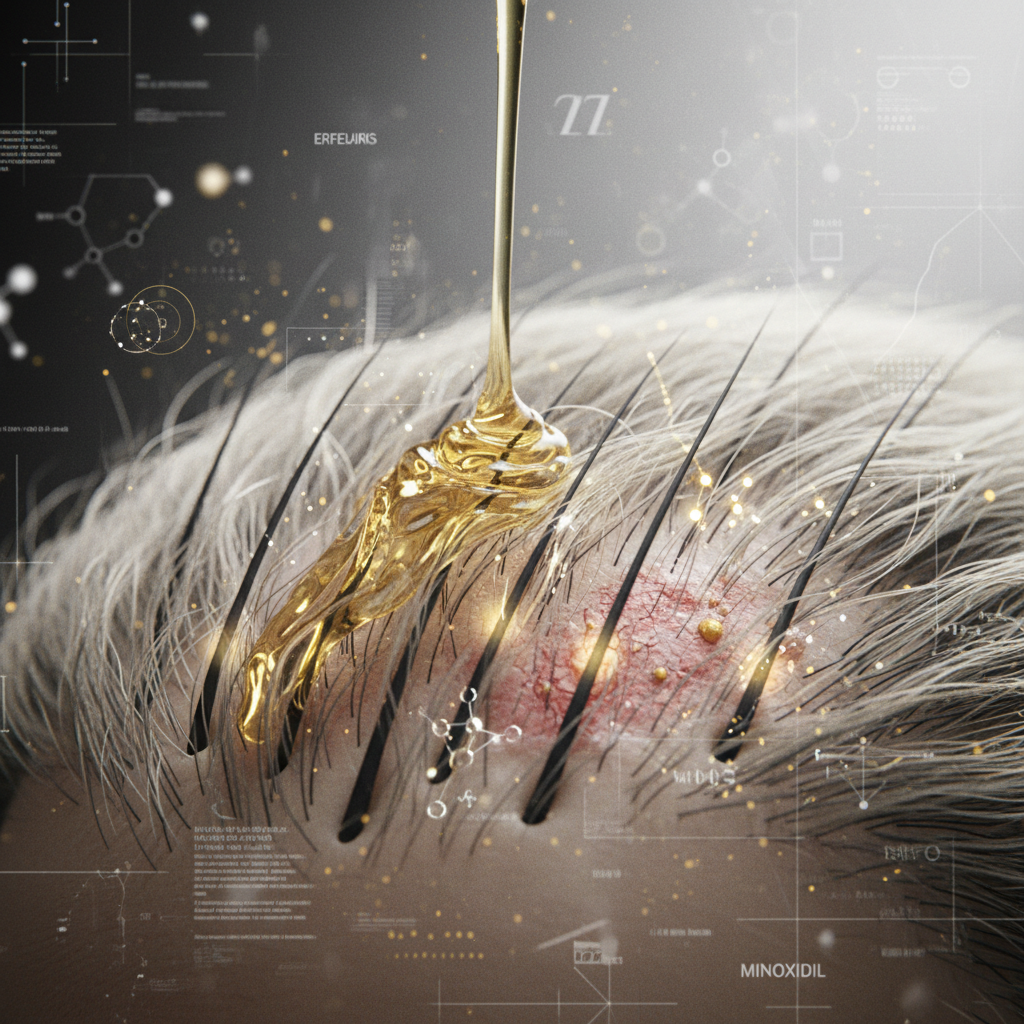
The primary action on the scalp is not purely vasodilatory, as was once assumed. While minoxidil was originally developed as an oral treatment for severe hypertension due to its peripheral vasodilator properties, its hair-growth action relies on specific cellular pathways within the dermal papilla.
At the same time, dermatological surveillance shows that adverse cutaneous reactions are the single most common reason patients discontinue treatment. These adverse effects range from mild scaling and dryness to severe allergic contact dermatitis. Identifying whether a reaction stems from the vehicle or the active ingredient is essential for managing therapy safely.
Cellular mechanisms of action in the follicle
Minoxidil is technically a prodrug. To become biologically active on hair follicles, it must undergo sulfation by the enzyme sulfotransferase (specifically SULT1A1), which is present in the outer root sheath of the hair follicle. Individuals with higher levels of follicular sulfotransferase activity generally show a superior clinical response.
Once converted to minoxidil sulfate, the molecule acts through several distinct biological pathways:
- ATP-sensitive potassium channel opening: Minoxidil opens potassium channels in smooth muscle cells and follicular cells. This causes hyperpolarisation of cell membranes, relaxing vascular smooth muscle and improving local microvascular perfusion to the dermal papilla.
- Prolongation of anagen: It signals follicular cells to exit the telogen phase prematurely and remain in the anagen phase for an extended duration. This increases both the length and diameter of the resulting hair shafts.
- Stimulation of growth factors: Research shows minoxidil upregulates vascular endothelial growth factor (VEGF) and hypoxia-inducible factor 1-alpha, which promotes angiogenesis around the follicle. It also stimulates dermal papilla cell proliferation and induces prostaglandin E2 (PGE2) synthesis while downregulating prostaglandin D2 (PGD2), an inhibitor of hair growth.
Topical Minoxidil
 │
 ▼ (Metabolised by follicular SULT1A1 enzyme)
Minoxidil Sulfate (Active Drug)
 │
 ┌────┴───────────────────────────┐
 ▼ ▼
Opens ATP-Sensitive Upregulates VEGF & PGE2
Potassium Channels Downregulates PGD2
 │ │
 ▼ ▼
Cell Membrane Hyperpolarisation Dermal Papilla Proliferation
& Microvascular Perfusion & Anagen Phase Extension
Cutaneous side effects and vehicle intolerance
Scalp complaints during treatment typically fall into three categories: irritant contact dermatitis, allergic contact dermatitis, and initial telogen release (dread shedding).
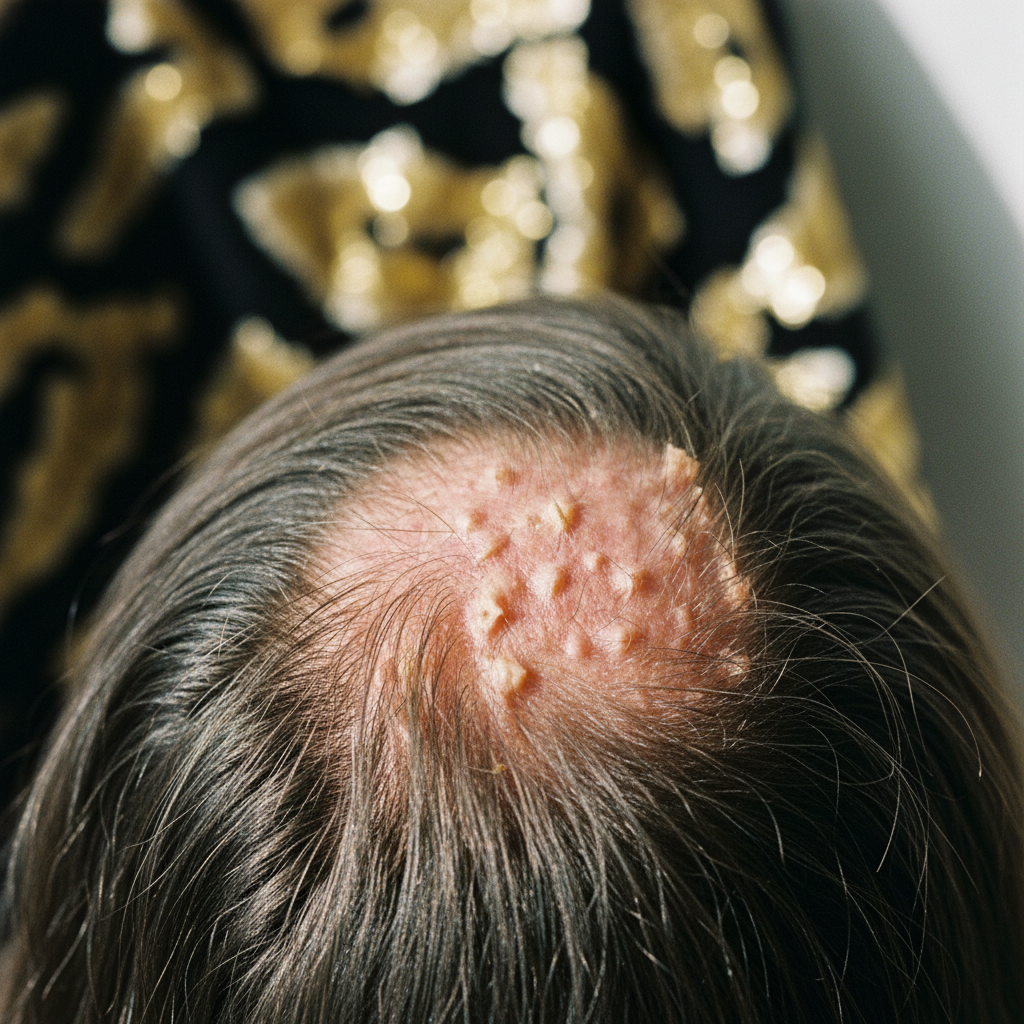
Liquid formulations typically contain water, ethanol (alcohol), and propylene glycol (macrogol). Propylene glycol serves as a penetration enhancer and solvent to keep minoxidil in solution. Unfortunately, it is a well-documented cutaneous irritant and a common cause of allergic sensitivity.
Signs of irritant reactions include:
- Fine white flaking, often mistaken for true dandruff
- Generalised scalp tightness and burning sensations immediately post-application
- Mild, diffuse erythema (redness) across the treated area
True allergic contact dermatitis is mediated by a Type IV delayed hypersensitivity response. Patch testing in dermatology clinics demonstrates that propylene glycol accounts for roughly 80% of these allergic patch reactions, while pure minoxidil allergy accounts for the remaining minority. Patients with true active-molecule allergies will react to all vehicle variants, including foam and oral formats.
| Side effect type | Primary cause | Clinical signs | Recommended intervention |
|---|---|---|---|
| Irritant contact dermatitis | Propylene glycol, high alcohol content | Stinging, erythema, fine scaling | Switch to 5% foam vehicle; decrease frequency |
| Allergic contact dermatitis | Propylene glycol (80%) or Minoxidil (20%) | Intense itching, weeping eczema, swelling | Dermatologist patch testing; discontinue if allergic to active |
| Early treatment shedding | Accelerated telogen-to-anagen transition | Increased loose hairs when washing (weeks 2 to 8) | Reassurance; continue use as shedding signals efficacy |
| Hypertrichosis | Drug migration or low-level systemic absorption | Fine hair on forehead, temples, or cheeks | Wash hands; avoid applying within 2 hours of sleep |
What the evidence does not show
There is no clinical evidence that topical minoxidil alters the systemic endocrine profile. Unlike finasteride or dutasteride, minoxidil does not inhibit 5-alpha reductase or decrease circulating levels of dihydrotestosterone (DHT). Because it does not correct the genetic sensitivity to androgens, it acts as a growth stimulant rather than a disease-halting hormonal therapy.
Furthermore, evidence does not show that minoxidil damages healthy hair follicles when applied correctly. The shedding noted during the initial weeks of treatment does not cause permanent hair loss. Hair shedding (the mechanical release of telogen club hairs) must be distinguished from hair loss (follicular miniaturisation or destruction). The shed hairs were already destined to fall out over the subsequent 3 to 4 months; minoxidil merely synchronises and accelerates this release.
What you can do to manage scalp tolerance
If you experience scalp irritation while using minoxidil, several practical steps can improve barrier function without sacrificing results:
- Switch to a foam formulation: 5% minoxidil foam is aerosolised using a propellant and replaces propylene glycol with ingredients like cetyl alcohol and stearyl alcohol. This dramatically lowers the incidence of flaking and irritation.
- Apply strictly to a dry scalp: Applying minoxidil to damp or wet skin markedly increases transdermal absorption. This can turn a mild irritant reaction into systemic absorption, potentially causing tachycardia, lightheadedness, or facial hair growth.
- Respect application volumes: Clinical guidelines indicate 1 ml per dose (or half a cap of foam). Applying more does not enhance sulfotransferase activity or follicle recruitment; it simply pools on the epidermis, drying out the skin barrier.
- Incorporate scalp barrier care: Use a mild, sulphate-free shampoo to cleanse dried drug residue from the skin surface. Avoid applying alcohol-heavy styling products directly over the medication.
When the cause may be something else
Not all scalp irritation during treatment is caused by minoxidil. Pre-existing conditions often flare up independently:
- Seborrhoeic dermatitis: A chronic inflammatory condition driven by Malassezia yeast. The high alcohol content of liquid minoxidil can dehydrate the skin, damaging the stratum corneum and allowing fungal metabolites to penetrate, triggering an acute seborrhoeic flare.
- Psoriasis: Scalp psoriasis creates well-demarcated erythematous plaques with thick, silvery scales. Alcohol-based solutions can induce an isomorphic response (Koebner phenomenon), worsening plaques.
- Traction or breakage: Hair fibre snapping along the shaft due to mechanical tension or chemical treatments is hair breakage, not follicle shedding. Minoxidil has no impact on mechanical tensile strength along the mid-lengths.
Cosmetic support and everyday hair maintenance
While pharmacological treatments target follicular biological pathways, maintaining the cosmetic integrity of your remaining hair fibre and scalp environment is equally valuable. Topical drug formulations can leave hair shafts feeling brittle, stripped, or chalky due to solvent evaporation.
Cosmetic shampoos and conditioners do not treat follicular miniaturisation, but gentle, nutrient-rich formulations help counter the drying effects of pharmaceutical alcohol vehicles. Watermans GrowMe Shampoo and ConditionMe Conditioner are designed to clean residue gently from the scalp while conditioning the hair fibre to minimise breakage. A balanced scalp environment helps maintain personal comfort, ensuring you can comply with any long-term medical routine recommended by your doctor.
When to seek professional advice
Consult a GP or dermatologist if you develop:
- Severe, widespread scalp eczema, weeping lesions, or swelling around the eyes and forehead.
- Dizziness, palpitations, unexplained swelling of the ankles, or chest discomfort (signs of systemic cardiovascular absorption).
- Continuous shedding that persists past 12 weeks of daily application without visible stabilisation.
- Sudden, patchy hair shedding (which may indicate alopecia areata rather than pattern hair loss).
Frequently asked questions about Minoxidil Mechanism and Scalp Side Effects
Why does minoxidil cause an initial shedding phase?
Minoxidil prompts follicles stuck in the telogen (resting) phase to rapidly shed their shafts and enter anagen (growth). This shift typically causes temporary shedding between weeks 2 and 8 of treatment. It indicates that follicles are actively responding to the medication.
Can minoxidil permanently cure pattern baldness?
No. Minoxidil acts as an ongoing stimulatory therapy rather than a permanent cure. Because it does not eliminate DHT or alter genetic sensitivity, any hair preserved or regrown will enter catagen and shed within 3 to 6 months of stopping treatment.
How do I treat flaking caused by Minoxidil Mechanism and Scalp Side Effects?
When navigating Minoxidil Mechanism and Scalp Side Effects related to flaking, verify whether you are using a liquid containing propylene glycol. Switching to a 5% foam preparation usually resolves the issue. Alternating with an anti-inflammatory shampoo containing ketoconazole can also calm surface flaking.
Can I use minoxidil once a day instead of twice?
While 2% solutions and traditional male 5% guidelines specify twice-daily use, several dermatological studies demonstrate that once-daily application of 5% foam achieves close to identical therapeutic efficacy while cutting vehicle-related scalp exposure and irritation in half.
What is the difference between hair breakage and minoxidil shedding?
Shedding involves complete hairs falling out directly from the follicle, visible by a tiny white keratin bulb at the root end. Breakage happens when the hair fibre snaps along its shaft due to physical stress, heat, or bleaching, leaving a fractured end without a bulb.
Long-term outlook and concluding guidance
Succeeding with pattern hair loss therapies requires realistic expectations regarding Minoxidil Mechanism and Scalp Side Effects. Topical minoxidil remains one of the most thoroughly validated non-hormonal treatments available for stimulating follicular cycling and counteracting miniaturisation. However, its effectiveness hinges on consistent, long-term adherence.
By recognising early shedding as a standard biological transition, opting for propylene-glycol-free formulations when irritation occurs, and maintaining a healthy epidermal scalp barrier, you can minimise adverse skin reactions and give your hair follicles the optimal conditions to thrive.
Sources and references
- American Academy of Dermatology. "Hair loss: Diagnosis and treatment." 2022.
- British Association of Dermatologists. "Guidelines for the management of alopecia areata and androgenetic alopecia." British Journal of Dermatology, 2018.
- National Institute for Health and Care Excellence (NICE). "Alopecia: Minoxidil topical summary." Clinical Knowledge Summaries, 2021.
- Messenger, A.G., and Rundegren, J. "Minoxidil: mechanisms of action on hair growth." British Journal of Dermatology, 2004. DOI: 10.1111/j.1365-2133.2004.05785.x
- Friedman, E.S., Friedman, P.M., Cohen, D.E., and Washenik, K. "Allergic contact dermatitis to topical minoxidil solution: etiology and treatment." Journal of the American Academy of Dermatology, 2002. DOI: 10.1067/mjd.2002.120599
- Goren, A., et al. "Novel enzymatic assay predicts minoxidil response in the treatment of androgenetic alopecia." Dermatologic Therapy, 2014. DOI: 10.1111/dth.12111