Minimising Mechanical and Thermal Hair Damage
8 min read ·
Learn the science of minimising mechanical and thermal hair damage. Discover how to protect cuticle lipids, avoid bubble hair, and prevent fibre breakage.
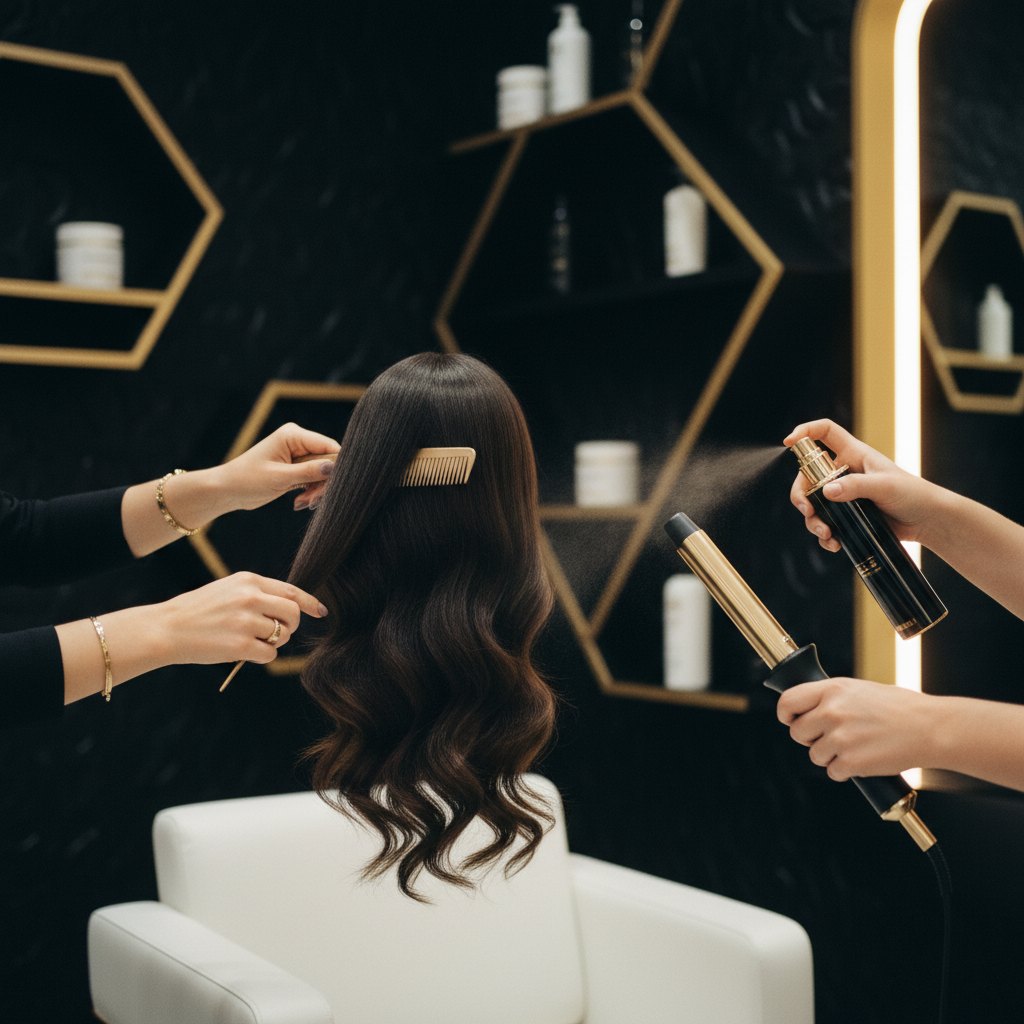
Quick answer: Minimising Mechanical and Thermal Hair Damage requires reducing physical friction and controlling heat exposure to protect the cuticle and internal cortex. When brushing wet hair, using rough towels, or applying styling tools above 185°C, keratin bonds fracture and lipids melt away. While you can preserve structural integrity using heat protectants, lower tool temperatures, and gentle detangling methods, cosmetic products cannot permanently rebuild severed disulfide bonds once the fibre splits, making proactive prevention your best defence.
Key takeaways
- Mechanical damage strips the protective cuticle scales through excessive friction, aggressive brushing, and harsh towel-drying.
- Thermal damage degrades alpha-keratin proteins into amorphous beta-keratin, permanently weakening the hair shaft at temperatures above 150°C.
- Wet hair is especially fragile because absorbed water weakens hydrogen bonds, increasing stretch susceptibility by up to 30 to 50 percent before snapping.
- Applying heat protectant polymers reduces heat transfer rates and limits moisture evaporation during heat styling.
- Preventing fibre breakage does not cure root-level follicular hair loss, as hair shaft fractures occur externally along the length of the strand.
Minimising Mechanical and Thermal Hair Damage: what the evidence shows
Minimising Mechanical and Thermal Hair Damage is fundamentally an exercise in structural preservation. Hair is a biological composite fibre consisting of an outer protective cuticle, an intermediate cortex made of keratin protein fibrils, and an optional central medulla.
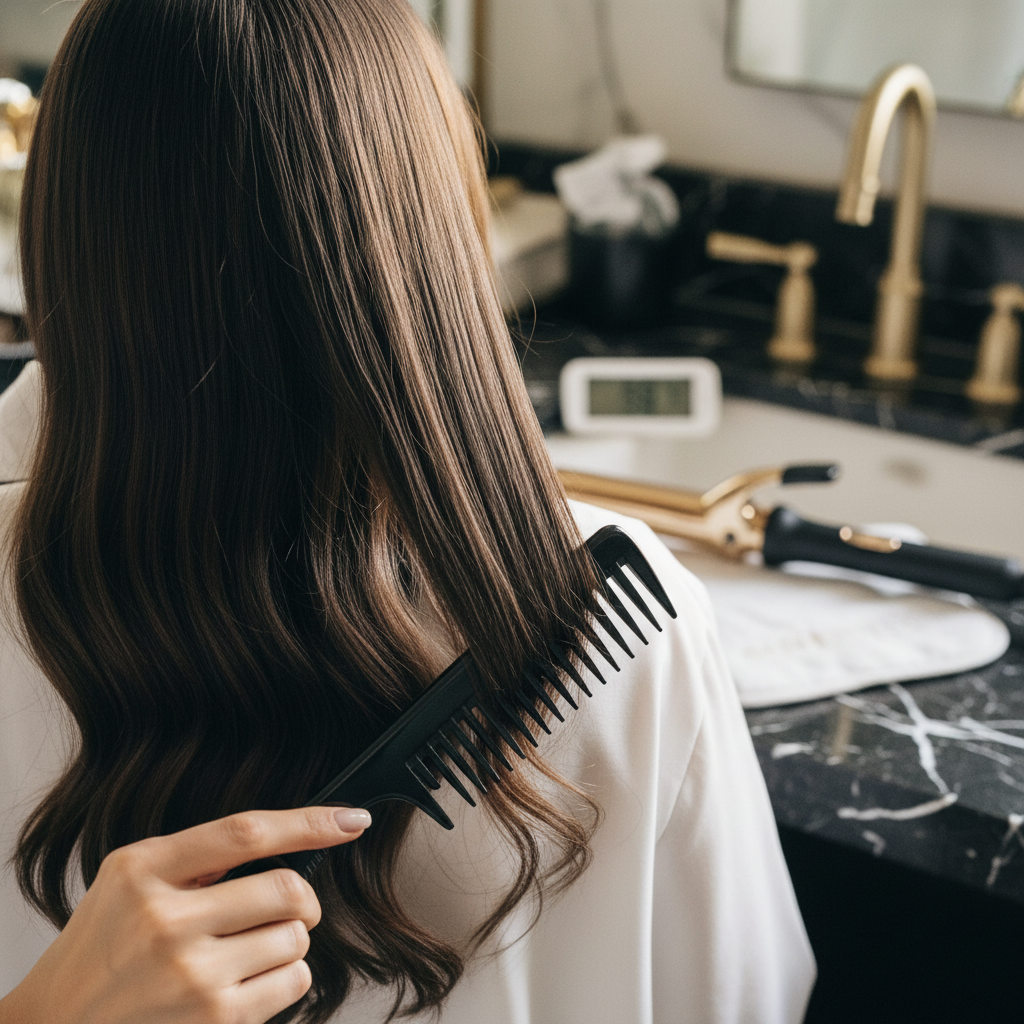
Scientific trials published in cosmetic dermatology journals show that thermal appliances cause rapid morphological changes to hair fibres. When flat irons or curling tongs touch hair at temperatures above 150°C, the moisture inside the fibre heats rapidly. If hair retains high water content during heat styling, this water vaporises, creating tiny bubbles inside the hair shaft. This condition, known as "bubble hair", leaves the fibre hollow, brittle, and prone to breaking at the slightest touch.
Mechanical stress acts synergistically with heat. Repetitive brushing with rigid bristles chips away at the edges of overlapping cuticle cells. When the protective outer cuticle wears away, the cortex sits exposed to UV light, environmental pollutants, and daily friction. Studies show that wet hair exhibits a significantly lower elastic modulus than dry hair. Brushing hair while it remains soaking wet stretches the protein matrix beyond its elastic limit, causing permanent deformation and fractures.
The physical mechanisms of fibre degradation
Understanding how hair sustains damage helps you choose the right preventative routines. Both physical forces and heat alter hair morphology in distinct ways.
Cuticle lifting and abrasion
The cuticle layer consists of five to ten overlapping scales cemented together by the cell membrane complex (CMC). Healthy cuticle scales lie flat, shielding the delicate inner cortex from moisture loss and external friction. Rough mechanical actions, such as vigorous towel-drying or backcombing, lift these scales. Once lifted, the scales catch on adjacent fibres, creating friction, knots, and breakage.
Protein denaturation from heat
Keratin proteins in the hair shaft exist primarily in an organised alpha-helical shape. Exposing dry hair to temperatures exceeding 155°C to 160°C causes these alpha-helical structures to denature into a less stable beta-sheet conformation. Above 200°C, hair proteins begin to degrade chemically. The amino acid cystine oxidises into cysteic acid, severing the disulfide cross-links that give hair its tensile strength.
Lipid stripping
The outermost surface of the hair shaft features a natural layer of 18-methyleicosanoic acid (18-MEA), a covalently bound fatty acid that creates a hydrophobic, water-repelling barrier. High thermal energy oxidises and strips this delicate lipid layer. When hair loses its 18-MEA barrier, it turns hydrophilic, absorbing atmospheric humidity rapidly, tangling easily, and losing natural shine.
| Damage Type | Primary Causes | Structural Impact | Observable Symptoms |
|---|---|---|---|
| Mechanical | Dry-brushing curls, wet detangling, harsh towels, tight elastics | Cuticle chipping, split ends (trichoptilosis), cell membrane degradation | Rough texture, split ends, flyaways, mid-shaft snaps |
| Thermal (Dry) | High flat-iron heat (185°C to 230°C), unshielded blow-drying | Protein denaturation, cystine loss, structural lipid depletion | Dullness, straw-like stiffness, chronic breakage |
| Thermal (Wet) | Heat styling damp hair, rapid boiling of cortex moisture | "Bubble hair" formation, cortical cavitations | Sudden fibre collapse, extreme snapping, irregular bulges |
Signs of mechanical and thermal damage
Damage along the hair shaft presents distinct symptoms compared to follicular shedding:
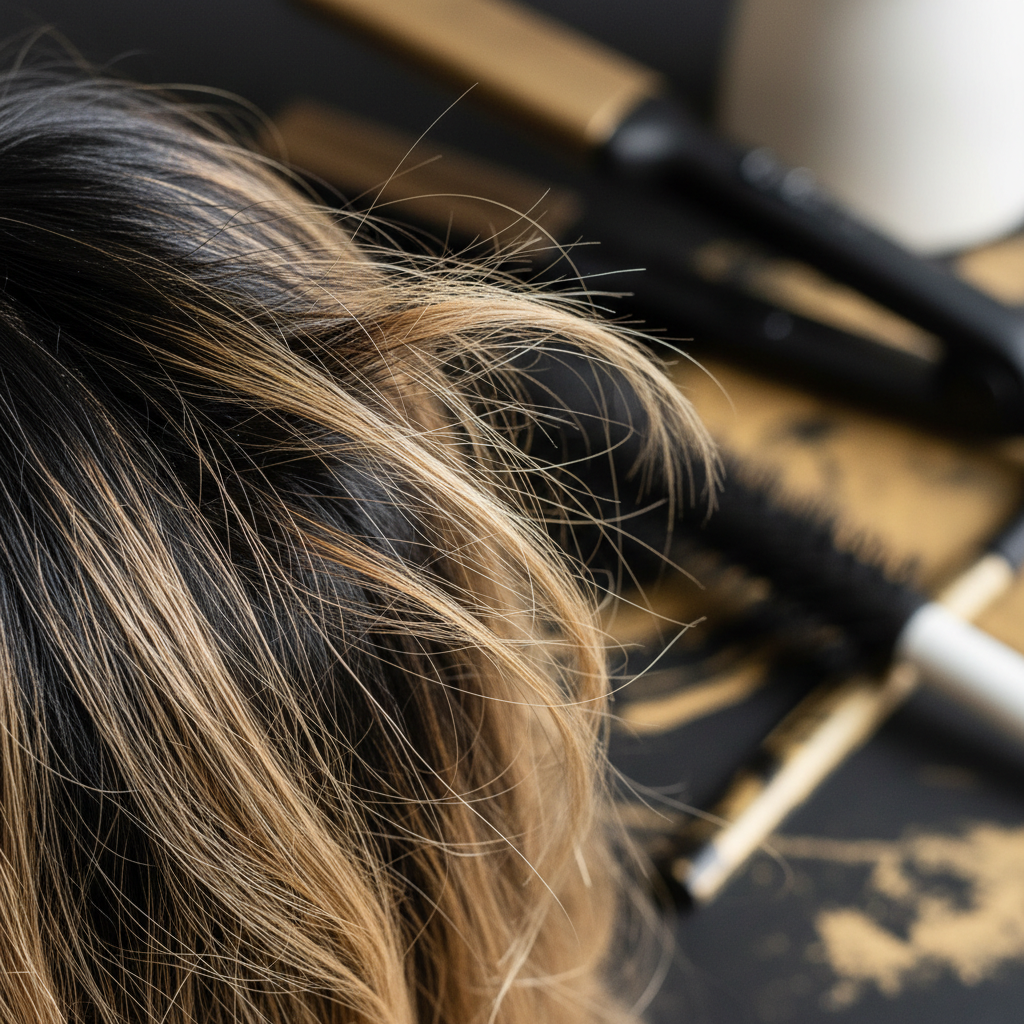
- Trichoptilosis (split ends): The protective cuticle wears away completely at the tips, allowing cortical fibres to separate into two or more strands.
- Trichorrhexis nodosa: The cortex develops tiny, fragile node-like swelling points along the shaft that resemble two paintbrushes shoved together under a microscope. Hair snaps cleanly at these weakened nodes.
- Loss of elasticity: The hair fibre snaps immediately when gently stretched between your fingers, rather than rebounding back to its original length.
- Increased porosity and dullness: Damaged hair absorbs water instantly yet loses moisture just as quickly, looking dull and matte because light scatters across the rough, lifted cuticles.
What the evidence does not show
Controlled cosmetic trials do not support the claim that topical cosmetic serums or oils permanently fuse split ends. While polymers, silicones, and hydrolysed proteins temporarily patch damaged areas and smooth the cuticle envelope, washing removes these temporary bridges.
Similarly, cosmetic treatments cannot rebuild severed disulfide bonds back to their virgin state once severe mechanical abrasion strips the cuticle away. Claims that thermal protectants offer total immunity against high styling temperatures are also inaccurate; even the highest-performing protective formulas only reduce heat transfer and water loss, shielding hair by roughly 30 to 50 percent.
Everyday practices to reduce fibre stress
Adopting evidence-based styling habits significantly cuts the rate of everyday fibre wear and tear.
Gentle detangling protocols
- Use a wide-tooth comb or flexible bristle brush: Start at the ends and work up towards the roots to avoid compacting tangles into tight knots.
- Detangle damp, conditioned hair: Apply a conditioner that provides lubricity before detangling, reducing the friction coefficient between fibres.
- Avoid vigorous towel rubbing: Pat hair dry or blot it with a smooth microfibre towel or cotton T-shirt to minimise cuticle abrasion.
Controlled heat styling
- Keep styling appliances below 185°C: Flat irons and curling wands produce reliable styling results at 150°C to 180°C. Working above 185°C accelerates thermal degradation without improving curl hold or straightening efficiency.
- Dry hair fully before using hot irons: Ensure hair is 100 percent dry before applying direct contact heat to prevent steam blisters and "bubble hair".
- Apply film-forming heat protectants: Formulations containing polyquaterniums, hydrolysed wheat proteins, and silicones spread a protective film over the shaft that slows heat conduction and seals in baseline hydration.
When breakage is mistaken for hair shedding
People often confuse fibre breakage with biological hair loss. If you find short, snapped hairs on your clothes or bathroom counter without a small white bulb at the root, you are experiencing shaft breakage caused by mechanical or thermal stress.
Conversely, if the shed hairs show an intact white bulb (the keratinised root end), the fibre has completed its normal growth cycle and shed directly from the follicle (telogen effluvium). Mechanical stress cannot induce follicular thinning unless constant, severe physical tension pulls on the roots over extended periods, a condition known as traction alopecia.
Supporting hair resilience: the Watermans approach
Topical cosmetic support helps improve hair manageability and lubricity, reducing the everyday friction that leads to mechanical damage. Products like Watermans Grow Me Shampoo and Condition Me Conditioner are formulated with nourishing ingredients like biotin, rosemary, caffeine, and hydrolysed lupin protein.
Using conditioning agents coats the hair shaft, smoothing lifted cuticles and reducing friction during detangling. When your brush glides through hair with minimal resistance, you naturally reduce tensile strain on vulnerable strands, supporting healthier-looking hair and helping to prevent avoidable mechanical breakage.
Frequently asked questions about Minimising Mechanical and Thermal Hair Damage
Can hair repair itself after thermal damage?
No, hair cannot biologically repair itself. Unlike skin, the hair shaft consists of dead, non-living keratinised tissue without living cells to regenerate lost structure. Minimising Mechanical and Thermal Hair Damage requires preventative care, because once heat denatures proteins or causes cortical bubbles, the only permanent solution is trimming away the compromised length.
What is the maximum safe temperature for flat ironing?
Cosmetic scientists recommend staying below 185°C (365°F). At temperatures between 150°C and 180°C, the hair's hydrogen bonds reshape without causing severe denaturation of alpha-keratin. Crossing the 190°C mark rapidly oxidises cystine and strips natural lipids, leading to severe thermal breakdown.
Why is wet hair more prone to mechanical damage?
When hair absorbs water, water molecules disrupt its internal hydrogen bonds, swelling the cortex and softening the inner matrix. In this state, hair stretches much more easily. If you brush wet hair aggressively, it stretches past its elastic limit, causing the outer cuticle to crack and the cortex to snap.
Do heat protectant sprays really work?
Yes, high-quality heat protectant sprays reduce damage, though they do not offer total protection. They use heat-resistant polymers and silicones to coat the fibre, distributing heat more evenly across the surface, slowing heat transfer to the inner cortex, and sealing in natural moisture.
Summary
Successfully minimising mechanical and thermal hair damage relies on consistent, low-friction habits and strictly controlled styling temperatures. By treating hair as an unrepairable biological textile, using wide-tooth detanglers, letting hair dry fully before applying heat tools, and using protective leave-in products, you shield the delicate cuticle and cortex from irreversible structural wear.
Sources and references
- Journal of Cosmetic Dermatology, "Thermal degradation of hair keratin," 2011.
- International Journal of Cosmetic Science, "The effect of heat on hair chemical and physical properties," 2015.
- Society of Cosmetic Chemists, "Chemical and Physical Behaviour of Human Hair," Clarence R. Robbins, 5th Edition, 2012.
- American Academy of Dermatology (AAD), "Hair Styling Without Damage," aad.org.