Mechanical Hair Damage: Identification, Causes, and Prevention
9 min read ·
Learn how to identify, prevent, and treat Mechanical Hair Damage caused by friction, brushing, and styling to keep your hair shaft strong and resilient.
Quick answer: Mechanical Hair Damage occurs when physical forces such as aggressive brushing, friction from fabrics, backcombing, and tight styling snap or wear down the hair shaft. Unlike biological hair loss, it represents physical fibre fracture rather than a follicular problem. You can prevent and manage this wear and tear by reducing friction and handling wet hair gently. However, because hair fibres are non-living biological structures, existing structural splits cannot truly fuse back together, meaning trimming remains the only permanent fix for severed ends.
Key takeaways
- Mechanical damage is caused by physical force (friction, tension, and abrasion) rather than heat, chemical processing, or genetic follicular miniaturisation.
- Wet hair stretches up to 30% beyond its resting length before breaking, making vigorous detangling while wet especially hazardous to the cuticle and cortex.
- Frictional wear strips the protective lipid layer (18-methyleicosanoic acid) and chips away cuticle scales, exposing the inner cortex to moisture loss and splitting.
- Broken fibres caused by mechanical stress are distinct from shed hairs; broken pieces lack the white keratinised bulb seen at the root of naturally shed strands.
- Prevention focuses on slip, wide-toothed tools, low-tension hairstyles, and friction-reducing sleep surfaces like silk or satin pillowcases.
Mechanical Hair Damage: what the evidence shows
Mechanical Hair Damage is one of the most common causes of weathered, frizzy, and thinning hair ends. Scientific investigations using scanning electron microscopy demonstrate that every physical interaction with hair (from routine shampooing to detangling) applies shear stress to the fibre.
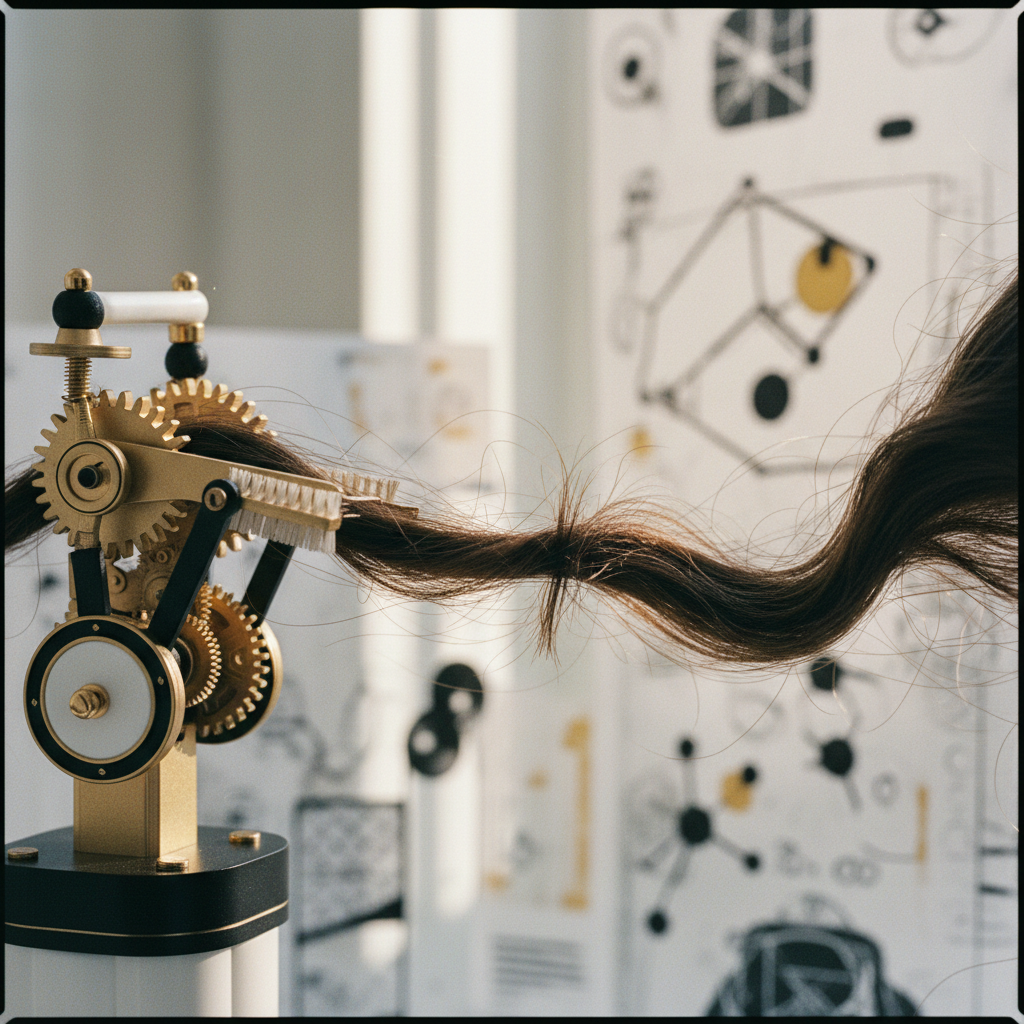
Research published in the Journal of Cosmetic Science shows that human hair consists of an outer protective cuticle layer surrounding the structural cortex. In virgin, undamaged hair, the cuticle comprises 6 to 10 overlapping cellular layers coated in a natural hydrophobic lipid called 18-methyleicosanoic acid (18-MEA). When you subject hair to repetitive mechanical friction, such as rough towel-drying or dragging a fine-toothed comb through knots, these cuticle scales lift, crack, and eventually break off entirely.
Once the cuticle layer is compromised, the fibrous cortical cells underneath are exposed to the environment. The cortex provides hair with its tensile strength through coiled keratin chains linked by disulphide bonds. Without its protective armour, the cortex unspools under routine physical tension. This unspooling presents clinically as trichorrhexis nodosa (microscopic nodes where the fibre fractures like two paintbrushes pushed against each other) or longitudinal splitting (trichoptilosis), commonly known as split ends.
Importantly, mechanical stress is cumulative. Hair grows roughly 1 to 1.25 centimetres per month. This means the ends of a 30-centimetre strand have weathered around two to three years of daily combing, washing, and friction against clothing.
The mechanical process: how physical forces break hair
Understanding how physical forces degrade hair requires looking at three distinct mechanisms: tension, friction, and compression.
1. Excessive tension and elastic strain
Dry hair has an elastic limit of around 20% to 30% elongation before permanent plastic deformation occurs. Beyond this threshold, the internal bonds cannot recoil, and the fibre snaps.
When hair is saturated with water, its hydrogen bonds are temporarily disrupted. This makes wet hair more elastic (stretching up to 30% to 50% under load) but mechanically weaker in terms of shear resistance. Forcing a rigid brush through wet tangles stretches the fibre past its yield point, fracturing the cortical filaments.
2. Abrasion and shear friction
Every time hair rubs against rough surfaces, friction wears down the outer cuticle. This happens when:
- Rubbing hair vigorously with a terrycloth towel.
- Turning your head against cotton pillowcases at night.
- Combing against the direction of cuticle scale growth (backcombing or teasing).
- Wearing woollen collars, scarves, or backpack straps that constantly rub against the mid-lengths and ends.
Backcombing is particularly destructive because it forces cuticle scales open against their natural shingled grain, stripping them off the fibre entirely within only a few passes.
3. Compression and focal crushing
Fastening hair with elastic bands that contain exposed metal clips or tight rubber cores creates a pinch point. Under this high compressive pressure, the cuticle is crushed. When the hair is repeatedly pulled into a tight ponytail or bun at the exact same location, the concentrated stress leads to localized breakage, often leaving an uneven "halo" of short hairs around the crown.
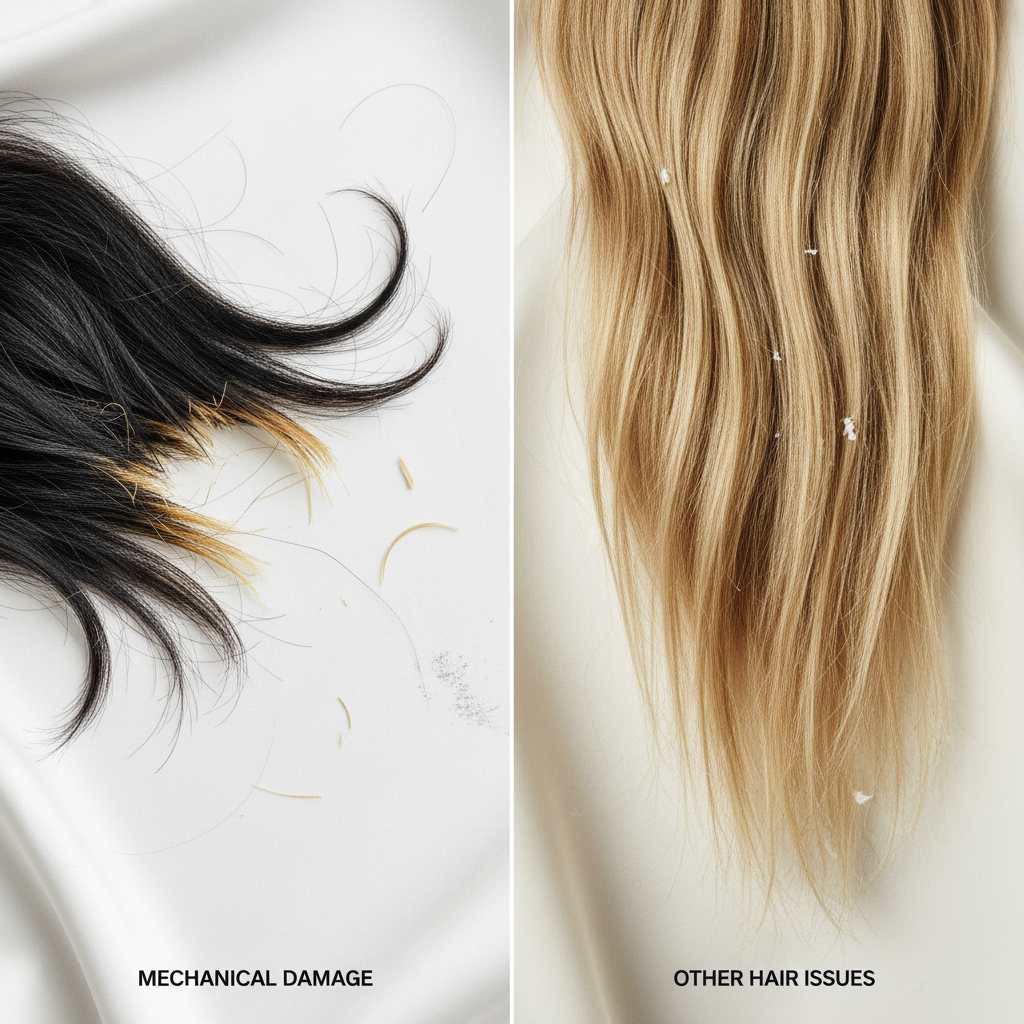
Signs of mechanical damage vs other hair issues
Because brittle hair can stem from multiple origins, identifying the exact symptoms of mechanical wear ensures you treat the right issue.
| Characteristic | Mechanical Damage | Chemical / Heat Damage | Telogen Effluvium (Shedding) |
|---|---|---|---|
| Primary Root Cause | Physical friction, tension, brushing | Bleach, relaxers, high-heat tools | Physiological stress, illness, deficiencies |
| Microscopic Appearance | Chipped cuticles, frayed ends | Melted fibres, dissolved disulphide bonds | Intact fibre with white bulb at root |
| Length of Lost Strands | Short, uneven, jagged fragments | Variable, brittle fragments | Full-length strands |
| Scalp Involvement | None (purely fibre-level) | Occasional scalp burns from chemicals | Follicular shedding across scalp |
| Reversibility | Must trim damage; prevent new breaks | Must grow out; bonds can be cosmetically patched | Follicles spontaneously resume growth cycle |
What the evidence does not show
There is no scientific evidence that mechanical stress causes true genetic hair thinning (androgenetic alopecia). While severe, long-term tension can lead to traction alopecia (a follicular condition common from tight braids or weaves), everyday brushing and towel drying affect only the non-living hair shaft.
Furthermore, clinical testing demonstrates that no topical product, oil, or serum can permanently rejoin a hair shaft that has split or broken. Once the cortical fibres unspool, cosmetic products containing hydrolysed proteins, silicones, or plant oils can only coat the fibre, temporarily smoothing the cuticle scales down and increasing lubricity. They act like cosmetic glue until your next wash, not a biological graft.
What you can do to prevent mechanical damage
Halting mechanical breakage relies on reducing friction, supporting slip, and handling hair with care.
Switch your detangling technique
- Start from the bottom: Never drag a comb down from the scalp to the ends. Start at the tips, working tangles out in 5-centimetre increments, slowly progressing upward toward the root.
- Use slip: Never detangle dry curly hair or brittle bleached hair without a lubricant. Apply a leave-in conditioner or detangling spray with water-soluble conditioning agents to lower the coefficient of friction.
- Choose the right tool: Use a wide-toothed comb made of seamless material, or a detangling brush designed with flexible bristles that bend when encountering resistance rather than snapping the hair.
Minimise sleep and fabric friction
Swap rough cotton pillowcases for mulberry silk or high-grade satin. Silk creates substantially less friction as you toss and turn at night, preventing morning matting. Securing long hair in a loose, high pineapple or a silk bonnet keeps lengths from tangling underneath your shoulders while you sleep.
Rethink towel drying
Traditional terrycloth towels have tiny loop piles that snag raised cuticle scales. Replace them with smooth microfibre wraps or a clean cotton T-shirt, and gently squeeze water from the hair rather than rubbing.
Diversify your styles
Avoid wearing tight ponytails in the exact same spot every day. Use soft fabric scrunchies or seamless spiral hair ties instead of thin elastic bands, and never pull hair ties out sideways; unroll them gently.
When breakage stems from a combined cause
Mechanical damage rarely happens in complete isolation. Hair that has undergone chemical processing (such as bleaching, perming, or permanent colouring) or intense heat styling has lost its protective 18-MEA lipid layer and suffered internal disulphide bond depletion.
This chemically vulnerable hair has a much lower tolerance for mechanical stress. A brushing technique that causes minimal wear on untreated, healthy hair can cause dramatic breakage on bleached or heat-damaged locks. If you notice widespread snapping, assess whether recent colour treatments or daily flat-ironing have lowered your hair's structural breaking point.
Supporting hair condition: the Watermans approach
While mechanical damage must be physically minimised, keeping hair shafts well conditioned improves their natural flexibility and resistance to daily styling friction. Incorporating nourishing products like Watermans Grow Me Shampoo and Condition Me Conditioner can provide the external conditioning required to smooth the hair shaft. Formulated with hydrolysed lupin protein, caffeine, biotin, and rosemary extract, this system helps hair feel stronger and more manageable. The conditioning step delivers essential slip, reducing the pulling force needed to pass a comb through wet or dry strands and helping keep mechanical breakage at bay.
When to seek professional advice
If you observe hair thinning at the scalp rather than short broken pieces on your clothing, or if you notice distinct patchy bald spots along your hairline, consult a dermatologist or trichologist. Tension-induced traction alopecia requires early professional intervention to avoid permanent follicular scarring. Similarly, sudden diffuse shedding where you lose full-length hairs with white bulbs at the ends points toward systemic shedding (telogen effluvium) or nutritional deficiencies rather than simple mechanical wear.
Frequently asked questions about Mechanical Hair Damage
Can Mechanical Hair Damage cause permanent hair loss?
Mechanical Hair Damage affects only the non-living fibre shaft and does not cause permanent hair loss. However, if mechanical force takes the form of chronic, high-tension hairstyles (such as tight cornrows or heavy extensions), it can strain the hair follicle, potentially leading to traction alopecia. If caught early, relieving this tension allows follicles to recover fully.
Does brushing 100 strokes a day improve hair health?
No. The historical advice to brush your hair 100 strokes a day is a myth that actually increases Mechanical Hair Damage. While light brushing distributes natural sebum down the shaft, excessive strokes repeatedly scrape the cuticle layers, leading to abrasion, cuticular thinning, and eventual mid-shaft breakage. Brush only enough to style and remove knots.
How can I tell if my hair is breaking or shedding?
Examine the fallen hairs against a dark surface. Shed hairs have detached naturally from the follicle and will feature a small, white, rounded bulb at one end. Broken hairs caused by mechanical stress are usually shorter, have blunt or frayed edges on both ends, and lack a root bulb.
Is it better to brush hair wet or dry?
It depends on your hair type. Straight and wavy hair is strongest when dry, so detangling gently before washing minimises breakage. Afro and tight curly textures shrink and lock together when dry; brushing them dry causes massive mechanical snapping. Curly hair should be detangled wet, saturated with conditioner to provide slip.
Mitigating physical stress for resilient hair
Managing Mechanical Hair Damage requires a conscious shift in how you physically handle your hair every day. Because hair fibre cannot biologically regenerate once it leaves the follicle, the cuticle layers you preserve today determine the tensile strength and smoothness of your ends years down the line. By substituting rough handling with slip, choosing low-friction accessories, and detangling patiently from tip to root, you protect the structural integrity of your hair from preventable physical breakage.
Sources and references
- Journal of Cosmetic Science: "The effect of physical and chemical weathering on human hair structure", 2008.
- British Association of Dermatologists: "Traction Alopecia and Hair Shaft Disorders Guidelines", 2020.
- International Journal of Trichology: "Hair cosmetics: An overview", 2015.
- American Academy of Dermatology: "Hair care without damage: Styling practices", 2022.
Find these ingredients in Watermans products
- Biotin: you will find this ingredient in our Hair Growth Shampoo.