Managing Protein Overload in Hair: The Definitive Guide
9 min read ·
Managing Protein Overload in Hair requires removing peptide buildup, restoring elastic moisture, and ending brittleness. Here is the science-based guide.
Quick answer: Managing Protein Overload in Hair requires immediately stopping protein-rich treatments, clarifying the hair fibre to remove surface deposit build-up, and restoring elasticity with water-based humectants and conditioning emollients. Protein overload occurs when hydrolysed proteins adhere heavily to the hair cuticle, causing the shaft to become brittle, stiff, and prone to mechanical snapping. However, hair cannot absorb endless internal protein; the issue is almost always a surface-level film that disrupts moisture retention rather than true structural alteration.
Key takeaways
- Protein overload is a cosmetic condition where excess proteins form a rigid outer shell on the hair cuticle, reducing fibre flexibility.
- The primary symptom is sudden brittleness and mechanical breakage, not shedding or follicular hair loss.
- Clarifying shampoos formulated with anionic surfactants are essential to remove deposited protein films from the hair shaft.
- Rebalancing the fibre requires humectants like glycerin and panthenol paired with fatty alcohols to restore softness and pliability.
- Fine hair and low-porosity hair types are particularly vulnerable to quick protein saturation and stiffness.
Managing Protein Overload in Hair: what the evidence shows
Managing Protein Overload in Hair begins with understanding how cosmetic proteins interact with the hair fibre. Cosmetic formulations use hydrolysed proteins derived from wheat, silk, keratin, soy, or collagen. These proteins are broken down via enzymatic or acid hydrolysis into low-molecular-weight peptides and amino acids, typically between 500 and 5,000 Daltons.
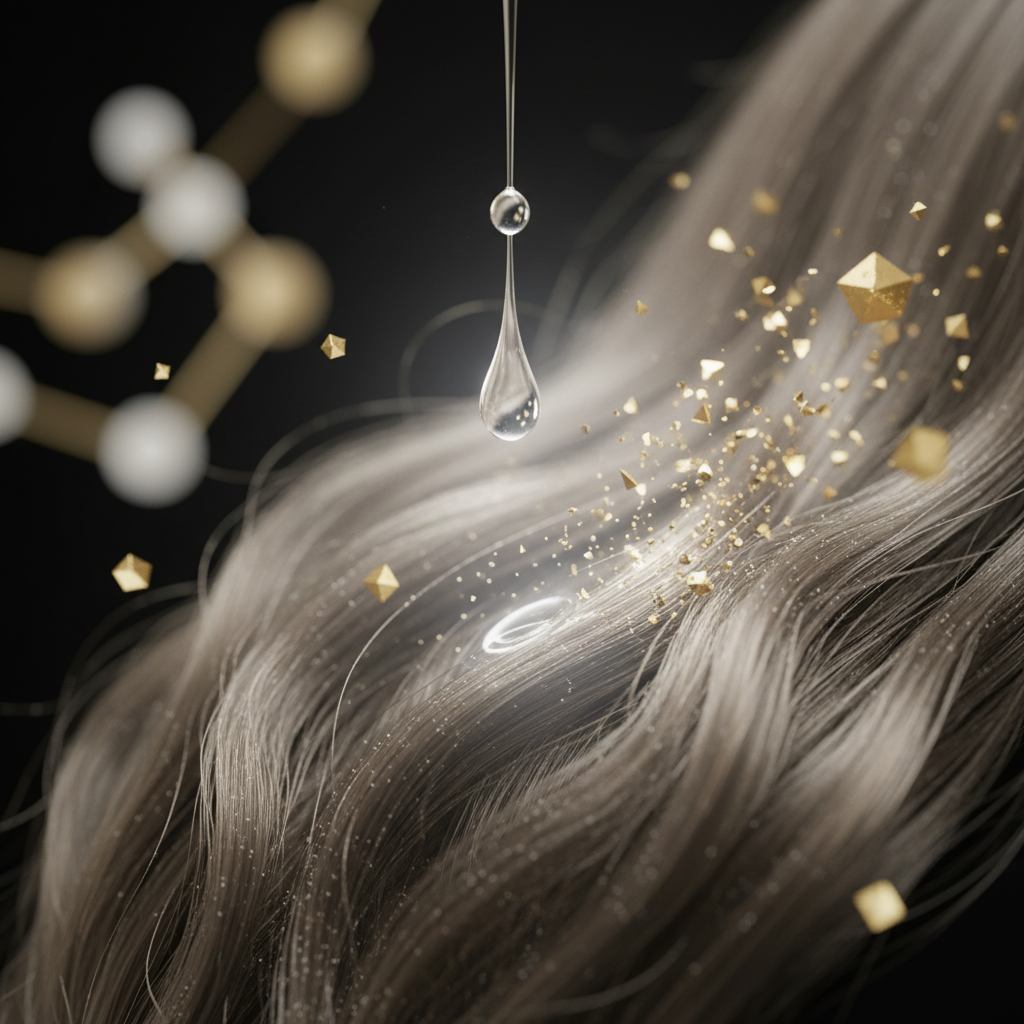
Cosmetic science research published in the International Journal of Cosmetic Science demonstrates that while very small peptides can penetrate damaged areas of the hair cortex to temporarily fill gaps, larger protein fractions deposit primarily on the cuticle layer. They adhere via ionic attraction to negatively charged, chemically damaged sites along the cuticular scales.
When you use protein-heavy leave-in conditioners, deep masks, and styling products in close succession, these protein layers accumulate. Rather than repairing the hair further, the accumulated film forms a rigid, cross-linked barrier on the outside of the hair fibre. This coating restricts the natural movement of the cuticle and prevents moisture from entering or exiting at normal physiological rates. The consequence is a loss of plasticisation: the fibre loses its elasticity and snaps under mild tension.
Normal Fibre: [Cuticle scales flex] ----> Pliable, absorbs water, stretches
Protein-Loaded: [Rigid protein film] ----> Stiff, resists moisture, snaps easily
What the evidence does not show
The term "protein overload" is common in salon culture and consumer communities, but the scientific literature views it somewhat differently.
First, the evidence does not show that hair shafts absorb excessive protein into their central matrix indefinitely until they burst or disintegrate. Hair is dead biological tissue, composed of roughly 85 to 90 percent native keratin. The hair shaft cannot metabolise external proteins, nor can it undergo cellular toxicity.
Second, topical protein does not cause follicular hair loss. If you notice snapping strands in your brush, inspect the ends. A strand broken along the shaft indicates mechanical breakage from protein-induced stiffness. A strand displaying a small white bulb at the tip indicates shedding from the hair follicle (such as telogen effluvium), which has systemic or hormonal triggers completely unrelated to topical protein treatments.
Finally, evidence does not show that protein should be permanently avoided. Protein treatments temporarily patch cuticle loss in bleach-damaged or heat-styled hair. The goal is balance, not complete avoidance.
The signs of protein overload to look for
Identifying protein overload accurately prevents you from applying the wrong corrective treatments. Look for these distinct mechanical indicators:
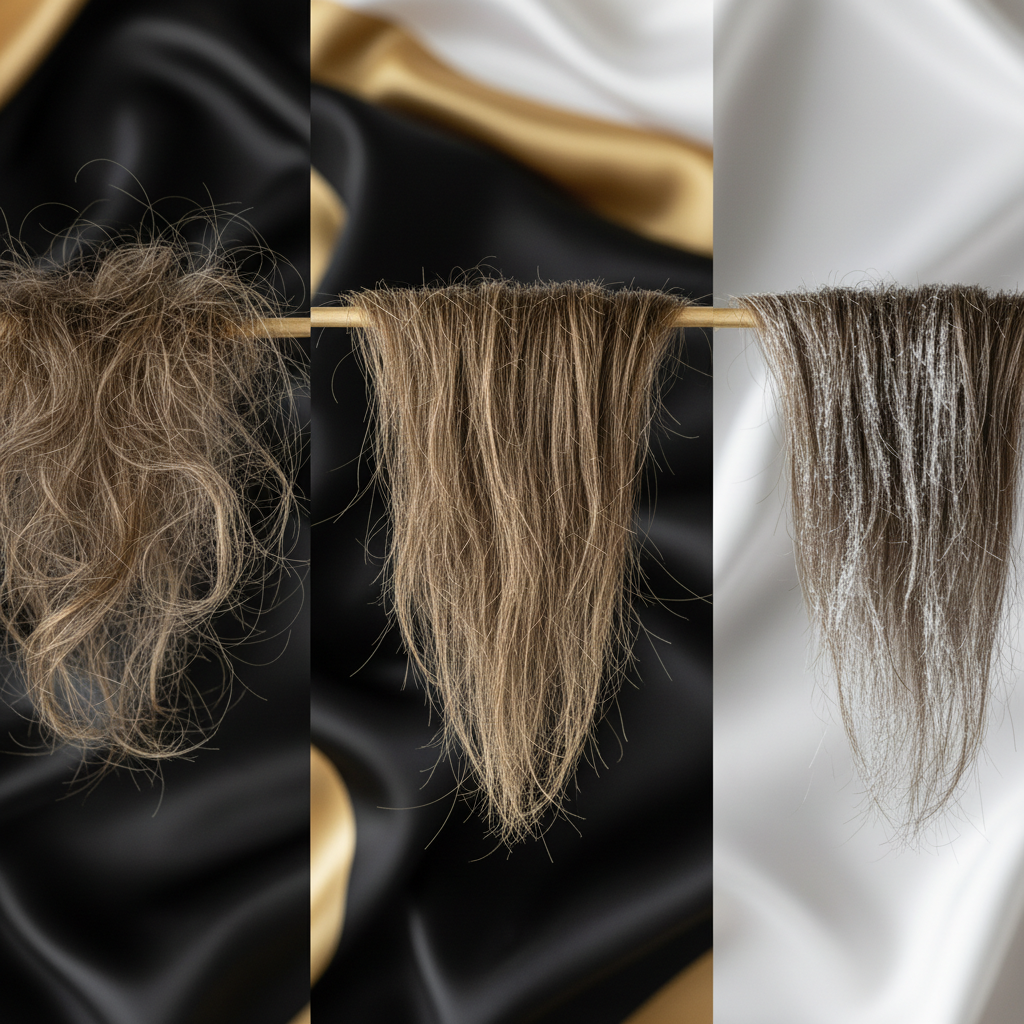
- Stiffness and straw-like texture: The hair feels unexpectedly coarse, dry, and rigid, even when wet.
- Loss of natural curl or wave definition: Curls become limp, stringy, or refuse to clump because the fibre lacks the mechanical flexibility to form its natural shape.
- The "snap" test failure: Take a single wet hair strand and stretch it gently between your fingers. Healthy wet hair typically stretches by roughly 20 to 30 percent of its resting length before springing back. Protein-overloaded hair will barely stretch at all and snaps instantly under minimal tension.
- Tangling and dullness: The uneven buildup of proteins creates friction along the cuticle surface, leading to severe micro-tangling and a lack of light reflection.
| Characteristic | Protein Overload | Moisture Overload (Hygral Fatigue) |
|---|---|---|
| Fibre Texture | Rigid, stiff, dry, straw-like | Mushy, gummy, excessively soft |
| Elasticity | Snaps immediately with zero stretch | Stretches excessively without bouncing back |
| Wet Behaviour | Resists water absorption, feels coarse | Holds excessive water, takes hours to dry |
| Primary Cause | Buildup of hydrolysed peptides and films | Prolonged cuticle swelling from constant water immersion |
| Primary Remedy | Clarifying wash followed by humectants | Gentle protein treatment and structural sealants |
How to reverse protein buildup
Managing protein overload requires a systematic routine focused on removing excess surface films and restoring elasticity.
1. Strip the deposited protein film
Mild, sulphate-free shampoos often lack the cleansing strength to break the ionic bonds of deposited hydrolysed proteins and polyquaternium conditioning agents. Use a clarifying shampoo containing surfactants such as sodium laureth sulphate (SLES) or sodium C14-16 olefin sulfonate. Wash thoroughly from mid-lengths to ends, letting the lather sit for two to three minutes to dissolve the surface coating. You may need two consecutive clarifying washes over one to two weeks depending on the severity of the buildup.
2. Introduce pure humectants
Once the barrier film is removed, the hair shaft requires humectants to pull water back into the fibre. Look for formulations rich in:
- Glycerin (draws ambient water into the cuticular layers)
- Panthenol (provitamin B5, which penetrates the cuticle and improves flexibility)
- Propylene glycol or butylene glycol
- Hyaluronic acid
Apply water-based humectant serums or leave-ins to damp hair to re-establish pliability.
3. Replenish with emollients and fatty alcohols
To seal in the restored hydration without adding more protein, apply rinse-out conditioners and lightweight oils rich in fatty alcohols (such as cetyl alcohol, stearyl alcohol, and cetearyl alcohol) and natural lipids (like jojoba oil, argan oil, or squalane). These ingredients lubricate the outer cuticle scales, lowering the coefficient of friction and preventing the hair from catching and snapping during brushing.
4. Check your ingredient lists
Temporarily eliminate all products containing the following terms from your daily routine:
- Hydrolysed keratin, hydrolysed collagen, hydrolysed wheat protein
- Hydrolysed silk, hydrolysed soy protein, hydrolysed oat flour
- Amino acids (e.g., silk amino acids, wheat amino acids)
- Keratin, collagen, or gelatin
When the cause may be something else
Hair brittleness is not always the result of cosmetic proteins. Before changing your entire routine, consider these alternative culprits:
- Hard water buildup: High concentrations of calcium and magnesium salts (calcium carbonate above 180 mg/L) bind to hair fibres, creating a chalky, brittle film that mimics protein overload. A chelating shampoo containing disodium EDTA or tetrasodium EDTA is required to strip mineral accumulation.
- Over-bleaching and chemical destruction: Repeated oxidative lightening breaks the disulphide cystine bonds within the cortex. This structural degradation makes hair brittle without any protein involvement.
- Severe thermal damage: Regular styling above 185°C denatures native keratin and burns the cuticle scales, causing irreversible roughness and breakage.
The role of hair porosity
Your hair's porosity heavily influences how rapidly it reacts to topical proteins.
Low-porosity hair features tightly bound, overlapping cuticle scales that resist product absorption. When you apply hydrolysed proteins to low-porosity strands, the molecules cannot penetrate any structural voids. Instead, they sit directly on the surface, quickly creating a stiff, brittle coating within just a few applications.
Conversely, high-porosity hair has lifted, chipped, or missing cuticles caused by chemical processing, UV exposure, or rough handling. It can tolerate and often benefits from small-sized hydrolysed proteins, as they temporarily fill the porosity gaps. Even high-porosity hair, however, will develop overload if high-molecular-weight proteins are used repeatedly without adequate hydration.
When to seek professional advice
If your hair continues to snap despite several weeks of protein-free, moisture-focused care, consult a certified trichologist or experienced hair stylist.
A stylist can assess whether your hair has reached mechanical exhaustion, where the physical damage is irreversible and requires a trim to stop splits travelling up the shaft. A trichologist can examine your scalp and hair under trichoscopy. This rules out structural hair shaft disorders (such as trichorrhexis nodosa or pili torti) and confirms whether shedding stems from an internal, systemic cause rather than topical product overload.
Watermans approach to balanced haircare
Maintaining hair density and condition requires a steady balance between structural support and moisture. Watermans develops haircare solutions designed to nurture the scalp ecosystem while keeping the lengths of the hair strong and supple. Rather than relying on heavy, film-forming protein coatings that can leave fine or low-porosity strands feeling stiff, Watermans formulations incorporate revitalising botanical extracts, essential vitamins, and targeted nutrients. This approach promotes a healthy-looking scalp environment and helps reduce mechanical breakage through balanced conditioning, avoiding the common pitfalls of protein accumulation.
Frequently asked questions about Managing Protein Overload in Hair
How long does Managing Protein Overload in Hair take to fix the problem?
Managing Protein Overload in Hair usually takes between one and three weeks to resolve. Most people notice an immediate improvement in softness after using a strong clarifying shampoo followed by a protein-free, deeply hydrating mask. However, returning the fibre to its natural elasticity and baseline flexural strength often requires three to four consecutive clarifying and conditioning cycles over several washes.
Can protein overload cause permanent damage to my hair?
No, protein overload does not cause permanent biological damage to the follicle or the interior of the hair. The brittleness occurs because of a temporary physical film coating the cuticle. However, if you vigorously brush or style hair while it is in this rigid state, you may cause irreversible mechanical breakage along the shaft that can only be resolved by trimming split ends.
Should people with low-porosity hair avoid protein entirely?
People with low-porosity hair do not need to avoid protein forever, but they should use it sparingly. Because low-porosity cuticles are tightly closed, large protein molecules accumulate rapidly on the exterior surface. Limit protein-containing products to once every six to eight weeks, choose formulas featuring tiny silk or wheat amino acids rather than heavy collagen, and always pair them with heat or steam to encourage absorption.
How do I tell the difference between protein overload and hard water buildup?
Both conditions cause stiff, dry, brittle strands, but their origins and solutions differ. Protein overload follows frequent use of restorative or bonding masks and leave-ins. Hard water buildup happens gradually when washing with water high in calcium and magnesium. Clarifying shampoos remove surface protein deposits, whereas hard water minerals require a chelating shampoo formulated with EDTA to dissolve metallic bonds.
Balance is the key to healthy hair fibre
Managing Protein Overload in Hair is fundamentally an exercise in cosmetic rebalancing. Hair requires both structural resilience and water-bound suppleness to withstand daily brushing, washing, and environmental exposure. By clarifying away rigid peptide films, eliminating unnecessary protein products, and infusing the hair with water-attracting humectants and softening emollients, you can restore natural movement and bounce to brittle strands. Pay attention to how your hair stretches when wet, adjust your routine as seasonal humidity shifts, and remember that more protein is not always better for healthy hair.
Sources and references
- International Journal of Cosmetic Science, "Interactions of cosmetic proteins with human hair fibres", 2008.
- Journal of Cosmetic Dermatology, "Hair breakage: Mechanisms, prevention, and cosmetic interventions", 2017.
- Robbins, C.R., Chemical and Physical Behavior of Human Hair, 5th edition, Springer, 2012.
- British Association of Dermatologists, "Hair Shaft Anomalies and Mechanical Damage", 2021.
Find these ingredients in Watermans products
- Panthenol (Provitamin B5): you will find this ingredient in our Heat Protection Spray.