Low Porosity Hair Care Strategies: The Complete Evidence-Based Guide
8 min read ·
Master Low Porosity Hair Care Strategies: understand cuticle behaviour, use indirect heat for hydration, prevent product build-up, and choose the right lightweight ingredients.
Quick answer: Effective Low Porosity Hair Care Strategies focus on opening tightly bound cuticle scales so moisture can penetrate the hair cortex. Low porosity hair possesses an intact, overlapping cuticle layer that resists water absorption and causes cosmetic products to sit on the surface. Successful strategies combine indirect heat, lightweight humectants, clarifying washes, and water-based formulas. The main limitation is that porosity is largely genetic; these techniques manage cuticular behaviour temporarily rather than permanently restructuring the hair fibre.
Key takeaways
- Low porosity hair has tightly overlapping, flat cuticle scales that repel water and resist chemical or moisture entry.
- Indirect heat (such as warm water, steam, or heated caps) temporarily expands the cuticle layer to allow hydration inside the cortex.
- Heavy butters and non-penetrating oils lead to rapid surface build-up, leaving strands stiff and dull.
- Periodic clarifying with a gentle surfactant is required to remove mineral and product films that worsen water repellency.
- Hydrolysed proteins should be used sparingly because low porosity hair retains its internal protein structure well and stiffens easily under excess surface protein.
Low Porosity Hair Care Strategies: what the evidence shows
Textile and cosmetic hair research shows that healthy, virgin human hair naturally leans towards low porosity. The outermost layer of the hair shaft, the cuticle, consists of 5 to 10 overlapping cellular layers bound by the cell membrane complex (CMC). In low porosity hair, these cuticle scales lie completely flat and tight.
Surface measurements demonstrate that this compact structure produces a strong hydrophobic (water-repelling) barrier due to 18-methyleicosanoic acid (18-MEA), a covalently bound fatty acid layer on the epicuticle. Because water beads up on the surface rather than entering readily, low porosity hair takes a long time to become fully saturated under a shower stream.
Cosmetic science demonstrates that surface tension prevents standard conditioning formulas from penetrating tightly bound fibres without assistance. The most reliable Low Porosity Hair Care Strategies deliberately manipulate environmental variables such as temperature, pH, and molecular weight to facilitate cosmetic penetration.
| Attribute | Low Porosity Hair | High Porosity Hair |
|---|---|---|
| Cuticle Structure | Flat, tightly shingled, highly compact | Raised, chipped, stripped, or perforated |
| Water Wetting Time | Long (beads up; requires manual working) | Fast (absorbs water almost instantly) |
| Drying Time | Extended (holds internal moisture once absorbed) | Very fast (loses water rapidly to ambient air) |
| Product Reaction | Prone to surface build-up and stiffness | Drinks heavy creams quickly; feels dry soon after |
| Protein Requirement | Minimal; benefits from small hydrolysed peptides | High; needs regular structural protein reinforcement |
| Thermal Response | Benefits from mild heat to lift cuticle scales | Requires cool rinsing to smooth raised scales |
Biological mechanisms of low porosity hair
Hair porosity describes how easily moisture, conditioning agents, and chemicals pass through the hair cuticle into the cortex. The cuticle scales behave like shingles on a roof. When undamaged by ultraviolet radiation, bleaching, thermal styling tools, or excessive mechanical brushing, these scales remain cemented together by lipids.
In low porosity hair, the intercellular cement within the cell membrane complex is dense and intact. When water contacts the hair, the hydrophobic surface repels the molecules. Only after extended exposure can water slowly slip beneath the edges of the scales.
Once water finally enters the cortex of low porosity hair, the tight cuticle traps it effectively. This characteristic creates a paradox: low porosity hair is difficult to wet, but once thoroughly soaked, it takes hours (or even an entire day) to air-dry because the exit pathways for water vapour are equally restricted.
Signs of low porosity hair
You can identify low porosity hair through distinct physical behaviours rather than unreliable home tests like floating a strand in a glass of water (which is skewed by natural sebum and surface tension). Look for these observable signs:
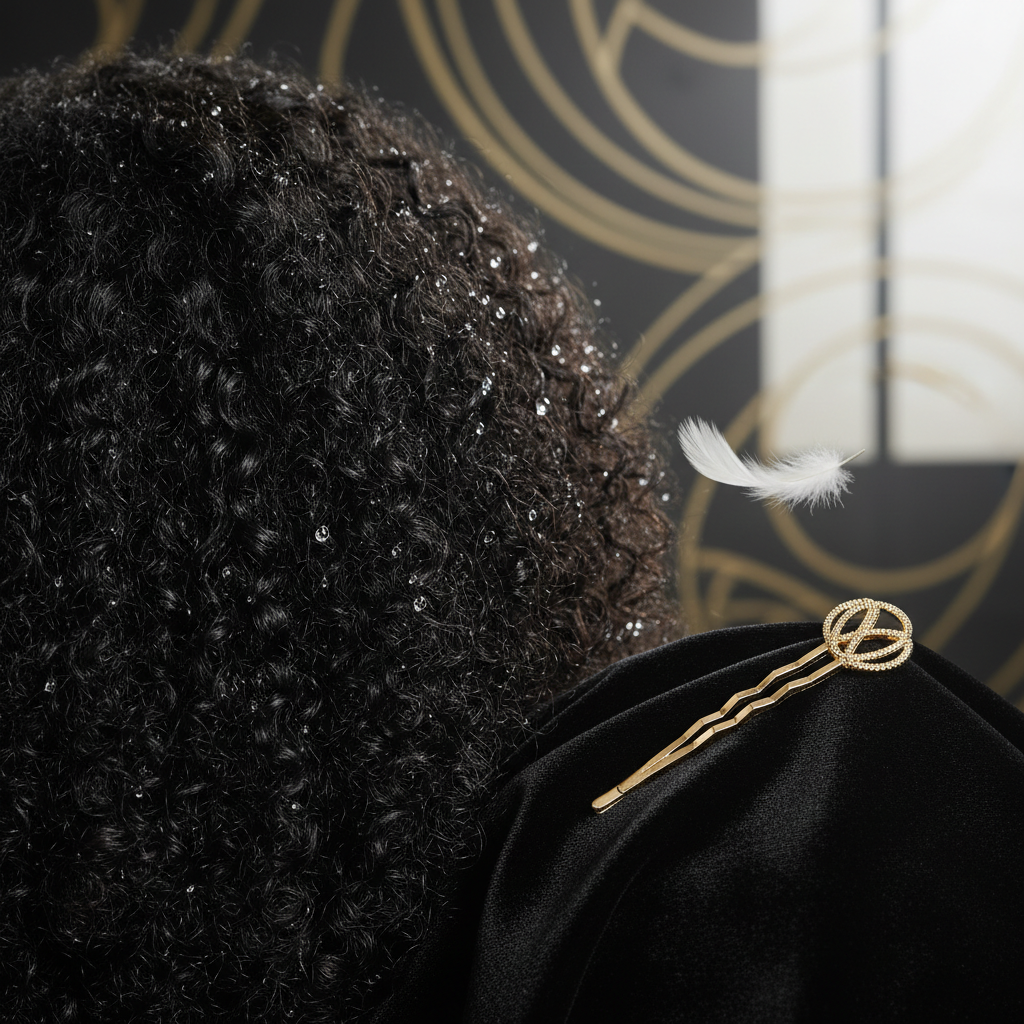
- Water beading: When you stand under the shower, water forms visible beads on the hair surface before saturating the strands.
- Prolonged drying times: Hair takes many hours to air-dry completely, even in moderate humidity.
- Product sitting on the surface: Styling creams, rich oils, and leave-in conditioners feel greasy or sticky, making hair look limp rather than soft.
- Quick build-up: Your scalp and lengths feel coated or develop a white, powdery cast just days after washing.
- Poor dye absorption: Semi-permanent dyes or chemical processing take longer to take hold or process unevenly.
Practical Low Porosity Hair Care Strategies
Managing low porosity hair requires modifying how and when you apply moisture, balancing surface cleansing, and avoiding ingredient overload.
Use indirect heat during conditioning
Applying a [deep conditioner](https://watermanshair.com/products/masque-me-luxurious-hair-mask) at room temperature will deliver minimal benefits to low porosity strands because the active conditioning agents cannot bypass the tight cuticle. Apply your conditioner, cover the hair with a plastic cap, and use a warm towel, steamer, or heat cap for 15 to 20 minutes. Warmth causes the keratin structure to soften slightly and expands the cuticular margins, allowing conditioning agents to enter the cortex.
Choose humectants and lightweight hydrators
Heavy occlusives like shea butter, castor oil, and mineral oil remain trapped outside the cuticle layer. Instead, choose water-soluble humectants that draw moisture into the hair:
- Glycerin (in moderate ambient humidity)
- Propylene glycol
- Hyaluronic acid
- Aloe vera extract
- Panthenol (provitamin B5)
For sealing, opt for lightweight plant oils with smaller fatty acid profiles that do not leave a suffocating film, such as argan oil, jojoba oil, or grapeseed oil.
Clarify regularly to reset the fibre
Because products struggle to penetrate, low porosity hair is unusually prone to surface build-up. Residue from conditioners, polymers, and environmental minerals hardens on the cuticle, making the hair even more water-repellent. Wash with a clarifying shampoo containing chelating agents or anionic surfactants every 2 to 4 weeks to clear the hair shaft completely.
Adjust application technique
Apply products to damp, warm hair rather than soaking-wet, cold hair. If hair is dripping wet, water blocks the remaining spaces between cuticle scales, preventing leave-in conditioners from gripping the shaft. Gently squeeze excess water out with a microfibre towel, apply water-based leave-in formulas, and work them in sections using smoothing motions.
What the evidence does not show
There is no scientific backing for the popular claim that alkaline baking soda rinses should be used regularly to "pop open" low porosity cuticles. Human hair and skin sit at a slightly acidic pH of 4.5 to 5.5. Exposing hair to highly alkaline substances (pH 8.0 to 9.0) causes cuticle swelling and friction-induced damage, leading to weathering and breakage rather than healthy hydration.
Similarly, low porosity hair does not require complete protein avoidance. While excessive, large-molecular-weight proteins cause low porosity hair to feel brittle, small hydrolysed silk or wheat peptides can deposit into minor micro-gaps to maintain tensile strength without causing stiffness.
Scalp health and supportive care
Scalp health directly influences the condition of emerging hair fibres. For those seeking healthy, balanced growth conditions, Watermans offers targeted scalp support. The Watermans Grow Me Shampoo and Conditioner system provides a balanced, invigorating wash that cleanses the scalp environment effectively without leaving heavy waxy residues that weigh down low porosity strands. Packed with premium ingredients like biotin, rosemary, caffeine, and hydrolysed lupin protein, it supports a refreshed scalp and fuller-looking, resilient hair.
When to seek professional advice
Sometimes what appears to be low porosity hair is actually heavy product accumulation, hard water mineral encrustation, or chemical buildup.
If your hair feels persistently straw-like, resists all wetting despite clarifying, or snaps easily when stretched gently while damp, visit a qualified trichologist or experienced stylist. They can examine your hair under magnification to distinguish between an undamaged, low-porosity cuticle and mineral build-up, and recommend professional salon chelating treatments or mechanical adjustments.
Frequently asked questions about Low Porosity Hair Care Strategies
How often should low porosity hair be washed?
Most individuals with low porosity hair benefit from washing every 4 to 7 days. Because oils and conditioning agents remain on the surface, extending time between washes often causes heavy build-up, dullness, and scalp irritation. A regular wash routine keeps the cuticle free of residue.
Does low porosity hair need protein treatments?
Low porosity hair needs protein far less frequently than damaged or high porosity hair. Because the cuticle is intact, the internal keratin remains protected. If you use protein, select formulas containing hydrolysed proteins with low molecular weights, and limit treatments to once every 6 to 8 weeks to avoid fibre stiffness.
Can cold water rinses benefit low porosity hair?
Cold water rinses offer minimal advantage to low porosity hair. While cold rinses are often recommended to seal cuticles, low porosity cuticles are already tightly closed. Rinsing with lukewarm water helps rinse away product cleanly, preventing conditioning agents from solidifying on the hair exterior.
What are the most reliable Low Porosity Hair Care Strategies for daily moisture?
The most dependable Low Porosity Hair Care Strategies for daily care involve using lightweight, water-based refresher sprays containing humectants like aloe vera or panthenol instead of thick butter-based creams. Apply refreshers lightly, avoiding saturated reapplications that lead to greasy accumulation.
Conclusion
Mastering Low Porosity Hair Care Strategies comes down to understanding the physics of a tightly sealed cuticle layer. By introducing gentle indirect heat, favouring lightweight humectants, avoiding heavy occlusives, and keeping the fibre clear of residue through regular clarifying, you can keep low porosity strands supple, hydrated, and resilient. Treat the hair gently, honour its naturally protective structure, and focus on hydration techniques that work with the cuticle rather than against it.
Sources and references
- Robbins, C. R. (2012). Chemical and Physical Behavior of Human Hair (5th ed.). Springer-Verlag.
- Gavazzoni Dias, M. F. (2015). Hair cosmetics: An overview. International Journal of Trichology, 7(1), 2 to 15.
- Dawber, R. (1996). Hair: Its structure and response to cosmetic preparations. Clinics in Dermatology, 14(1), 105 to 112.
- Swift, J. A. (1999). Human hair cuticle: Biologically conspired to the owner's benefit. International Journal of Cosmetic Science, 21(4), 227 to 239.
Find these ingredients in Watermans products
- Castor Oil: you will find this ingredient in our Camellia & Black Castor Hair & Body Oil.
- Panthenol (Provitamin B5): you will find this ingredient in our Heat Protection Spray.
- Aloe Vera: you will find this ingredient in our Curly Hair Conditioner.