Hair Porosity Assessment: An Evidence-Based Guide to Cuticle Health
9 min read ·
Learn how to perform an accurate Hair Porosity Assessment, identify low, medium, and high porosity strands, and choose the right ingredients for your hair.
Quick answer: A Hair Porosity Assessment evaluates how readily your hair fibre absorbs, retains, and loses moisture, driven primarily by the condition of the protective outer cuticle scales. Porosity falls into low, medium (normal), or high categories. While popular home tests like the water float test are notoriously unreliable due to surface tension and sebum, a reliable assessment relies on tactile strand tests, wetting rates, and chemical history to guide product selection, moisture balance, and chemical processing.
Key takeaways
- Porosity describes the integrity and spacing of the cuticle layers overlapping the hair cortex.
- Low porosity hair has tightly packed, flat cuticles that resist water entry; high porosity hair has lifted, chipped, or missing cuticles that absorb water instantly but lose it just as fast.
- The popular "glass of water float test" is widely inaccurate because natural sebum, product residue, and surface tension prevent even damaged hair from sinking.
- The slide test (tactile assessment), wetting time, and dry-down rates offer far more reliable diagnostic value at home and in the salon.
- Porosity is dynamic. While genetics determine your baseline, UV exposure, thermal styling (over 185°C), and chemical bleaching permanently alter the cuticle architecture.
Hair Porosity Assessment: what the evidence shows
A clinical Hair Porosity Assessment looks at the physical barrier function of the hair shaft. Hair is composed of roughly 65 to 95 percent proteins (primarily keratin), up to 32 percent water, 1 to 9 percent lipids, and small amounts of trace minerals. The outermost layer, the cuticle, consists of 6 to 10 overlapping cellular scales pointing toward the tip of the hair shaft.
Cosmetic science demonstrates that hair porosity is directly correlated with the integrity of the 18-methyleicosanoic acid (18-MEA) lipid layer and the endocuticle. In virgin, healthy hair, the hydrophobic lipid layer repels external water, keeping moisture movement regulated. When chemical treatments such as alkaline bleaching (typically pH 9.0 to 11.0) or permanent colouring strip the 18-MEA layer and dissolve structural cystine bonds, the cuticles lift permanently.
Research published in the Journal of Cosmetic Science confirms that high-porosity hair exhibits increased water uptake (swelling) alongside significantly higher protein loss during routine washing. A proper assessment determines whether your hair needs lightweight humectants that penetrate tightly sealed cuticles or lipid-replenishing conditioning agents that temporarily patch structural gaps.
The mechanics of hair porosity: low, medium, and high
Understanding how the cuticle behaves clarifies why different hair fibres respond differently to the same product:
Low porosity
The cuticle scales lie flat, compact, and tight. Hydrophobic properties remain fully intact.
- Water absorption: Water beads on the surface. It takes several minutes of direct saturation in the shower for the hair to become fully wet.
- Product behaviour: Heavy butters and thick oils sit on top of the fibre, creating a greasy, sticky film without softening the strand.
- Drying time: Once wet, it takes many hours to air-dry because moisture is trapped beneath tightly sealed scales.
Medium (normal) porosity
The cuticle layers are slightly looser, allowing balanced moisture movement into the cortex without structural breakdown.
- Water absorption: Hair wets readily without immediate saturation or extreme water-beading.
- Product behaviour: Accepts leave-in conditioners and styling products easily, holding styles well.
- Drying time: Dries in an average timeframe with minimal frizz.
High porosity
The cuticle scales are raised, chipped, perforated, or stripped away entirely, exposing the cortex.
- Water absorption: Hair absorbs water instantly, soaking like a sponge.
- Product behaviour: Absorbs oils and creams rapidly, yet feels dry, straw-like, and tangled an hour later.
- Drying time: Dries exceptionally fast because the damaged barrier cannot prevent water evaporation.
| Metric | Low Porosity | Medium Porosity | High Porosity |
|---|---|---|---|
| Cuticle Condition | Tightly closed, intact 18-MEA layer | Intact, slightly raised edges | Chipped, lifted, stripped, missing |
| Wetting Speed | Slow (water beads on surface) | Normal (wets evenly within 1 to 2 minutes) | Instant (absorbs water immediately) |
| Drying Time | Very long (hours to air-dry) | Moderate | Very short (dries rapidly, tangles easily) |
| Feel When Wet | Smooth, firm | Soft, pliable | Gummy, stretchy, or rough |
| Response to Heavy Oils | Product build-up, looks greasy | Well-absorbed, healthy sheen | Absorbs fast, remains dry and brittle |
| Primary Risk | Product build-up and dullness | Low risk, easy maintenance | Fibre breakage and protein loss |
How to conduct a reliable Hair Porosity Assessment
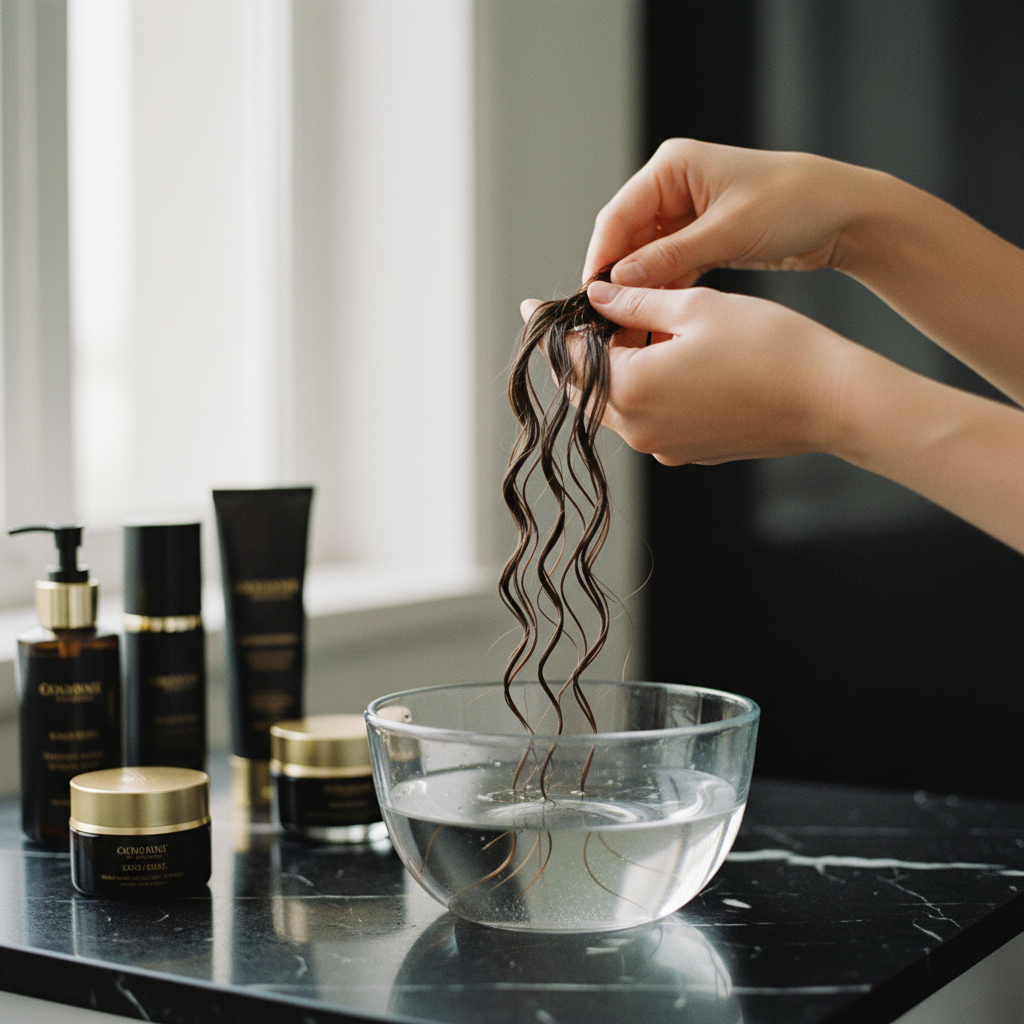
The standard float test (placing a strand of shed hair in a glass of tap water) fails because water has surface tension, and hair naturally carries hydrophobic oils or silicone residue. A freshly bleached strand coated in silicone serum will float, falsely reading as low porosity.
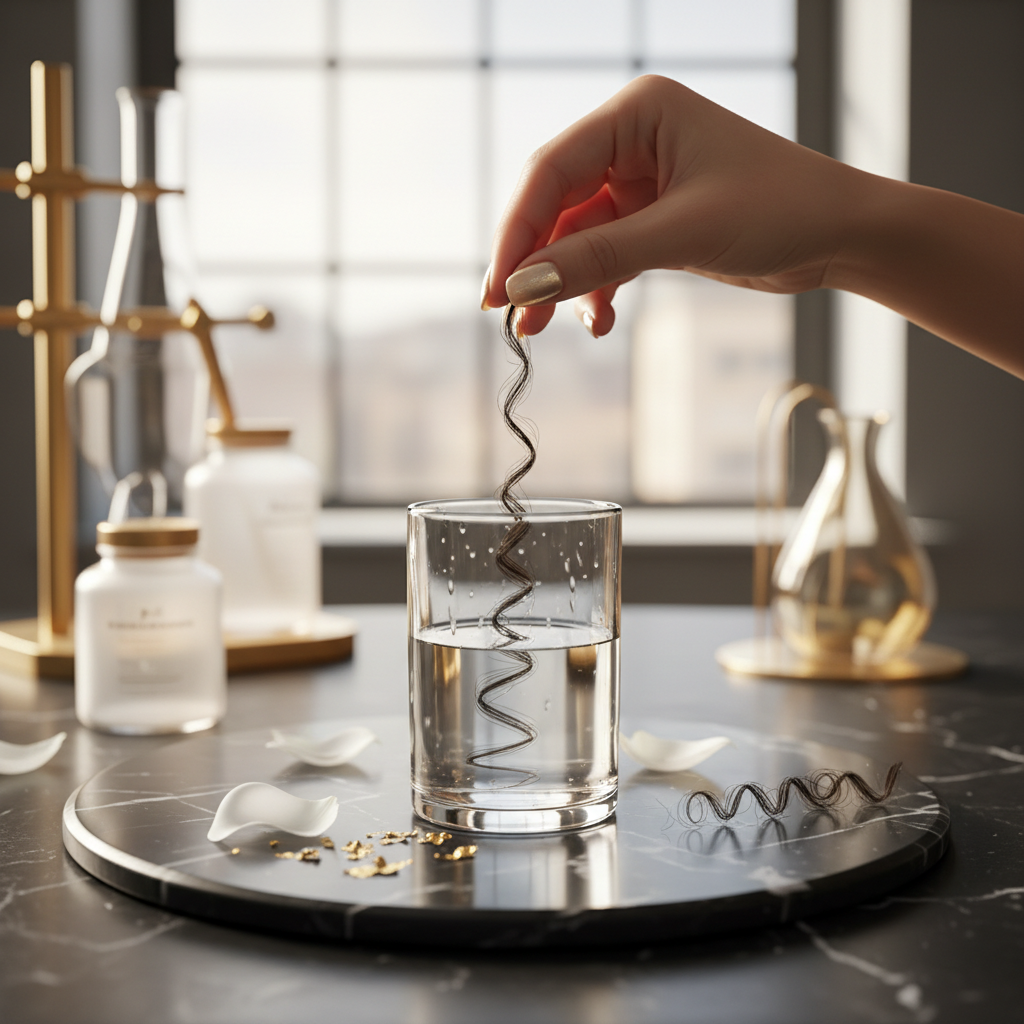
To carry out an accurate Hair Porosity Assessment, use these three practical diagnostic methods instead:
1. The slide test (tactile analysis)
Take a single, clean strand of shed hair from your brush or during a wash. Hold the tip firmly between the fingers of one hand. With the thumb and index finger of your other hand, slide down the hair shaft from the tip towards the root (against the natural grain of the scales).
- If your fingers glide smoothly without resistance, the cuticle is flat (low porosity).
- If you feel slight bumps or resistance, the cuticle is moderately open (medium porosity).
- If the strand feels notably rough, squeaky, or snags your fingers, the cuticle is lifted and compromised (high porosity).
2. The spray mist test
Isolate a section of clean, product-free, dry hair. Using a fine mist spray bottle filled with room-temperature water, spray the section once or twice from 15 centimetres away.
- If water forms distinct droplets that sit on the surface for over two minutes, your porosity is low.
- If the droplets linger briefly before absorbing evenly, porosity is medium.
- If the water vanishes directly into the hair shaft upon contact, porosity is high.
3. Elasticity and wet stretch test
Gently stretch a wet strand between your fingers. Healthy hair stretches up to 30 percent of its resting length when wet and returns to its original shape. High-porosity hair that lacks internal protein will stretch excessively and snap, or feel gummy and limp under tension.
What the evidence does not show
Porosity does not dictate hair growth rate, nor does high porosity cause follicular hair loss (alopecia). The cuticle is a non-living, kerantinised structure; its porosity reflects physical wear and tear along the shaft, not cellular activity within the scalp follicle.
Furthermore, products marketed to "permanently seal" high porosity cuticles cannot alter the dead fibre forever. Cuticle loss is permanent damage. Cosmetic treatments, acidic rinses, and protein conditioners can temporarily smooth, coat, and reinforce the fibre until the next wash, but they cannot regenerate lost keratin cells.
When the cause may be something else
If your hair feels persistently dry, snaps easily, or resists styling, high porosity is not the only potential culprit:
- Hard water mineral build-up: High concentrations of calcium and magnesium (common in hard water areas exceeding 200 mg/L) bind to hair proteins. This creates a brittle, dry layer that mimics high porosity roughness even on healthy virgin hair.
- Product accumulation: Polyquaternium compounds and non-soluble silicones can coat the shaft, repelling moisture and causing false low-porosity symptoms.
- Structural hair disorders: Conditions like trichorrhexis nodosa (node-like swelling that causes the hair shaft to break) or pili torti (twisted hair shafts) alter texture and surface friction independently of porosity.
Routine adjustments based on your results
Managing low porosity hair
Low-porosity cuticles need warmth and lighter formulations to receive hydration:
- Use mild warmth (a warm towel or shower steam) during deep conditioning to gently swell the cuticle and allow entry.
- Choose water-based humectants such as glycerin, panthenol, and aloe vera.
- Avoid heavy, unrefined plant butters that harden at room temperature and sit on the exterior.
- Clarify periodically to prevent cosmetic build-up from sealing the cuticles shut.
Managing high porosity hair
High-porosity fibres need structural reinforcement and lipid barriers to stop moisture escaping:
- Use acidic rinses or balanced haircare products (pH 4.5 to 5.5) to keep remaining cuticle plates as smooth and flat as possible.
- Incorporate hydrolysed proteins (such as hydrolysed wheat, soy, or keratin) to temporarily fill microscopic fissures in the damaged cortex.
- Seal hydration in using emollient-rich creams and protective plant oils.
- Minimise high-heat styling, and keep heated tools below 185°C to avoid degrading the hair's structural alpha-keratin.
Supporting hair fibre resilience with Watermans
When managing hair that shows signs of elevated porosity, breakage, and surface stress, using gentle, nutrient-rich formulations helps maintain mechanical strength. Watermans focuses on delivering balanced scalp and hair nutrition without harsh cleansing agents that deplete the hair's remaining lipid barrier. Products formulated with hydrolysed lupin protein, niacinamide, and caffeine help support hair fibre condition, keeping strands looking thicker, fuller, and more resilient against daily mechanical grooming stress.
When to seek professional advice
Consult a qualified trichologist or experienced hair colourist if:
- Hair breaks off close to the scalp without visible shedding of a bulb.
- The fibre feels persistently gummy or disintegrates when wet following chemical services.
- Scalp irritation, flaking, or rapid follicular shedding occurs alongside changes in hair texture. A professional can use trichoscopy or polarised light microscopy to view the cuticle architecture and distinguish between surface porosity and internal structural hair disorders.
Frequently asked questions about Hair Porosity Assessment
Why is the water float test inaccurate for a Hair Porosity Assessment?
The float test relies on a glass of water, which has natural surface tension. If a shed hair carries sebum, natural scalp oils, or cosmetic silicones, it will float regardless of whether the cuticles are damaged. Similarly, dust particles can keep high-porosity hair afloat, making the float test unreliable for an accurate diagnostic reading.
Can your hair porosity change over time?
Yes. Hair porosity increases as the hair grows and faces environmental wear. The root section of a long strand is almost always lower in porosity than the ends, which have endured years of UV radiation, mechanical brushing, shampooing, and heat styling. Chemical processing like bleaching instantly shifts low or medium porosity hair into high porosity.
Does high porosity hair cause hair loss?
No. High porosity affects the hair shaft, not the follicle beneath the scalp. It causes hair breakage (snapping along the shaft), which reduces overall hair density and makes ends look thin. It does not cause telogen effluvium, androgenetic alopecia, or other forms of root-based hair shedding.
How often should you perform a Hair Porosity Assessment?
Assessing your hair porosity every 4 to 6 months is generally sufficient. However, you should re-evaluate your hair immediately after major chemical treatments, such as bleaching, perming, relaxing, or permanent colour, as these services permanently shift the porosity profile of your strands.
Maintaining balance across the hair fibre
A thorough Hair Porosity Assessment gives you the diagnostic clarity needed to tailor your routine to your hair's physical structure rather than guesswork. Whether your cuticles are tightly sealed, naturally balanced, or lifted by chemical styling, matching your products to your cuticle profile will protect the fibre from breakage, reduce friction, and preserve hair health over time.
Sources and references
- Journal of Cosmetic Science, "The Effects of Chemical Treatments on the Structural and Mechanical Properties of Human Hair", 2009.
- International Journal of Trichology, "Hair Cosmetics: An Overview", 2015.
- Robbins, C. R., Chemical and Physical Behavior of Human Hair, 5th ed., Springer, 2012.
- Society of Cosmetic Scientists (SCS), "Principles of Cuticle Health and Lipid Barrier Function", 2018.
Find these ingredients in Watermans products
- Caffeine: you will find this ingredient in our Hair Growth Shampoo.
- Niacinamide: you will find this ingredient in our Hair Mask.
- Panthenol (Provitamin B5): you will find this ingredient in our Heat Protection Spray.
- Aloe Vera: you will find this ingredient in our Curly Hair Conditioner.