Managing Heat Damage on Hair: Causes, Science, and Solutions
9 min read ·
Evidence-based guide to Managing Heat Damage on Hair: explore thermal degradation mechanisms, signs of damage, and proven methods to protect and manage fragile fibres.
Quick answer: Managing Heat Damage on Hair requires mitigating thermal protein breakdown, replenishing lost lipids, and trimming fractured ends, because dead keratin fibres cannot biologically regenerate. Temperatures above 150°C degrade alpha-keratin and strip the protective 18-methyleicosanoic acid (18-MEA) lipid layer, causing moisture loss and breakage. Effective management relies on lowering styling temperatures, applying silicone or polymer heat protectants, using hydrolysed protein treatments, and cutting split ends before fractures travel up the hair shaft.
Key takeaways
- Hair is non-living keratin tissue; once heat denatures its protein matrix, the structural damage is permanent and cannot be healed biologically.
- Thermal tools operating above 160°C cause structural lipid loss, while temperatures beyond 200°C melt keratin and cause irreversible protein carbonisation.
- Cosmetic management relies on film-forming heat protectants, hydrolysed protein reconstructors, and humectant-rich conditioning agents to temporarily seal and reinforce the fibre.
- Mechanical breakage from heat must be distinguished from follicular hair shedding; thermal tools snap the hair shaft but do not trigger shedding from the root.
- The only definitive remedy for split ends (trichoptilosis) caused by extreme heat is physical trimming.
Managing Heat Damage on Hair: what the evidence shows
Managing Heat Damage on Hair involves compensating for the irreversible structural and chemical alterations caused by excessive thermal styling. Thermal appliances such as straighteners, curling wands, and high-heat hair dryers expose hair fibres to temperatures typically ranging from 120°C to over 230°C. Controlled laboratory research shows that these temperatures alter hair at every structural level, from surface lipids down to the internal cortex.
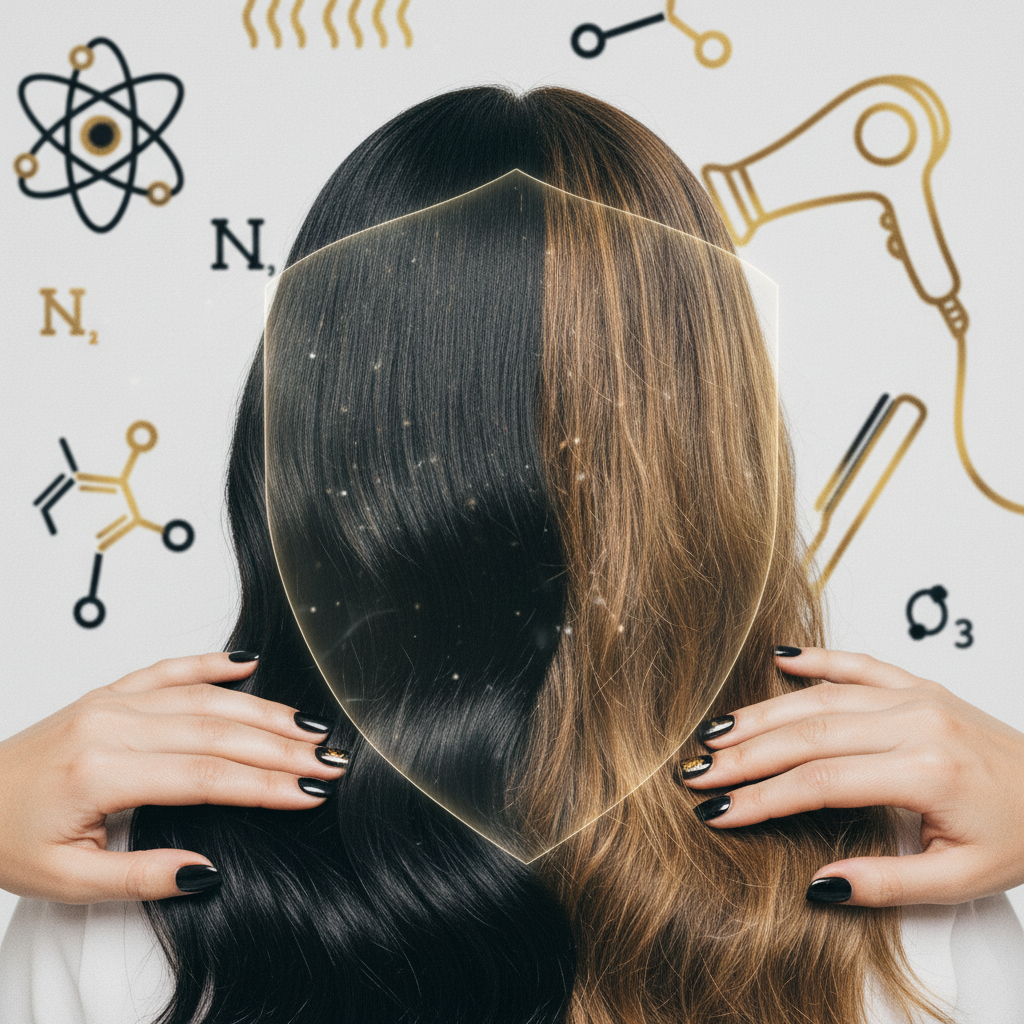
Scientific literature, including studies published in the Journal of Cosmetic Science, demonstrates that human hair undergoes thermal degradation in distinct stages. At approximately 140°C to 150°C, the hair begins to lose free and bound water. More critically, high heat oxidises and degrades the protective lipid layer on the cuticle surface, known as 18-methyleicosanoic acid (18-MEA). When 18-MEA is lost, hair changes from hydrophobic (water-repelling) to hydrophilic (water-absorbing), leaving it vulnerable to environmental humidity, swelling, and friction.
At temperatures between 160°C and 190°C, the internal alpha-keratin helical coils within the cortex unravel and transition into disordered beta-keratin sheets. This structural shift reduces the tensile strength and elasticity of the hair fibre. When heat exceeds 200°C, thermal decomposition begins, leading to protein denaturation, cysteine oxidation into cysteic acid, and eventual melting of the keratin matrix. Managing this condition requires cosmetic interventions that physically shield the fibre, patch surface defects, and reduce further mechanical stress.
The physical mechanisms of thermal destruction
Understanding thermal damage requires examining what happens inside the fibre during tool application:
- Cuticle lifting and cracking: Rapid heat causes the overlapping cuticle scales to buckle, lift, and chip off. This exposes the vulnerable cortex beneath to friction, light, and styling tools.
- Bubble hair formation: If hair is damp or wet when exposed to temperatures above 100°C, the water inside the cortex boils rapidly and expands into steam. This trapped steam expands faster than it can escape through the cuticle, creating micro-cavities or literal bubbles within the fibre. These sites form immediate weak points that snap under slight tension.
- Loss of moisture retention: While heat strips water, the permanent issue is the loss of the lipid barrier and internal cell membrane complex (CMC). Without these lipids, the hair cannot regulate moisture, leading to persistent brittleness.
- Pigment degradation: Heat oxidises both natural melanin and artificial colour molecules, leading to brassiness, fading, and colour dulling.
Signs of thermal damage to watch for
Thermal damage presents through clear physical and cosmetic changes:
- Loss of natural curl pattern: Wavy, curly, and coily hair patterns relax or become uneven because the hydrogen and disulphide bonds within the cortex have been permanently reconfigured.
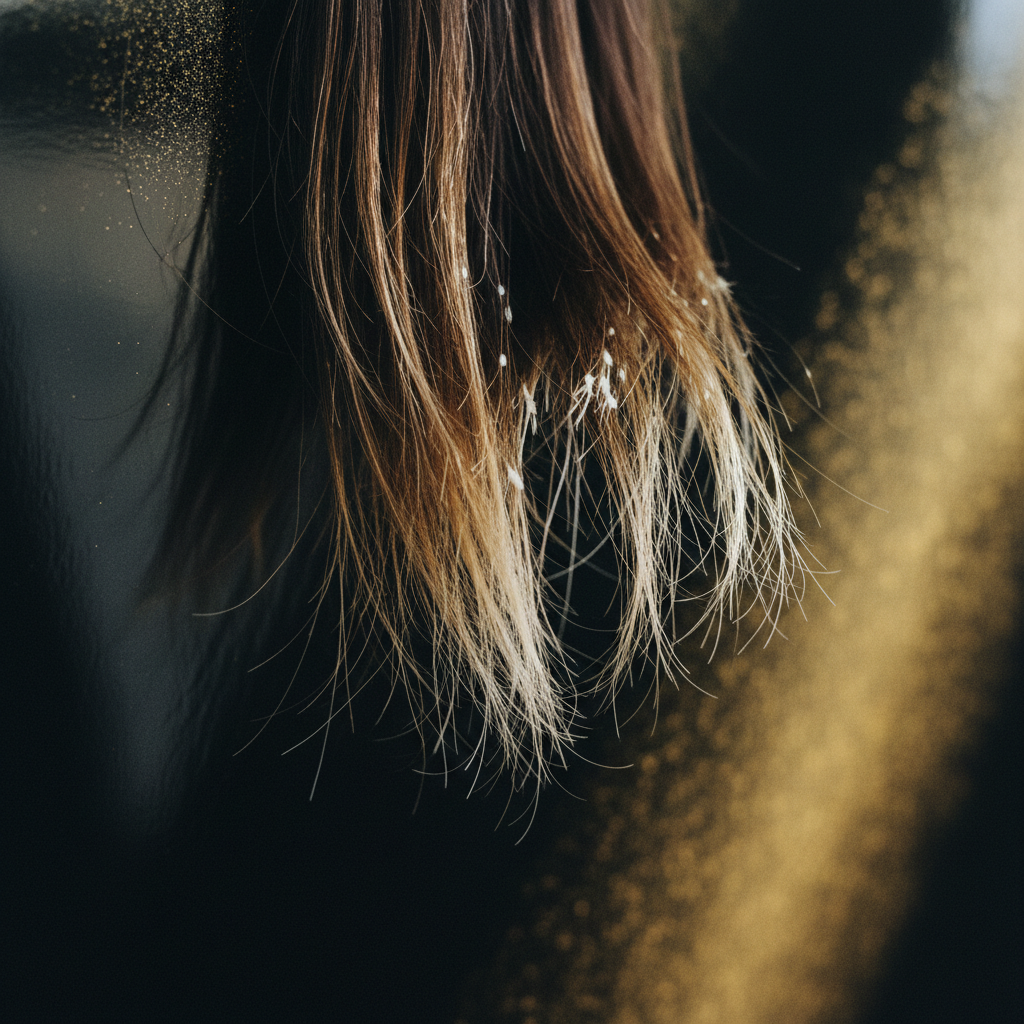
- Trichoptilosis and trichorrhexis nodosa: Split ends (trichoptilosis) and tiny white, nodule-like fractures along the hair shaft (trichorrhexis nodosa) where the fibre is ready to snap.
- Extreme porosity: Hair absorbs water instantly in the shower but dries abnormally fast, feeling straw-like, stiff, and rough to the touch.
- Excessive tangling: Lifted, jagged cuticle edges snag against neighbouring strands, creating persistent friction knots.
- Mid-shaft snapping: Shorter pieces of hair shedding across clothing, pillows, or sinks without a white bulb at the root, indicating mechanical breakage rather than telogen shedding.
What the evidence does not show
Controlled cosmetic science makes several clear distinctions regarding thermal damage:
- No cosmetic product can "repair" or "heal" heat-damaged hair: Products claiming to mend split ends or reverse heat damage rely on polymers and conditioning agents that temporarily glue the cuticle down or coat the shaft. Once washed out with surfactants, the underlying structural deficit remains.
- Heat damage does not cause follicular hair loss: Straightening irons and blow dryers damage the hair shaft (the non-living fibre). They do not cause alopecia or interfere with the dermal papilla unless a tool physically burns the living scalp tissue, causing a rare form of cicatricial (scarring) alopecia.
- Natural oils are not adequate heat protectants: Using pure culinary or cosmetic oils (such as coconut, olive, or argan oil) in place of formulated heat protectants is unsupported by data. Most plant oils have high thermal conductivity and smoke points that can accelerate scorching, lacking the thermal insulation provided by engineered polymers and silicones.
Strategic steps for managing thermal damage
Successful management combines thermal restraint, protective shielding, and restorative cosmetic chemistry.
| Damage stage | Structural characteristics | Effective management strategy | Primary limitation |
|---|---|---|---|
| Mild (Surface cuticle erosion) | Lifted cuticles, minor dullness, slight dryness, intact curl pattern. | Acidic conditioners (pH 3.5 to 5.0), leave-in silicones, lowering heat below 150°C. | Requires continuous reapplication after washing. |
| Moderate (Cortical compromise) | Loss of elasticity, altered curl pattern, colour fading, early split ends. | Hydrolysed protein treatments, cationic polymers, strict heat cessation. | Elasticity is only cosmetically masked, not biologically renewed. |
| Severe (Carbonisation / Bubble hair) | Trichorrhexis nodosa, extensive snapping, frayed ends, complete curl loss. | Physical shears to remove fractured zones, protective styling, zero direct heat. | Hair fibre cannot be saved; trimming is the only permanent solution. |
1. Re-evaluate thermal tool settings and frequency
Lower the operating temperature of your tools. Fine and chemically processed hair should not be styled above 150°C. Healthy, coarse fibres should stay below 185°C. Avoid repeated passes over the same section of hair, and never apply direct heated plates to damp or wet hair.
2. Apply verified heat protectants
Formulated heat protectants containing ingredients such as dimethicone, amodimethicone, polyquaternium-55, and hydrolysed wheat protein can reduce heat transfer into the cortex by up to 50 percent. They provide a thermal buffer, distribute heat more evenly across the surface, and reduce friction during styling.
3. Utilise hydrolysed proteins and conditioning lipids
Hydrolysed proteins (keratin, silk, wheat, or soy) have low molecular weights (typically 1,000 to 10,000 Daltons) that allow them to deposit into structural gaps along damaged cuticles. Follow protein treatments with lipid-rich emollients containing fatty alcohols (cetyl and stearyl alcohol) and ceramides to replenish lost slip and hydrophobicity.
4. Remove fractured ends
When hair develops split ends or trichorrhexis nodosa, the fracture will continue to propagate upward along the cortex if left unaddressed. Regular micro-trims (every 6 to 8 weeks) eliminate these points of mechanical failure, preserving the healthier hair above.
When the cause may be something else
It is essential not to mistake other forms of hair compromise for thermal damage:
- Chemical damage: Bleaching, relaxers, and permanent waves break disulphide bonds chemically. This yields symptoms identical to heat damage (porosity, snapping), but the primary cause is chemical over-processing.
- Telogen effluvium: If you notice hair coming out from the scalp in large quantities with a visible white bulb on the end, this is diffuse follicular shedding, often triggered by stress, illness, nutritional deficits, or hormonal shifts, not your styling tools.
- Weathering and UV exposure: Chronic sun exposure photo-oxidises hair proteins and lipids, causing dryness and surface fragility that closely mimics low-level heat damage.
When to seek professional advice
Consult a qualified trichologist or dermatologist if you experience sudden diffuse thinning, bald patches, or scalp irritation, scaling, or burning sensations after using heated tools. Professional salon stylists should also be consulted to assess whether structural breakage requires a precision haircut to prevent progressive splits.
Supporting hair condition with Watermans
When managing hair that feels dry and fragile from heat, using gentle, nourishing cleansing and conditioning formulations helps reduce further mechanical stress. The Watermans GrowMe range is formulated with biotin, caffeine, argan oil, and hydrolysed lupin protein. While no shampoo can reverse denatured keratin, these ingredients support a clean, balanced scalp environment and provide cosmetic conditioning agents that improve slip, minimise friction, and make fragile strands easier to detangle without unnecessary snapping.
Frequently asked questions about Managing Heat Damage on Hair
Can heat damage be reversed without cutting the hair?
No. Hair consists of dead, non-living keratin cells without a vascular supply or cellular machinery to repair itself. Managing Heat Damage on Hair without cutting involves using protein treatments and conditioning polymers to temporarily patch surface defects, but severely fractured ends and split shafts must be trimmed away with shears.
At what temperature does hair start to sustain irreversible damage?
Protein denaturation and significant lipid breakdown begin at approximately 150°C to 160°C. At temperatures exceeding 200°C, the hair cuticle can melt, and internal alpha-keratin permanently shifts to disordered structures, causing acute structural failure and breakage.
Is air-drying always better than blow-drying?
Not necessarily. Research published in the Annals of Dermatology found that allowing hair to air-dry over prolonged periods keeps the cell membrane complex swollen with water, increasing moisture-induced fatigue. Blow-drying with continuous movement at a distance of 15 cm on a cool-to-medium heat setting is often less damaging than leaving hair wet for hours.
How often should protein treatments be used on heat-damaged strands?
For moderate damage, a hydrolysed protein treatment every 2 to 4 weeks is generally sufficient. Overusing protein without adequate conditioning humectants can make hair stiff and brittle, leading to paradoxical snapping. Always balance protein treatments with moisturising conditioners.
Do natural oils like argan or coconut oil protect against flat iron heat?
No. Pure natural oils lack the film-forming and heat-deflecting polymer technology required to insulate hair fibres against temperatures above 150°C. In some cases, applying raw oil before using a flat iron can cause the oil to smoke and scorch the cuticle, worsening thermal stress.
Conclusion
Successfully Managing Heat Damage on Hair demands an evidence-based understanding of the hair fibre's physical limits. Because thermal exposure permanently alters keratin proteins and strips protective surface lipids, hair cannot heal itself biologically once burned. Effective management centres on damage limitation: lowering appliance temperatures, shielding strands with verified cosmetic protectants, reinforcing the porous shaft with hydrolysed proteins, and trimming fractured ends before they travel further. By treating fragile fibres with gentle mechanical care, you can preserve the structural integrity of your hair as healthier new growth emerges from the scalp.
Sources and references
- Robbins, C. R. (2012). Chemical and Physical Behavior of Human Hair (5th ed.). Springer-Verlag.
- Lee, Y., Kim, Y. D., Hyun, H. J., Pi, L. Q., Jin, X., & Lee, W. S. (2011). Hair shaft damage from heat and drying time of hair dryer. Annals of Dermatology, 23(4), 455-460.
- Gamez-Garcia, M. (1998). The cracking of human hair cuticles by cyclical thermal stresses. Journal of Cosmetic Science, 49(5), 297-302.
- McMullen, R., & Jachowicz, J. (1998). Thermal analysis of hair. Journal of Cosmetic Science, 49(4), 223-241.
- Swift, J. A. (1991). The stereochemistry of the human hair cuticle. Journal of the Society of Cosmetic Chemists, 42(1), 43-58.
Find these ingredients in Watermans products
- Biotin: you will find this ingredient in our Hair Growth Shampoo.
- Wheat Amino Acids: you will find this ingredient in our Heat Protection Spray.