Malassezia and Dandruff: The Underlying Science and Scalp Management
8 min read ·
Explore the biological link between Malassezia and Dandruff, uncovering how yeast metabolism triggers flaking and how to effectively manage scalp health.
Quick answer: The relationship between Malassezia and Dandruff centres on a lipophilic yeast naturally residing on human skin. Dandruff occurs when Malassezia species feed on scalp sebum, producing irritating oleic acid. In susceptible individuals, this byproduct disrupts the epidermal barrier, causing accelerated skin cell turnover, inflammation, and visible flaking. However, Malassezia is not an external infection; it is a normal commensal organism. Complete eradication is neither realistic nor healthy, meaning successful management focuses on microbial suppression and barrier repair rather than permanent elimination.
Key takeaways
- Malassezia globosa and Malassezia restricta are harmless commensal yeasts that live naturally on virtually all adult scalps.
- Dandruff is triggered when these yeasts metabolise sebum lipids and release irritating free fatty acids, notably oleic acid.
- Visible flakes represent rapid, disordered epidermal turnover where skin cells shed in clumps of hundreds rather than invisibly.
- Dandruff sits on the mild end of a spectrum that includes seborrhoeic dermatitis, which involves marked erythema and deeper inflammation.
- Effective management relies on keeping sebum levels balanced and using targeted antifungal or keratolytic agents rather than stripping the scalp.
Malassezia and Dandruff: what the evidence shows
Peer-reviewed dermatological research confirms that the connection between Malassezia and Dandruff relies on a three-part biological interplay: sebum secretion, fungal metabolism, and individual skin barrier susceptibility.
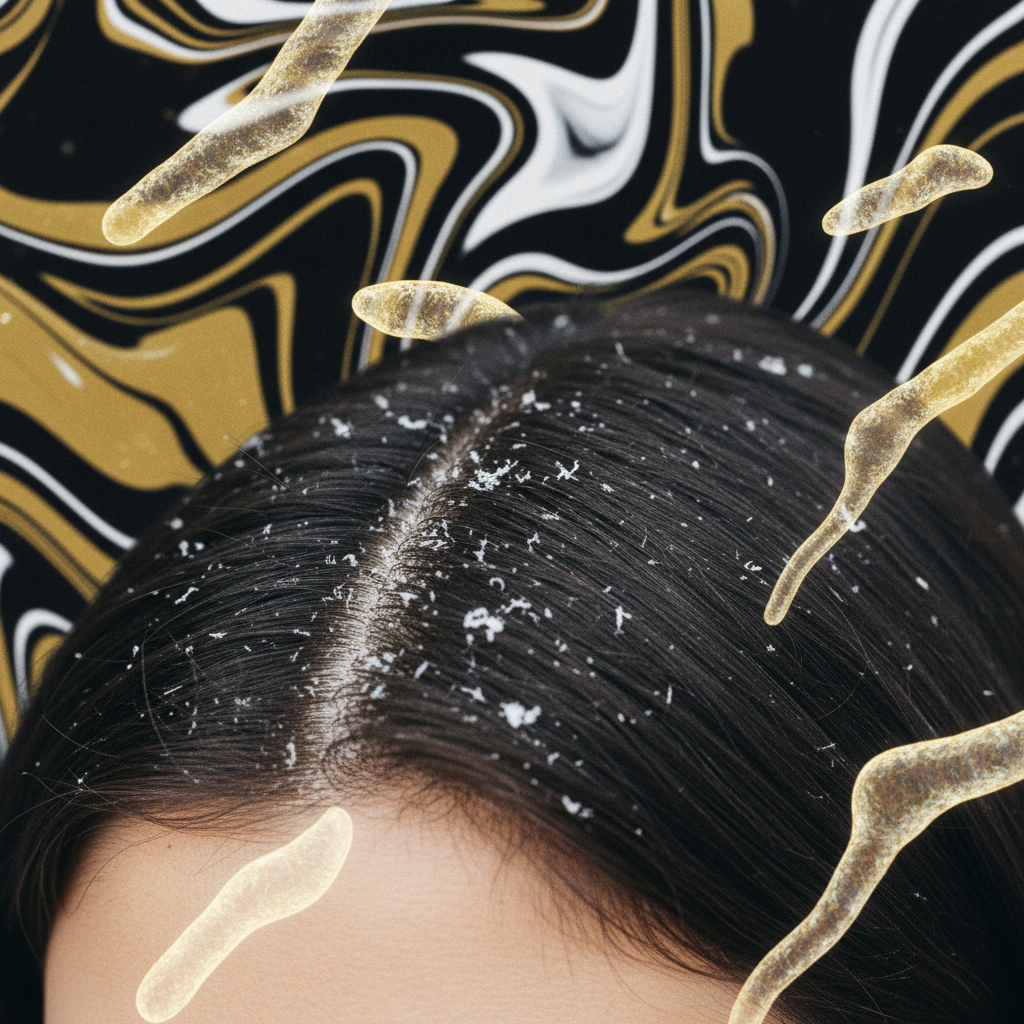
For decades, clinicians debated whether dandruff was primarily an oily scalp dysfunction or a fungal overgrowth. Genomic sequencing and clinical trials in the early 2000s settled the question. When researchers apply pure oleic acid to the scalp of people prone to dandruff, flaking and irritation occur even in the absence of active yeast. When applied to people who do not naturally experience dandruff, no reaction takes place.
This finding demonstrates that Malassezia alone does not cause the condition. Instead, dandruff develops because certain scalps react poorly to the specific metabolic waste of this normal skin organism. The yeast relies entirely on external lipids because it lacks fatty acid synthase genes. It secretes lipase enzymes to break down human sebum triglycerides. In doing so, it consumes saturated fatty acids and leaves behind unsaturated fatty acids, primarily oleic acid. In susceptible skin, oleic acid penetrates the stratum corneum, induces inflammation, and forces the scalp to shed immature cells before they have differentiated correctly.
Sebum Production (Lipids)
 │
 ▼
Malassezia Secretes Lipases
 │
 ▼
Free Fatty Acids Released (Oleic Acid)
 │
 ▼
Compromised Stratum Corneum Barrier
 │
 ▼
Accelerated Cell Turnover & Clumped Flaking
What the evidence does not show
Dermatological science has disproven several widespread assumptions regarding scalp flaking:
- It is not an infection caught from others: You cannot catch dandruff from shared hairbrushes, hats, or salon equipment. The yeast is already present on normal human skin.
- It is not simply poor hygiene: While infrequent washing allows sebum and yeast populations to accumulate, excess sebum production is largely driven by genetics, hormones, and individual biology. Over-washing with harsh detergents can actually damage the skin barrier further.
- It is not just "dry scalp": True dry scalp occurs when the skin lacks hydration, often producing tiny, fine, powdery flakes. Dandruff flakes are typically larger, oily, and cling to the hair shafts or scalp surface due to sebum binding.
- It does not directly cause follicular hair loss: Dandruff does not destroy hair follicles or cause androgenetic alopecia. However, severe, unaddressed inflammation and physical scratching can trigger temporary telogen effluvium shedding or cause mechanical hair breakage along the fibre.
The biological mechanism step by step
To understand how the scalp changes during an active flare, it helps to examine epidermal renewal.
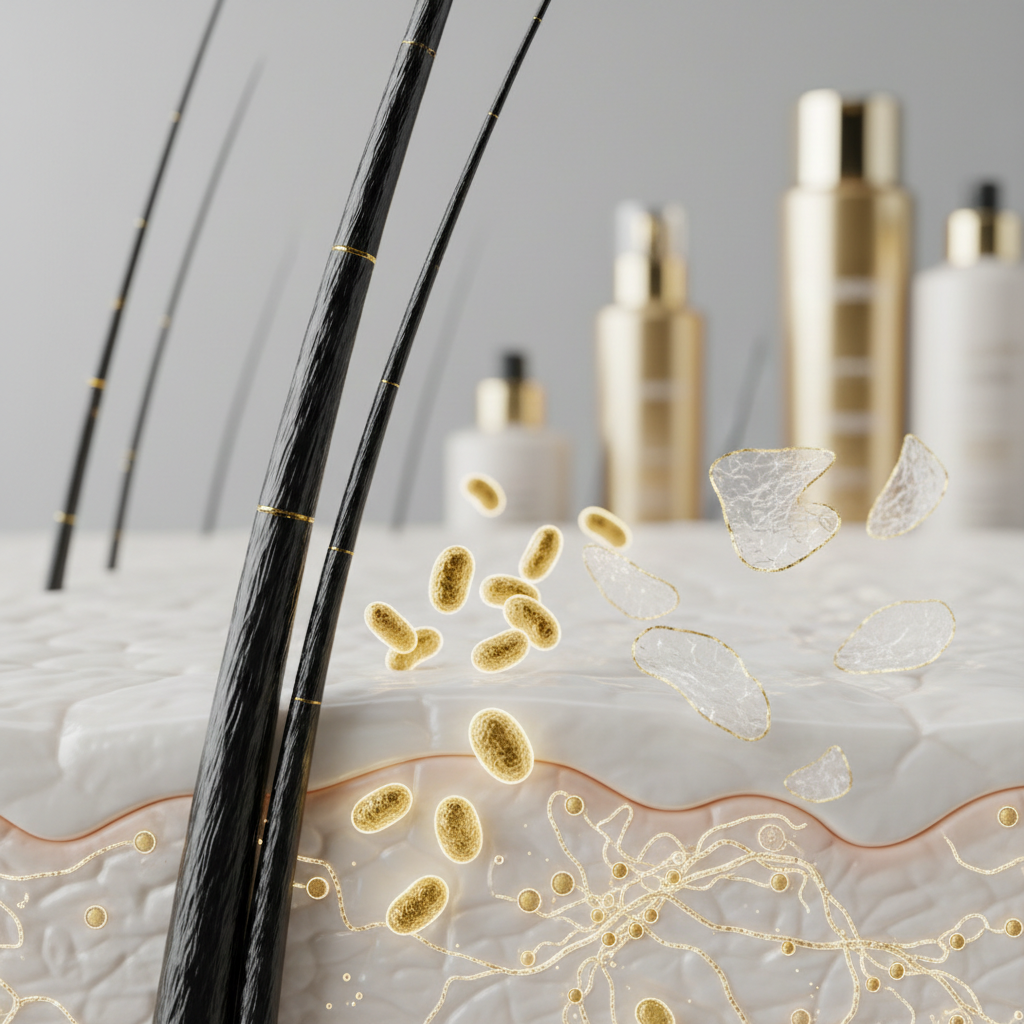
Normal epidermal turnover takes approximately 28 to 30 days. Basal layer keratinocytes divide, migrate upward, mature, flatten, and shed invisibly as single, microscopic corneocytes.
In a scalp affected by Malassezia metabolites, this renewal cycle speeds up dramatically to just 7 to 14 days. Because the cells are rushed to the surface:
- Parakeratosis occurs: Keratinocytes retain their nuclei, which normally break down before reaching the surface.
- Lipid organisation fails: The intercellular lipid matrix (ceramides, cholesterol, and free fatty acids) fails to form a cohesive, protective brick-and-mortar structure.
- Cohesion is uneven: Weakened structural bonds cause the stratum corneum to crack, while abnormal inter-cellular adhesion forces cells to detach in cohesive sheets or clumps containing hundreds or thousands of cells. These clumps form the visible white or yellowish scales known as dandruff.
Dandruff versus seborrhoeic dermatitis and dry scalp
Dandruff is widely regarded by dermatologists as the mildest, non-inflammatory (or sub-clinically inflammatory) variant of seborrhoeic dermatitis. Distinguishing between these conditions determines the correct care path.
| Characteristic | Dry Scalp | Dandruff (Pityriasis Capitis) | Seborrhoeic Dermatitis |
|---|---|---|---|
| Primary Driver | Transepidermal water loss, lack of moisture | Malassezia metabolism of sebum | Inflammatory reaction to Malassezia |
| Flake Appearance | Small, dry, white, powdery | Medium to large, white or off-white, slightly greasy | Thick, greasy, yellowish scales or crusts |
| Scalp Redness | Absent | Minimal to none | Noticeable erythema (pink, red, or discoloured) |
| Associated Areas | Confined to scalp | Scalp only | Scalp, eyebrows, nasolabial folds, ears, chest |
| Sebum Levels | Low / dry | Normal to high / oily | High / oily |
| Itch Intensity | Mild, tight feeling | Mild to moderate | Moderate to severe, persistent |
What you can do: evidence-based management
Managing the balance between Malassezia and the scalp environment requires consistent, targeted habits rather than aggressive stripping.
1. Target yeast populations with proven washes
Over-the-counter anti-dandruff formulations rely on distinct active mechanisms:
- Antifungals: Ingredients like ketoconazole (1% to 2%), piroctone olamine, and zinc pyrithione directly lower Malassezia density on the skin surface.
- Keratolytics: Salicylic acid softens and dissolves the intercellular bonds holding dead flakes together, making them easier to wash away.
- Cytostatic agents: Selenium sulphide slows the rate of epidermal cell division.
Apply active treatments directly to the scalp, lather, and leave them in contact with the skin for 3 to 5 minutes before rinsing. Rinsing immediately does not allow sufficient time for active ingredients to penetrate the lipid layer.
2. Cleanse regularly to reduce available lipids
Because Malassezia depends on sebum to survive, allowing sebum to accumulate provides fuel for yeast proliferation. Wash your hair frequently enough to prevent heavy oil buildup, tailoring the schedule to your hair texture and curl pattern.
3. Avoid feeding the yeast with external oils
Certain vegetable and plant oils contain fatty acids that Malassezia can feed upon. Applying heavy oils such as olive oil, coconut oil, or pure oleic-rich oils directly to an inflamed scalp can worsen flaking. If moisturising the hair lengths, keep heavier oils away from the scalp skin.
4. Support overall scalp barrier integrity
A balanced scalp environment is naturally slightly acidic, with a normal pH range between 4.5 and 5.5. Using pH-balanced cleansers prevents excessive swelling of the hair cuticles and preserves the protective acid mantle of the scalp.
For those seeking to maintain a clean, resilient scalp environment while supporting overall hair health, gentle formulations containing botanical extracts and essential nutrients can provide supportive care alongside targeted treatments. Watermans produces cosmetic scalp and hair formulations designed to foster a balanced, fresh environment across the root area. Their shampoos and treatments support a healthy-looking scalp, helping hair look visibly fuller and feel stronger without using harsh barrier-stripping agents.
When the cause may be something else
If standard anti-dandruff protocols do not resolve your flaking, the underlying cause may not be Malassezia:
- Scalp Psoriasis: Presents as sharply demarcated, thick, silvery-white plaques that often extend past the hairline and onto the neck or ears.
- Contact Dermatitis: An allergic reaction or sensitivity to haircare ingredients (such as fragrances, preservatives, or certain surfactants) causing sudden redness, stinging, and fine peeling.
- Tinea Capitis: A contagious fungal dermatophyte infection, common in children, which causes scaling accompanied by broken hair stumps, patchy shedding, and swollen lymph nodes.
When to seek professional advice
Consult a GP, dermatologist, or registered trichologist if:
- The scalp shows visible, spreading redness, swelling, or heat.
- Thick crusting or weeping sores develop.
- Severe itch disrupts your sleep or normal daily activities.
- Over-the-counter anti-dandruff preparations show no improvement after 3 to 4 weeks of consistent use.
- You notice unexplained, patchy hair shedding or hair breakage alongside the flaking.
Frequently asked questions about Malassezia and Dandruff
What is the precise link between Malassezia and Dandruff?
The link between Malassezia and Dandruff involves the yeast feeding on scalp sebum. As it digests these lipids, it releases oleic acid into the skin. In sensitive scalps, this fatty acid triggers barrier disruption, mild inflammation, and rapid skin cell renewal, causing dead cells to shed as visible flakes.
Can you permanently cure Malassezia on the scalp?
No, you cannot permanently eliminate Malassezia, nor should you attempt to. The yeast is a permanent, natural resident of the human skin microbiome. Management strategies aim to lower yeast levels and clear excess sebum during active flares, keeping symptoms under control rather than eradicating the organism entirely.
Does Malassezia cause permanent hair loss?
No, Malassezia does not directly target the hair follicle or cause permanent hair loss. However, severe scratching due to itchiness can lead to mechanical hair breakage. Additionally, significant secondary scalp inflammation can trigger temporary, reversible hair shedding across the scalp, known as telogen effluvium.
Why do some people have Malassezia without developing dandruff?
Everyone carries Malassezia, but only about 50 percent of adults experience dandruff. Research shows the difference lies in skin barrier susceptibility and immune reactivity. Some individuals possess robust stratum corneum barriers that resist irritation from oleic acid, while others experience immediate barrier breakdown and hyper-proliferation.
Final perspectives on scalp balance
Understanding the biological link between Malassezia and Dandruff removes the unhelpful stigma often associated with flaking. Dandruff is not an indicator of poor cleanliness; it is an everyday biological interaction between your natural microbiome and your scalp skin barrier. By focusing on consistent cleansing, targeted antifungal and keratolytic actives, and barrier preservation, you can successfully maintain a comfortable, healthy-looking scalp.
Sources and references
- Dawson, T. L. (2007). Malassezia globosa and restricta: breakthrough understanding of the etiology and treatment of dandruff and seborrheic dermatitis through whole-genome analysis. Journal of Investigative Dermatology Symposium Proceedings, 12(2), 15-19.
- Ro, B. I., & Dawson, T. L. (2005). The role of sebaceous gland activity and scalp microfloral metabolism in the etiology of seborrheic dermatitis and dandruff. Journal of Investigative Dermatology Symposium Proceedings, 10(3), 194-197.
- British Association of Dermatologists. (2020). Seborrhoeic Dermatitis Patient Information Leaflet. BAD Guidelines.
- National Health Service (NHS). (2022). Dandruff: Symptoms, causes, and treatments. NHS UK.
- DeAngelis, Y. M., et al. (2005). Three etiologic facets of dandruff and seborrheic dermatitis: Malassezia fungi, sebaceous lipids, and individual sensitivity. Journal of Investigative Dermatology Symposium Proceedings, 10(3), 295-297.
Find these ingredients in Watermans products
- Zinc: you will find this ingredient in our Hair Vitamins.
- Oleic Acid: you will find this ingredient in our Camellia & Black Castor Hair & Body Oil.