Lichen Planopilaris Explained: Signs, Causes, and Clinical Management
9 min read ·
Lichen Planopilaris Explained: explore the causes, signs, and clinical treatments for this scarring alopecia, and learn why early diagnosis is vital to save hair.

Quick answer: With Lichen Planopilaris Explained clearly, it is an uncommon inflammatory scalp condition classified as a primary cicatricial (scarring) alopecia. In this condition, your immune system mistakenly attacks the hair follicle, specifically targeting epithelial stem cells near the follicular bulge. This destructive inflammation leads to irreversible fibrosis and permanent hair loss. While medical treatments can calm active inflammation and halt its spread, therapies cannot regenerate follicles once fibrous scar tissue replaces them, making early clinical intervention vital.
Key takeaways
- Lichen planopilaris (LPP) is an autoimmune-mediated scarring alopecia that permanently destroys hair follicles.
- Classical symptoms include follicular hyperkeratosis (scaling collars around hair shafts), perifollicular redness, itching, burning, and tenderness.
- Unlike telogen effluvium or androgenetic alopecia, LPP causes follicular ostia (pore openings) to vanish, leaving smooth, shiny patches of scalp.
- Medical treatment focuses strictly on arresting inflammation to protect remaining hair; lost follicles cannot regrow.
- A definitive diagnosis typically requires dermoscopy (trichoscopy) followed by a 4 mm scalp punch biopsy sent for histopathological analysis.
Lichen Planopilaris Explained: what the evidence shows
When clinicians examine Lichen Planopilaris Explained in peer-reviewed dermatology literature, it is documented as a follicular subtype of lichen planus. It predominantly affects adults between the ages of 40 and 60, with women diagnosed approximately two to three times more frequently than men.
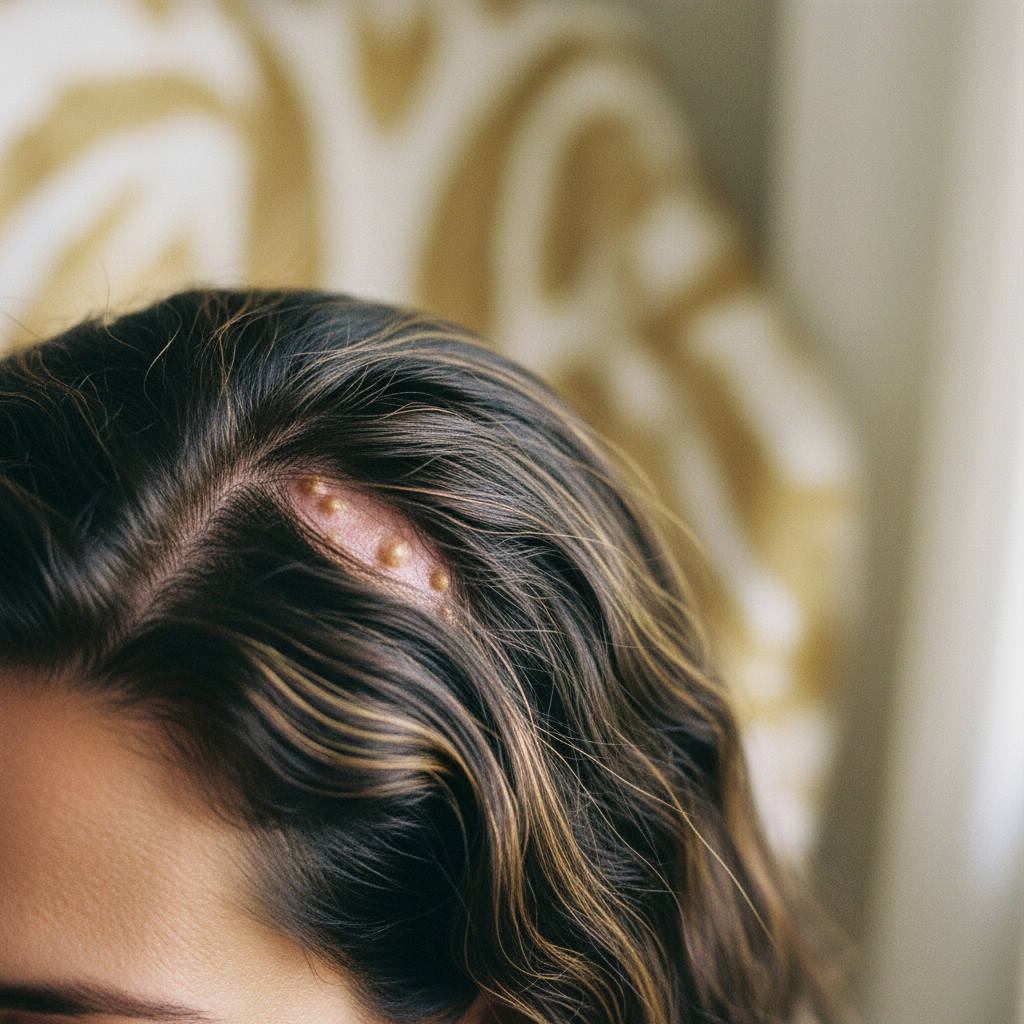
The condition accounts for a significant proportion of scarring hair loss cases seen in specialist hair clinics. In classic LPP, inflammation presents in patchy distributions across the vertex and parietal regions of the scalp. Variants of the condition include frontal fibrosing alopecia (FFA), which primarily causes a band-like recession of the frontal and temporal hairline, and Graham-Little-Piccardi-Lassueur syndrome, which couples scalp cicatricial alopecia with non-scarring pubic or axillary hair loss and widespread follicular keratosis.
Controlled clinical cohorts published in the British Journal of Dermatology indicate that LPP is notoriously unpredictable. In some individuals, the inflammatory process advances slowly over decades with minimal subjective discomfort. In others, it acts aggressively, producing rapid patch expansion, intense burning sensations, and swift follicular destruction within months.
The biological mechanism of follicular destruction
To understand why lichen planopilaris causes permanent hair loss, you must look at follicular anatomy and immune privilege.
Normal hair follicles maintain an immune-privileged microenvironment, shielding them from autoimmune surveillance. In LPP, this privilege collapses. Cytotoxic T-lymphocytes (specifically CD8+ cells) infiltrate the infundibulum and isthmus regions of the upper follicle.
These T-cells mount a directed attack against the epithelial stem cells located at the follicular bulge. These stem cells are responsible for regenerating the lower hair follicle during each new anagen (growth) cycle. As apoptosis (programmed cell death) sweeps through the basal layer of the follicular epithelium, the body repairs the damage using fibroblasts. Dense collagen fibres replace the cellular architecture of the follicle. Once the follicular ostium closes and fibrous tracts form, the hair cannot regenerate.
What the evidence does not show
There is no scientific evidence demonstrating that lichen planopilaris is contagious, caused by poor personal hygiene, or triggered directly by standard cosmetic haircare products.

Furthermore, evidence does not show that diet alone can cure or reverse the condition. While chronic psychological stress is frequently reported by patients as an exacerbating factor, clinical studies have not proven stress to be the root causative agent. Crucially, the evidence shows that natural oils, nutritional supplements, and cosmetic hair growth serums cannot revive hair follicles once scar tissue replaces them. Cosmetic products can support scalp comfort, but they do not alter the underlying autoimmune attack.
Identifying the signs of lichen planopilaris
The early presentation of LPP can be subtle, frequently masquerading as stubborn dandruff or seborrhoeic dermatitis. Recognising the classic clinical triad allows for earlier detection:
- Perifollicular erythema: A distinct pink, red, or violaceous ring of inflammation encircling individual hair follicles at the scalp surface.
- Follicular hyperkeratosis (perifollicular cast): Accumulated keratin that forms a hard, raised collar or scale hugging the base of the hair shaft (often described as "perifollicular cuffing").
- Sensory symptoms: Persistent scalp pain (trichodynia), severe burning, prickling, or itching that does not respond to regular anti-dandruff treatments.
- Loss of follicular openings: As the condition advances, active inflammatory borders leave behind bare, pale, smooth skin completely devoid of visible pores.
Lichen planopilaris compared to other hair loss conditions
Differentiating LPP from non-scarring and other scarring hair loss disorders is essential because treatment strategies differ fundamentally.
| Feature | Lichen Planopilaris (LPP) | Androgenetic Alopecia (AGA) | Alopecia Areata (AA) |
|---|---|---|---|
| Category | Primary cicatricial (scarring) | Non-scarring | Non-scarring |
| Primary Mechanism | T-cell attack on follicular stem cells | DHT-driven follicular miniaturisation | T-cell attack on hair bulb in anagen |
| Follicular Openings | Disappear in burnt-out patches | Preserved throughout thinning areas | Preserved; visible yellow/black dots |
| Associated Symptoms | Burning, pain, tenderness, severe itch | Usually asymptomatic | Occasionally mild tingling or itch |
| Perifollicular Signs | Keratin casts, erythema around shafts | None; normal scalp appearance | Exclamation mark hairs at margins |
| Regrowth Potential | Follicles lost to scarring cannot regrow | Possible with medical management | High potential for complete regrowth |
What you can do: clinical management and supportive care
Managing lichen planopilaris requires a close working relationship with a medical dermatologist, combined with gentle cosmetic practices that prevent unnecessary physical trauma to the scalp.
Medical interventions
Medical treatments aim to eliminate inflammation and protect surviving follicles. Dermatologists evaluate disease activity using clinical tools such as the Lichen Planopilaris Activity Index (LPPAI). First-line therapies typically involve high-potency topical corticosteroids (such as clobetasol propionate) or intralesional steroid injections directly into active margins.
For rapidly progressing or recalcitrant cases, dermatologists often prescribe oral immunomodulators. These include hydroxychloroquine, doxycycline (utilised for its anti-inflammatory rather than antibacterial properties), ciclosporin, methotrexate, or oral retinoids. Recent clinical literature also reports positive outcomes using Janus kinase (JAK) inhibitors in stubborn cases.
Supportive scalp care
When dealing with an inflamed, compromised scalp barrier, everyday haircare routines must adapt:
- Avoid harsh chemical processing, such as bleaching, high-volume peroxide developers, relaxers, or permanent wave solutions.
- Choose mild, sulphate-free cleansers that maintain an acidic scalp pH between 4.5 and 5.5 to respect the epidermal barrier.
- Minimise thermal styling. Excessive heat from dryers held close to the scalp or hot irons can aggravate sensitive, inflamed tissue.
- Avoid mechanical traction. Tight ponytails, extensions, or vigorous brushing place physical tension on already vulnerable hair shafts and follicles.
The role of cosmetic haircare
Cosmetic shampoos and scalp treatments cannot treat or cure autoimmune inflammation. However, once medical therapy brings disease activity under control, cosmetic products can play a practical supportive role. Using formulas packed with gentle emollients, scalp-conditioning ingredients, and amino acids helps maintain moisture in surrounding, healthy hair fibres, reducing secondary hair breakage.
Watermans creates products designed to foster a healthy cosmetic scalp environment and strengthen hair lengths. While Watermans formulations are purely cosmetic and do not treat pathological alopecias like LPP, their gentle, sulphate-free cleansers and leave-in scalp elixirs provide non-irritating hydration that can help support the cosmetic appearance of surviving hair.
When the cause may be something else
Several conditions present with clinical features similar to lichen planopilaris. If your scalp displays unusual scaling, redness, or hair thinning, a specialist will consider several alternative diagnoses:
- Discoid Lupus Erythematosus (DLE): Another primary scarring alopecia, DLE often presents with prominent follicular plugging, carpet-tack scale, marked pigmentary changes (hyper- or hypopigmentation), and follicular atrophy.
- Folliculitis Decalvans: A scarring condition characterised by pustules, crusting, and "tufting" (polytrichia), where multiple hairs emerge from a single dilated follicular opening, typically driven by chronic bacterial dysbiosis (Staphylococcus aureus).
- Central Centrifugal Cicatricial Alopecia (CCCA): A scarring alopecia common in women of African descent that originates at the vertex and spreads symmetrically outward.
- Seborrhoeic Dermatitis: A non-scarring condition producing greasy, yellowish flakes and redness across sebaceous areas, but without the loss of follicular openings or scarring.
When to seek professional advice
Because lichen planopilaris involves permanent follicular destruction, time is of the essence. You should book an appointment with a GP, trichologist, or dermatologist immediately if you experience:
- Unexplained scalp burning, stinging, or tenderness that lasts more than two weeks.
- Raised, red, or scaly rings specifically wrapped around individual hair bases.
- Patches on your scalp where the hair has shed and the skin looks unusually smooth, glossy, or poreless.
- Rapid changes to the density of your hairline or crown accompanied by scalp irritation.
A definitive diagnosis involves dermoscopic examination (trichoscopy) to look for loss of follicular ostia and perifollicular casts. In almost all suspected cases, the dermatologist will perform a 4 mm punch biopsy taken from the active, inflamed border of a patch to examine cross-sections under a microscope.
Frequently asked questions about Lichen Planopilaris Explained
Can hair grow back after lichen planopilaris burns out?
No, hair cannot regrow in areas where lichen planopilaris has completely destroyed the follicle. The condition replaces functional hair follicles and their stem cell reservoirs with fibrous scar tissue. However, medical intervention can preserve follicles that are inflamed but not yet scarred, which is why early clinical management is critical.
What is Lichen Planopilaris Explained in relation to frontal fibrosing alopecia?
When examining Lichen Planopilaris Explained alongside other conditions, frontal fibrosing alopecia (FFA) is recognised by dermatologists as a clinical variant of LPP. While classical LPP creates scattered patches on the crown and vertex, FFA presents as a progressive band-like recession along the front and sides of the hairline, frequently accompanied by eyebrow loss.
Can changing my shampoo cure lichen planopilaris?
No. Lichen planopilaris is an internal autoimmune condition targeting the deep follicle beneath the skin surface. Shampoos and cosmetic washes cannot penetrate to or alter the underlying T-cell immune response. Switching to a gentle, fragrance-free, pH-balanced cleanser can ease superficial surface irritation, but it cannot cure the disease.
Is lichen planopilaris an inherited genetic condition?
LPP does not follow a simple Mendelian pattern of inheritance. While researchers have identified certain genetic markers and HLA class associations that increase an individual's susceptibility to autoimmune conditions, LPP is primarily considered an acquired, complex immune-mediated disorder rather than a direct hereditary disease passed from parent to child.
Summary
Having Lichen Planopilaris Explained thoroughly demonstrates that early recognition is your most powerful tool. It is an aggressive, immune-mediated disorder that trades living hair follicles for scar tissue. Cosmetic hair products, natural remedies, and waiting for symptoms to clear on their own will not stop the underlying inflammation. If you notice localized redness, scaling collars, or tender patches on your scalp, consult a qualified dermatologist immediately to confirm a diagnosis, start an anti-inflammatory protocol, and preserve your hair.
Sources and references
- British Association of Dermatologists. Lichen Planopilaris Patient Information Leaflet. 2021.
- Harries, M. J., & Paus, R. "The pathogenesis of primary cicatricial alopecias." American Journal of Pathology, 2010.
- Chiang, Y. Z., et al. "Lichen planopilaris: review of 122 patients." Clinical and Experimental Dermatology, 2012.
- National Institute for Health and Care Excellence (NICE). Alopecia - management of hair loss. Clinical Knowledge Summaries, 2022.
- American Academy of Dermatology. Cicatricial Alopecia: Diagnosis and Management. AAD Guidelines, 2020.