Understanding Scarring Alopecia: Causes, Symptoms, and Clinical Care
9 min read ·
Understanding Scarring Alopecia: learn about its causes, warning signs, biological mechanisms, and why early medical diagnosis is essential to prevent permanent hair loss.
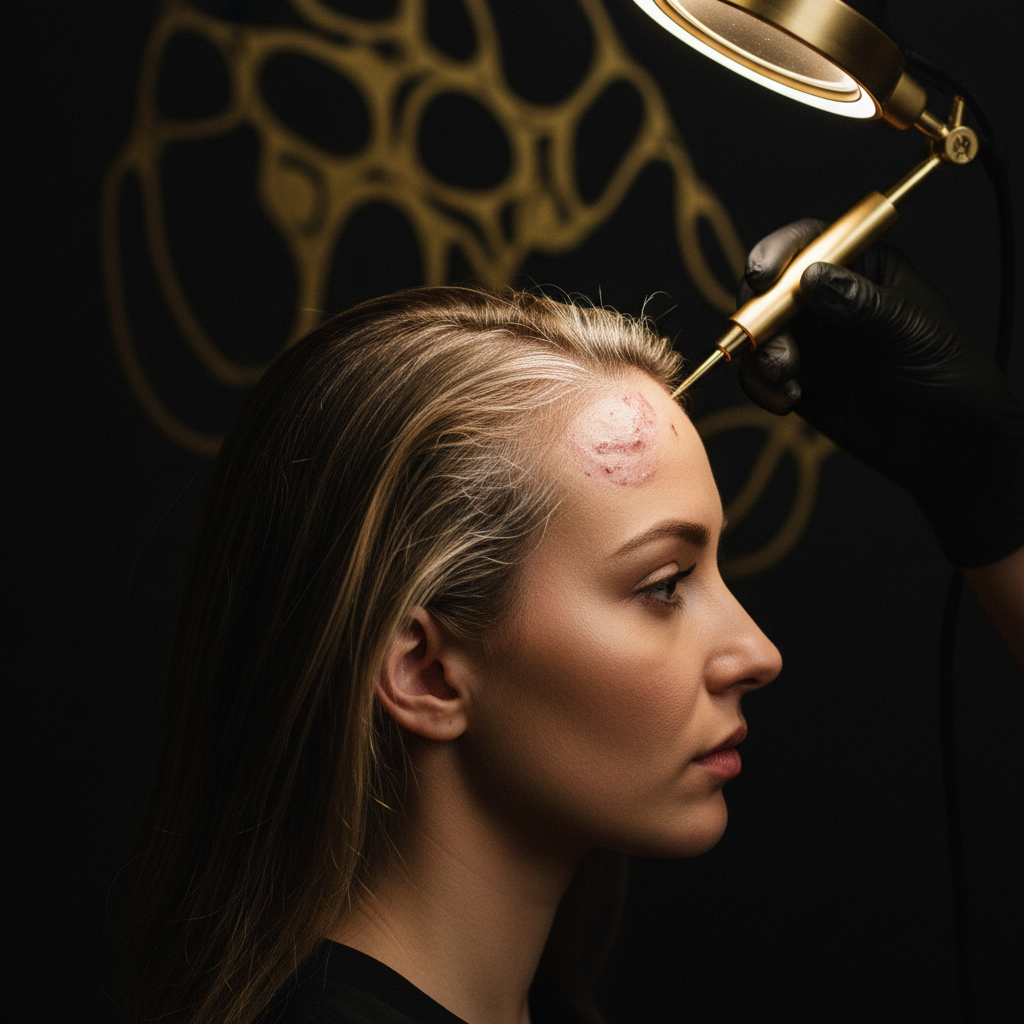
Quick answer: Understanding Scarring Alopecia begins with recognising that it represents a group of inflammatory scalp conditions, formally called cicatricial alopecia, which permanently destroy hair follicles and replace them with fibrous scar tissue. Unlike temporary shedding, hair lost to cicatricial conditions cannot regrow once the follicle stem cells are obliterated. Early clinical intervention from a dermatologist is crucial to extinguish the underlying inflammation, halt progression, and preserve remaining healthy hair before irreversible scarring spreads across the scalp.
Key takeaways
- Cicatricial (scarring) alopecia destroys epithelial stem cells located in the follicular bulge, preventing future hair growth.
- Common primary forms include Lichen Planopilaris (LPP), Frontal Fibrosing Alopecia (FFA), and Central Centrifugal Cicatricial Alopecia (CCCA).
- Early symptoms frequently include intense scalp burning, itching, tenderness, redness around follicle openings, or scaling.
- A scalp biopsy examined under histopathology is the clinical gold standard for an accurate, definitive diagnosis.
- Medical treatments focus on arresting immune-mediated inflammation rather than regrowing lost strands.
- Gentle, low-tension haircare routines protect vulnerable surrounding follicles while clinical treatment takes place.
Understanding Scarring Alopecia: what the evidence shows
Understanding Scarring Alopecia requires distinguishing between primary and secondary cicatricial alopecias. In primary scarring alopecia, the hair follicle itself is the primary target of an inflammatory, immune-mediated attack. In secondary scarring alopecia, follicular destruction occurs as a bystander effect following external trauma, severe physical or chemical burns, radiation therapy, or deep cutaneous infections.
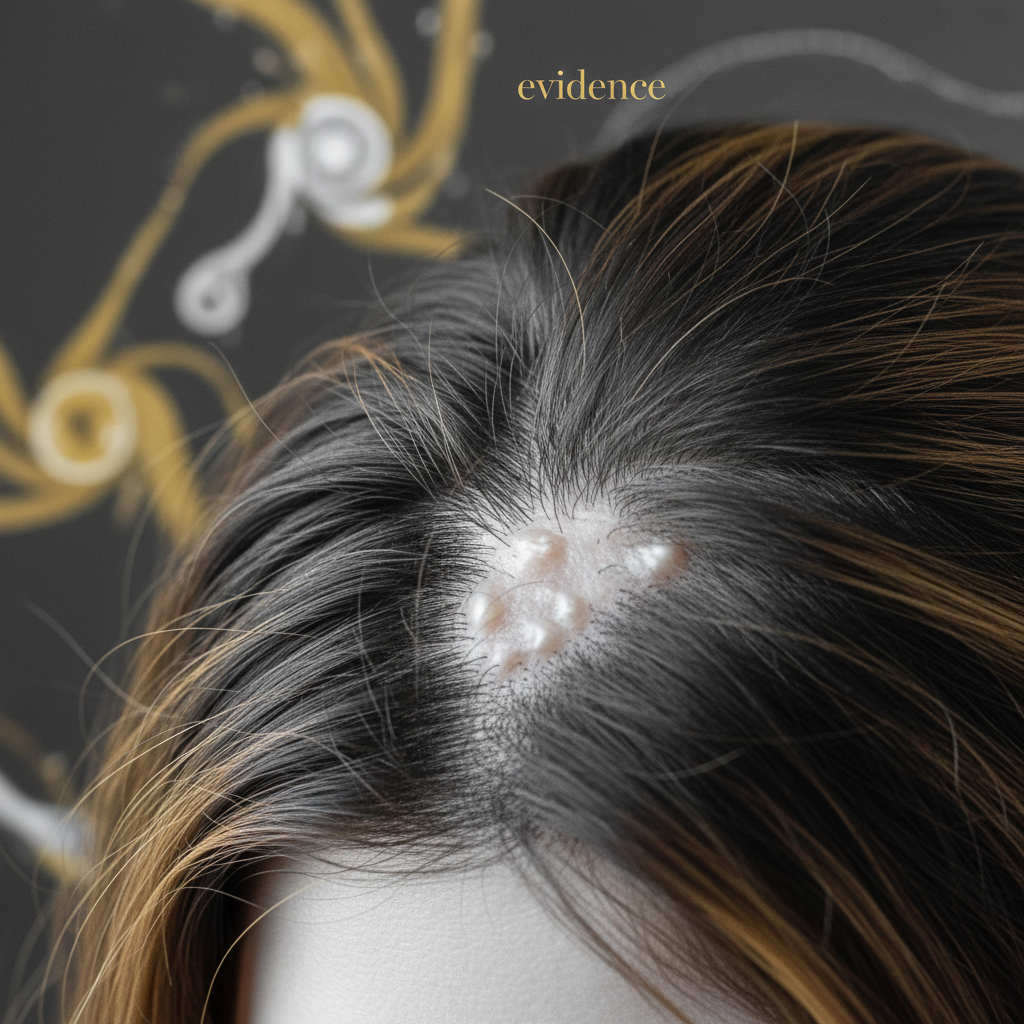
Peer-reviewed dermatological studies classify primary scarring alopecias according to the dominant immune cell type driving the destruction. Lymphocytic forms, such as Lichen Planopilaris, Frontal Fibrosing Alopecia, and discoid lupus erythematosus, feature an attack mediated by T-lymphocytes. Neutrophilic forms, such as Folliculitis Decalvans and dissecting cellulitis of the scalp, involve neutrophil infiltration, often resulting in pustules, crusting, and secondary bacterial colonisation. Mixed forms combine both inflammatory patterns.
Epidemiological data shows that these conditions affect diverse demographics. Frontal Fibrosing Alopecia predominantly affects postmenopausal women, presenting as a receding frontal and temporal hairline often accompanied by eyebrow loss. Central Centrifugal Cicatricial Alopecia is observed most frequently in women of African descent, beginning at the crown or vertex and expanding outward.
Clinical research demonstrates that the loss of follicular ostia (the visible pores from which hair fibres emerge) serves as the cardinal diagnostic sign. When viewed under high-magnification trichoscopy, the normal follicular openings disappear, leaving smooth, shiny skin that signals irreversible fibrosis beneath the surface.
What the evidence does not show
Controlled medical research does not support the idea that cosmetic haircare products, standard shampoos, or everyday environmental factors cause primary scarring alopecia. While harsh chemical relaxers, severe heat styling, and high-tension traction were historically blamed as the sole cause of conditions like CCCA, modern research indicates a far more complex picture involving genetic predisposition, fibroproliferative gene expression, and immune dysregulation.
Furthermore, no clinical evidence suggests that topical cosmetic serums, vitamin supplements, or standard over-the-counter hair growth treatments can revive follicles destroyed by cicatricial scarring. Once scar tissue replaces the hair follicle apparatus, biological regrowth is impossible. Claims that cosmetic tonics can reverse established scarring alopecia contradict established dermatological science.
The biological mechanism of follicular destruction
To understand why scarring alopecia causes permanent loss, one must examine the microanatomy of the hair follicle. The critical regenerative engine of the hair follicle resides in the "bulge" region of the outer root sheath, positioned near the attachment site of the arrector pili muscle, approximately 1 to 1.5 millimetres below the skin surface.
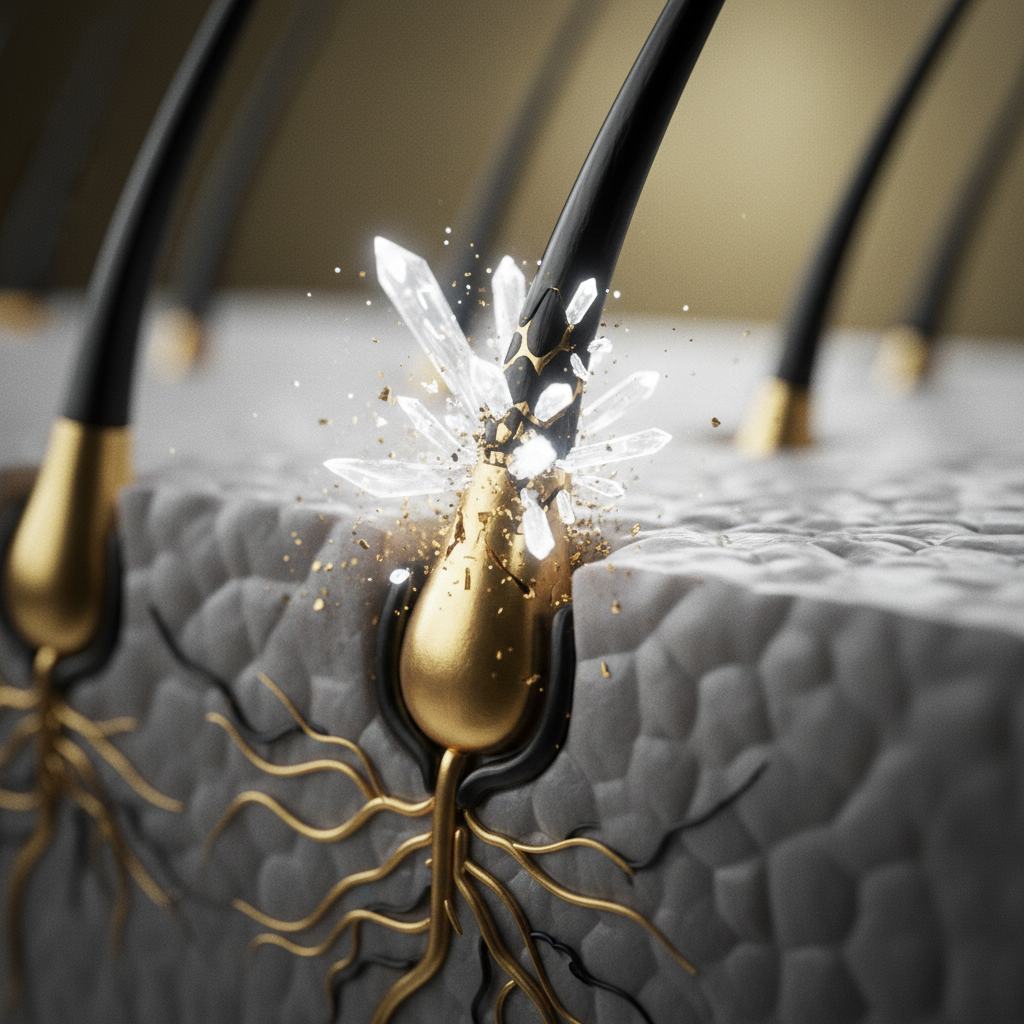
The bulge houses multipotent epithelial stem cells. During the normal hair cycle, these stem cells migrate downward to regenerate the transient lower two-thirds of the follicle, initiating the anagen (growth) phase. In non-scarring conditions like alopecia areata or telogen effluvium, inflammation primarily targets the hair bulb at the base of the follicle. Because the bulb is transient and the bulge stem cells remain undamaged, the follicle retains the ability to cycle back into growth once the inflammatory trigger subsides.
In scarring alopecia, the inflammatory infiltrate attacks the infundibulum, isthmus, and the bulge itself. Activated immune cells release pro-inflammatory cytokines, inducing apoptosis (programmed cell death) in the epithelial stem cells. Fibroblasts migrate into the damaged zone, laying down dense, collagen-rich fibrous tissue. This replaces the complex architecture of the follicle with a permanent fibrous tract. Without viable stem cells, the hair shaft cannot be regenerated.
Clinical signs and symptoms to monitor
Because prompt diagnosis dictates how much hair can be saved, recognising early warning signs is vital for stylists, trichologists, and individuals.
Primary clinical symptoms include:
- Scalp dysaesthesia: persistent burning, stinging, itching, or marked scalp tenderness.
- Perifollicular erythema: redness clustered tightly around individual hair follicle bases.
- Perifollicular hyperkeratosis: small collars of scale or keratin buildup casting the hair base (known as follicular casts).
- Pustules or crusts: pus-filled bumps or recurrent bleeding crusts, especially seen in neutrophilic types like Folliculitis Decalvans.
- Progressive bald patches with absent pores: smooth, pale, or shiny patches where the natural skin texture and follicular openings are missing.
- Tufted hairs: several hairs emerging from a single dilated follicular opening, resembling doll's hair, caused by scarring fusing adjacent follicles.
Comparing scarring and non-scarring alopecia
The differences between scarring and non-scarring presentations determine whether hair restoration is biologically viable.
| Diagnostic Feature | Scarring (Cicatricial) Alopecia | Non-Scarring Alopecia (e.g., Alopecia Areata, TE) |
|---|---|---|
| Primary Target | Follicular bulge and stem cells | Transient hair bulb or hair cycle timing |
| Follicular Openings (Ostia) | Lost; skin appears smooth, shiny, or porcelain | Preserved; pores remain visible |
| Scalp Sensations | Frequently painful, burning, itching, or tender | Often asymptomatic, occasionally mild paresthesia |
| Visible Inflammation | Perifollicular erythema, scaling, pustules, casts | Minimal to absent surface inflammation |
| Reversibility | Irreversible once scarring forms; goal is arrest | Reversible; follicles retain regenerative capacity |
| Diagnostic Confirmation | Scalp punch biopsy (histopathology) | Clinical history, trichoscopy, pull test |
When the cause may be something else
Hair thinning and patchiness can easily be mistaken for scarring conditions, leading to unnecessary panic or delayed care.
- Androgenetic alopecia: Pattern hair loss causes gradual miniaturisation of follicles, reducing terminal hairs to fine vellus hairs. Crucially, the follicular openings remain open, and there is no active destruction or scarring of the bulge.
- Alopecia areata: This autoimmune condition creates round, smooth bald patches. While the skin may look bare, dermoscopy reveals yellow dots and exclamation-mark hairs, confirming that the follicular pores are present and capable of regrowth.
- Traction alopecia: In its early stages, traction alopecia is non-scarring and reversible if tension is removed. However, sustained, chronic mechanical tension over decades can transition into secondary cicatricial damage, destroying the follicle permanently.
- Severe seborrhoeic dermatitis: Thick scales and erythema may mimic inflammatory alopecia, but seborrhoeic dermatitis affects the interfollicular skin without destroying follicular ostia.
What you can do: medical and practical management
Managing cicatricial alopecia requires an urgent, coordinated approach centred on medical care supported by protective daily routines.
Medical interventions
Only a physician or dermatologist can prescribe the treatments needed to stop active scarring alopecia. Typical evidence-based interventions include:
- Topical and intralesional corticosteroids: High-potency topical steroids (such as clobetasol propionate) or triamcinolone acetonide injections calm localised lymphocytic flares.
- Calcineurin inhibitors: Topical tacrolimus helps reduce inflammation without the skin-thinning risks of prolonged steroid use.
- Systemic anti-inflammatory agents: Oral hydroxychloroquine, doxycycline, or tetracycline are commonly used in lymphocytic forms for their immunomodulatory properties.
- Oral retinoids or targeted biologics: Severe or refractory cases may warrant medications such as acitretin, isotretinoin, or JAK inhibitors under specialist supervision.
Supportive scalp and hair hygiene
While cosmetics cannot alter the internal immune response, proper scalp hygiene prevents secondary microbial build-up:
- Cleanse regularly with a mild, pH-balanced (pH 4.5 to 5.5) shampoo to remove sebum, sweat, and scale without stripping natural barrier lipids.
- Avoid mechanical stress. Abandon tight braids, tight ponytails, heavy extensions, and aggressive brushing that place physical tension on inflamed follicles.
- Minimise thermal and chemical trauma. Avoid chemical straighteners, bleaching, and high-heat styling tools, which irritate compromised scalp tissue.
Gentle daily support from Watermans
For individuals managing scalp conditions under medical supervision, supporting the surrounding scalp environment with non-irritating care is essential. Watermans focuses on evidence-informed cosmetic formulation designed to maintain a clean, comfortable scalp and support the appearance of the hair you have.
Watermans GrowMe Shampoo and ConditionMe Conditioner deliver mild, sulphate-free cleansing enriched with biotin, rosemary extract, niacinamide, and allantoin. These cosmetic ingredients help nourish the scalp barrier, condition the existing hair fibre, and minimise unnecessary breakage without placing harsh chemical burdens on sensitive, reactive skin. Cosmetic care should always complement, never replace, the clinical treatment plan provided by your dermatologist.
Frequently asked questions about Understanding Scarring Alopecia
How is a definitive diagnosis of scarring alopecia made?
A dermatologist confirms the condition by performing a 4-millimetre scalp punch biopsy taken from the active inflammatory border of the hair loss area. A dermatopathologist examines horizontal and vertical tissue sections under a microscope to evaluate the presence of fibrous tracts, the depth of inflammatory cells, and the absence of follicular structures.
Can hair regrow after scarring alopecia has occurred?
Hair cannot regrow in areas where true cicatricial scarring has replaced the follicular stem cells. If medical treatment extinguishes the inflammation before stem cells are destroyed, dormant or partially damaged follicles may recover. This makes Understanding Scarring Alopecia early in its progression crucial for preserving hair density.
Is cicatricial alopecia an autoimmune disorder?
Most primary cicatricial alopecias, including Lichen Planopilaris and Frontal Fibrosing Alopecia, are considered autoimmune or immune-mediated disorders. In these conditions, the body's immune system fails to recognise the hair follicle as self-tissue, targeting bulge stem cells with an inflammatory reaction that triggers permanent fibrous scarring.
Does colouring hair trigger or worsen scarring alopecia?
Standard hair dye does not cause scarring alopecia. However, in an individual with active, inflamed cicatricial alopecia, the harsh alkaline chemicals, ammonia, or peroxide in permanent hair colour can cause severe chemical irritation and contact dermatitis. This can aggravate active scalp inflammation, so hair dye should be avoided during active flare-ups.
Can hair transplants work for people with scarring alopecia?
Hair restoration surgery is generally not recommended during active disease because the ongoing autoimmune process can attack newly transplanted follicles. In rare instances where the disease has remained completely quiescent and burn-out has been clinically documented for two or more years, small test grafts may be considered by an experienced hair restoration surgeon.
The importance of prompt action
Understanding Scarring Alopecia gives you the knowledge to recognise that persistent scalp pain, localized redness, and disappearing hair pores require immediate medical intervention rather than cosmetic remedies. Because follicular destruction cannot be reversed once fibrosis sets in, every week of uncontrolled inflammation increases the likelihood of permanent hair loss. If you suspect signs of scarring alopecia, schedule a comprehensive assessment with a dermatologist or specialised hair clinic right away. Early, accurate diagnosis and targeted anti-inflammatory therapy remain your best defence in safeguarding the health of your scalp and hair.
Sources and references
- British Association of Dermatologists. Guidelines for the Management of Lichen Planopilaris. British Journal of Dermatology, 2020.
- Harries, M. J., et al. Management of primary cicatricial alopecias: a practical approach. Clinical and Experimental Dermatology, 2018.
- Strazzulla, L. C., et al. Alopecia Areata and Scarring Alopecias: A Review of Cutaneous Manifestations, Pathogenesis, and Treatment. Journal of the American Academy of Dermatology, 2018.
- National Health Service (NHS). Hair loss: types, causes, and treatments. NHS.uk.
- Filbrandt, R., Rufaut, N., Jones, L., & Sinclair, R. Primary cicatricial alopecia: diagnosis and treatment. Canadian Medical Association Journal, 2013.
Find these ingredients in Watermans products
- Niacinamide: you will find this ingredient in our Hair Mask.