The Keratin Structure of Human Hair: Biology and Strength
9 min read ·
The keratin structure of human hair gives fibres their strength and elasticity through intermediate filaments, matrix proteins, and vital bonds.
Quick answer: The keratin structure of human hair is a fibrous protein architecture comprising roughly 65 to 95 percent of each hair strand's dry weight. This biological framework relies on insoluble, alpha-helical intermediate filaments embedded in a sulfur-rich, amorphous protein matrix. These structural proteins are held together by covalent disulfide bonds, ionic salt bridges, and weak hydrogen bonds to provide exceptional tensile strength and flexibility. However, because hair fibres are non-living biological matter, damaged keratin cannot regenerate biologically; it requires topical maintenance to prevent structural failure.
Key takeaways
- Predominant composition: Keratin proteins make up roughly 85 percent of the total dry mass of a healthy human hair shaft.
- Hierarchical organisation: Individual polypeptide chains twist into alpha-helices, group into protofilaments and intermediate filaments, and rest within a high-sulfur matrix.
- Three core bond types: Hair strength depends on covalent disulfide bonds (strongest), ionic salt linkages (pH-dependent), and hydrogen bonds (water-sensitive).
- Non-living material: Once keratinised cells emerge past the scalp surface, they are biologically inactive and cannot self-repair when bonds break.
- Chemical sensitivity: Disulfide bonds break under high-pH alkaline conditions and chemical reducing agents, while hydrogen bonds reset with simple wetting and drying.
The Keratin Structure of Human Hair: what the evidence shows
Scientific analysis demonstrates that the keratin structure of human hair is an organised, multi-layered composite material. At the cellular level, hair consists of three primary regions: the outermost cuticle, the central cortex, and the inner medulla (which may be absent in fine fibres).
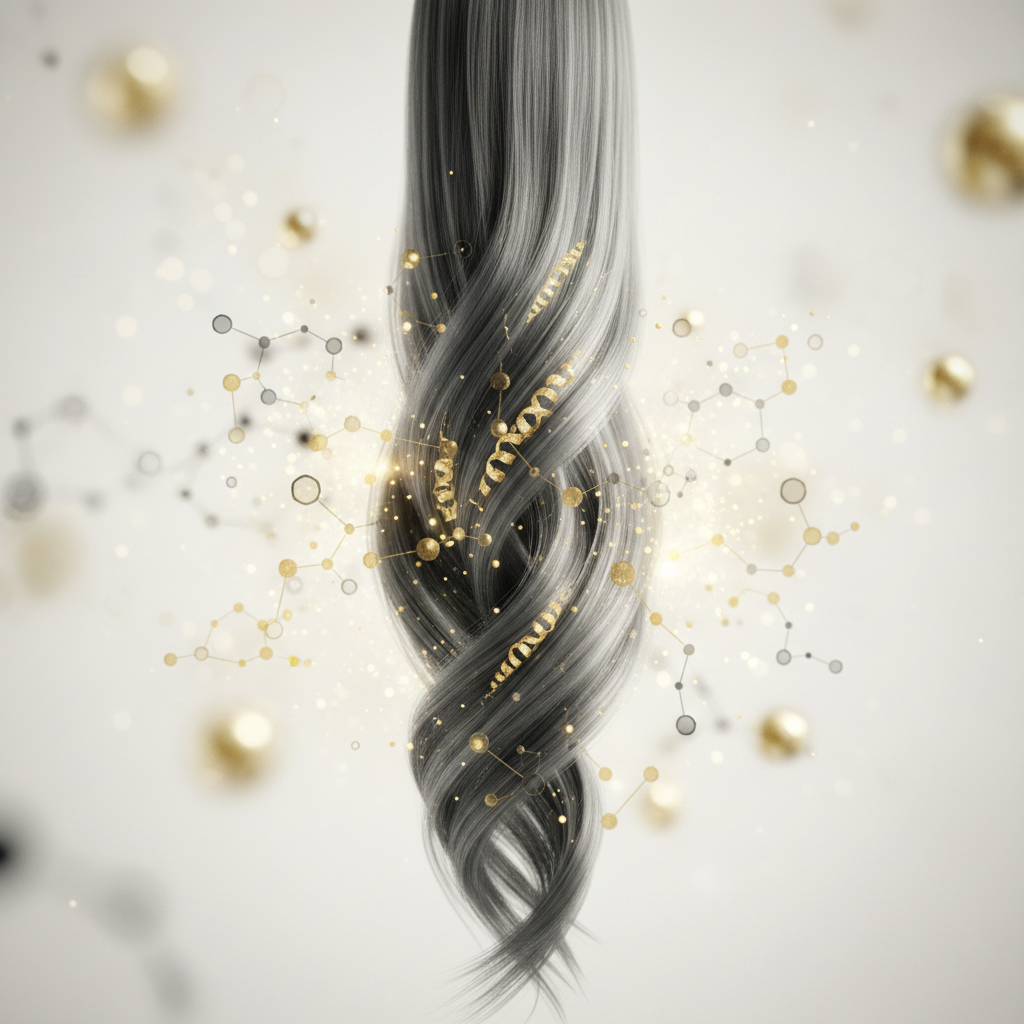
The cortex provides the vast majority of the hair's mechanical strength and elasticity. Within cortical cells, alpha-keratin proteins form right-handed alpha-helical coiled coils. Pairs of these coils twist together into protofilaments, which then assemble into intermediate filaments (microfibrils) measuring approximately 7 to 8 nanometres in diameter.
Surrounding these organised filaments is an amorphous, non-filamentous protein matrix. This matrix is rich in keratin-associated proteins (KAPs), which contain high concentrations of the amino acid cysteine. Through cysteine oxidation, adjacent protein chains link via covalent disulfide bonds. This composite of crystalline-like intermediate filaments embedded in a cross-linked matrix gives human hair its remarkable resistance to stretching, bending, and everyday environmental friction.
Structural chemical bonds in hair keratin
The physical durability and behaviour of human hair depend on three specific molecular bonds that stabilise the keratin matrix.
Disulfide bonds
Disulfide bonds are covalent linkages formed between the sulfur atoms of two cysteine amino acid residues, creating cystine. These bonds account for the hair's permanent shape, rigidity, and chemical resistance. Physical manipulation or pure water cannot break disulfide bonds. They require chemical reducing agents (such as ammonium thioglycolate used in perms) or high-pH alkaline swelling to disrupt. Once severed, if they do not reform correctly, the hair loses elasticity and snaps easily.
Ionic bonds (salt linkages)
Ionic bonds occur between the positively charged amino groups and negatively charged carboxyl groups of neighbouring amino acid side chains. These bonds depend heavily on ambient pH. The natural isoelectric point of human hair sits at roughly pH 3.67, while the surface pH hovers between 4.5 and 5.5. When hair is exposed to strongly alkaline solutions (pH above 8.0), these ionic attractions destabilise, causing the fibre to swell and the outer cuticle scales to lift.
Hydrogen bonds
Hydrogen bonds are weak, non-covalent electrostatic attractions between polar groups across protein chains. Although individually weak, their sheer abundance accounts for roughly one-third of the hair's immediate mechanical resistance. Hydrogen bonds break instantly when exposed to water, allowing the keratin chains to shift into temporary configurations. As the hair dries and water evaporates, these bonds reform in the new position, which explains how wet-setting and heat-styling work.
| Bond Type | Bond Classification | Broken By | Reformed By | Role in Fibre |
|---|---|---|---|---|
| Disulfide | Strong covalent | Reducing agents, bleaches, high heat (>215°C) | Neutralisation/oxidation (partial) | Elasticity, permanent tensile strength |
| Ionic (Salt) | Moderate electrostatic | Extreme pH shifts (acids < pH 2, alkalis > pH 8) | Returning hair to pH 4.5 to 5.5 | Resistance to swelling, cuticle flatness |
| Hydrogen | Weak electrostatic | Water, heat, humidity | Drying, cooling in shape | Temporary styling, flexibility |
Mechanisms of keratin degradation
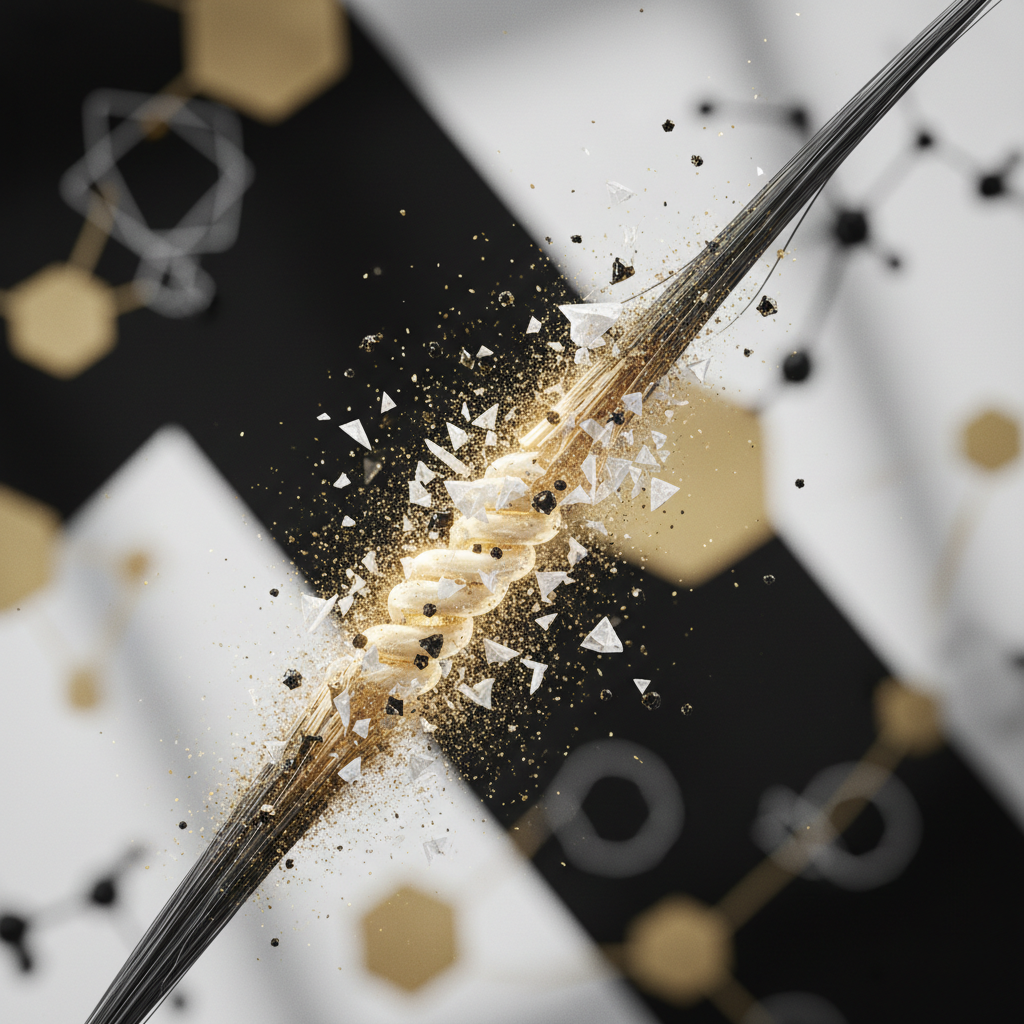
The keratin structure of human hair degrades through mechanical, thermal, and chemical pathways. None of these pathways represent systemic health issues; they reflect cumulative physical wear along the non-living shaft.
Bleaching and oxidation
Alkaline persulfate bleaches enter the cortex to oxidise melanin granules, but they also oxidise cystine molecules. This reaction converts cystine into cysteic acid, permanently destroying the disulfide bridge. Hair with high cysteic acid levels shows elevated porosity, poor wet combability, and a marked reduction in wet tensile strength.
Thermal denaturation
Exposing wet or dry hair to temperatures exceeding 150°C causes alpha-keratin helices to unfold into a disordered beta-sheet structure. When styling tools exceed 200°C to 230°C, the matrix proteins degrade and residual moisture vaporises rapidly, creating micro-cavities within the cortex known as "bubble hair". This leads to rapid snapping.
Environmental weathering
Ultraviolet radiation (UVA and UVB) degrades amino acids including tryptophan, tyrosine, and cystine. Sun exposure breaks surface peptide bonds and oxidises lipids on the cuticular surface (specifically 18-methyleicosanoic acid, or 18-MEA), stripping away the hair's natural hydrophobic shield and leaving the inner keratin vulnerable to hydration fluctuations.
What the evidence does not show
There is no scientific evidence that topical cosmetics or treatments can biologically regenerate dead hair fibres. When marketing claims promise to "rebuild broken bonds identically to virgin hair", this must be understood in context. Topical bond-building technologies cross-link specific functional groups synthetically, which temporarily reinforces structural integrity, but they do not reverse the biological loss of natural cystine or restore intact 18-MEA layers.
Additionally, dietary protein deficiency is rarely the cause of cosmetic keratin brittleness in healthy individuals in developed countries. While severe systemic malnutrition (such as kwashiorkor) alters hair shaft morphology and pigmentation, everyday breakage is almost entirely caused by external cosmetic, chemical, and physical trauma rather than a lack of dietary keratin building blocks.
Signs of keratin matrix damage
Recognising the signs of weakened keratin helps prevent irreversible fibre snapping:
- Loss of wet elasticity: When pulled gently while damp, healthy hair stretches up to 30 percent of its resting length and bounces back. Damaged keratin stretches excessively without returning, or snaps with minimal tension.
- High porosity: The fibre absorbs water instantly and takes an unusually long time to dry because the damaged cuticle and matrix hold excess unbound water.
- Rough tactile texture: Stripped cuticular scales expose the fibrous cortex beneath, creating friction, persistent tangles, and split ends (trichoptilosis).
- Extreme dullness: Light scatters irregularly across a degraded protein surface rather than reflecting evenly.
Protecting your hair's keratin structure
Because the keratin structure of human hair cannot repair itself from within, preservation and preventative care are essential.
- Manage wet handling: Wet hair shifts into an extended beta-keratin state easily and suffers lower breakage thresholds. Use a wide-tooth comb or flexible detangling brush, working upwards from ends to roots.
- Respect thermal limits: Keep heated tools below 180°C. Always apply a heat protectant containing silicones, quaternary polymers, or specialised film-formers that slow heat transfer to the cortical proteins.
- Maintain an acidic pH balance: Wash and condition with formulas buffered between pH 4.5 and 5.5 to keep cuticles compressed and ionic bonds stable.
- Incorporate hydrolysed proteins: Topical formulations containing hydrolysed wheat, soy, or keratin peptides (molecular weight 500 to 2,000 Daltons) can temporarily penetrate micro-fractures in the cuticle and matrix to reduce mechanical friction.
Scalp care and follicle support: Watermans
External keratin maintenance protects the lengths, but the initial synthesis of high-tensile keratin intermediate filaments occurs beneath the scalp line within the hair bulb's keratogenous zone. Adequate follicular microcirculation and a clean scalp environment are prerequisites for optimal fibre formation.
Watermans GrowMe Shampoo provides a nutrient-rich, topical formulation designed to wash away sebum, hard water residues, and environmental pollutants while supporting a healthy-feeling scalp environment. Blended with biotin, caffeine, rosemary extract, niacinamide, and hydrolysed lupin protein, it conditions the emerging hair fibre and supports the appearance of thickness and resilience right from the root.
Frequently asked questions about The Keratin Structure of Human Hair
What is the primary protein composition within the keratin structure of human hair?
The keratin structure of human hair consists primarily of hard alpha-keratins, which are fibrous, insoluble proteins with an unusually high proportion of the amino acid cysteine (around 10 to 18 percent of total amino acid content). These proteins are divided into intermediate filament proteins (which provide structural scaffolding) and high-sulfur keratin-associated proteins (which act as the surrounding cross-linked matrix).
Can damaged hair keratin repair itself naturally?
No, damaged hair keratin cannot repair itself biologically. The hair shaft above the skin surface is composed of fully cornified, non-living cells with no metabolic activity, cellular machinery, or blood supply. While cosmetic formulations, conditioning agents, and bond-building complexes can temporarily patch micro-fissures or create synthetic bridges, they cannot restore the original biological state of the fibre.
How does heat change the keratin structure of hair?
Heat above 150°C causes the tightly coiled alpha-keratin helices within the cortex to unfold into unorganised beta-sheets. When temperatures reach 200°C and higher, cystine bonds oxidise, and the structural integrity of both the cuticle and cortex breaks down. If moisture is trapped inside the fibre during rapid heating, it turns to steam, creating internal micro-blisters that leave the shaft permanently brittle.
What is the difference between alpha-keratin and beta-keratin in hair?
Alpha-keratin is the natural, resting configuration of hair protein, characterised by a spring-like coiled-coil shape that gives hair its resting elasticity. When hair is wetted and gently stretched, these coils uncoil into an extended, pleated configuration known as beta-keratin. When the hair is released and dries, it naturally relaxes back into the alpha-keratin conformation, provided the internal bonds have not been over-stretched.
Summary
The keratin structure of human hair serves as an extraordinary example of natural biomechanical engineering, balancing high tensile strength with remarkable flexibility through its composite assembly of alpha-helical filaments and sulfur-rich matrix proteins. However, because this structure is non-living, it has no self-repair mechanism. Everyday chemical treatments, heat styling, and mechanical friction steadily chip away at its vital disulfide, ionic, and hydrogen bonds. By understanding the underlying physics and chemistry of the hair fibre, choosing pH-balanced products, and moderating heat and chemical exposure, you can successfully protect this vital protein framework and maintain strong, resilient hair.
Sources and references
- Robbins, C. R. (2012). Chemical and Physical Behavior of Human Hair (5th ed.). Springer-Verlag.
- Feughelman, M. (1997). Mechanical Properties and Structure of Alpha-keratin Fibres. UNSW Press.
- Swift, J. A. (1999). Human hair cuticle: mechanically tough, chemically dynamic. International Journal of Cosmetic Science, 21(4), 227-239.
- Wolfram, L. J. (2003). Human hair: a unique physicochemical composite. Journal of the American Academy of Dermatology, 48(6), S106-S114.
- Cruz, C. F., et al. (2016). Keratin-based materials for haircare applications. Cosmetics, 3(3), 25.
Find these ingredients in Watermans products
- Niacinamide: you will find this ingredient in our Hair Mask.