Hydrolysed Keratin in Hair Products: The Science, Benefits, and Limits
9 min read ·
Hydrolysed Keratin in Hair Products temporarily reinforces weak, damaged fibres to reduce breakage. Discover the science, benefits, and how to avoid protein overload.
Quick answer: Hydrolysed Keratin in Hair Products is a cosmetic conditioning agent created by breaking down natural keratin proteins into smaller peptide fragments via enzymatic or chemical hydrolysis. These low-molecular-weight peptides temporarily adsorb to the hair cuticle and penetrate porous gaps in the cortex, improving tensile strength, elasticity, and moisture retention while reducing breakage caused by chemical processing and heat styling. However, hydrolysed keratin cannot permanently rebuild living biological tissue or repair split ends permanently, as hair is non-living keratinised fibre.
Key takeaways
- Hydrolysis reduces the large molecular weight of intact keratin (typically 10,000 to 50,000 Daltons) down to between 500 and 3,000 Daltons, allowing peptides to deposit beneath lifted cuticles.
- Hydrolysed keratin reduces hair breakage by reinforcing vulnerable structural voids along damaged hair shafts; it does not treat follicular hair loss or alter natural hair growth cycles.
- The ingredient acts as both a film-former on the cuticle surface and an internal moisture-binding humectant within porous cortical layers.
- Overuse on low-porosity, protein-sensitive, or undamaged hair can lead to a stiff, brittle coating that paradoxically increases snapping and roughness.
- Balanced formulation with emollient fatty alcohols and humectants is essential to maintain the correct protein-moisture balance in the fibre.
Hydrolysed Keratin in Hair Products: what the evidence shows
Peer-reviewed cosmetic science confirms that Hydrolysed Keratin in Hair Products temporarily reinforces mechanically and chemically altered hair. Natural human hair is composed of approximately 85% to 90% keratin proteins, rich in cysteine residues that cross-link via disulphide bonds. When hair undergoes bleaching, permanent waving, oxidative colouring, or thermal styling above 185°C, these disulphide bonds cleave, cysteic acid forms, and native protein fragments leach out of the cortex.
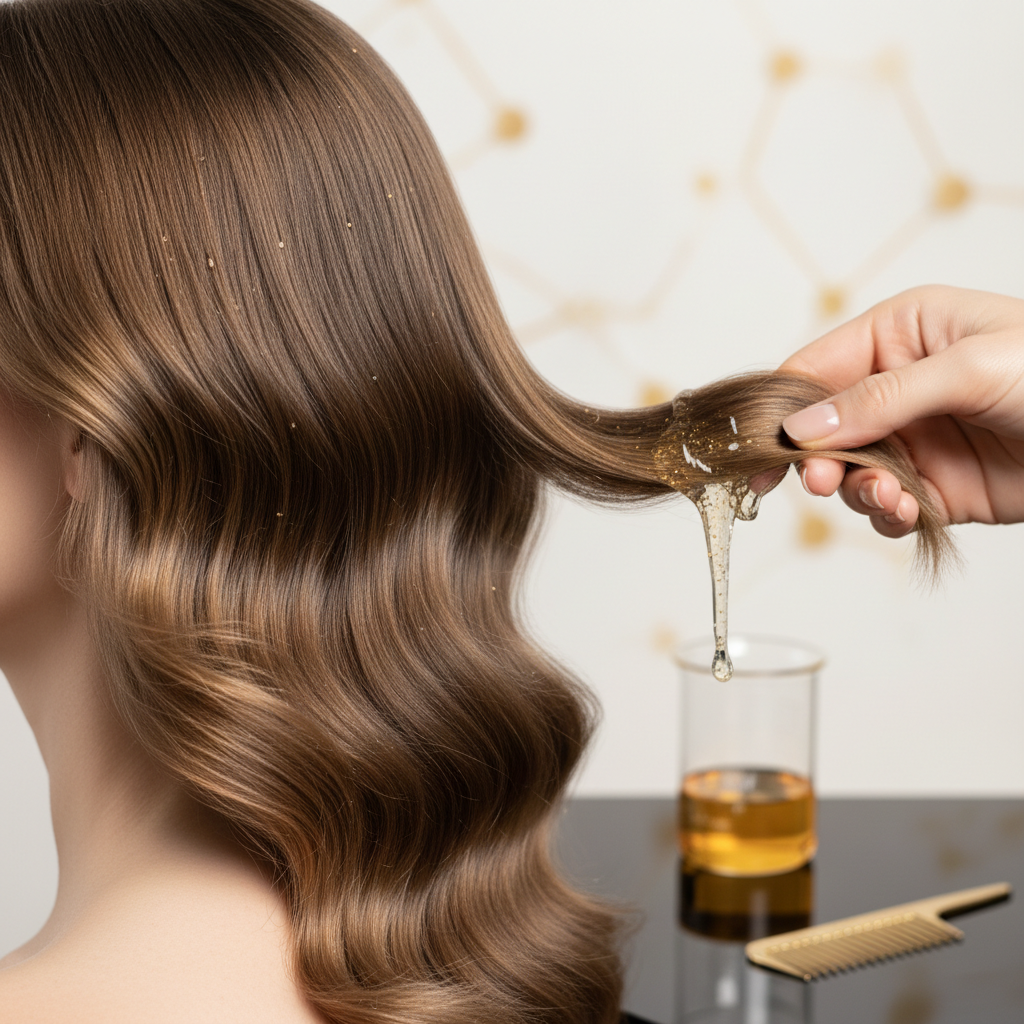
Laboratory studies published in the International Journal of Cosmetic Science and the Journal of Cosmetic Science demonstrate that hydrolysed proteins penetrate damaged hair fibres in a molecular weight-dependent manner. Fractions below roughly 1,500 Daltons can diffuse through micro-fissures into the cortex, where their polar amino acids form temporary hydrogen and ionic bonds with the remaining cellular matrix.
Higher molecular weight fragments (around 2,000 to 5,000 Daltons) adsorb electrostatically onto the negatively charged outer surface of the cuticle. This double action fills uneven crevices along the shaft, temporarily smoothing the cuticle scales, reducing surface friction, and increasing wet and dry combability. Tensile testing reveals a measurable increase in work-to-break values for bleached fibres treated with hydrolysed keratin, confirming that the protein helps vulnerable strands resist snapping during routine detangling.
What the evidence does not show
Cosmetic marketing frequently overstates what protein treatments can deliver. Scientific evidence clarifies several firm boundaries:
- No permanent structural regeneration: Hydrolysed keratin cannot permanently "heal" hair. Hair fibres are dead biological structures without living cells to assimilate proteins into permanent native tissue. Benefits wash out gradually across 1 to 6 shampoos depending on molecular weight and product formulation.
- No split-end reconnection: While hydrolysed keratin can temporarily glue split ends together via polymer film formation, normal friction, brushing, and washing quickly shear these weak non-covalent bonds. Mechanical trimming remains the only permanent solution for trichoptilosis (split ends).
- No effect on follicular hair loss: Hydrolysed Keratin in Hair Products acts purely on the extruded hair shaft. It does not treat androgenetic alopecia, telogen effluvium, or autoimmune hair loss. Reducing breakage at the mid-lengths prevents cosmetic thinning, but it does not stop hairs shedding from the root.
How hydrolysed keratin functions on hair fibres
To understand how hydrolysed keratin works, you have to examine molecular sizing and electrical charge. Native keratin is completely insoluble in water and possesses a massive molecular weight that sits uselessly on the hair surface without integrating.
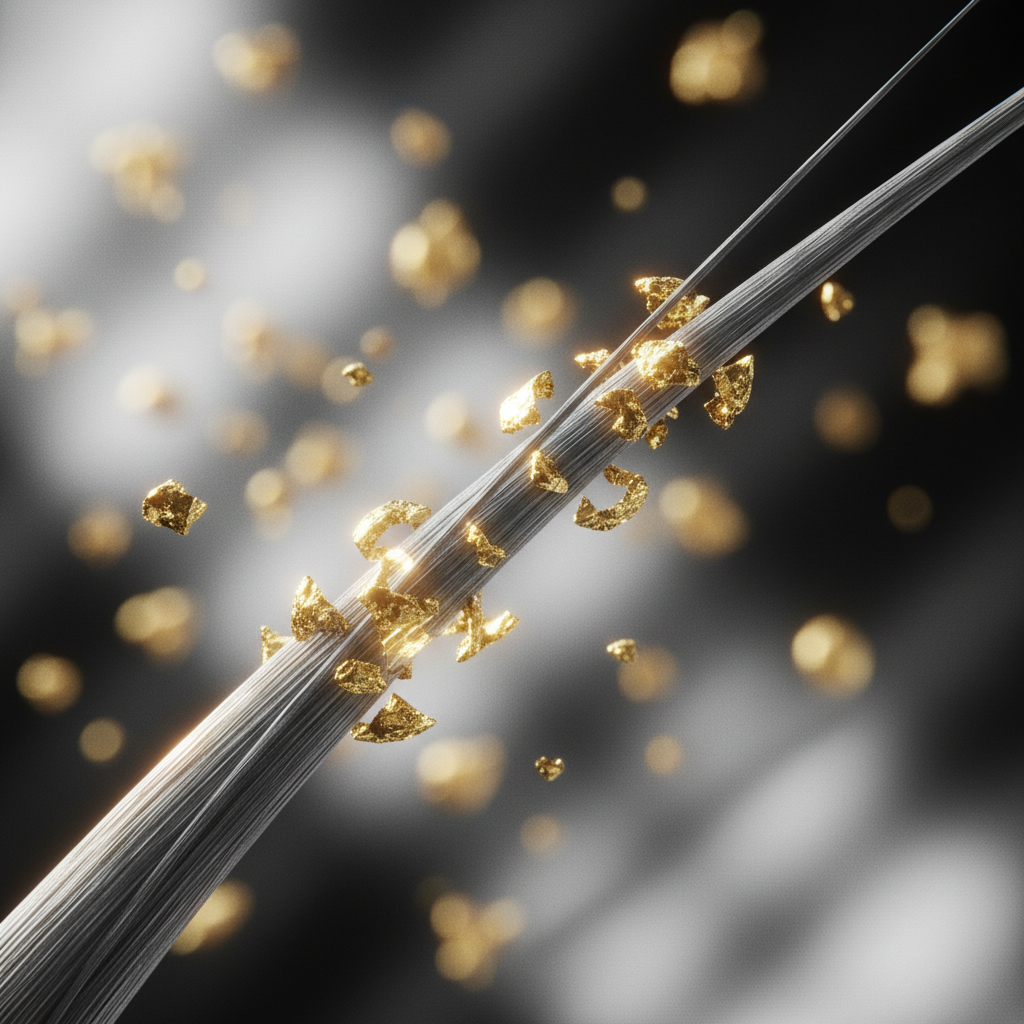
Through controlled enzymatic or acid hydrolysis, chemists cleave the protein chains into short peptides and free amino acids, such as cystine, glutamic acid, and arginine. The final ingredient dissolves cleanly in aqueous bases and carries an overall positive (cationic) charge at typical cosmetic pH levels (pH 4.0 to 5.5).
Native Keratin (Insoluble, 10,000 to 50,000 Da)
 │
 [Enzymatic or Acid Hydrolysis]
 ▼
Hydrolysed Keratin Peptides (Soluble, 500 to 3,000 Da)
 │ │
 ▼ (Under 1,500 Da) ▼ (Above 1,500 Da)
Diffuses into damaged cortex Coats cuticle scales
(Binds moisture, adds elasticity) (Forms protective film, cuts friction)
Because chemically processed hair carries an elevated negative charge due to the creation of cysteic acid groups, the cationic keratin peptides are drawn directly to damaged spots via electrostatic attraction (substantivity). Once anchored, these hydrophilic peptides draw and hold ambient moisture, smoothing lifted scales and restoring natural elasticity to the strand.
Hydrolysed keratin versus other cosmetic proteins
Different hydrolysed proteins offer distinct amino acid profiles and molecular distributions. This comparison outlines their primary functional roles in hair formulations:
| Protein Type | Typical Molecular Weight | Main Functional Role | Ideal Hair Condition |
|---|---|---|---|
| Hydrolysed Keratin | 500 to 3,000 Daltons | Matches native human hair amino acids; binds tightly to high-porosity regions | Bleached, chemically straightened, or heat-damaged hair |
| Hydrolysed Wheat Protein | 1,000 to 2,500 Daltons | Strong moisture-binding capability; expands the shaft temporarily to add volume | Fine, flat, or moderately dry hair needing body |
| Hydrolysed Silk | 500 to 1,500 Daltons | Creates high-refraction surface shine; delivers a silky, low-friction feel | Coarse, dull, or frizzy hair seeking gloss |
| Hydrolysed Collagen | 1,500 to 4,000 Daltons | Heavy film-former; excellent water retention on the cuticle surface | Very dry, brittle hair prone to weather exposure |
Signs your hair needs hydrolysed keratin
Hair fibre sends clear physical signals when its protein matrix is depleted. You will benefit from hydrolysed keratin if you notice:
- Excessive stretch and poor recoil: When wet, healthy hair stretches by up to 30% of its resting length and snaps back cleanly. Protein-depleted hair stretches out like wet chewing gum, deforms, and snaps without returning to shape.
- A mushy or gummy feel when wet: Cuticles that have lost their hydrophobic 18-methyleicosanoic acid (18-MEA) lipid layer and cortical proteins absorb excessive water (hygral fatigue), feeling limp and sticky under the shower.
- High porosity: Strands drink up water and styling products instantly yet dry out within minutes, remaining parched, frizzy, and unresponsive.
- Increased mid-shaft snapping: You notice short, broken pieces of hair on your shoulders, clothes, or bathroom counter, lacking white root bulbs.
Signs of protein overload and what to do
More protein is not always better. When healthy or low-porosity hair receives excessive doses of Hydrolysed Keratin in Hair Products without adequate emollients, peptides build up heavily on the cuticle surface.
This leads to what stylists call "protein overload". The hair feels stiff, wire-like, rough, and straw-like to the touch. Because the surface becomes rigid and loses compliance, mechanical actions like combing or tying hair back cause brittle snapping.
If you suspect protein overload, immediately pause all protein-containing masks, leave-in sprays, and conditioners. Wash with a mild clarifying shampoo to strip excess surface polymers, then follow with a rich, protein-free [deep conditioner](https://watermanshair.com/products/masque-me-luxurious-hair-mask) containing fatty alcohols (such as cetyl or cetearyl alcohol) and plant oils. Maintain this moisture-focused regimen for 2 to 3 weeks until normal softness and flexibility return.
Practical application: getting the most from keratin products
To gain maximum reinforcement from hydrolysed keratin without causing brittleness:
- Check the ingredient list (INCI): Look for Hydrolyzed Keratin in the top 5 to 8 ingredients on leave-in treatments or masks for noticeable structural support. In daily shampoos, its contact time is brief, acting primarily as a protective surfactant buffer rather than a deep restructuring agent.
- Apply heat cautiously: Mild heat (such as sitting under a warm salon hood or using a warm towel at roughly 40°C for 10 to 15 minutes) opens the cuticle slightly, encouraging lower-molecular-weight fractions to migrate deeper into the cortex.
- Follow with an acidic rinse or conditioner: Finishing with a formulation at pH 4.0 to 4.5 helps flatten the cuticle scales back down, locking the adsorbed peptides in place and boosting shine.
- Calibrate frequency by porosity: High-porosity, bleach-treated hair can tolerate protein treatments once a week. Low-porosity or untreated hair rarely needs intensive protein more than once every 4 to 6 weeks.
The Watermans approach to hair health
Cosmetic hair strength relies on a dual approach: maintaining the integrity of the extruded fibre while supporting an optimal environment at the scalp. While Hydrolysed Keratin in Hair Products provides targeted surface protection and temporary mechanical reinforcement for damaged lengths, it works best as part of a wider wellness routine. Watermans incorporates hydrolysed proteins alongside botanical extracts, rosemary, caffeine, and biotin across its ranges to nourish the scalp surface and condition the fibre, helping to reduce mechanical breakage and keep hair looking full and resilient from root to tip.
When to seek professional advice
If your hair is breaking off in clumps, if shedding increases dramatically (finding more than 100 to 150 hairs with white bulbs attached per day), or if you notice distinct bald patches, hydrolysed keratin will not resolve the issue. Consult a registered trichologist or dermatologist. They can evaluate underlying systemic drivers such as telogen effluvium, nutritional deficiencies (including iron or ferritin levels), thyroid dysfunction, or autoimmune alopecia, ensuring you receive medical intervention rather than relying solely on topical cosmetic conditioners.
Frequently asked questions about Hydrolysed Keratin in Hair Products
What is the primary benefit of Hydrolysed Keratin in Hair Products?
The primary benefit of Hydrolysed Keratin in Hair Products is reducing mid-shaft breakage. Because the protein is broken down into small peptides, it temporarily fills porous gaps in the cuticle and cortex, smoothing the fibre, restoring moisture balance, and increasing structural elasticity against heat and mechanical stress.
Can hydrolysed keratin cause hair loss or shedding?
No. Hydrolysed keratin applied to the hair shaft does not interfere with the hair follicle or trigger shedding. However, excessive use without balancing moisture can make the hair shaft stiff and brittle, leading to increased breakage along the lengths, which is often mistaken for root-level hair loss.
Is hydrolysed keratin safe for colour-treated hair?
Yes, it is especially beneficial for colour-treated hair. The oxidative bleaching and dyeing processes deplete natural structural proteins and lift cuticles. Hydrolysed keratin settles into these damaged areas, reducing porosity, evening out hair texture, and helping colour appear more uniform and vibrant.
How often should you use hair treatments containing hydrolysed keratin?
Frequency depends on your hair's baseline damage. For heavily bleached, permed, or heat-styled hair, use a protein-rich treatment once a week. For untreated or fine hair with minimal damage, use it once a month or stick to balanced daily conditioners where keratin sits lower on the ingredient list.
Final thoughts on Hydrolysed Keratin in Hair Products
Understanding the role of Hydrolysed Keratin in Hair Products allows you to use protein-based cosmetics with confidence and precision. Rather than a permanent cure for structural damage, view hydrolysed keratin as an effective, science-backed maintenance tool. By replacing lost peptides, sealing lifted cuticles, and restoring tensile elasticity, it shields fragile lengths from the friction of daily life, preventing breakage and helping you retain healthier-looking hair over time.
Sources and references
- International Journal of Cosmetic Science, "Investigation of the penetration of hydrolyzed proteins into hair", 2008.
- Journal of Cosmetic Science, "Effect of hydrolyzed keratin on the mechanical and thermal properties of bleached hair", 2012.
- Cosmetic Ingredient Review (CIR), "Safety Assessment of Hydrolyzed Keratin and Related Ingredients as Used in Cosmetics", 2016.
- Robbins, C. R., Chemical and Physical Behavior of Human Hair, 5th ed., Springer, 2012.
Find these ingredients in Watermans products
- Wheat Amino Acids: you will find this ingredient in our Heat Protection Spray.