How to Wash Coloured Hair Properly
8 min read ·
Learn How to Wash Coloured Hair Properly to prevent fading and breakage. Master water temperature, cuticle care, and sulphate-free washing techniques.
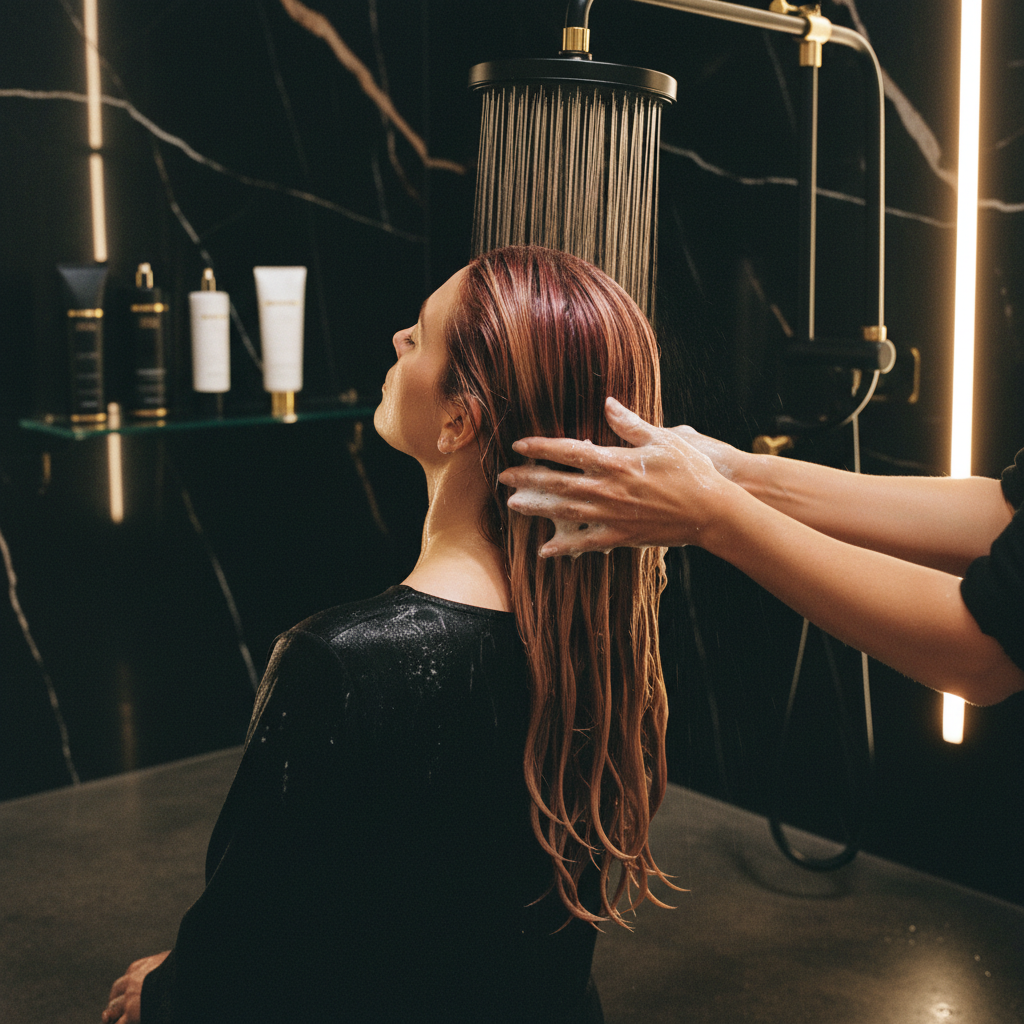
Quick answer: Learning How to Wash Coloured Hair Properly comes down to managing cuticle swelling, water temperature, and surface friction. Permanent and semi-permanent colour molecules leach out primarily when water forces the hair fibre's outer cuticle scales to lift. Washing with lukewarm or cool water, choosing a low-pH, sulphate-free cleanser, and spacing washes apart protects lipid layers and maintains tone. However, proper washing cannot reverse existing chemical damage or restore the hair's natural, water-repellent 18-methyleicosanoic acid (18-MEA) layer once chemical processing strips it.
Key takeaways
- Water alone accounts for significant dye loss because water swells the cortex and allows colour pigments to dissolve out.
- Wash using lukewarm or cool water; high heat increases cuticle dilation and accelerates colour fading.
- Formulations with a slightly acidic pH (between 4.5 and 5.5) help contract the cuticle layer and prevent pigment leakage.
- Cleansing the scalp while letting foam run down the mid-lengths avoids unnecessary mechanical friction and fibre breakage.
- Porous, chemically processed strands require conditioning agents that deposit protective lipids to mimic the stripped natural barrier.
How to Wash Coloured Hair Properly: what the evidence shows
Understanding How to Wash Coloured Hair Properly begins with the structure of chemically altered hair. Cosmetic dyes sit within the cortex or adhere to the outer cuticle. During permanent colouring, alkaline agents such as ammonia swell the hair shaft and open the overlapping cuticle scales, allowing oxidative pigments to penetrate.
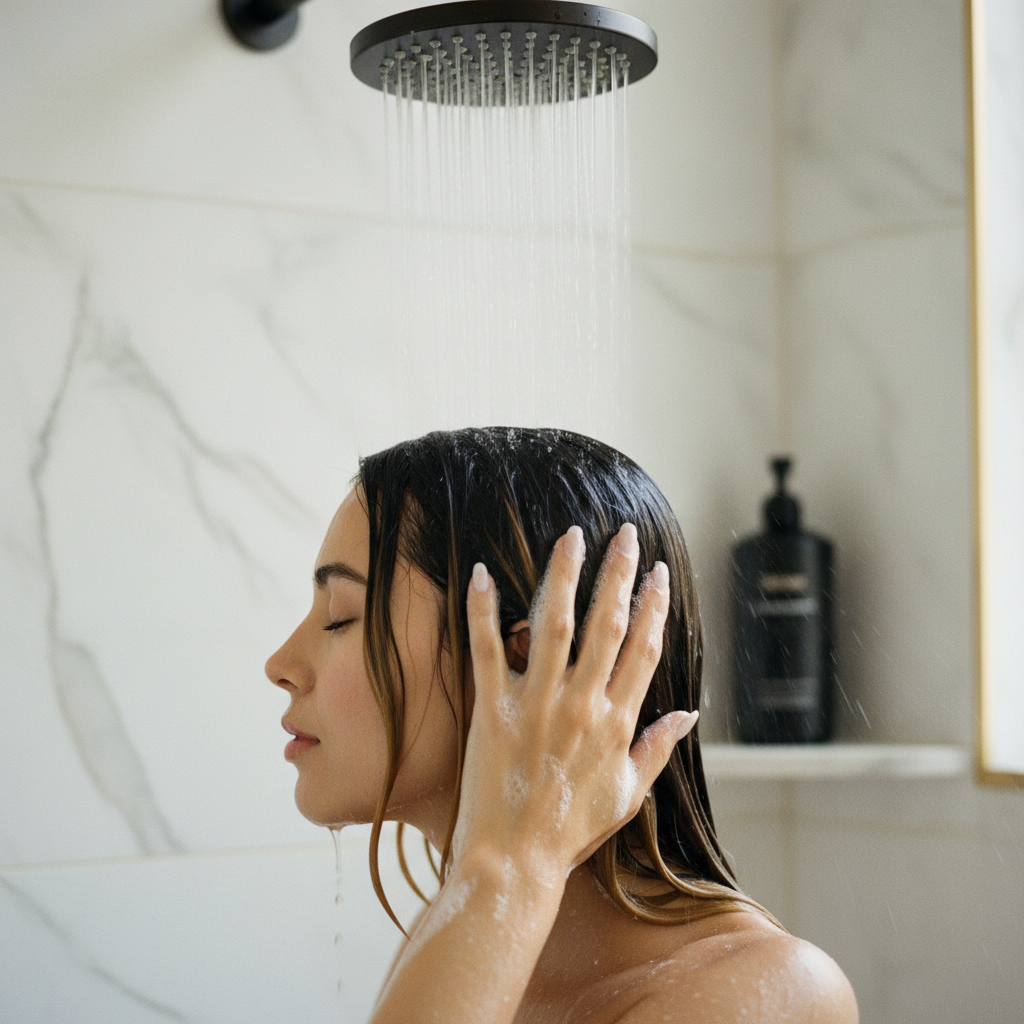
Published research in cosmetic trichology confirms that water exposure is the single largest contributor to cosmetic colour loss. When water penetrates the hair fibre, the shaft swells by up to 15 to 20 percent in diameter. This swelling forces the cuticle plates upward, creating microscopic escape routes for colour pigments.
Surfactants compound this effect. Harsh anionic detergents (like sodium lauryl sulphate) strip the hair shaft of sebum and protective surface lipids. When you wash coloured hair with aggressive cleansers and hot water, you strip the artificial pigment along with surface oils. Using a mild, pH-balanced cleanser limits both surfactant-driven stripping and water-induced cuticle swelling.
The mechanism: why coloured hair behaves differently
Natural, unprocessed hair possesses a hydrophobic (water-repelling) outer layer bound by a specific fatty acid known as 18-methyleicosanoic acid (18-MEA). This lipid shield protects the inner cortex from absorbing excess moisture.
Chemical colouring processes, including bleaching and permanent oxidation dyes, chemically remove this 18-MEA layer. Without this hydrophobic barrier:
- The hair fibre becomes hydrophilic (water-loving).
- Strands absorb water rapidly, leading to rapid swelling and subsequent pigment leaching.
- Cuticles do not lie flat naturally, which creates rough surface friction, tangling, and dullness.
- Hair loses tensile strength when wet, making it highly susceptible to mechanical breakage rather than follicular hair shedding.
Temperature plays an active physical role. Hot water softens the keratin matrix and increases the kinetic energy of water molecules, hastening the rate at which pigment particles wash out of the porous cortex.
| Factor | Hot Water & Harsh Surfactants | Cool Water & Mild Surfactants | Impact on Coloured Hair |
|---|---|---|---|
| Cuticle Response | Scales lift and swell significantly | Scales remain compact and aligned | Prevents pigment leaching |
| Surface Charge | Increases negative charge and static | Balances charge, smoothing the fibre | Reduces friction and tangling |
| Colour Retention | Accelerates fading within 3 to 6 washes | Preserves vibrancy across weeks | Prolongs salon toner lifespan |
| Fibre Integrity | Heightens risk of wet-comb snapping | Preserves elasticity and tensile strength | Minimises mechanical breakage |
Step-by-step: how to wash coloured hair at home
Adopting the right technique protects your investment and preserves hair health:
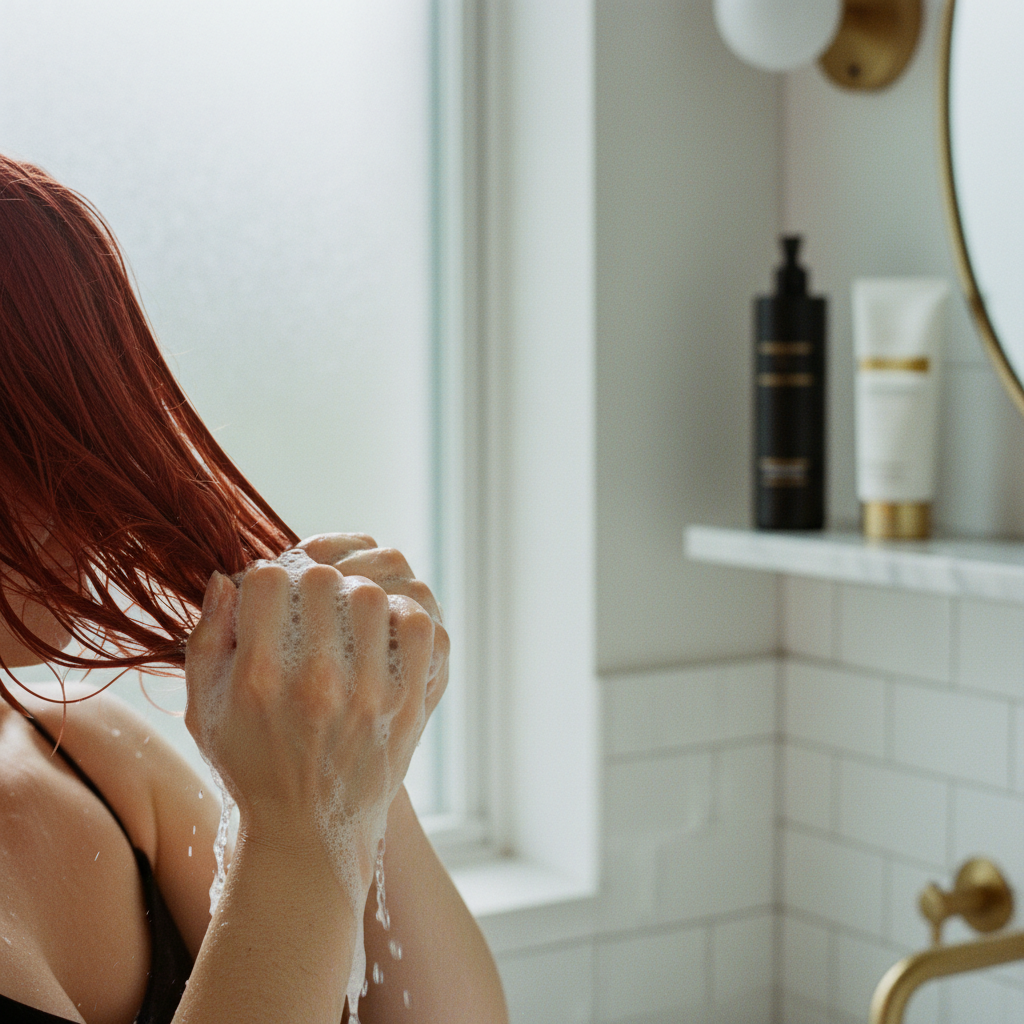
- Wait after colouring: Allow 48 to 72 hours after chemical colouring before your first full wash. This gives the hair matrix time to settle and oxidise fully.
- Saturate with lukewarm water: Thoroughly wet your hair using lukewarm or cool water. Avoid hot showers, which lift the cuticle instantly.
- Target the scalp: Apply a sulphate-free, low-pH shampoo directly to the scalp. Use the pads of your fingers, not your nails, to work up a lather. The goal of shampoo is to clear sebum and debris from the skin.
- Minimise mid-length agitation: Do not pile your lengths on top of your head or scrub the ends. Simply let the suds rinse through the lengths. This removes airborne grime without abrading fragile, coloured cuticles.
- Rinse thoroughly with cool water: Ensure all cleanser is removed. Cool water encourages cuticles to lie flatter against the shaft.
- Apply conditioner from mid-lengths to ends: Squeeze out excess water first so the conditioner is not diluted. Look for formulas with cationic conditioners (like behentrimonium chloride) and hydrolysed proteins to temporarily patch porous areas.
- Detangle with care: Use a wide-tooth comb or your fingers while the conditioner is in your hair. Start from the ends and work upward. Wet, dyed hair has reduced elasticity and snaps easily under tension.
- Blot, do not rub: Wrap hair in a soft cotton towel or microfibre wrap to absorb moisture. Rubbing with a coarse bath towel causes cuticular fraying and breakage.
What the evidence does not show
There is no scientific evidence that skipping washing entirely improves hair density or stops hair shedding. While cutting back frequency helps preserve colour pigments, neglecting scalp hygiene can lead to an accumulation of sebum, dead skin cells, and microbial overgrowth (such as Malassezia), triggering conditions like seborrhoeic dermatitis.
Furthermore, cold water rinses do not literally close cuticles like a mechanical valve. Cuticles do not possess muscles. Cool water simply avoids the thermal swelling caused by hot water, helping the keratin stay more compact. Finally, "colour-safe" shampoos cannot prevent fading indefinitely; water alone naturally dissolves dye molecules over time.
When colour fading signals another issue
Sometimes rapid colour fading is not just a washing error. If your hair loses toner within one or two washes regardless of your technique, consider these variables:
- High porosity from over-bleaching: Severely compromised hair cannot hold dye molecules because the internal protein scaffolding (cortex) is degraded.
- Hard water build-up: High concentrations of dissolved minerals (such as calcium and magnesium, or copper from pipes) bind to colour-treated hair. This causes brassiness, dullness, and colour shifting.
- UV exposure: Sunlight breaks the chemical bonds of synthetic dye through photo-oxidation.
- Clarifying overuse: Using deep-cleansing or anti-dandruff shampoos on colour-treated hair strips tones rapidly due to their high surfactant load and alkaline pH.
The Watermans approach to hair maintenance
For those seeking to maintain a healthy scalp environment while managing coloured hair, Watermans offers gentle formulations designed to nourish without aggressive stripping. Watermans GrowMe Shampoo is formulated sulphate-free, making it an ideal candidate when you want to wash the scalp thoroughly without exposing coloured mid-lengths to harsh detergents. Paired with Watermans ConditionMe Conditioner, which delivers targeted hydration, cholesterol, and natural oils, this routine helps replenish the moisture barrier that chemical processing routinely depletes. This balance supports an optimal scalp environment while protecting the feel and appearance of chemically treated fibres.
When to seek professional advice
Consult your professional stylist or colourist if your hair shows signs of extreme chemical trauma, such as a gummy, stretchy texture when wet, or extensive breakage along the mid-lengths. They can apply bond-building treatments or adjust your dye formulation.
If you notice increased hair shedding from the roots (visible white bulbs at the ends of fallen strands) or patchy hair loss, consult a trichologist or GP. Chemical colour causes breakage along the shaft; it does not induce follicular shedding unless an acute contact allergic reaction or chemical burn occurs on the scalp.
Frequently asked questions about How to Wash Coloured Hair Properly
How often should I wash colour-treated hair?
Most colourists recommend washing colour-treated hair two to three times per week. Washing daily accelerates dye leaching, as water penetration causes the hair shaft to swell repeatedly. If you have an oily scalp, focus your shampoo application strictly on the roots, or use a gentle, sulphate-free cleanser to balance hygiene and colour protection.
Does cold water really preserve hair colour?
Yes, lukewarm to cool water helps preserve colour compared to hot water. While cold water does not physically close cuticles like a door, hot water expands the fibre and softens the keratin structure. Using cooler water limits thermal swelling, keeping the cuticle layers flatter and reducing the amount of pigment that dissolves into the water.
What is the primary rule for How to Wash Coloured Hair Properly?
The primary rule for How to Wash Coloured Hair Properly is to minimise both cuticle swelling and physical friction. This is accomplished by using lukewarm water, sulphate-free cleansers with an acidic pH (around 5.0), and focusing shampoo strictly on the scalp rather than scrubbing fragile, chemically altered lengths.
Can I use purple or blue toning shampoos every wash?
No, toning shampoos should generally be used only once every week or two. Toning shampoos are formulated to neutralise unwanted brassy yellow or orange pigments by depositing direct dyes. However, many toning shampoos have a slightly higher pH to deposit those pigments, which can leave hair feeling dry and brittle if used during every wash.
Why does coloured hair snap so easily when wet?
Chemical colouring strips the hair's protective 18-MEA lipid layer, leaving it hydrophilic and porous. When wet, this compromised fibre stretches beyond its natural elasticity. Aggressive rubbing, combing with fine-tooth combs, or scrubbing the lengths causes the cuticle to tear, resulting in immediate mechanical hair breakage along the shaft.
Summary
Mastering How to Wash Coloured Hair Properly is essential for maintaining vibrant colour and structural integrity. By treating coloured hair as a fragile, hydrophilic material that requires low-friction washing, cool water, and pH-balanced care, you extend the life of your colour and safeguard against fibre breakage. Adjusting your home routine protects the cuticle and keeps your hair looking rich, conditioned, and resilient.
Sources and references
- Robbins, C. R. (2012). Chemical and Physical Behavior of Human Hair. 5th ed. Springer-Verlag.
- Draelos, Z. D. (2010). Essentials of Hair Care often Neglected: Hair Cleansing. International Journal of Trichology, 2(1), 24-29.
- Gavazzoni Dias, M. F. (2015). Hair Cosmetics: An Overview. International Journal of Trichology, 7(1), 2-15.
- Evans, T., & Wickett, R. (2012). Practical Modern Hair Science. Allured Business Media.
- Cruz, C. F., et al. (2016). Human Hair Characteristics and Methods for Evaluating Hair Care Products. Cosmetics, 3(4), 34.
Find these ingredients in Watermans products
- Copper: you will find this ingredient in our Hair Vitamins.