How to Use Hair Oil for Heat Protection: The Definitive Guide
8 min read ·
Learn how to use hair oil for heat protection safely, including smoke points, application methods, and why pure oils must be paired with thermal protectants.
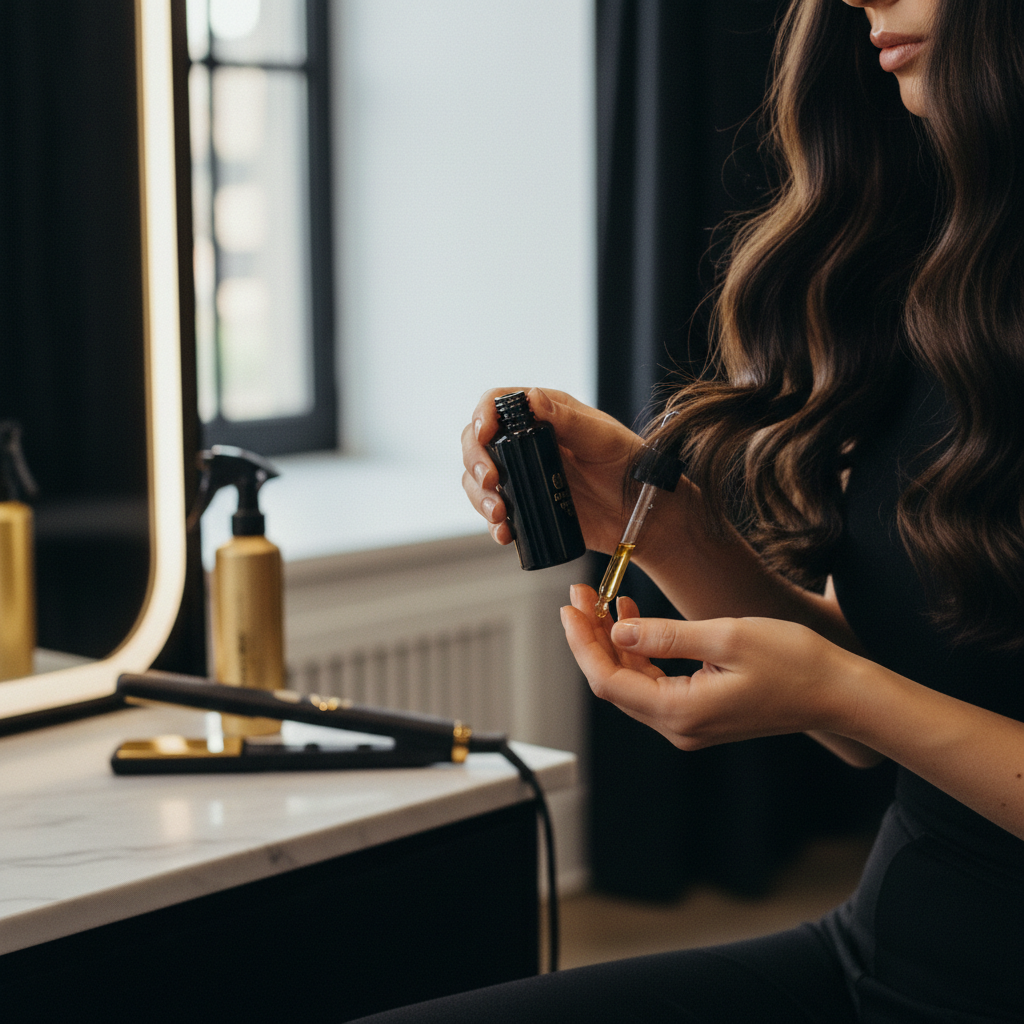
Quick answer: Learning How to Use Hair Oil for Heat Protection requires understanding that pure natural oils cannot replace formulated thermal protectants at high styling temperatures. While plant oils lubricate the cuticle, slow water loss, and buffer moderate heat from blow-drying, their primary limitation is a variable smoke point and lack of heat-dispersing polymers. To protect your hair safely, apply a few drops of lightweight, stable oil to damp strands before blow-drying, but always pair or precede it with a dedicated heat protectant before using flat irons or curling wands exceeding 180°C.
Key takeaways
- Pure oils do not provide broad-spectrum thermal shielding against direct, high-temperature flat irons above 180°C.
- Applying oil to damp hair before blow-drying creates a protective lipid barrier that reduces surface friction and decelerates rapid moisture evaporation.
- Natural oils with higher oxidative stability (such as argan, jojoba, and coconut oil) perform better than polyunsaturated drying oils, which degrade under thermal stress.
- Applying excess oil immediately before using dry hot tools can inadvertently fry the cuticle if the tool temperature exceeds the oil's thermal tolerance.
- Cosmetic thermal protectants rely on synthetic polymers and silicones to conduct and dissipate heat evenly, making oil an ideal finishing complement rather than a sole shield.
How to Use Hair Oil for Heat Protection: what the evidence shows
Understanding How to Use Hair Oil for Heat Protection begins with the biophysics of the hair shaft. Hair fibres are primarily composed of keratin proteins (around 85% to 90%), water, and a delicate protective outer layer of overlapping cuticle scales held together by cell membrane complex lipids, notably 18-methyleicosanoic acid (18-MEA).
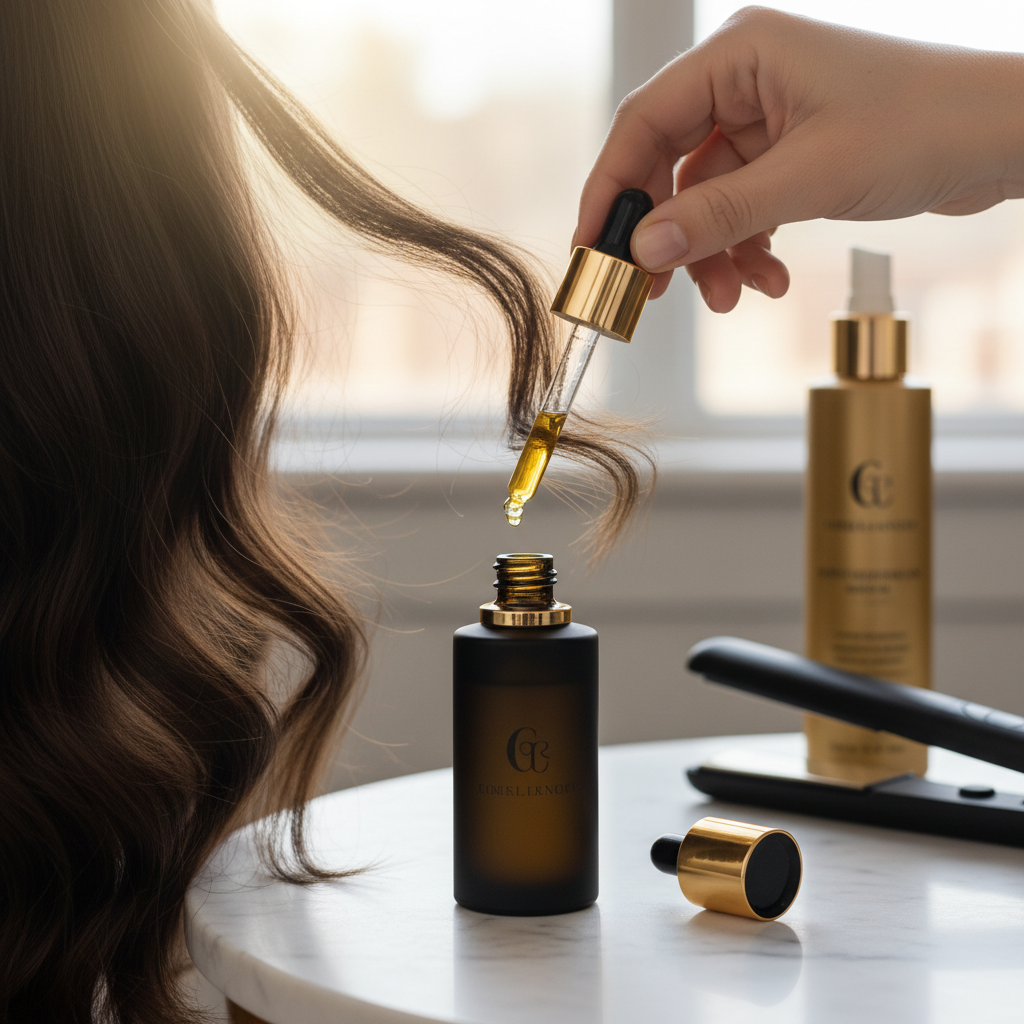
When you introduce heat to unprotected hair, several destructive processes occur simultaneously:
- Free water vaporization: At temperatures above 100°C, moisture trapped inside the hair cortex boils rapidly. This rapid phase transition creates steam pockets that expand forcefully, forming micro-cavities within the fibre. Trichologists refer to this permanent structural defect as "bubble hair", which leaves strands brittle and prone to catastrophic snapping.
- Protein denaturation: Keratin begins to denature and lose its helical structure around 155°C to 160°C. Once temperatures hit 200°C to 230°C, the internal structural integrity degrades irreversibly.
- Lipid stripping: Direct heat oxidises and removes surface lipids, lifting the cuticle edges. This creates microscopic roughness, increases friction between fibres, and accelerates mechanical breakage during brushing.
Cosmetic science research reveals that plant and mineral oils provide thermal buffering primarily through lubrication and moisture regulation. When you apply a light layer of oil to damp hair, it coats the hair shaft, reinforcing the hydrophobic barrier. During low-to-moderate blow-drying (typically 60°C to 90°C air temperature on the fibre), this lipid film slows down the rate of water desorption. Slower drying preserves the cuticle's elasticity and prevents sudden moisture shock.
However, the evidence is unequivocal: pure plant oils do not dissipate concentrated, contact heat in the way specialised polymers do. For tools like flat irons that apply direct, dry heat between 180°C and 230°C, an oil alone is insufficient.
The mechanism: smoke points and oxidative stability
To use oils effectively around heat, you must understand thermal breakdown. Every lipid has a smoke point, the temperature at which it stops merely buffering and begins to decompose, smoke, and release volatile free fatty acids and acrolein.
Equally important is oxidative stability. Oils rich in polyunsaturated fatty acids (such as flaxseed, walnut, or rosehip oils) contain double bonds that break down rapidly when exposed to heat and oxygen. When these oils oxidise on your hair fibre, they form sticky, degraded polymers that coat the cuticle, increasing friction and causing matte, straw-like damage.
In contrast, monounsaturated and saturated lipids (like jojoba esters, coconut oil, and argan oil) possess higher oxidative stability. They tolerate elevated temperatures without rapid chemical degradation, making them far safer candidates for thermal styling routines.
| Oil Type | Predominant Fatty Acids | Approximate Smoke Point | Best Application Stage |
|---|---|---|---|
| Argan Oil | Oleic (43%), Linoleic (37%) | ~215°C | Damp hair before blow-drying; finishing serum |
| Jojoba Oil | Gadoleic (70%), Erucic (15%) | ~200°C | Damp hair to mimic natural sebum |
| Coconut Oil | Lauric (49%), Myristic (18%) | ~175°C to 200°C | Pre-wash treatment or damp hair; blow-drying only |
| Avocado Oil | Oleic (60%), Palmitic (20%) | ~250°C (refined) | Coarse, thick hair; low-to-medium heat blow-drying |
| Grapeseed Oil | Linoleic (70%), Oleic (16%) | ~215°C | Prone to oxidation; use sparingly on low heat |
Step-by-step: how to apply hair oil safely during heat styling
To capture the conditioning benefits of plant oils without courting heat damage, follow this practical protocol:
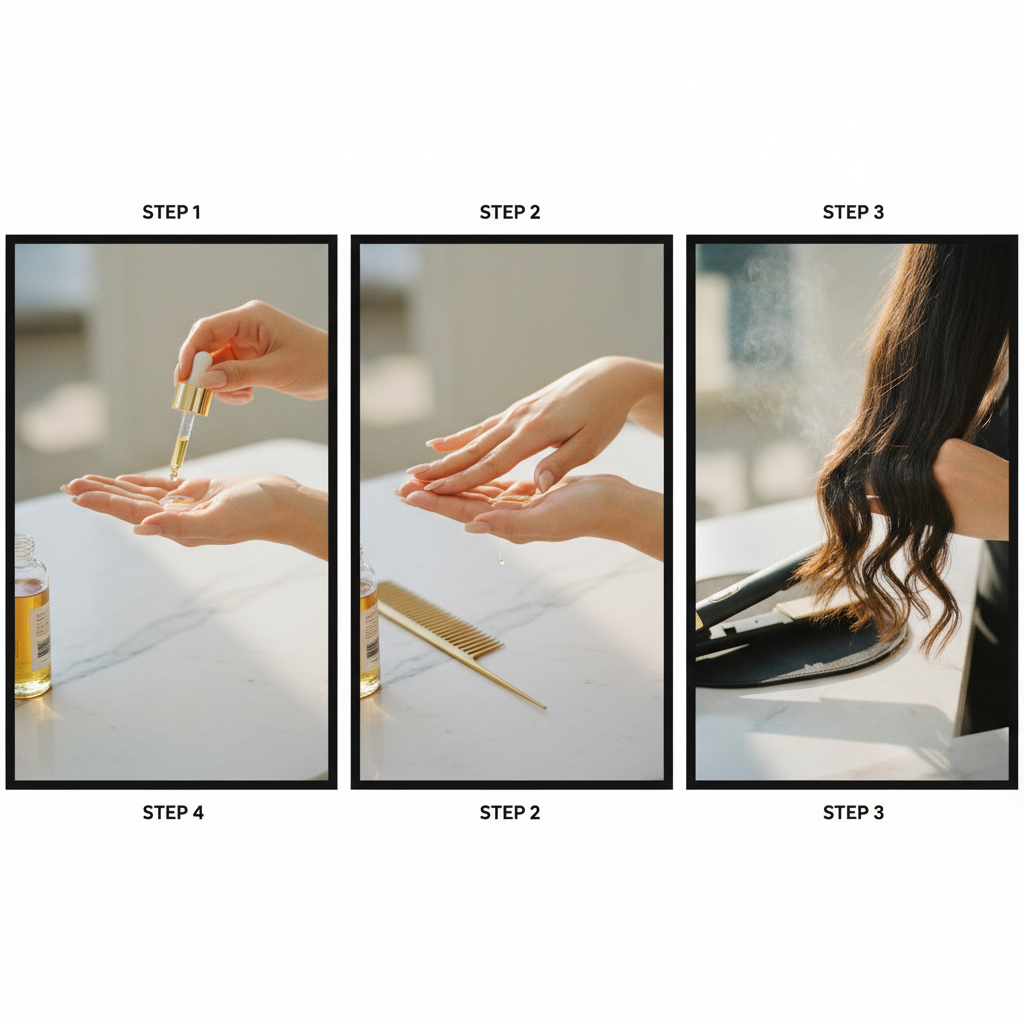
Step 1: Start on clean, damp hair
Never apply pure oils to dirty or dry hair right before clamping a flat iron down. Wash your hair, gently squeeze out excess water with a microfibre towel, and detangle with a wide-tooth comb.
Step 2: Dose according to hair density and diameter
Quantity matters immensely. For fine hair, one to two drops warmed between your palms is plenty. For thick, coarse, or highly porous coils, three to five drops may be necessary.
Step 3: Distribute through the mid-lengths and ends
Work the oil exclusively through the oldest, most vulnerable portions of your hair shaft. Avoid applying pure oils directly to the scalp or roots prior to thermal styling, as this weighs hair down and attracts dust and particulate matter.
Step 4: Layer with a specialised thermal shield
If you intend to use flat irons, curling wands, or hot rollers above 150°C, apply a dedicated cosmetic heat protectant spray containing dimethicone, amodimethicone, or polyquaternium polymers. These ingredients film-form across the fibre to distribute surface heat evenly.
Step 5: Dry completely before using contact tools
Never touch a flat iron or curling tong to hair that is wet or heavily coated with wet oils. The tool must glide over completely dry, conditioned strands. If you hear a sizzle or see vapor clouds smelling of toasted oil, your tools are cooking your hair cuticle.
Signs your hair is suffering from thermal damage
Heat damage is cumulative and irreversible once it affects the keratin core. Watch for these distinct signs:
- White dots (Trichorrhexis nodosa): Tiny white nodules along the hair shaft where the cortex has split and frayed internally.
- Loss of curl pattern: Naturally wavy, curly, or coily hair fails to bounce back after washing, hanging limp or irregularly straight in over-heated patches.
- Rough, raspy texture: Cuticles that have blistered or sheared off leave the hair feeling like rough dry paper instead of smooth silk.
- Excessive mid-shaft snapping: Finding short, blunt-ended hair fragments on your clothes or counter during styling (breakage, distinct from full-length shed hairs with intact white bulbs).
When the cause may be something else
If your hair appears dull, dry, or brittle despite meticulous heat-styling habits, consider secondary culprits:
- Hard water minerals: High concentrations of calcium and magnesium in tap water form insoluble salts that bond to the cuticle, mimicking heat-induced dryness and preventing protectants from adhering.
- Chemical processing: High-lift bleaches and permanent colour services strip natural lipids and oxidise disulphide bonds, leaving hair exceptionally vulnerable to even low heat settings.
- Protein-moisture imbalance: Overuse of heavy protein treatments without adequate emollients can make hair rigid, causing it to snap under mild tension during blow-drying.
Complementary haircare: Watermans support
While oils and protectants shield the external fibre, hair resilience starts at the scalp. Watermans focuses on non-invasive, nutrient-rich scalp support to maintain optimal conditions for emerging hair fibres.
Watermans Grow Me Shampoo and Condition Me Conditioner supply strengthening ingredients like hydrolysed lupin protein, biotin, caffeine, and rosemary extract. By fortifying the condition of the hair cuticle and supporting a balanced scalp environment, these formulations ensure new growth emerges robust and better equipped to withstand environmental and styling stress.
Frequently asked questions about How to Use Hair Oil for Heat Protection
Can I use pure coconut oil instead of a heat protectant spray?
No, you should not substitute pure coconut oil for a dedicated heat protectant spray when using hot irons. Coconut oil penetrates the hair shaft well and works wonderfully on damp hair before blow-drying. However, it lacks the polymer film formers needed to buffer intense, dry temperatures above 180°C.
Will applying oil before flat ironing fry my hair?
Yes, applying pure oil directly to dry hair immediately before flat ironing can scorch the fibre. If the flat iron exceeds the smoke point or thermal tolerance of the oil, the lipid can boil against the cuticle, causing severe blistering and permanent mechanical breakage. Always use oil on damp hair before blow-drying instead.
What is the correct way on How to Use Hair Oil for Heat Protection on fine hair?
On fine hair, the safest method is to emulsify a single drop of lightweight oil (such as jojoba or squalane) thoroughly between your palms, then lightly glaze only the bottom two inches of damp strands before blow-drying on a medium heat setting. This prevents weighing down fine fibres while still softening brittle ends.
Should I put oil on hair before or after blow-drying?
You can use oil both before and after blow-drying, but for different purposes. Applying a light layer on damp hair before drying buffers moisture loss and reduces brush friction. Applying half a drop to dry hair after styling adds shine and smooths flyaways.
Safe practices for lasting hair health
Mastering How to Use Hair Oil for Heat Protection comes down to respecting the physical limits of natural lipids. Plant oils excel at lubricating the cuticle, preventing rough mechanical abrasion, and softening strands during moderate blow-drying routines. However, they cannot defy the laws of thermodynamics when exposed to 200°C styling irons.
For complete fibre integrity, treat oils as nourishing sealants and lubricants rather than high-heat firewalls. Pair your favourite stable oils with science-backed heat protectants, moderate your styling temperatures, keep hot tools moving, and allow your hair to retain its natural vitality.
Sources and references
- Journal of Cosmetic Science: "Secondary ion mass spectrometric investigation of penetration of coconut and mineral oils into human hair fibres" (2001)
- International Journal of Trichology: "Hair Cosmetics: An Overview" (2015)
- Society of Cosmetic Chemists: "Thermal Analysis of Hair: Thermal Degradation and Protection" (2011)
- Journal of the Society of Cosmetic Chemists: "Effect of heat on hair characteristics: Investigation of hair damage after heat treatments" (2004)
Find these ingredients in Watermans products
- Biotin: you will find this ingredient in our Hair Growth Shampoo.