How to Treat Scalp Inflammation: Causes, Mechanisms, and Proven Solutions
9 min read ·
Understand how to treat scalp inflammation with evidence-based strategies, barrier repair techniques, and expert advice for long-term scalp health.
Quick answer: Learning how to treat scalp inflammation starts with identifying the underlying trigger, which ranges from seborrhoeic dermatitis and product build-up to psoriasis or contact allergies. Calming the tissue involves targeted anti-inflammatory agents, mild antifungal washes, gentle mechanical cleansing, and barrier repair. However, learning how to treat scalp inflammation has one major limitation: chronic or severe inflammatory disorders (such as lichen planopilaris or scalp psoriasis) require clinical dermatological diagnosis and prescription medical therapy, as cosmetic care alone cannot alter autoimmune or scarring disease pathways.
Key takeaways
- Scalp inflammation stems from diverse triggers, including microbial imbalance (Malassezia overgrowth), barrier disruption, allergic contact dermatitis, and autoimmune skin conditions.
- Effective management pairs active soothing agents (such as niacinamide, rosemary, and zinc pyrithione) with consistent, gentle removal of sebum and dead corneocytes.
- Scalp skin has a natural pH of roughly 4.5 to 5.5; alkaline detergents and harsh physical scrubs disrupt this acid mantle and worsen inflammatory cascades.
- Chronic inflammation around the hair follicle can trigger premature catagen entry, causing diffuse shedding (telogen effluvium) or, in severe scarring cases, permanent follicular loss.
- Clinical red flags like pustules, silvery plaques, intense burning, or patchy baldness require assessment by a GP, trichologist, or dermatologist.
How to Treat Scalp Inflammation: what the evidence shows
When researching how to treat scalp inflammation, clinical evidence points directly toward restoring the scalp barrier and controlling microflora. Scalp tissue has the highest follicular density and highest concentration of sebaceous glands on the human body. When sebum oxidises or fungal populations such as Malassezia restricta proliferate, the resulting free fatty acids breach the stratum corneum. This triggers keratinocytes to release inflammatory cytokines, including interleukin-1 alpha (IL-1α) and tumour necrosis factor-alpha (TNF-α).
Clinical studies show that managing this cascade requires a two-step therapeutic mechanism:
- Microbial suppression: Anti-fungal and antimicrobial actives (such as ketoconazole, piroctone olamine, and zinc pyrithione) reduce the microbial burden that feeds inflammatory cycles. Studies demonstrate that reducing Malassezia colonisation significantly lowers epidermal redness, itching, and scaling within two to four weeks.
- Topical anti-inflammatory modulation: Non-steroidal soothing compounds, including niacinamide (vitamin B3), panthenol (provitamin B5), allantoin, and cold-pressed botanical extracts like rosemary and tea tree, downregulate pro-inflammatory signalling pathways. Niacinamide, for example, increases ceramide synthesis to patch micro-fissures in the skin barrier while reducing vascular erythema.
+--------------------------+------------------------------+-------------------------------------+
| Condition | Common Visual Signs | First-Line Management Strategy |
+--------------------------+------------------------------+-------------------------------------+
| Seborrhoeic Dermatitis | Greasy, yellow flakes, red | Antifungal shampoos (ketoconazole, |
| | patches, persistent itching | piroctone olamine), zinc, daily wash|
+--------------------------+------------------------------+-------------------------------------+
| Contact Dermatitis | Stinging, sudden redness, | Allergen elimination, cool rinses, |
| | micro-blistering, tightness | topical hydrocortisone if prescribed|
+--------------------------+------------------------------+-------------------------------------+
| Scalp Psoriasis | Thick, silvery-white plaques,| Coal tar, salicylic acid keratolysis|
| | well-demarcated red borders | prescription topical corticosteroids|
+--------------------------+------------------------------+-------------------------------------+
| Folliculitis | Small red papules, tender | Antibacterial/antiseptic washes, |
| | pustules around hair bases | medical evaluation, hygiene review |
+--------------------------+------------------------------+-------------------------------------+
| Folliculitis Decalvans | Tufted hairs, scarring, | Urgent dermatology referral, oral |
| (Cicatricial Alopecia) | crusting, permanent baldness | antibiotics, specialist care |
+--------------------------+------------------------------+-------------------------------------+
What the evidence does not show
Popular hair forums often promote aggressive DIY home remedies as cures for scalp redness and tenderness. The dermatological literature does not support these practices:
- Pure essential oil applications: Undiluted oils (such as neat tea tree, peppermint, or oregano oil) are potent sensitising agents. Controlled patch tests show they frequently cause allergic contact dermatitis, multiplying baseline inflammation rather than curing it.
- Apple cider vinegar rinses for chronic disease: While mildly acidic solutions can temporarily rebalance alkaline surface pH, undiluted vinegar causes chemical burns and epithelial injury on already compromised skin. It does not treat autoimmune psoriasis or bacterial folliculitis.
- "Training" your hair by eliminating washing: The "no-poo" movement claims that avoiding shampoo reduces irritation. In reality, letting sebum, sweat, pollution, and shed skin cells accumulate on the scalp feeds Malassezia yeast and fuels secondary inflammatory flaring.
The biological mechanisms behind scalp redness and soreness
Inflammation is the body's protective vascular response to tissue damage, pathogens, or irritants. On the scalp, three interrelated biological pathways drive the problem:
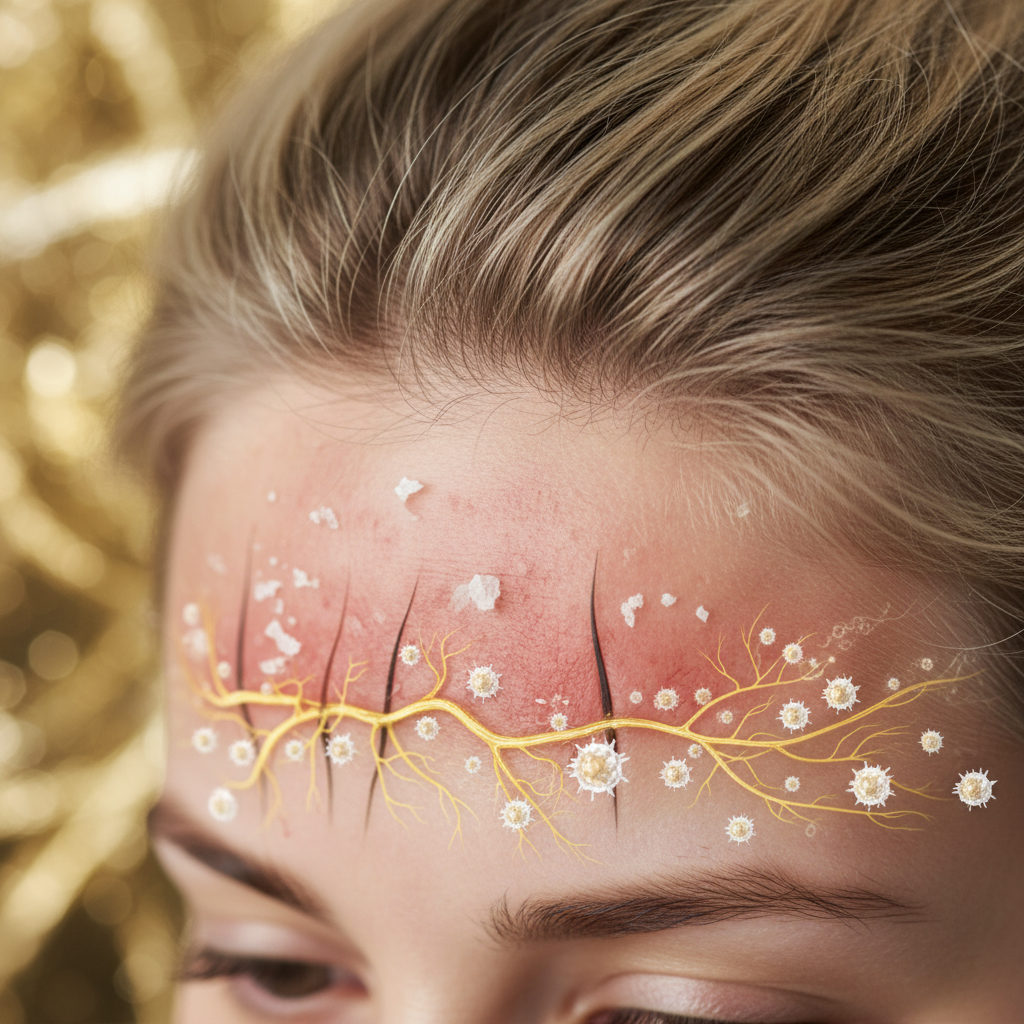
Barrier breakdown and transepidermal water loss (TEWL)
The stratum corneum is composed of protein-rich corneocytes bound by a lipid matrix of ceramides, cholesterol, and free fatty acids. When exposed to harsh surfactants (such as high concentrations of sodium lauryl sulphate) or chemical salon services (like bleaching and perming), this lipid glue dissolves. The rate of TEWL rises sharply, allowing environmental irritants, styling residues, and microbes to enter the deeper, living layers of the epidermis.
Neurogenic inflammation
Scalp skin is richly innervated. In response to barrier disruption, local sensory nerve fibres release neuropeptides, such as substance P and calcitonin gene-related peptide (CGRP). These neuropeptides trigger vasodilation (causing visible redness or erythema) and mast cell degranulation, which floods the tissue with histamine. The subjective result is intense itching, burning, tingling, or tenderness (trichodynia).
The follicular connection to hair shedding
When inflammation lingers around the infundibulum (the upper segment of the hair follicle), it disrupts the follicular microenvironment. Mast cell mediators and cytokines can shock actively growing anagen follicles into premature regression (catagen), leading to an episode of telogen effluvium two to three months later. It is vital to note this is physiological hair shedding, not hair breakage. Addressing the inflammatory flare stops the cycle and allows the follicle to resume normal hair production once the microenvironment stabilises.
What you can do: a systematic soothing routine
If you are dealing with mild to moderate irritation, a structured, low-stress care routine helps restore balance to the tissue:
- Cleanse with intentional frequency: Wash your scalp every 24 to 48 hours using a sulfate-free, pH-balanced cleanser (pH 5.0 to 5.5). Regular washing removes oxidised sebum and yeast without stripping the moisture barrier.
- Use warm, not hot, water: Water temperatures above 40 degrees Celsius strip protective epidermal lipids, dilate superficial capillaries, and intensify itching. Rinse with lukewarm water.
- Incorporate anti-inflammatory actives: Seek scalp serums and lotions containing niacinamide, allantoin, bisabolol, or caffeine. These actives help quiet cytokine production without causing chemical dependence.
- Avoid aggressive physical exfoliation: Salt scrubs and stiff plastic scalp brushes micro-tear delicate scalp skin. If you have thick flaking, opt for gentle chemical exfoliants like low-strength salicylic acid (0.5 to 1.0 percent) or lactic acid to dissolve debris without friction.
- Evaluate your styling products: Temporarily cut out high-alcohol styling sprays, synthetic fragrances, and heavy plant waxes (such as unrefined coconut oil or shea butter) that can clog follicles and trap microbes.
Supporting the scalp environment with Watermans
When managing daily discomfort, choosing gentle, nutrient-dense topical products makes a notable difference. Watermans GrowMe Shampoo is formulated with a physiological pH and avoids aggressive cleansing agents that degrade the skin barrier.
Its formula blends revitalising ingredients, including rosemary extract, caffeine, niacinamide, and allantoin, which are widely documented in dermatological literature for their skin-soothing and conditioning qualities.
For targeted support, Watermans Grow More Elixir delivers a concentrated, leave-in scalp treatment designed to hydrate the stratum corneum and maintain an optimal environment for hair follicles. Used alongside good hygiene practices, these formulas support a calmer, healthier-looking scalp without relying on irritating chemical additives.
When the cause is something else: differential signs
Not all scalp tenderness is simple irritation or seborrhoea. Several distinct conditions mimic everyday inflammation:
- Scalp Psoriasis: Characterised by sharply defined, thick, silvery-white scales that shed heavily. It is an immune-mediated disorder caused by accelerated skin cell turnover.
- Cicatricial (Scarring) Alopecias: Conditions such as Lichen Planopilaris (LPP) or Frontal Fibrosing Alopecia (FFA) present with perifollicular redness, violet margins around the hair base, and burning. Left untreated, these destroy the follicular stem cells and cause permanent hair loss.
- Bacterial Folliculitis: Usually triggered by Staphylococcus aureus, this presents as distinct, tender pustules or pimples around individual follicles, often requiring oral or topical antibiotics.
When to seek professional medical advice
Cosmetic routines have clear boundaries. You should consult a GP, a registered trichologist, or a consultant dermatologist immediately if you experience any of the following symptoms:
- Severe scaling that adheres firmly to the scalp or bleeds when dislodged
- Localised pustules, fluid weeping, honey-coloured crusting, or swollen lymph nodes
- Persistent scalp pain, extreme burning, or numbness
- Visible patches of hair loss where the skin looks smooth, shiny, or devoid of follicular openings
- No improvement after four weeks of dedicated over-the-counter anti-dandruff or soothing regimens
A dermatologist can perform a dermoscopic evaluation (trichoscopy) or take a 4 mm punch biopsy to definitively diagnose complex inflammatory skin disorders.
Frequently asked questions about How to Treat Scalp Inflammation
How long does it take to see results when treating scalp inflammation?
Mild inflammation caused by product sensitivity or minor seborrhoeic dermatitis typically begins to calm down within 7 to 14 days of eliminating irritants and using targeted soothing washes. However, complete restoration of the stratum corneum barrier and microflora balance generally requires four to six weeks of consistent care.
Can scalp inflammation cause permanent hair loss?
Everyday scalp inflammation, such as mild dandruff or product irritation, does not cause permanent hair loss. It can trigger temporary hair shedding (telogen effluvium) through inflammatory cytokine stress. However, chronic inflammatory scarring conditions, like lichen planopilaris, can destroy hair follicles permanently if not treated promptly with clinical medical intervention.
Does cold water help treat an inflamed scalp?
Lukewarm to cool water provides immediate, temporary relief by causing local vasoconstriction, which narrows superficial blood vessels and reduces heat, swelling, and itching. While cool water soothes the symptoms of irritation, it does not clear underlying fungal overgrowth or treat systemic skin conditions on its own.
Should I oil my scalp if it is inflamed and itchy?
In most cases, you should avoid applying heavy plant oils (like coconut, olive, or castor oil) to an inflamed scalp. If the inflammation stems from seborrhoeic dermatitis or dandruff, these lipids directly feed Malassezia yeast species, accelerating the fungal cycle and worsening inflammation. Lightweight, clinically formulated serums are a much safer alternative.
How to treat scalp inflammation triggered by chemical hair dye?
If your scalp reacts to hair dye, immediately rinse thoroughly with cool water and a gentle, fragrance-free cleanser to remove lingering chemicals. Apply a plain barrier cream or aloe vera gel to reduce stinging. If blistering, swelling of the face, or severe hives develop, seek emergency medical care, as this indicates a serious contact allergy.
Caring for your scalp long term
Understanding how to treat scalp inflammation requires patience, gentle handling, and an appreciation of cutaneous biology. By identifying the root cause, discarding harsh DIY treatments, and maintaining a clean, balanced scalp environment with evidence-backed soothing ingredients, you protect both your skin barrier and your growing hair. Where flaring is severe, painful, or persistent, always partner with a medical professional to ensure your scalp gets the precise clinical care it needs.
Sources and references
- British Association of Dermatologists. (2020). Seborrhoeic Dermatitis: Patient Information Leaflet. BAD Guidelines.
- National Institute for Health and Care Excellence (NICE). (2022). Psoriasis: assessment and management. Clinical Guideline [CG153].
- Trüeb, R. M. (2015). The impact of oxidative stress on hair. International Journal of Cosmetic Science, 37(S2), 25-30.
- Borda, L. J., & Wikramanayake, T. C. (2015). Seborrheic Dermatitis and Dandruff: A Comprehensive Review. Journal of Clinical and Investigative Dermatology, 3(2), 10.
- Harries, M. J., et al. (2018). Management of lichen planopilaris: a systematic review. British Journal of Dermatology, 179(4), 832-841.
- Wohlrab, J., & Kreft, D. (2014). Niacinamide - mechanisms of action and its topical use in dermatology. Skin Pharmacology and Physiology, 27(6), 311-315.
Find these ingredients in Watermans products
- Zinc: you will find this ingredient in our Hair Vitamins.
- Castor Oil: you will find this ingredient in our Camellia & Black Castor Hair & Body Oil.
- Niacinamide: you will find this ingredient in our Hair Mask.
- Panthenol (Provitamin B5): you will find this ingredient in our Heat Protection Spray.
- Aloe Vera: you will find this ingredient in our Curly Hair Conditioner.