How to Moisturise Dry Hair: Science-Backed Hydration Guide
9 min read ·
Learn how to moisturise dry hair using evidence-based methods. Discover the role of humectants, emollients, and cuticular lipid protection for softer strands.
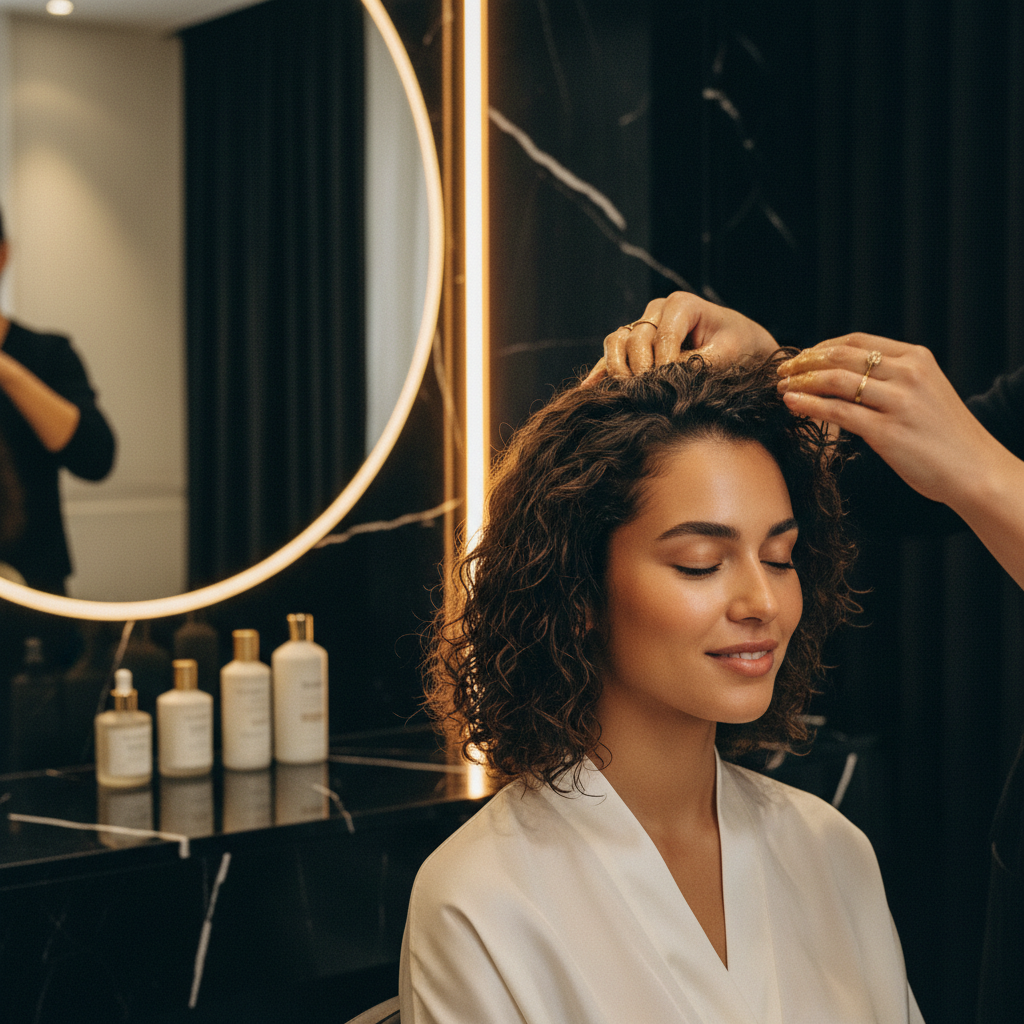
Quick answer: Learning How to Moisturise Dry Hair requires balancing water absorption with lipid barrier protection. Hair cannot produce its own oils; sebum from the scalp must coat the cuticle to seal in ambient moisture. True hydration involves wetting the hair fibre, using humectants like glycerin or panthenol to draw in water, and sealing the cuticle with emollient lipids. However, cosmetic moisturising repairs only the outward appearance and elasticity of the hair fibre, it cannot biologically regenerate dead keratin cells.
Key takeaways
- Dry hair stems from a compromised cuticle layer that fails to retain internal moisture, leading to friction, dullness, and mechanical breakage.
- Water hydrates the cortex, but applying water alone causes repeated swelling and contraction (hygral fatigue), which weakens the fibre if lipids are absent.
- Effective moisture retention requires a two-step approach: humectants to attract moisture, followed by emollients and occlusives to seal the cuticle.
- Chemical processing, excessive heat styling, and alkaline cleansing products strip the natural 18-methyleicosanoic acid (18-MEA) lipid layer from the hair surface.
- Hair moisturising treatments cannot permanently repair split ends or cure hair loss, which originates at the dermal papilla beneath the scalp.
How to Moisturise Dry Hair: what the evidence shows
Understanding How to Moisturise Dry Hair requires examining the biological structure of the hair shaft. Hair fibres consist of three main layers: the innermost medulla, the structural cortex, and the protective external cuticle. The cuticle is made of overlapping keratin scales coated in a thin layer of covalently bound fatty acids, primarily 18-methyleicosanoic acid (18-MEA).
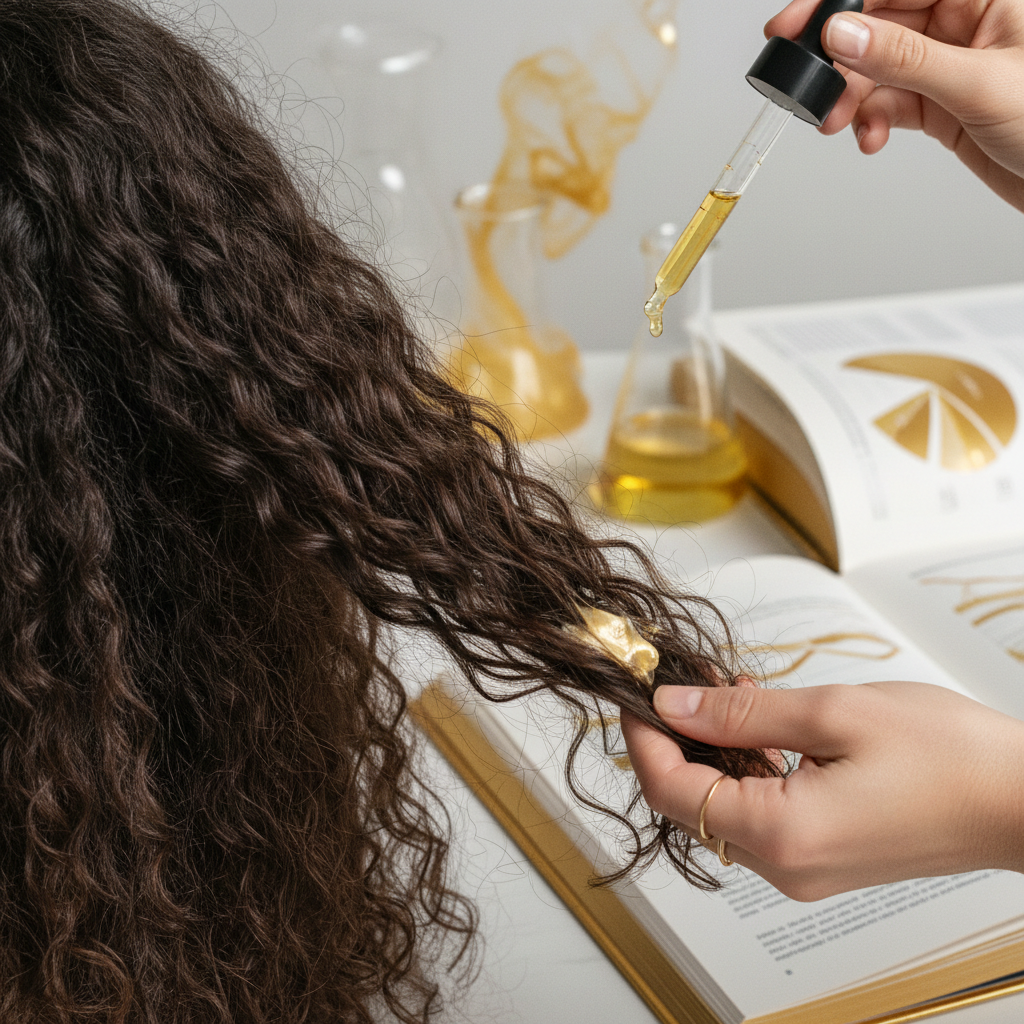
This fatty acid layer gives virgin hair its hydrophobic (water-repelling) nature. When intact, it maintains internal water levels at roughly 10% to 15% of the total fibre weight under typical ambient conditions. When cosmetic treatments, ultraviolet radiation, or alkaline detergents strip this lipid barrier, the cuticle lifts. The hair becomes hydrophilic, absorbing water rapidly but losing it just as fast. This moisture instability leaves the shaft brittle, rough, and prone to tangles.
Scientific research demonstrates that moisture cannot simply be poured onto hair. Water by itself temporarily plasticises keratin bonds, making the hair pliable while wet. Yet as that water evaporates without an occlusive barrier, it leaves the hair fibre drier than before. To properly moisturise dry strands, haircare routines must deliver humectants that bind water within the outer cortex, accompanied by conditioning agents that mimic the lost 18-MEA barrier.
The biological mechanisms of hair hydration
Hair hydration is governed by physical chemistry rather than cellular metabolism. Because the visible hair shaft consists of non-living, cornified keratin cells, it cannot regulate hydration from the inside out.
The role of humectants
Humectants are hygroscopic substances that pull water vapour from the surrounding atmosphere and bind it to the hair shaft. Common humectants include:
- Glycerin: A low-molecular-weight trihydroxy alcohol that penetrates slightly beneath lifted cuticle scales to retain moisture.
- Panthenol (Pro-Vitamin B5): A smaller molecule that can penetrate the cortex, acting as an internal plasticiser to increase fibre flexibility.
- Hydrolysed proteins: Short-chain peptides that bind to damaged sites along the cuticle, attracting ambient moisture while temporarily boosting tensile strength.
Humectants require balanced environmental humidity. In very dry climates (below 35% relative humidity), simple humectants can pull moisture out of the cortex into the dry air. In high humidity, they may draw in excess water, causing frizz and swelling.
The role of emollients and occlusives
Once humectants draw water into the fibre, occlusives and emollients prevent rapid evaporation. Emollients smooth the raised edges of the cuticle scales, reducing inter-fibre friction and flattening the surface to reflect light. Occlusives form a physical, hydrophobic film over the cuticle, functioning as a synthetic replacement for 18-MEA. Common examples include plant-derived triglycerides, fatty alcohols (such as cetyl and stearyl alcohol), and cosmetic esters.
+-------------------------------------------------------------+
| Water / Hydration |
| (Enters the cortex, temporarily softens keratin) |
+-------------------------------------------------------------+
 |
 v
+-------------------------------------------------------------+
| Humectants (e.g. Glycerin) |
| (Binds water molecules to protein chains) |
+-------------------------------------------------------------+
 |
 v
+-------------------------------------------------------------+
| Emollients & Occlusives |
| (Seals cuticle scales, prevents evaporation) |
+-------------------------------------------------------------+
Signs of dry hair versus structural damage
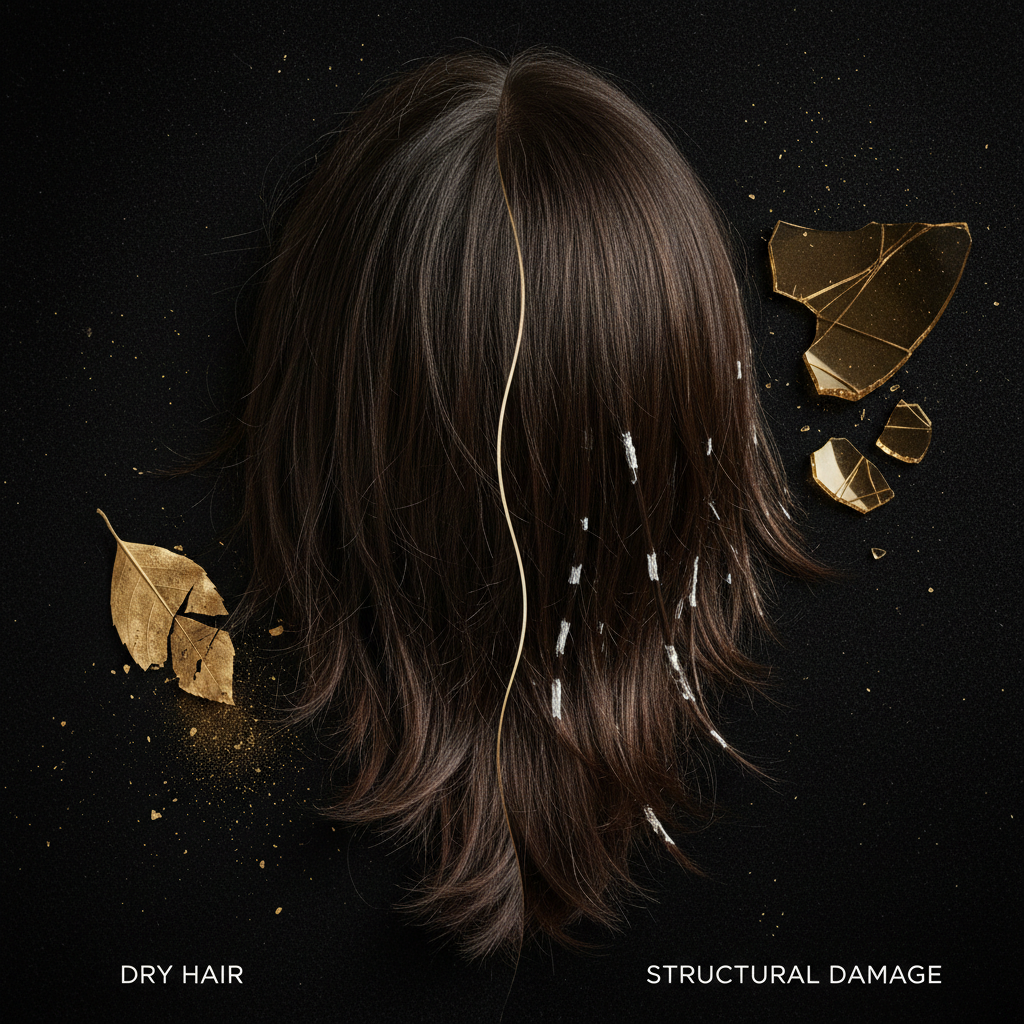
Dryness and structural protein loss share similar characteristics, but they require different interventions.
| Characteristic | Dry Hair | Protein-Damaged Hair |
|---|---|---|
| Tactile feel | Rough, stiff, straw-like | Mushy or gummy when wet, brittle when dry |
| Elasticity | Snaps under slight tension without stretching | Stretches excessively without returning, then breaks |
| Porosity | Moderate; absorbs water normally | High; absorbs water instantly and dries very quickly |
| Primary cause | Environmental exposure, lack of natural sebum | Bleach, permanent relaxers, extreme heat (above 200°C) |
| Correction | Humectants, conditioning lipids, mild surfactants | Hydrolysed protein treatments followed by lipid sealing |
Dry hair primarily lacks pliable moisture and surface lipids. Protein-damaged hair has suffered internal chemical degradation of its disulfide cystine bonds. While dry hair becomes soft once conditioned, chemically degraded hair often requires structured protein reconstruction alongside hydration.
What you can do: an evidence-based routine
Establishing an effective routine to rehydrate parched strands involves careful product selection and gentle physical handling.
1. Cleanse with pH-balanced, non-stripping surfactants
Traditional high-alkaline soaps and aggressive anionic surfactants lift the cuticle scales and strip the natural sebum layer. Select shampoos formulated at a physiological hair pH between 4.5 and 5.5. This mildly acidic range helps keep cuticle cells flat, minimising swelling and moisture loss during washing.
2. Apply rinse-out conditioners containing cationic agents
Damaged and dry hair carries a negative electrical charge. Modern conditioners use positively charged (cationic) surfactants, such as behentrimonium chloride or cetrimonium chloride. These agents are electrostatically drawn to the most damaged, negatively charged areas of the hair shaft. They deposit a micro-thin, lubricating film that reduces combing friction by up to 80%.
3. Incorporate deep-conditioning lipid masks
Weekly deep-conditioning treatments formulated with fatty alcohols and plant oils penetrate microscopic surface cracks. Leave the formulation on for 10 to 20 minutes. Moderate warmth (around 35°C to 40°C, such as a warm towel) can slightly relax the cuticle architecture, allowing deeper lipid deposition without thermal trauma.
4. Seal the hair fibre while damp
Never apply pure oils to completely dry hair expecting hydration. Oils are occlusives, not hydrators; they contain no water. Apply a water-based leave-in product containing humectants first, then follow with a light coating of natural oil or conditioning serum to trap that moisture inside the fibre.
5. Minimise thermal and mechanical stress
Hot styling tools operated above 185°C cause rapid moisture evaporation that creates micro-voids in the cortex, a condition known as "bubble hair." Always use a heat protectant containing heat-stable conditioning polymers before styling, and swap friction-heavy cotton pillowcases for smooth satin or silk alternatives.
Supporting the scalp environment: Watermans
External hydration directly affects the existing hair fibre, but long-term hair quality also depends on maintaining an optimal scalp environment. The scalp is the living tissue where the follicle produces new fibre; an inflamed, dry, or clogged scalp can lead to poor cuticle formation as new hair emerges.
Watermans focuses on non-invasive, topical scalp support that complements structural fibre care. Formulated without harsh, drying sulphates, Watermans Grow Me Shampoo cleanses the scalp gently, preserving natural surface lipids while washing away sebum buildup and debris. Packed with functional ingredients like biotin, rosemary, caffeine, and hydrolysed lupin protein, it creates an ideal physiological environment at the follicular level.
Pairing a clarifying yet non-stripping cleanse with Watermans Condition Me Conditioner provides the necessary cationic conditioning to seal lifted cuticles, reducing moisture loss and preventing mechanical breakage along the lengths.
When dry hair signals an underlying issue
Dry, brittle hair is usually the result of mechanical or cosmetic habits, but systemic health changes can also alter hair texture.
- Hypothyroidism: An underactive thyroid gland slows metabolic processes, which can reduce sebum synthesis. This results in dry, coarse, brittle hair across the entire scalp, often accompanied by diffuse hair shedding.
- Nutritional deficiencies: Inadequate intake of essential fatty acids (omega-3 and omega-6), zinc, or iron can impair sebum quality and disrupt keratin synthesis.
- Hormonal shifts: Perimenopause, menopause, and postpartum transitions alter the androgen-to-oestrogen ratio, frequently leading to reduced sebaceous gland activity and drier hair shafts.
- Seborrhoeic dermatitis: While associated with flaking, this condition disrupts the epidermal barrier and sebum distribution, making the lengths feel dehydrated while the scalp remains irritated.
If your hair texture changes suddenly without changes in styling, chemical services, or climate, consult a trichologist, dermatologist, or GP to rule out systemic metabolic or nutritional factors.
Frequently asked questions about How to Moisturise Dry Hair
Can drinking extra water cure dry hair?
Drinking water is essential for systemic health, but it will not directly hydrate dry hair lengths. The visible hair shaft is non-living tissue and lacks a circulatory connection to your digestive system. While severe dehydration can impair follicle function during hair production, improving the moisture level of existing hair requires external humectants and conditioning sealants.
How often should you wash hair when learning How to Moisturise Dry Hair?
Most individuals managing dry hair benefit from washing two to three times a week. Washing too frequently can strip away protective sebum, while washing too rarely allows environmental pollutants and dead skin to irritate the scalp. Use a gentle, sulphate-free cleanser and always follow with a conditioning rinse.
Is natural coconut oil effective for moisturising hair?
Coconut oil is one of the few natural oils with a low molecular weight and linear chemical structure that allows it to penetrate the hair cortex. While it prevents protein loss, it is an occlusive emollient, not a hydrator. Apply coconut oil to slightly damp hair so it can seal in water rather than blocking moisture out.
What is the difference between dry hair and hair shedding?
Dry hair refers to a physical lack of moisture and lipids along the hair shaft, which leads to roughness and breakage. Hair shedding occurs when the hair follicle naturally completes its growth cycle and releases the bulb from the scalp. Dry hair can lead to breakage, but it does not cause follicular shedding.
Can split ends be moisturised back together?
No. Once the protective cuticle is worn away and the cortex splits, the structural damage is permanent. While heavy conditioners and serums can temporarily glue the split ends together until the next wash, the only permanent remedy is trimming the damaged tips with sharp styling shears.
Conclusion
Mastering How to Moisturise Dry Hair is a physical process of restoring the balance between water and protective lipids. Because hair cannot repair itself biologically, keeping it soft, supple, and resilient demands a conscious routine: non-stripping cleansers, water-attracting humectants, and sealing emollients that shield the delicate cuticle from daily friction and environmental stress. By understanding the mechanical needs of the hair fibre and keeping the scalp balanced, you can transform brittle, lacklustre strands into smooth, healthy-looking hair.
Sources and references
- American Academy of Dermatology Association. "Dry Hair: Causes and Treatments." 2022.
- Robbins, Clarence R. Chemical and Physical Behavior of Human Hair. 5th ed., Springer, 2012.
- Gavazzoni Dias, Maria Fernanda Reis. "Hair Cosmetics: An Overview." International Journal of Trichology, vol. 7, no. 1, 2015, pp. 2 to 15.
- Draelos, Zoe Diana. "Essentials of Hair Care often Neglected: Hair Cleansing." International Journal of Trichology, vol. 2, no. 1, 2010, pp. 24 to 29.
- National Health Service (NHS). "Hair Loss and Hair Care." 2023.
Find these ingredients in Watermans products
- Zinc: you will find this ingredient in our Hair Vitamins.