How Tap Water pH Affects Hair: Evidence, Mechanisms, and Protection
9 min read ·
Discover how tap water pH affects hair structure, why alkaline water causes cuticle swelling, and how to protect your hair from daily wash breakage.
Quick answer: Understanding how tap water pH affects hair centres on the natural acid mantle. Hair fibres have an isoelectric point around pH 3.67, while a healthy scalp sits between pH 4.5 and 5.5. Most domestic tap water is regulated between pH 6.5 and 8.5. This slight alkalinity forces the hair cuticle scales to lift, increasing friction, moisture loss, and fibre tangling. While tap water pH causes mechanical cuticle swelling and breakage, it does not cause follicular hair loss or stop natural hair growth.
Key takeaways
- Scalp skin typically maintains an acidic pH between 4.5 and 5.5, while hair fibre reaches electrical neutrality (its isoelectric point) at pH 3.67.
- Domestic tap water is generally kept slightly alkaline or neutral (pH 6.5 to 8.5) by water suppliers to protect metal distribution pipes from corrosion.
- Washing hair in water with a pH above 5.5 increases the negative electrical charge on the hair surface, swelling the cuticle and raising inter-fibre friction.
- Tap water pH can trigger physical hair breakage, dullness, and colour fading, but it does not cause follicular hair loss such as androgenetic alopecia.
- Rebalancing hair with an acidic rinse or balanced shampoo (pH 4.5 to 5.5) helps close the cuticle layer and restore smooth surface texture.
How Tap Water pH Affects Hair: what the evidence shows
When assessing how tap water pH affects hair, cosmetic scientists look closely at the physical structure of the hair shaft. Hair fibres are composed of keratin protein chains held together by chemical bonds, including disulfide bonds, hydrogen bonds, and salt linkages. These salt linkages are deeply sensitive to the pH of the liquids that touch them.
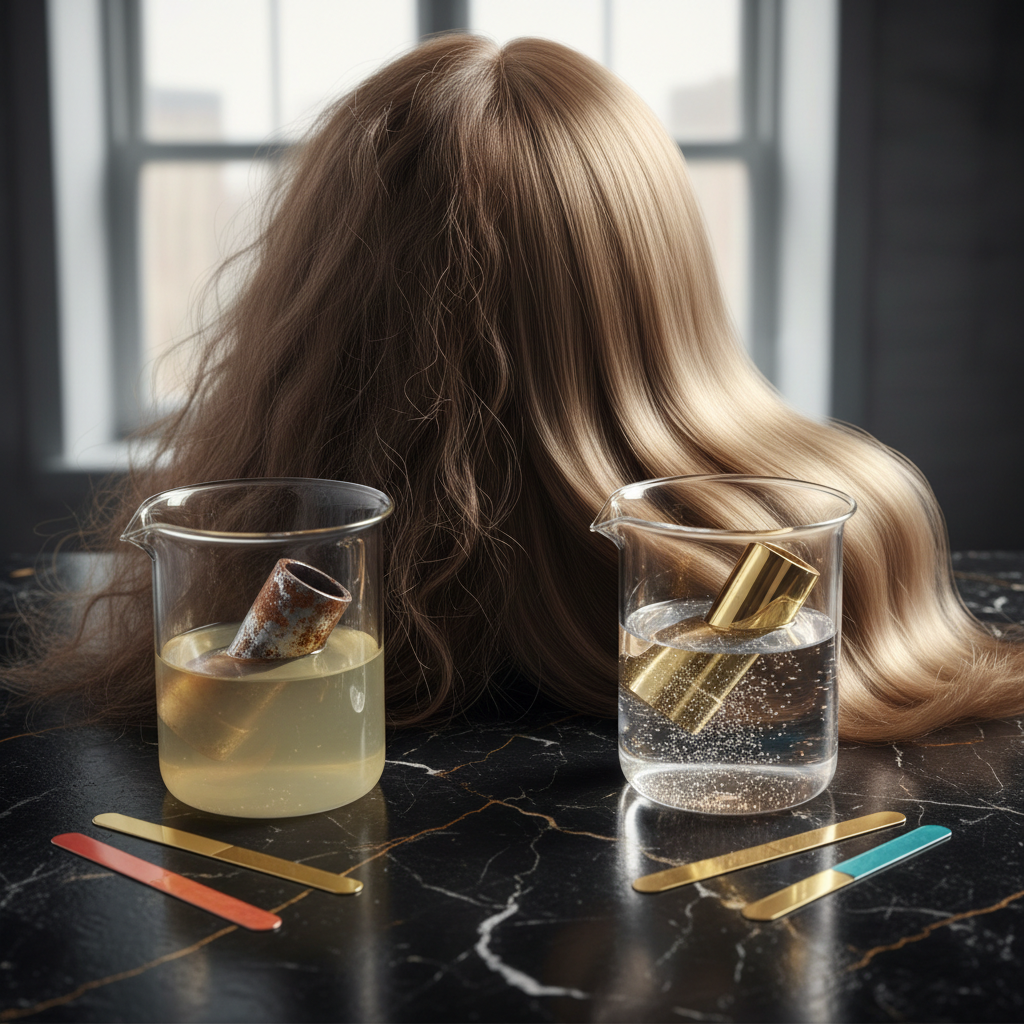
Hair fibre has an isoelectric point of approximately pH 3.67. At this acidic level, the positive and negative electrical charges across the keratin structure are balanced. When you wash your hair in water that sits higher on the pH scale, the negative charge on the fibre surface increases substantially. Research published in the International Journal of Cosmetic Science shows that when the surface charge turns strongly negative, the individual cells of the cuticle (the protective outer shingles of the hair) swell and flare open.
Because municipal water authorities intentionally buffer municipal drinking supplies between pH 6.5 and 8.5 to prevent pipe corrosion, almost all tap water is alkaline relative to hair. When you expose your strands to water in this range, the swollen cuticles rub against one another. This mechanical abrasion strips the natural lipid layer (18-methyleicosanoic acid), leading to rough texture, lost shine, and split ends over repeated wash cycles.
What the evidence does not show: hair loss vs breakage
It is crucial to separate cosmetic hair breakage from genuine hair shedding or follicular hair loss. The pH of domestic tap water does not penetrate deeply enough into living scalp tissue to destroy dermal papilla cells, alter hormone receptors, or trigger miniaturisation of hair follicles.
Conditions such as androgenetic alopecia (pattern baldness) are dictated by genetics and sensitivity to dihydrotestosterone (DHT). Sudden widespread shedding across the scalp, known as telogen effluvium, is generally triggered by systemic stressors such as severe illness, hormonal shifts, nutritional deficiencies, or major psychological trauma. Tap water pH causes cuticle lifting and structural fragility along the exposed fibre shaft. This results in breakage, where snapping hairs are mistaken for shedding, but it does not cause hair loss at the root.
The biological mechanism: pH, cuticles, and the scalp barrier
The outer layer of the human scalp is protected by an acid mantle, a fine film of sebum, sweat, and amino acids with a natural pH of roughly 4.5 to 5.5. This acidic shield keeps opportunistic bacteria and fungi, such as Malassezia, in balance while preserving the stratum corneum barrier.
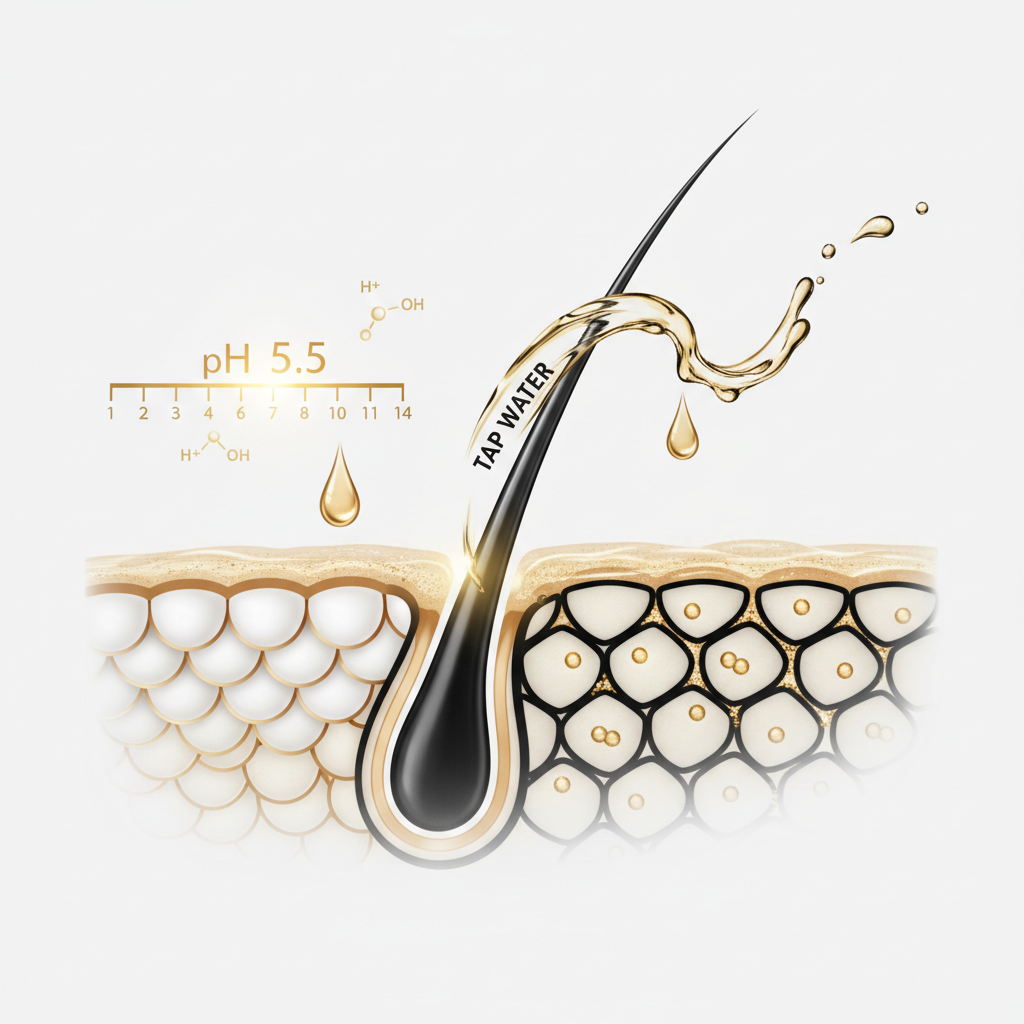
Acidic (pH 3.5 - 5.5) Neutral (pH 7.0) Alkaline (pH 8.0 - 9.0)
[ Cuticles smooth & flat ] [ Mild swelling ] [ Cuticles flared open ]
Isoelectric point: pH 3.67 Pure water Average hard tap water
Scalp skin: pH 4.5 - 5.5
When tap water with a pH of 7.5 to 8.5 hits the scalp, several things happen simultaneously:
- Temporary barrier disruption: The skin surface is shifted toward alkalinity. While healthy skin can restore its acid mantle within 30 to 120 minutes, repeated exposure can provoke dryness, irritation, and flaking in people prone to eczema or seborrhoeic dermatitis.
- Cuticle flaring: Water molecules enter the cortex through raised cuticle margins. The hair shaft swells by up to 15 to 20 percent of its dry diameter.
- Electrostatic repulsion: Like charges repel. As tap water raises the negative charge along individual strands, neighbouring hair fibres push apart, leading to static, flyaways, and severe friction during detangling.
- Hydration depletion: As the lifted cuticle dries, it fails to seal moisture inside the cortex. Over time, hair becomes porous, brittle, and susceptible to snapping under standard brush tension.
Comparing water and hair chemistry
The table below illustrates where typical water types sit relative to the biological requirements of human hair and scalp tissue:
| Water Type or Tissue | Typical pH Range | Cuticle State | Risk to Fibre Integrity |
|---|---|---|---|
| Hair Isoelectric Point | 3.67 | Fully compressed, flat | None (optimal balance) |
| Healthy Scalp Skin | 4.5 to 5.5 | Intact acid mantle | Minimal (optimal barrier) |
| Soft Tap Water | 6.5 to 7.2 | Slight cuticle lift | Low friction increase |
| Hard Tap Water | 7.5 to 8.5 | Distinct cuticle flare | Moderate breakage risk |
| Well Water (High Lime) | 8.0 to 9.0+ | Severe cuticle swelling | High frizz, dullness, breakage |
| Chlorinated Pool Water | 7.2 to 7.8 | Swollen and oxidised | High chemical degradation |
Signs your tap water pH is impacting your hair
Recognising the physical symptoms of alkaline water exposure helps you intervene before permanent mechanical damage sets in. Watch for these common signs:
- Persistent dullness: Hair lacks shine because the lifted, uneven cuticle surface scatters light rather than reflecting it evenly.
- Tangles and wet knotting: Strands catch on each other immediately after rinsing, requiring heavy force or detangling sprays to comb through.
- Quickly fading colour: Artificial dye molecules wash out rapidly through lifted cuticle layers during every shower.
- Frizzy texture: Natural curl and wave patterns lose definition as moisture evaporates from an unsealed hair shaft.
- Breakage near the ends: You notice short, snapped pieces of hair in the sink without a visible white bulb at the tip.
Practical steps to counteract alkaline tap water
You cannot easily change the municipal water entering your building, but you can alter how that water interacts with your hair.
Use pH-balanced shampoos and conditioners
Select cleansing and conditioning products formulated between pH 4.5 and 5.5. A low-pH conditioner counteracts the alkaline swell of tap water, neutralising excess negative charges and coaxing the cuticle scales flat before you dry or style.
Incorporate an acidic rinse
A diluted apple cider vinegar rinse (one to two tablespoons in 500 ml of cool water, roughly pH 3.5 to 4.0) used once weekly helps collapse swollen cuticles and dissolves basic mineral films. Always patch-test first if you have an irritated or broken scalp.
Minimise mechanical stress while wet
Hair is at its weakest when wet and swollen from alkaline water. Avoid aggressive towel-drying with rough cotton terrycloth. Use a microfibre wrap or soft cotton T-shirt, and detangle exclusively with a wide-tooth comb or flexible wet-brush, working slowly from the ends upward.
Consider a chelating routine for hard water
If your alkaline tap water is also high in calcium and magnesium ions (hard water), mineral salts bind directly to the raised cuticles, forming an insoluble film. A monthly chelating treatment binds these mineral deposits and washes them clean.
When the cause may be something else
If you address your water routine and your hair remains weak, thinning, or shedding heavily, tap water pH is unlikely to be the primary culprit. Consider these common alternatives:
- Nutritional gaps: Low serum ferritin (stored iron), vitamin D insufficiency, or inadequate dietary protein undermine hair fibre synthesis at the follicular level.
- Thyroid dysfunction: Both hypothyroidism and hyperthyroidism alter hair texture, rendering it unusually fine, dry, or prone to diffuse thinning.
- Chemical or heat processing: High-volume bleaching, chemical relaxers, and flat irons above 185°C cause direct protein denaturation that mimics alkaline water damage.
- Follicular shedding: If you notice hair strands coming out whole, complete with a tiny white bulb on the end, you are experiencing genuine shedding rather than fibre breakage.
When to seek professional advice
Consult a board-certified dermatologist, registered trichologist, or GP if you notice sudden, diffuse shedding exceeding 100 hairs per day over several weeks. You should also seek clinical care if you see distinct circular bald patches, feel persistent scalp burning, or experience scaly crusts that do not resolve with over-the-counter care. These signs indicate medical dermatological concerns rather than cosmetic responses to water chemistry.
Supporting hair health with Watermans
When managing mechanical vulnerability caused by tap water exposure, maintaining healthy hair and a balanced scalp environment is essential. Watermans focuses on evidence-led scalp care and cosmetic fibre resilience.
Using gentle formulas that clean without stripping natural protective oils provides the foundation your hair needs against environmental stress. Products such as Watermans Grow Me Shampoo and Condition Me Conditioner are formulated to respect scalp balance while supplying hydrolysed lupin protein, biotin, and caffeine to fortify hair shafts against daily washing friction and wet breakage.
Frequently asked questions about How Tap Water pH Affects Hair
Can high tap water pH cause permanent hair loss?
No. The way how tap water pH affects hair is purely external and structural. Alkaline water causes the cuticle scales on the fibre shaft to swell, leading to surface roughness and breakage. It does not alter follicular cycles, damage dermal papillae, or trigger genetic conditions like androgenetic alopecia.
Is boiled tap water better for washing hair?
Boiling tap water does not meaningfully correct its pH for hair. While boiling can precipitate temporary hardness (calcium bicarbonate), it can slightly increase pH by driving out dissolved carbon dioxide. Boiled water does not replace the need for an acidic, pH-balanced hair conditioner.
What is the ideal pH level for hair washing?
The ideal cosmetic range for cleansing products is pH 4.5 to 5.5. Because human tap water typically measures between 6.5 and 8.5, using hair products sitting in this slightly acidic range neutralises alkaline swelling and returns the cuticle layer to a smooth, flat alignment.
How do I test the pH of my home tap water?
You can test your domestic water by purchasing narrow-range pH test strips (measuring between pH 5.0 and 9.0) or an entry-level digital pH pen. Simply draw a fresh cup of tap water at room temperature, submerge the strip or probe, and compare against the provided reference scale.
Managing the impact of water pH on your hair
Understanding how tap water pH affects hair empowers you to treat the root cause of dullness and wet tangles rather than masking the symptoms. Tap water is held at a neutral to slightly alkaline pH to protect plumbing, but hair fibres thrive in a mildly acidic environment. By countering this disparity with balanced haircare products, careful handling while wet, and occasional clarifying routines, you keep the cuticle tightly sealed, minimise mechanical breakage, and preserve the strength and lustre of your hair.
Sources and references
- International Journal of Cosmetic Science, "The effect of shampoo pH on hair: a study on 123 shampoos for children and adults", 2014.
- Journal of the Society of Cosmetic Chemists, "The role of pH in hair chemistry", 1993.
- World Health Organization (WHO), "pH in Drinking-water: Background document for development of WHO Guidelines for Drinking-water Quality", 2007.
- British Association of Dermatologists, "Hair Breakage and Cuticle Integrity", Clinical Reference Library, 2021.
- Drinking Water Inspectorate (DWI), "Water Quality Regulations and the pH of Drinking Water Supplies in England and Wales", 2020.
Find these ingredients in Watermans products
- Vitamin D: you will find this ingredient in our Hair Vitamins.