How Chemical Bleaching Affects Hair: The Scientific Breakdown
10 min read ·
Learn how chemical bleaching affects hair structure, from breaking disulphide bonds to stripping protective lipids, plus practical steps to prevent breakage.
Quick answer: Understanding how chemical bleaching affects hair centres on oxidative structural breakdown. Chemical lighteners use alkaline agents (typically ammonium hydroxide, pH 9.0 to 11.0) to swell the cuticle, allowing hydrogen peroxide and persulphate salts to penetrate the cortex and oxidise melanin pigments. While effective for lightening, this process permanently dissolves the protective 18-methyl eicosanoic acid (18-MEA) lipid layer, breaks structural disulphide bonds, and increases fibre porosity. Chemical bleaching cannot alter your hair follicle genetics, but it fundamentally and irreversibly weakens the exposed hair shaft.
Key takeaways
- Chemical bleaching lifts the protective cuticle scales by operating at an alkaline pH between 9.0 and 11.0.
- Hydrogen peroxide and persulphate oxidise natural melanin, simultaneously breaking critical disulphide bonds in keratin proteins.
- The process strips 18-methyl eicosanoic acid (18-MEA), the natural lipid boundary that makes healthy hair naturally water-repellent.
- Bleach damage causes physical hair breakage along the shaft; it does not cause medical hair loss or follicular shedding unless severe scalp burns occur.
- High porosity, extreme elasticity loss, wet tangling, and split ends are the clearest signs of structural bleaching damage.
- You cannot undo broken disulphide bonds naturally, but cosmetic bond builders, protein treatments, and emollient conditioning significantly reduce ongoing breakage.
How Chemical Bleaching Affects Hair: what the evidence shows
Scientific research in cosmetic chemistry reveals that understanding how chemical bleaching affects hair requires looking closely at fibre morphology. Hair fibres consist of three main regions: an outer protective cuticle, an inner structural cortex made of keratinised proteins, and an occasional central core known as the medulla.
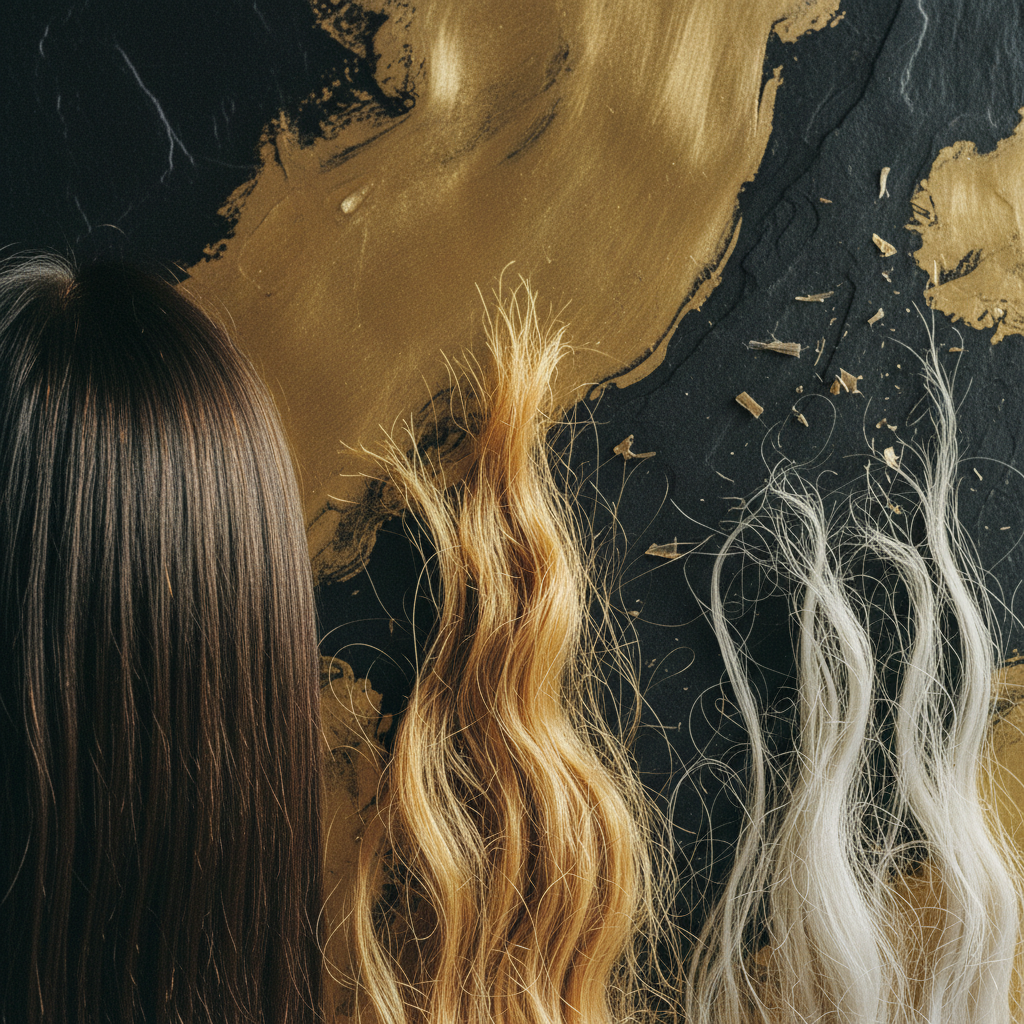
When you apply lightener, alkaline chemistry forces the tightly overlapping shingles of your cuticle to raise. This allows oxidising agents (hydrogen peroxide paired with ammonium or potassium persulphate) to diffuse into the cortex. Inside the cortex, the mixture targets eumelanin (brown-black pigments) and pheomelanin (red-yellow pigments). The bleach oxidises these melanin granules, rendering them colourless.
However, the chemical oxidation reaction is non-selective. Alongside dissolving melanin, the oxidising agents aggressively degrade cystine, an amino acid that forms the disulphide bridges holding your keratin chains together. Cosmetic studies published in the Journal of Cosmetic Science show that aggressive chemical bleaching can degrade up to 15 to 25 percent of a hair fibre's cystine into cystic acid. This loss directly reduces the wet and dry tensile strength of the hair, making the shaft susceptible to snapping under routine brushing or washing.
Furthermore, bleaching strips the f-layer. The f-layer is an ultra-thin sheath of fatty acids, primarily 18-methyl eicosanoic acid (18-MEA), bound to the cuticle surface. Once 18-MEA is lost, the fibre changes from naturally hydrophobic (water-repelling) to hydrophilic (water-absorbing). Your hair then drinks up excessive moisture when wet, swelling uncontrollably and weakening further.
What the evidence does not show: hair loss versus hair breakage
A widespread misconception exists surrounding chemical lightening and thinning hair. It is critical to separate hair breakage from biological hair loss.
Chemical bleaching acts strictly on the non-living fibre protruding above the skin surface. The oxidising reaction occurs within the hair shaft; it does not reach, alter, or shut down the dermal papilla or hair follicle nestled 3 to 5 millimetres below the scalp surface. Therefore, bleaching does not trigger androgenetic alopecia (pattern baldness) or initiate telogen effluvium (diffuse metabolic shedding).
The rapid thinning people observe after a harsh bleaching session represents hair breakage, where structurally depleted fibres snap along the length of the shaft. The single exception involves direct chemical misuse: if high-volume persulphate lightener is left on the scalp under heat, it can cause severe contact dermatitis or chemical burns. Only deep, scarring chemical burns that destroy follicular tissue can induce permanent scalp hair loss.
The mechanism: step-by-step chemical breakdown
The structural consequences of hair lightening follow a precise sequence of chemical events:
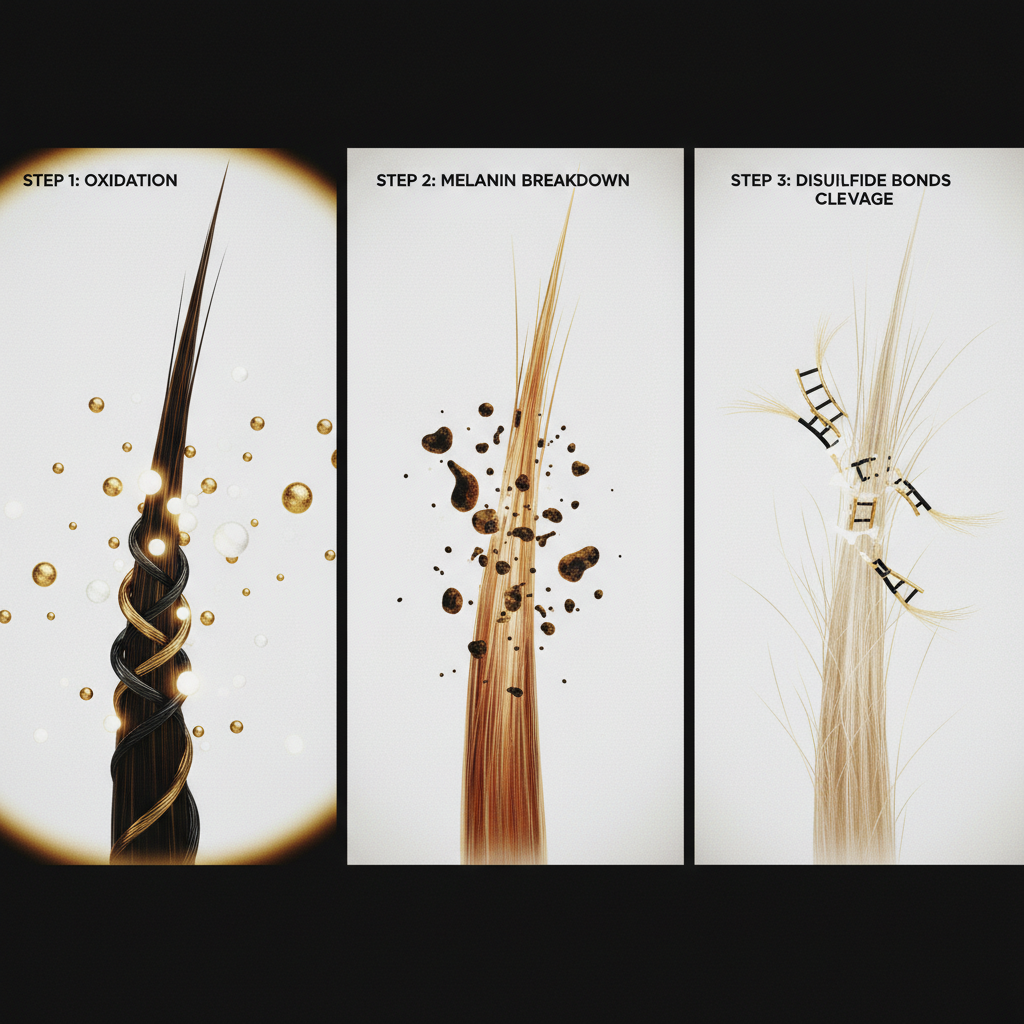
- Alkaline swelling: Ammonia or ethanolamine drives the pH of the hair environment up to 9.0 to 11.0. This softens the keratin and forces the cuticle plates to flare outward.
- Lipid stripping: The alkaline oxidation immediately hydrolyses the thioester bonds holding 18-MEA to the outer cuticle. The hair permanently loses its natural waterproofing.
- Melanin oxidation: Peroxide radicals break down the conjugated double bonds in melanin granules, transforming pigmented molecules into solubilised, colourless compounds.
- Disulphide bond cleavage: The oxidation converts cystine into cysteic acid. Because cysteic acid cannot form cross-linking bridges, the internal scaffold of the cortex loses structural rigidity.
- Protein leaching: Repeated washing dissolves and rinses away fragmented keratin peptides, leaving microscopic voids within the cortex.
Comparing healthy hair to chemically bleached hair
The structural and physical differences between unbleached and bleached hair fibres are measurable in laboratory settings:
| Property | Virgin / Untreated Hair | Chemically Bleached Hair |
|---|---|---|
| Typical Surface pH | 4.5 to 5.5 (Acid mantle balanced) | Alkaline disruption, elevated porosity |
| F-Layer (18-MEA) | Intact (Hydrophobic, repels water) | Stripped (Hydrophilic, absorbs excess water) |
| Cystine Content | High (Robust disulphide cross-links) | Reduced by 15% to 25% (Converted to cysteic acid) |
| Tensile Strength | High resistance to mechanical snapping | Weakened; snaps easily when wet or brushed |
| Cuticle Condition | Flat, smooth, compact shingles | Raised, chipped, fractured, or missing plates |
| Porosity Level | Low to medium | Extremely high |
| Elasticity | Returns to original length when stretched | Over-stretches like elastic, deforms, and breaks |
Visible signs of bleach-induced fibre damage
How can you tell if your hair has crossed from mild lightening into structural breakdown? Look for these distinct physical indicators:
- Gummy or spongy wet texture: When wet, damaged hair feels mushy, stretches abnormally without springing back, or snaps under minimal tension.
- Severe matting and knotting: Because the raised cuticle plates lack their slick 18-MEA lipid layer, adjacent hair strands catch on one another like Velcro.
- Dullness and rough finish: Raised and broken cuticle shingles scatter light unevenly rather than reflecting it, leading to a matte, lifeless appearance.
- White bulbs at break points: Hair fibres snap cleanly along depleted zones, sometimes leaving tiny white stress fractures visible near the ends.
- Rapid colour loss: High porosity means toner or semi-permanent colour molecules slip out through the open cuticle gaps within just a few washes.
What you can do to manage and support bleached hair
Because hair is non-living tissue, you cannot biological heal a bleached strand. You can, however, use cosmetic science to reinforce remaining structures and dramatically reduce daily breakage.
Reconstruct bonds and restore tensile support
Cosmetic bond-building formulations (utilising active cross-linking agents like bis-aminopropyl diglycol dimaleate or maleic acid complexes) help bridge damaged protein gaps. Hydrolysed vegetable proteins and amino acids (such as wheat, keratin, or silk proteins) can temporarily lodge within cortical voids, adding rigidity to weak fibres.
Replenish synthetic lipids
Because your natural 18-MEA lipid layer cannot regenerate, you must replace it topically. Look for conditioners containing cetyl alcohol, stearyl alcohol, ceramides, and light plant oils (such as argan or jojoba). These ingredients coat the raw cuticle, restore slip, and reduce mechanical friction during styling.
Acidify your washing routine
Healthy hair thrives in an acidic pH window of 4.5 to 5.5. Bleached hair benefits from mildly acidic shampoos and rinses (pH 4.0 to 5.0). Acidic products help contract the cuticle layers, smoothing down flared edges and mitigating water swelling.
Reduce mechanical and thermal stress
Always detangle bleached hair starting from the ends and moving upward using a wide-tooth comb or flexible detangling brush. Apply a leave-in conditioner before touching wet hair. Minimise heat styling tools; if you must blow-dry, use the lowest heat setting and always apply a silicone-based thermal protectant.
When the cause may be something else
If you notice excessive shedding where whole strands fall out with a white bulb intact at the root, the issue is not bleach breakage. True shedding occurs inside the follicle. Common culprits include:
- Telogen effluvium: Diffuse shedding triggered two to three months after a physiological shock, severe illness, rapid weight loss, or high fever.
- Nutritional deficiencies: Insufficient levels of serum ferritin (stored iron), vitamin D, zinc, or dietary protein undermine keratin production at the root level.
- Hormonal fluctuations: Thyroid dysfunction (hypothyroidism or hyperthyroidism) or postpartum hormone shifts directly alter follicular cycles.
- Traction alopecia: Excessive pulling from tight braids, extensions, or ponytails damages follicles independently of chemical processing.
When to get professional advice
Consult a qualified trichologist or dermatologist if you experience scalp pain, redness, persistent burning, oozing, or localized bald patches following a lightening service. These symptoms suggest a chemical burn or allergic contact dermatitis requiring medical intervention. If your primary issue is severe breakage along the hair lengths, an experienced professional colourist can perform a strand test, apply targeted conditioning treatments, and trim fragile ends to stop fractures from traveling up the hair shaft.
Supporting bleached hair with Watermans
When managing hair compromised by chemical lighteners, daily maintenance must focus on structural preservation and scalp vitality. Watermans GrowMe Shampoo is formulated as a gentle, sulphate-free cleanser that purifies without violently stripping the remaining fragile lipid barrier on bleached fibres. Packed with biotin, rosemary extract, caffeine, and hydrolysed lupin protein, it maintains an optimal environment for existing growth while introducing protein fragments to reinforce stressed fibres.
Pairing it with Watermans ConditionMe Conditioner provides the targeted slip and emollience chemically lightened hair desperately needs. This nourishing treatment coats roughened cuticle surfaces, reducing inter-fibre friction and wet-brush breakage, helping you retain length and manageability while you nurse bleached strands back to their best cosmetic condition.
Frequently asked questions about How Chemical Bleaching Affects Hair
Can chemical bleaching permanently stop hair from growing?
No. Chemical lighteners act exclusively on the external fibre, not the follicle below your skin. Unless you experience a severe chemical burn that scars the scalp tissue, bleaching cannot stop hair follicles from producing new fibres. The apparent lack of growth people notice is almost always physical breakage snapping off fragile ends at the exact rate new hair grows from the roots.
Why does hair stretch like rubber after being bleached?
Hair stretches and deforms when oxidising lighteners degrade its internal disulphide cross-links and strip its protective lipid layer. Without these structural bridges, the keratin chains inside the cortex slip past one another when pulled instead of snapping back into place. This excessive, gummy elasticity indicates critical structural compromise and a high risk of breakage.
How often can you safely bleach your hair?
Stylists recommend waiting a minimum of 6 to 10 weeks between lightening services, focusing application strictly on the new root regrowth. Overlapping lightener onto previously bleached hair causes cumulative structural degradation, severely increasing the likelihood of catastrophic hair breakage along the boundary line.
Does toner damage hair the same way bleach does?
No, toners are significantly less damaging than bleach. Most toners use low-volume developers (typically 5 to 10 volume peroxide) designed to deposit pigment rather than aggressively lift natural melanin. While toners still raise cuticles slightly, they do not dissolve structural disulphide bonds to the extent seen with high-lift persulphate bleaches.
How Chemical Bleaching Affects Hair in terms of moisture absorption?
Understanding how chemical bleaching affects hair porosity explains why bleached hair feels dry yet stays wet for hours. Stripping the natural 18-MEA lipid layer makes the fibre hydrophilic. It soaks up massive amounts of environmental water, but because the cuticle remains open and damaged, it cannot retain that hydration, leaving the hair brittle once dry.
Summary: managing bleached hair with care
Knowing precisely how chemical bleaching affects hair helps you make informed choices about your colour routine and aftercare. While lighteners provide unmatched lifting power by breaking down melanin, they inevitably deplete disulphide bonds, destroy the protective f-layer, and increase fibre vulnerability.
You cannot biologically mend broken disulphide bridges, but you can alter your maintenance regimen. By combining bond-supporting cosmetic treatments, gentle cleansing, lipid-replenishing conditioners, and minimal mechanical friction, you can keep chemically lightened hair looking vibrant, feeling resilient, and protected against premature breakage.
Sources and references
- Robbins, C. R. (2012). Chemical and Physical Behavior of Human Hair. 5th edition. Springer-Verlag.
- Journal of Cosmetic Science: "The effect of chemical bleaching on the physical properties of human hair fibres" (Society of Cosmetic Chemists).
- International Journal of Trichology: "Hair Cosmetics: An Overview" (2015).
- British Association of Dermatologists: "Hair breakage, cosmetic damage, and grooming practices" (Clinical Guidance).
- National Health Service (NHS): "Hair loss and cosmetic hair damage considerations".
Find these ingredients in Watermans products
- Zinc: you will find this ingredient in our Hair Vitamins.