How Bleach and Chemical Treatments Alter Hair Structure: The Complete Guide
11 min read ·
Discover How Bleach and Chemical Treatments Alter Hair Structure. Learn the science of disulphide bond degradation, cuticle damage, and ways to protect weak hair.
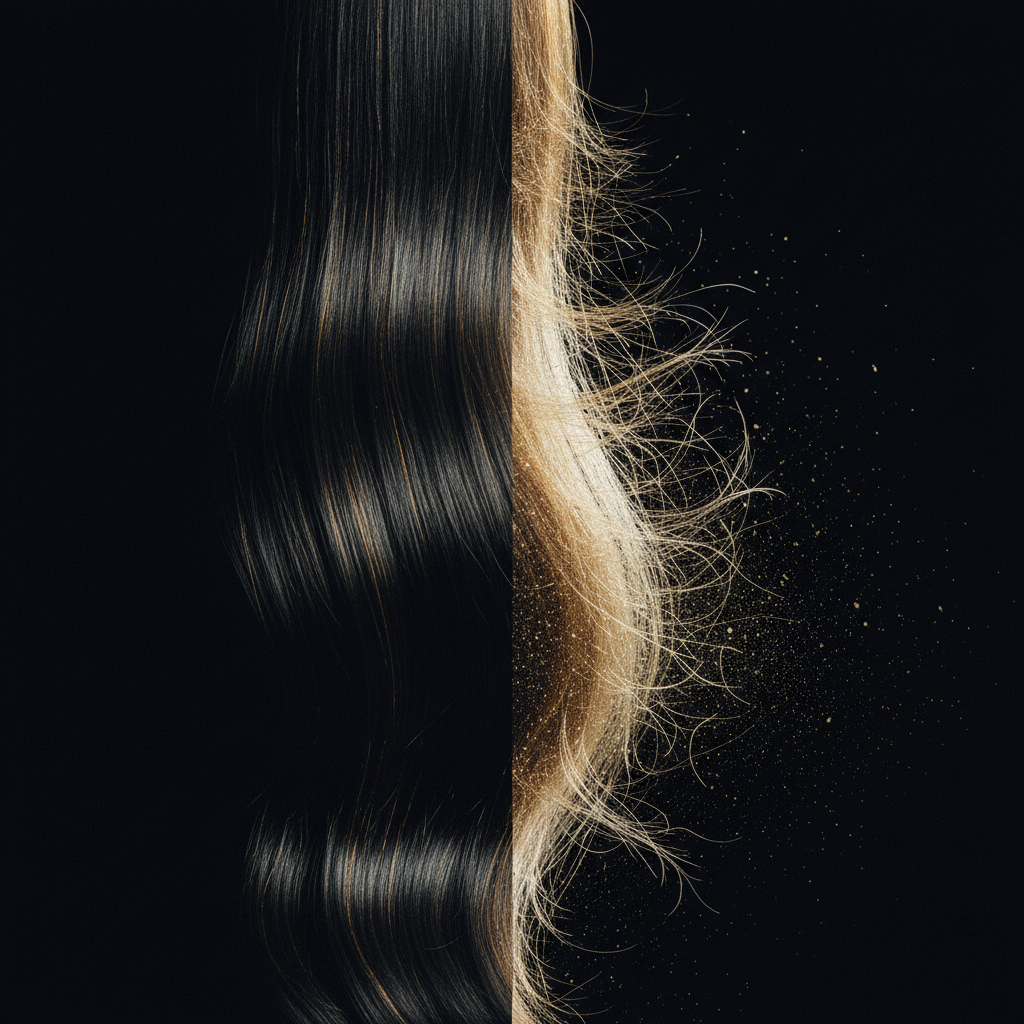
Quick answer: Understanding How Bleach and Chemical Treatments Alter Hair Structure reveals that alkaline agents, oxidisers, and reducing chemicals fundamentally disrupt the hair fibre's architecture. These processes lift the protective cuticle, break structural disulphide bonds within the cortex, and strip natural 18-methyleicosanoic acid (18-MEA) lipids. While chemical processing allows dramatic colour changes, straightening, or curling, it permanently reduces tensile strength and increases porosity. Cosmetic treatments can patch and smooth the fibre, but they cannot truly reverse structural bond loss or restore virgin keratin integrity.
Key takeaways
- Bleaching uses high pH alkalising agents (pH 9.0 to 11.0) and hydrogen peroxide to dissolve melanin, which irreversibly oxidises disulphide bonds into cysteic acid.
- Chemical relaxers and perm lotions break structural cystine cross-links to reconfigure hair shape, permanently reducing fibre elasticity and tensile strength.
- Chemical processing removes the f-layer, a microscopic lipid barrier of 18-MEA that naturally makes hair hydrophobic and water-repellent.
- Highly processed hair displays elevated porosity, meaning it absorbs water rapidly, swells excessively, and becomes fragile when wet.
- While bond-building additives and protein conditioners help reinforce damaged fibres and reduce snap, they cannot reconstruct the original biological cortex.
How Bleach and Chemical Treatments Alter Hair Structure: what the evidence shows
Human hair is an intricate biological composite. The outermost layer, the cuticle, consists of flattened, overlapping keratin scales sealed by a thin lipid layer known as the 18-MEA f-layer. Beneath this lies the cortex, which accounts for roughly 85% of the fibre's total mass. The cortex contains parallel bundles of keratin intermediate filaments embedded in a cysteine-rich protein matrix. Disulphide bonds, salt linkages, and hydrogen bonds hold these bundles together, giving virgin hair remarkable elasticity, strength, and resistance to environmental wear.
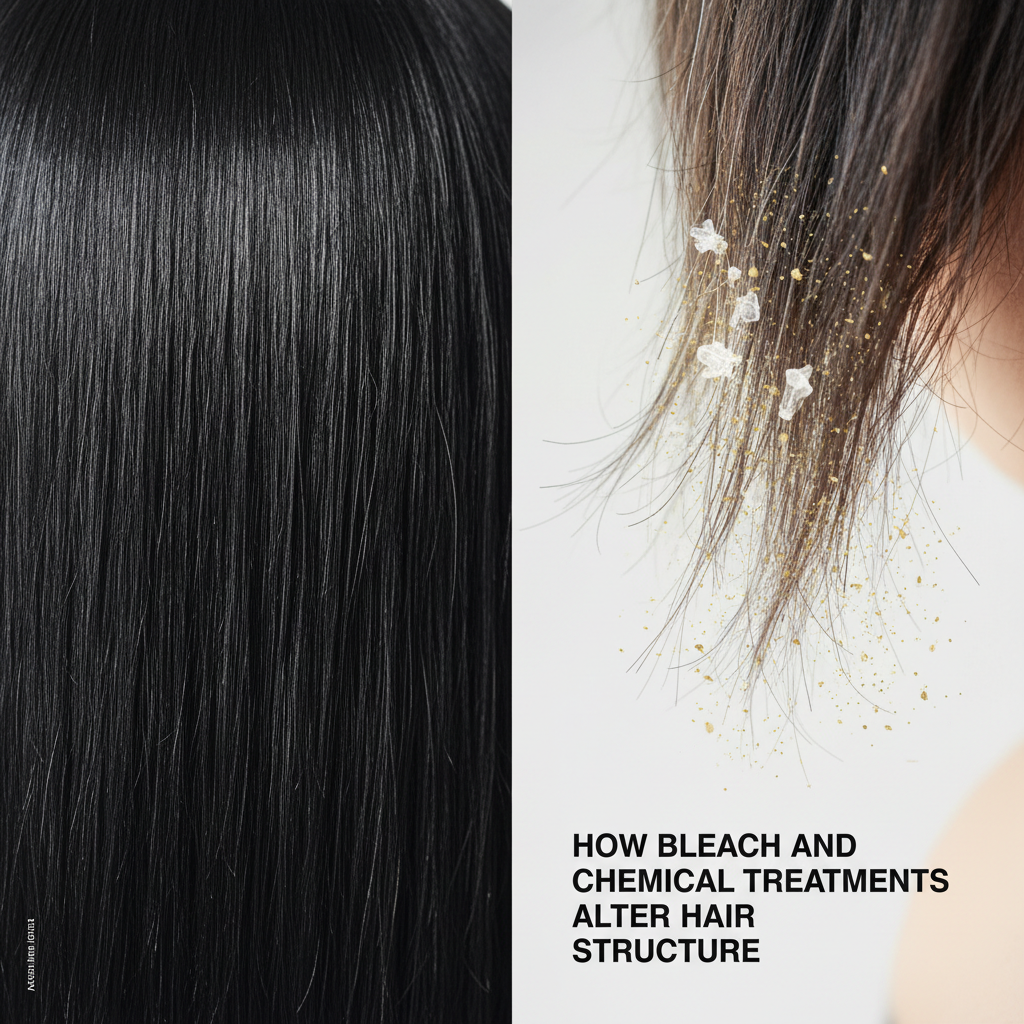
When you investigate How Bleach and Chemical Treatments Alter Hair Structure, research demonstrates that every chemical service permanently reorganises this internal and external framework.
Bleaching agents rely on an alkaline carrier (typically ammonium hydroxide or monoethanolamine) to swell the hair shaft and lift the cuticle scales. This allows hydrogen peroxide to penetrate deep into the cortex. Inside, the oxidiser destroys the natural melanin pigments that give hair its colour. However, oxidisation is non-specific. Beside targeting melanin, the reaction attacks the amino acid cystine. It breaks disulphide bonds and converts them into hydrophilic cysteic acid groups. Every bleaching cycle depletes the hair's structural cross-links, rendering the fibre weaker and increasingly susceptible to mechanical snap.
Permanent waving and chemical relaxing follow a different chemical pathway but produce comparable physical degradation. Perm solutions use reducing agents (such as ammonium thioglycolate) at an alkaline pH to rupture roughly 20% to 30% of cortical disulphide bonds. The hair is reshaped on rods and neutralised with a dilute oxidiser to re-form bonds in their new positions. Hydroxide relaxers use an even harsher mechanism called lanthionisation. They permanently replace disulphide bonds with weaker lanthionine cross-links, stripping up to one-third of the fibre's natural strength in a single sitting.
| Chemical Treatment | Primary Active Mechanism | Cuticle Impact | Cortical & Bond Impact | Impact on Tensile Strength |
|---|---|---|---|---|
| Bleaching / Lightening | Alkaline swelling (pH 9 to 11) + hydrogen peroxide oxidation | Strips the 18-MEA lipid layer; erodes scale margins | Converts disulphide bonds to cysteic acid; degrades melanin | Severe reduction (dose-dependent) |
| Permanent Hair Dye | Ammonia / MEA swelling + oxidative dye precursors | Lifts and chips outer cuticle edges | Moderate oxidation of internal disulphide bonds | Mild to moderate reduction |
| Thioglycolate Perms | Chemical reduction of disulphide bonds, then oxidative neutralisation | Swells cuticle; causes micro-fissuring | Breaks bonds, re-forms only 70% to 85% in altered alignment | Moderate reduction |
| Hydroxide Relaxers | High alkalinity (pH 12 to 14); nucleophilic displacement (lanthionisation) | Severe lifting, fusion, or complete loss of scale definition | Irreversibly converts cystine into lanthionine; strips structural matrix | High reduction |
The molecular mechanisms of chemical damage
Chemical alteration affects three distinct structural layers: the protective lipid barrier, the outer cuticle architecture, and the cortical protein matrix.
The loss of the hydrophobic 18-MEA layer
Virgin hair is naturally hydrophobic (water-repelling). This water resistance is governed by 18-methyleicosanoic acid (18-MEA), a single layer of fatty acids covalently bound to the epicuticle. A single alkaline bleaching service removes most of this lipid shield.
Once the f-layer is stripped, the fibre turns hydrophilic (water-loving). Instead of repelling moisture, damaged hair absorbs water quickly, swelling up to 20% wider in diameter. This cycle of swelling and deswelling weakens the cell membrane complex (CMC), creating internal friction that accelerates cuticle shedding.
Cuticle erosion and raised porosity
Under a scanning electron microscope, virgin cuticle scales lie flat like tightly stacked roof tiles. Chemical treatments blast these scales open. Repeated chemical processing causes the edges to fray, crack, and break away entirely.
Without an intact cuticle, the hair's porosity spikes. Porous hair loses internal moisture rapidly, tangles constantly because lifted scales snag against adjacent fibres, and appears dull because damaged surfaces scatter light rather than reflecting it evenly.
Cortical degradation and bond breakdown
The cortex delivers the hair's tensile strength. Disulphide cross-links act like rungs on a rope ladder; they allow hair to stretch under tension and spring back to its original length. Bleaching oxidises these cystine cross-links into negatively charged cysteic acid groups.
Because cysteic acid attracts water and repels other negatively charged structures, the hair loses its internal cohesion. When stretched, heavily bleached or relaxed hair fails to bounce back. Instead, it deforms permanently, stretches like wet chewing gum, and snaps under everyday combing forces.
What the evidence does not show
There is no scientific evidence that any topical cosmetic product can truly rebuild virgin hair. While bond-building additives containing active cross-linking agents can bridge some broken bonds and temporarily strengthen the cortex, they do not replicate the native biological matrix. Once cystine is converted to cysteic acid, that specific disulphide bond is permanently altered.
Furthermore, evidence does not show that chemical treatments applied strictly to the hair lengths cause follicle-level hair loss or alopecia. Hair breakage along the shaft is purely a fibre issue. Unless an aggressive chemical burns, blisters, or inflames the scalp, it does not interrupt the follicular hair growth cycle inside the dermal papilla.
Recognising the signs of structural chemical damage
Recognising How Bleach and Chemical Treatments Alter Hair Structure helps you identify the early signs of fibre degradation before extensive breakage takes place:
- Loss of wet elasticity: When wet, healthy hair stretches by roughly 30% of its length and returns to normal. Severely processed hair stretches unnaturally without snapping back, or it breaks with almost zero tension.
- Extreme hydrophilicity: The hair soaks up water instantly in the shower and takes hours to air-dry because it holds excess water within its porous cortex.
- Velcro-like tangling: Because cuticle scales remain raised and fragmented, individual hair strands snag against one another, creating dense, difficult mats.
- Dullness and roughness: Light cannot reflect uniformly off broken, uneven cuticle scales, leaving hair looking chalky and dry.
- Short white dots along the shaft: Known clinically as trichorrhexis nodosa, these tiny white nodes represent areas where the cortex has fractured internally, preceding a clean break.
How to manage and protect chemically altered hair
While you cannot biologically regenerate dead hair fibres, you can dramatically improve their structural integrity, cosmetic feel, and lifespan through targeted care.
Replenish surface lipids
Because chemical processing strips the natural 18-MEA layer, you must substitute it with cosmetic conditioning agents. Cationic surfactants (such as cetrimonium chloride and behentrimonium methosulfate), natural plant oils, and silicones carry positive electrical charges. They bind electrostatically to the negative charges on damaged cuticle surfaces, lowering friction, sealing moisture in, and restoring slip.
Use targeted bond repair and protein treatments
Hydrolysed proteins (wheat, soy, or keratin) feature small molecular weights that can penetrate slightly beneath lifted cuticles to patch voids in the cell membrane complex. Combined with active dicarboxylic acids or maleate-based bond builders, these treatments temporarily reinforce internal cross-links, measurably reducing wet breakage.
Minimise mechanical and thermal stress
Chemically processed hair has a far lower breaking threshold. To preserve remaining tensile strength:
- Never brush chemically processed hair aggressively while it is dripping wet.
- Detangle using a wide-toothed comb or flexible wet-brush, working slowly from the ends upward.
- Lower heat-styling tools below 180°C and always apply a thermal protectant. High heat causes rapid water boiling inside porous fibres, triggering structural bubbles known as bubble hair.
- Switch to a silk or satin pillowcase to reduce nocturnal friction.
Support overall hair vitality with Watermans
When hair lengths have been weakened by chemical processing, maintaining an optimal scalp environment is crucial so new growth emerges at its strongest. Watermans GrowMe Shampoo delivers a nourishing blend of biotin, rosemary, caffeine, niacinamide, and argan oil directly to the scalp. While topical shampoos cannot reverse cortical damage already present on bleached lengths, caring for the scalp ensures that fresh, virgin hair receives clean, balanced support from the follicle outward.
When the cause may be something else
If you notice excessive hair collecting on your brush or shower floor, it is vital to distinguish between fibre breakage and systemic shedding:
- Check the shed hair for a root bulb: If the fallen hair strand has a small, white keratin bulb on the end, it has shed naturally from the follicle (telogen effluvium or normal cyclical shedding). If the strand has blunt, fractured ends without a bulb, it is mechanical breakage caused by structural degradation.
- Nutritional deficiencies: Low ferritin (iron stores), vitamin D insufficiency, and inadequate dietary protein reduce the structural quality of new hair fibres as they form, making them naturally weaker even before chemical processing.
- Heat and environmental stress: Heavy UV exposure and frequent high-heat flat ironing cause oxidative damage very similar to bleach, stripping the f-layer and creating split ends.
When to seek professional advice
Seek guidance from a certified trichologist, dermatologist, or experienced colourist under the following circumstances:
- Chemical scalp burns: If bleach or relaxer causes stinging, weeping sores, crusting, or persistent redness on the scalp, consult a medical doctor immediately to prevent scarring alopecia.
- Sudden shedding from the root: If hair is falling out in large clumps with the root attached, consult a trichologist to investigate systemic, hormonal, or autoimmune triggers.
- Severe melt-down breakage: If your hair feels gummy and disintegrates between your fingers after a salon service, an experienced professional colourist should step in to perform corrective protein restructuring and advise on cutting damaged ends.
Frequently asked questions about How Bleach and Chemical Treatments Alter Hair Structure
Does bleaching permanently alter the internal structure of the hair?
Yes. Bleaching permanently alters the cortex by oxidising natural disulphide bonds into cysteic acid and removing the protective 18-MEA lipid layer. These chemical bonds cannot naturally knit themselves back together. While conditioning treatments, bond builders, and protein masks can temporarily smooth the cuticle and reinforce weak spots, the original virgin structure cannot be biologically restored.
What is the difference between hair breakage and follicular hair loss?
Hair breakage happens when the physical fibre snaps along the shaft due to chemical, thermal, or mechanical damage. The follicle remains healthy in the scalp and continues its normal growth cycle. Follicular hair loss, such as telogen effluvium or alopecia, involves hairs falling out directly from the root with their white bulb intact, triggered by hormones, genetics, or internal health factors.
Why does chemically relaxed or bleached hair break more easily when wet?
When hair loses its hydrophobic 18-MEA lipid layer through chemical processing, it absorbs substantial amounts of water. This water disrupts internal hydrogen bonds, causing the cortex to swell and soften. Because bleaching and relaxing also deplete structural disulphide bonds, the wet fibre loses its elasticity and snaps under minimal physical tension.
Can bond builders reverse the structural damage caused by chemical processing?
Bond builders cannot fully reverse structural damage. How Bleach and Chemical Treatments Alter Hair Structure involves the irreversible oxidation of keratin proteins. Bond builders introduce artificial cross-linking agents that temporarily bridge some severed bonds, improving tensile strength and reducing breakage during styling. However, they do not turn processed hair back into virgin fibre.
Managing chemically treated hair effectively
Grasping How Bleach and Chemical Treatments Alter Hair Structure equips you to make informed decisions about your hair routine. Chemical services provide creative freedom, rich colour, and dramatic style transformations, but they always extract a biological toll on the hair shaft.
By understanding how alkaline swelling, oxidative bond loss, and lipid stripping alter your hair's internal architecture, you can alter your habits accordingly. Prioritise gentle handling, replace lost surface lipids with targeted conditioning masks, avoid excessive heat styling, and keep your scalp clean and nourished to ensure your hair stays resilient, shiny, and strong throughout its lifespan.
Sources and references
- Robbins, C. R. (2012). Chemical and Physical Behavior of Human Hair. Springer Science & Business Media.
- Cruz, C. F., Costa, C., Gomes, A. C., & Cavaco-Paulo, A. (2016). Human Hair: A Review on Chemistry and Structure. Journal of Cosmetic Dermatology.
- Dawber, R. (1996). Hair: Its Structure and Response to Cosmetic Preparations. Clinics in Dermatology.
- Wolfram, L. J. (2003). Human Hair: A Unique Physicochemical Composite. Journal of the American Academy of Dermatology.
- National Health Service (NHS). (2023). Hair loss (alopecia). Nhs.uk.
Find these ingredients in Watermans products
- Vitamin D: you will find this ingredient in our Hair Vitamins.
- Niacinamide: you will find this ingredient in our Hair Mask.