Hormonal Hair Thinning: Understanding the Endocrine Causes and Management
8 min read ·
Understand the causes, signs, and biological mechanisms of Hormonal Hair Thinning, from DHT to menopause, and learn evidence-based ways to support hair density.
Quick answer: Hormonal Hair Thinning refers to a reduction in hair density and calibre caused by endocrine shifts that alter the natural hair growth cycle. The primary driver is androgen sensitivity, where dihydrotestosterone (DHT) binds to susceptible receptors in the scalp, causing follicular miniaturisation. It also occurs when protective oestrogen drops during perimenopause, menopause, or after childbirth. While cosmetic routines support fibre strength, true hormonal thinning requires identifying the underlying endocrine imbalance, as topical care alone cannot alter internal receptor sensitivity.
Key takeaways
- Hormonal Hair Thinning alters the physical diameter of hair fibres through follicular miniaturisation, rather than simply increasing daily shedding.
- Androgens, specifically dihydrotestosterone (DHT), play a central role by shrinking genetically sensitive follicles on the crown, temples, and vertex.
- Drops in oestrogen and progesterone shift the balance in favour of circulating androgens, which is why thinning frequently accelerates during menopause.
- Thyroid imbalances (both hypo- and hyperthyroidism) disrupt cellular metabolism in the hair matrix, resulting in diffuse hair thinning across the entire scalp.
- Differentiating between shedding (telogen effluvium), breakage (structural shaft damage), and miniaturisation (androgenetic thinning) is vital for choosing the correct management strategy.
Hormonal Hair Thinning: what the evidence shows
Hormonal Hair Thinning is driven by systemic endocrine interactions with the hair follicle. The most common presentation is androgenetic alopecia, which affects up to 50 percent of men and roughly 40 percent of women over their lifetimes according to clinical dermatological data.

In genetically predisposed individuals, an enzyme called 5-alpha reductase converts circulating testosterone into dihydrotestosterone (DHT). When DHT attaches to androgen receptors in dermal papilla cells, it shortens the anagen (active growth) phase of the hair cycle and extends the kenogen phase (the resting period where the follicle remains empty). Over successive hair cycles, the follicle shrinks. Consequently, the terminal hairs (thick, pigmented strands) progressively transform into vellus hairs (fine, short, barely visible strands).
In women, oestrogen typically acts as a protective buffer, prolonging anagen. When oestrogen levels plummet during perimenopause, menopause, or postpartum, this protective effect diminishes. Even normal physiological levels of androgens can then exert a disproportionate miniaturising effect, leading to the characteristic widening of the central part or diffuse crown thinning.
What the evidence does not show
There is no scientific backing for the idea that everyday washing, standard hair colour treatments, or mechanical styling cause Hormonal Hair Thinning. Bleaching and tight hairstyles cause fibre breakage and traction alopecia respectively, but they do not alter systemic endocrine pathways or provoke follicular miniaturisation.
Furthermore, current medical research does not support the claim that over-the-counter topical cosmetics can fundamentally cure endocrine-driven alopecia. Shampoos and serums can create an optimal scalp environment, support surface microcirculation, and reinforce the hair shaft to prevent concurrent breakage, but they do not permanently alter internal androgen receptor genetics or thyroid hormone output.
Signs to look for: identifying the pattern
Recognising whether your density loss is hormonal requires looking at the pattern of thinning, the diameter of shed hairs, and accompanying physical symptoms.
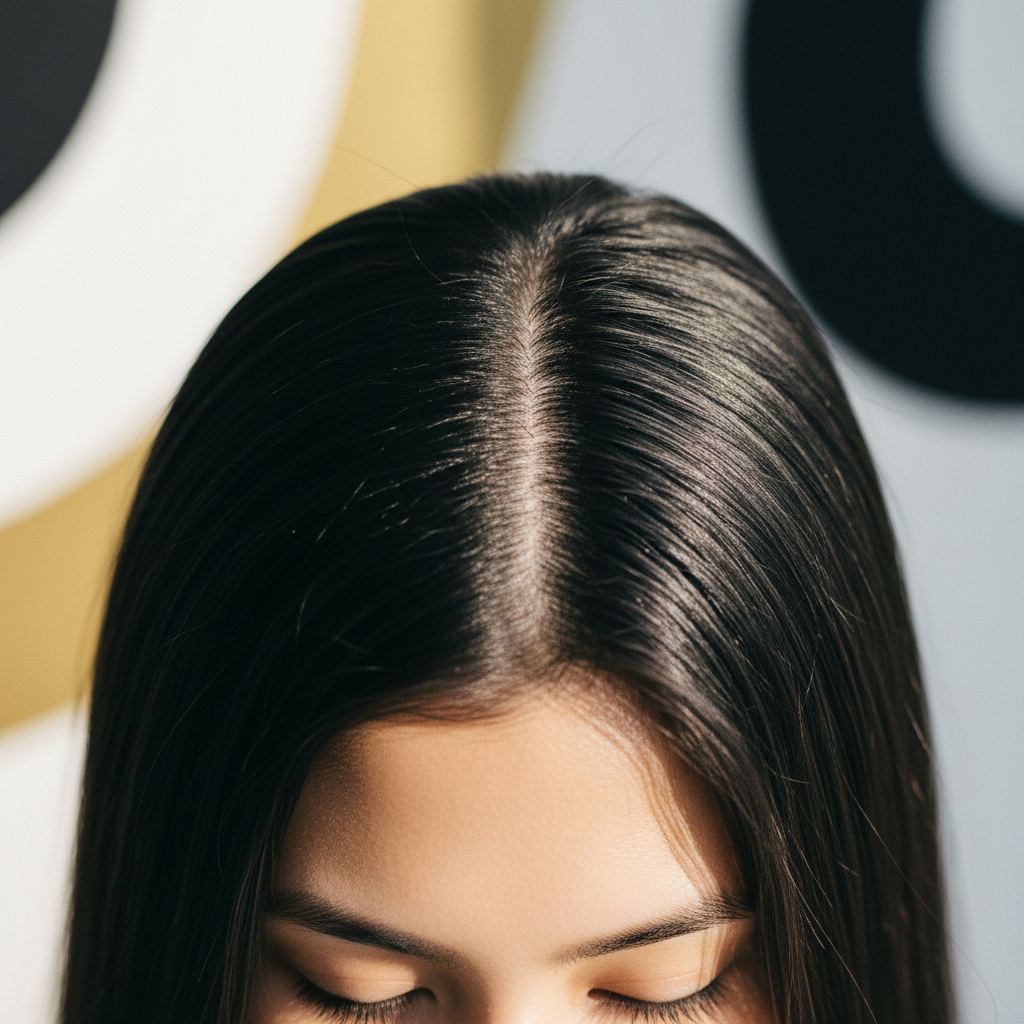
- Widening of the part line: In women, hormonal thinning usually preserves the frontal hairline while density reduces progressively along the central parting (the "Christmas tree" pattern).
- Recession and vertex thinning: In men, hormonal thinning typically begins with bitemporal recession at the temples followed by thinning at the crown.
- Variable hair shaft thickness: When inspecting shed hairs, you will notice strands of visibly differing diameters and lengths, indicating active follicular miniaturisation.
- Scalp visibility without distinct bald patches: Hormonal thinning presents as diffuse loss of volume over the top of the head rather than coin-shaped, smooth bald patches (which indicate alopecia areata).
- Systemic clues: Concurrent symptoms such as irregular menstrual cycles, adult cystic acne, facial hair growth, sudden weight fluctuations, or cold intolerance can indicate underlying polycystic ovary syndrome (PCOS) or thyroid dysfunction.
Hormonal thinning vs shedding vs breakage
Understanding the root cause of your volume loss prevents misdirected care. The table below compares the primary mechanisms:
| Feature | Hormonal Hair Thinning | Telogen Effluvium (Shedding) | Mechanical Breakage |
|---|---|---|---|
| Primary mechanism | Follicular miniaturisation via DHT and hormone shifts | Premature termination of anagen into telogen | Structural failure of the hair fibre cortex |
| Visual pattern | Widening part, crown loss, recession | Diffuse, scalp-wide density loss | Shorter, ragged ends, halo of flyaways |
| Onset speed | Gradual, progressive over months to years | Sudden, acute shedding 2 to 3 months after a trigger | Gradual accumulation following chemical or heat damage |
| Shed hair appearance | Varied diameters, fine and wispy strands | Full-length hairs with white keratinised bulbs | Fragmented, short hair segments with no bulb |
| Scalp sensation | Typically normal; occasional trichodynia | Normal scalp; sometimes tender | Normal scalp |
When the cause may be something else
Not all thinning roots back to androgens or menopausal shifts. Before assuming you have Hormonal Hair Thinning, investigate these non-hormonal contributors:
- Nutritional deficiencies: Ferritin (stored iron) levels below 30 to 50 ng/mL, vitamin D deficiency, or inadequate dietary protein can compromise the metabolic activity of the matrix cells, producing diffuse thinning.
- Severe physiological stress: Major surgery, high fever, or severe systemic infections can shock up to 30 percent of growing hairs into the shedding phase, triggering telogen effluvium.
- Traction and tension: Daily tight ponytails, braids, or heavy extensions place continuous physical tension on the follicle, causing inflammation and eventual fibrotic scarring that mimics hormonal recession.
- Scalp disorders: Severe seborrhoeic dermatitis, psoriasis, or fungal infections cause local inflammatory cascades that disrupt the anchor of the hair fibre, causing increased shedding.
What you can do: evidence-based steps
Managing hormonal thinning involves addressing both internal drivers and external strand preservation.
- Obtain comprehensive blood testing: Ask a medical practitioner to check your full iron profile (ferritin, transferrin saturation), thyroid function (TSH, free T3, free T4), vitamin D, and androgen profile (free testosterone, DHEA-S).
- Explore clinically approved medical options: For diagnosed androgenetic alopecia, topical minoxidil (licensed for both men and women) works by extending the anagen phase and increasing follicular blood supply. Systemic anti-androgens such as finasteride, dutasteride, or spironolactone may be considered under medical supervision.
- Optimise the scalp microenvironment: Maintain a clean, balanced scalp microbiome. Regular washing with gentle, sulphate-free cleansers removes excess sebum, which contains concentrated levels of DHT.
- Minimise mechanical and thermal stress: Because miniaturised hairs have narrower diameters, they are physically weaker and prone to snapping. Keep thermal tool temperatures below 180 degrees Celsius and use wide-tooth detangling combs to avoid compounding follicular thinning with shaft breakage.
Supporting hair density with Watermans
Cosmetic hair care plays a practical supporting role alongside medical diagnosis. The Watermans Grow Me range is designed to optimise the scalp environment and fortify hair fibres against premature breakage.
Formulated with scalp-invigorating ingredients such as caffeine, rosemary, biotin, and niacinamide, Watermans products promote healthy local microcirculation and cleanse the scalp of oxidised sebum without stripping natural lipids. Hydrolysed lupin protein within the formula helps reinforce the structural cuticle of fine, miniaturising strands. While cosmetic products do not cure internal hormonal conditions, using a targeted, nutrient-dense topical routine ensures that every growing hair fibre achieves maximum strength, resilience, and visual fullness.
When to seek professional medical advice
You should consult a GP or a registered dermatologist if your hair loss appears suddenly, progresses rapidly over a few weeks, or is accompanied by burning, scaling, itching, or pain.
Medical evaluation is also critical if you notice patchy bald spots, eyebrow thinning, or symptoms of metabolic dysfunction such as unexpected weight gain, persistent fatigue, or irregular menstrual cycles. A dermatologist can use a dermatoscope to examine follicular openings, assess the ratio of miniaturised hairs to terminal hairs, and confirm a definitive diagnosis.
Frequently asked questions about Hormonal Hair Thinning
Can Hormonal Hair Thinning be reversed completely?
Reversal depends on how early you intervene. Miniaturised follicles that have shrunk recently can often be revived to produce thicker terminal hairs through approved medical treatments like minoxidil or anti-androgens. However, follicles that have remained completely dormant and fibrosed for many years can no longer generate new fibres, meaning prevention and early maintenance are vital.
Does stopping birth control trigger Hormonal Hair Thinning?
Yes, stopping oestrogen-containing oral contraceptives can trigger both acute shedding (telogen effluvium) and reveal underlying Hormonal Hair Thinning. The drop in synthetic oestrogen removes follicular protection, allowing baseline androgens to act on genetically susceptible hair follicles. This shedding often stabilises within 6 to 9 months, but unmasked genetic thinning may require ongoing management.
How does menopause accelerate hair thinning?
During menopause, the ovaries gradually halt the production of oestrogen and progesterone. These hormones naturally promote anagen (growth) duration. As their levels fall, the relative ratio of circulating androgens rises, making hair follicles more susceptible to DHT-mediated miniaturisation across the vertex and crown of the scalp.
Will high biotin doses cure my hormonal thinning?
No. Biotin (vitamin B7) only improves hair growth in individuals with a clinically diagnosed biotin deficiency, which is rare in balanced diets. Excess biotin does not block DHT, nor does it regulate oestrogen or thyroid output. Furthermore, high biotin supplementation can skew laboratory results for thyroid and cardiac tests.
Does high stress directly raise DHT levels?
Stress does not directly raise DHT, but it elevates cortisol through the hypothalamic-pituitary-adrenal (HPA) axis. Elevated cortisol disrupts follicle stem cell activity, causing telogen effluvium. Stress can also disrupt adrenal hormone production, indirectly compounding the overall hormonal vulnerability of the scalp.
Long-term management of hormonal hair changes
Hormonal Hair Thinning is a chronic, progressive biological process rather than a temporary cosmetic complaint. Effective management requires identifying the precise hormonal triggers, consulting medical specialists for targeted clinical treatments, and adopting a protective daily routine that shields miniaturising strands from environmental and mechanical damage. Approaching hair health from both the inside and outside remains the most reliable path to sustaining scalp coverage and fibre density.
Sources and references
- British Association of Dermatologists. Clinical Guidelines for the Management of Alopecia Areata and Androgenetic Alopecia, 2021.
- National Institute for Health and Care Excellence (NICE). Alopecia androgenetica: Clinical Knowledge Summaries, 2022.
- NHS. Hair loss causes and treatments, 2023.
- Journal of the American Academy of Dermatology. Evaluation and diagnosis of female pattern hair loss, 2018.
- Endocrine Reviews. Thyroid hormone regulation of human hair follicle biology, 2020.
Find these ingredients in Watermans products
- Biotin: you will find this ingredient in our Hair Growth Shampoo.
- Vitamin D: you will find this ingredient in our Hair Vitamins.
- Niacinamide: you will find this ingredient in our Hair Mask.