Menopausal Hair Changes: Causes, Science, and Management
9 min read ·
Learn the hormonal causes behind Menopausal Hair Changes, how to distinguish thinning from breakage, and proven clinical and cosmetic care strategies.
Quick answer: Menopausal hair changes refer to the biological shifts in strand diameter, follicular density, sebum secretion, and texture that occur as circulating oestrogen and progesterone decline during perimenopause and postmenopause. These endocrine shifts alter the ratio of oestrogens to androgens, shortening the anagen growth phase and miniaturising vulnerable follicles. The main limitation is that cosmetic routines cannot reverse systemic hormonal shifts; targeted medical evaluations, topical care, and gentle handling are required to manage symptoms effectively.
Key takeaways
- Declining oestrogen and progesterone shift the hormonal balance toward relative androgen dominance, triggering follicular miniaturisation.
- Hair thinning during menopause primarily manifests as diffuse reduction across the crown and a widening central parting, unlike the distinct bitemporal recession typical of male pattern hair loss.
- Sebum production decreases by up to 40 percent postmenopause, leading to a dry, itchy scalp and brittle hair shafts prone to mechanical breakage.
- True follicular miniaturisation must be distinguished from temporary shedding triggers such as stress, nutritional deficiencies, and thyroid dysfunction.
- Cosmetic products support scalp vitality and reduce mechanical breakage, while medical therapies like minoxidil and hormone replacement therapy address underlying endocrine and cellular pathways.
Menopausal Hair Changes: what the evidence shows
Peer-reviewed dermatological research demonstrates that hormonal transitions directly influence human hair biology. Oestrogens prolong the anagen (growth) phase of the hair follicle and stimulate cell division in the dermal papilla. Progesterone functions, in part, as a natural inhibitor of 5-alpha reductase, the enzyme that converts testosterone into dihydrotestosterone (DHT).
During perimenopause and menopause, circulating 17-beta oestradiol and progesterone fall sharply. When these protective levels plummet, systemic and local androgens exert a proportionally larger effect on androgen-sensitive hair follicles. The British Association of Dermatologists notes that female pattern hair loss (FPHL) affects over 50 percent of women over the age of 65, with early presentation often starting during perimenopause.
Clinical research shows three primary biological alterations:
- Shortened anagen phase: Follicles spend fewer years in active growth, causing hair to shed at shorter terminal lengths.
- Follicular miniaturisation: Terminal hair follicles gradually convert into vellus-like hairs, producing fibres with visibly smaller diameters.
- Sebaceous gland slowdown: Estrogen and androgen receptors regulate sebum production. Postmenopausal women experience a marked reduction in lipid synthesis, leading to cuticular dehydration, loss of elasticity, and reduced natural shine.
What the evidence does not show
Scientific evidence does not show that every woman will inevitably lose density during menopause. Genetics dictate whether hair follicles express the androgen receptors that drive miniaturisation. If your follicles are not genetically susceptible to androgen sensitivity, you may notice changes in dryness or texture without experiencing significant female pattern hair loss.
Furthermore, controlled studies do not support the idea that external hair cosmetics can alter circulating hormone levels or permanently reverse genetic follicle miniaturisation. While scalp-stimulating formulas containing caffeine, rosemary extract, niacinamide, and biotin can fortify the scalp barrier, improve microcirculation, and reduce strand breakage, they do not replace systemic endocrinological treatments.
The underlying mechanisms of midlife hair shifts
Understanding how your body changes at a cellular level helps remove the mystery and frustration surrounding midlife hair issues.
Hormonal Shift: Oestrogen & Progesterone Decline
 │
 ▼
 Relative Androgen Dominance
 │
 ┌───────────┴───────────┐
 ▼ ▼
5-Alpha Reductase Sebaceous Gland
 Converts T to DHT Downregulation
 │ │
 ▼ ▼
Follicular Miniaturisation Reduced Sebum (Dryness)
 │ │
 ▼ ▼
 Thinner, Shorter Strands Brittle, Snapping Fibres
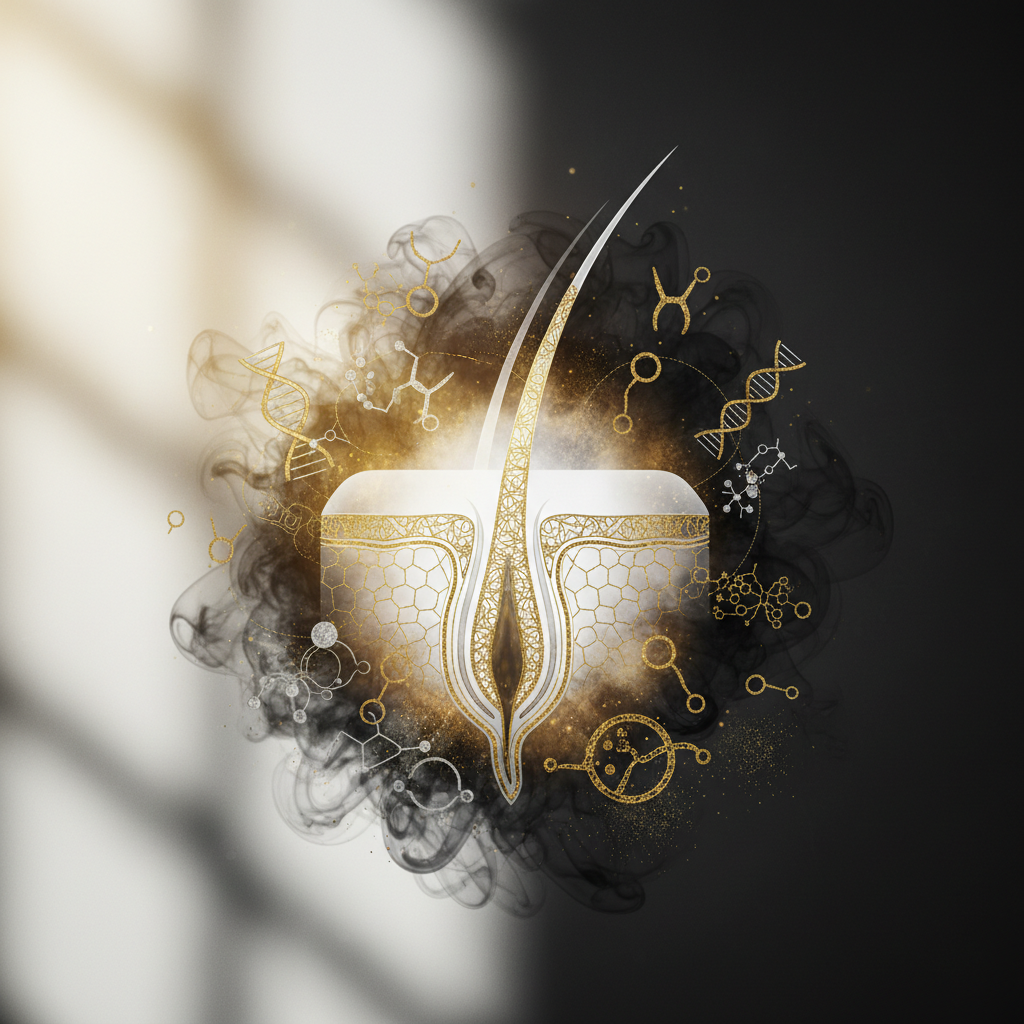
When 5-alpha reductase converts testosterone to DHT, DHT binds to androgen receptors in genetically susceptible dermal papilla cells. This binding stimulates the release of transforming growth factor-beta (TGF-beta), which inhibits keratinocyte proliferation and triggers premature catagen (the regression phase).
Simultaneously, microvascular changes occur. Microcapillary networks that feed the dermal papillae become less responsive with age. Blood flow to the root decreases slightly, restricting the delivery of oxygen, amino acids, and essential micronutrients. Combined with declining natural oils, the emerging hair fibre possesses a looser cuticular structure, making it vulnerable to weathering, UV degradation, and styling damage.
Signs to look for: changes in texture, density, and scalp
Menopausal changes rarely happen overnight. They typically emerge as subtle shifts across 3 distinct zones:
- The central parting and crown: You may notice your scalp becoming more visible under bright light, or your ponytail circumference decreasing from its baseline 7 to 10 centimetres.
- The hair shaft: Individual fibres often feel coarser, wiry, or irregular. This texture change occurs because miniaturised follicles produce asymmetrical fibre shapes, combined with declining natural sebum.
- The scalp skin: A persistent dry, tight, or mildly flaky sensation often develops due to reduced natural lipid production, disrupting the scalp's epidermal barrier.
Comparing hair conditions: loss, shedding, and breakage
It is critical to distinguish between three distinct midlife hair challenges. Treatments that resolve breakage will not reverse follicular miniaturisation, and therapies for shedding will not mend a damaged cuticle.
| Metric | Female Pattern Hair Loss (Miniaturisation) | Telogen Effluvium (Excessive Shedding) | Mechanical Breakage (Fibre Snapping) |
|---|---|---|---|
| Primary Site | Crown, mid-frontal scalp, preserved anterior hairline | Diffuse across the entire scalp | Mid-shaft, ends, and around facial framing layers |
| Bulb Present? | Yes, but roots are tiny and miniaturised | Yes, distinct white keratin bulb present | No white bulb (shaft fractured mid-length) |
| Onset | Gradual over months or years | Abrupt, typically 2 to 3 months post-trigger | Gradual, worsening with heat and chemical processing |
| Root Cause | Hormonal shifts, genetics, androgen sensitivity | Physiological stress, illness, crash diets, ferritin drop | Cuticular dehydration, aggressive styling, chemical wear |
| First-Line Care | Topical minoxidil, anti-androgens, medical HRT | Address systemic stressor, nutritional repletion | Conditioning treatments, lower heat, gentle handling |
What you can do: clinical and daily management
An effective strategy requires both internal support and targeted external care.
Nutritional and medical evaluation
Consult your GP for comprehensive blood panels. Request tests for serum ferritin (stored iron), thyroid stimulating hormone (TSH and free T4), vitamin D (25-hydroxyvitamin D), and vitamin B12. Research indicates that low serum ferritin (below 50 micrograms per litre) can impair hair recovery, while perimenopausal thyroid disorders mimic hormonal hair thinning.
Medical therapies such as topical minoxidil (2 percent or 5 percent) are clinically proven to stimulate cellular activity in the follicle and widen the vascular supply. Discuss Hormone Replacement Therapy (HRT) with your healthcare provider; while HRT is prescribed for systemic symptoms like hot flushes and bone density loss, oestrogen-dominant formulations with low-androgenic progestins often provide secondary support for follicular health.
Daily haircare adjustments
- Lower wash temperature: Wash hair with lukewarm water rather than hot water, which strips the already depleted natural lipid barrier from your scalp.
- Incorporate targeted conditioning: Use deep-conditioning treatments formulated with hydrolysed wheat proteins and botanical lipids weekly to replace lost moisture and reduce shaft brittleness.
- Reduce mechanical tension: Swap elastic hair bands for silk scrunchies and avoid high-tension updos that place traction on delicate fronto-temporal margins.
- Lower thermal tool temperatures: Keep styling irons below 180 degrees Celsius and always apply heat protectants containing silicones or film-forming polymers.
Supporting the scalp: the role of Watermans
While systemic changes require medical consultation, topical routines play a valuable role in keeping the scalp environment healthy and protecting thinning fibres from mechanical snap. Watermans Grow Me shampoo and conditioner offer a cosmetic approach focused on scalp vitality. Formulated with ingredients such as caffeine, biotin, rosemary extract, and niacinamide, the system helps cleanse the follicular infundibulum of styling residue and excess surface DHT without stripping moisture.
These topical botanicals and hydrolysed proteins work at the surface to reinforce hair shaft elasticity, reduce friction during washing, and deliver fuller-looking volume to limp, menopausal locks. Keeping the scalp hydrated, clean, and nourished supports healthy follicle function as part of your broader wellness routine.
When the cause may be something else
Not all thinning in midlife stems from menopause. Hypothyroidism and Hashimoto's thyroiditis are especially prevalent in women between 40 and 60 years old and can cause coarse, thinning hair across the entire scalp.
Severe iron deficiency without anaemia, rapid weight loss from restrictive diets, extreme psychological stress, and autoimmune conditions like alopecia areata or lichen planopilaris can also cause sudden thinning or patchiness. If you notice localized circular patches, scaling, redness, burning, or sudden large clumps of hair falling in the shower, seek an accurate diagnosis promptly.
When to seek professional advice
You should book an appointment with a registered trichologist or a consultant dermatologist if:
- Your hair thinning is accompanied by scalp itching, burning, soreness, or visible erythema (redness).
- You notice scarring, shiny bald patches, or follicular plugging.
- You are shedding more than 150 to 200 hairs per day for longer than 8 consecutive weeks.
- Your central parting continues to widen visibly despite consistent over-the-counter interventions.
A specialist can use dermoscopy (trichoscopy) to inspect follicular openings, measure hair shaft diversity (an indicator of miniaturisation), and rule out scarring alopecias before irreversible damage occurs.
Frequently asked questions about Menopausal Hair Changes
Why does hair become dry and frizzy during menopause?
Sebaceous glands respond directly to circulating oestrogens and androgens. As hormone production decreases, your scalp produces up to 40 percent less natural sebum. Without this protective lipid layer, cuticular scales flare open, allowing internal hydration to evaporate. The hair shaft loses flexibility, feels rough, and is much more prone to static and frizz.
Can menopausal hair changes be reversed completely?
Reversing these changes depends on how quickly you intervene and your individual genetics. While fully miniaturised follicles that have stopped producing fibres cannot be revived, follicles that are only partially miniaturised can often be supported. Combining medical treatments (such as topical minoxidil or HRT) with scalp-nourishing care can restore density and reduce breakage.
Does Hormone Replacement Therapy (HRT) stop hair loss?
HRT can stabilise hair thinning for many women by restoring systemic oestrogen levels and balancing the androgen ratio. However, its effectiveness depends heavily on the type of progestogen used. Formulations containing progestogens with low androgenic activity (such as dydrogesterone or micronised progesterone) are preferred for preserving hair density. Speak with your doctor about hair-friendly HRT options.
What ingredients should I look for in shampoos for thinning hair?
Look for stimulating and volumising ingredients like caffeine, rosemary extract, niacinamide, and hydrolysed proteins. Caffeine penetrates the follicular sheath to support cellular energy, while niacinamide promotes healthy microcirculation. Hydrolysed proteins temporarily bind to cuticular gaps, increasing shaft diameter and resilience against daily mechanical breakage.
How can I tell the difference between breakage and shedding?
Examine the shed fibres under a bright light. A strand that has naturally shed from the root will feature a tiny, pale, bulbous root tip (the telogen bulb) at one end. A broken strand will have blunt, jagged, or split ends without any bulb, and is typically shorter than the rest of your hair length.
Managing hair transitions with confidence
Experiencing menopausal hair changes can feel unsettling, but these shifts are a natural biological response to changing endocrine levels. By differentiating true follicular miniaturisation from breakage and shedding, you can focus on treatments that deliver genuine improvements. A combined approach of clinical evaluation, hormone balancing when appropriate, gentle handling, and scalp-supportive products will help you maintain strong, healthy, and vibrant hair throughout midlife and beyond.
Sources and references
- British Association of Dermatologists. (2020). Female Pattern Hair Loss (Androgenetic Alopecia). Clinical Guidance.
- NHS. (2022). Menopause and hair loss. Nhs.uk.
- National Institute for Health and Care Excellence (NICE). (2019). Menopause: diagnosis and management (NICE Guideline NG23).
- Messenger, A. G., et al. (2010). British Association of Dermatologists' guidelines for the management of alopecia areata. British Journal of Dermatology.
- Trueb, R. M. (2015). Oxidative Stress in Hair Graying and Thinning: An Update. International Journal of Cosmetic Science.
- Camacho-Martinez, F. M. (2009). Hair loss in women. Seminars in Cutaneous Medicine and Surgery.
Find these ingredients in Watermans products
- Vitamin D: you will find this ingredient in our Hair Vitamins.
- Niacinamide: you will find this ingredient in our Hair Mask.