Heat Protection Mechanisms: The Science of Thermal Hair Defence
8 min read ·
Explore how Heat Protection Mechanisms work, including thermal conduction delay, polymer films, moisture buffering, and their real-world limits.
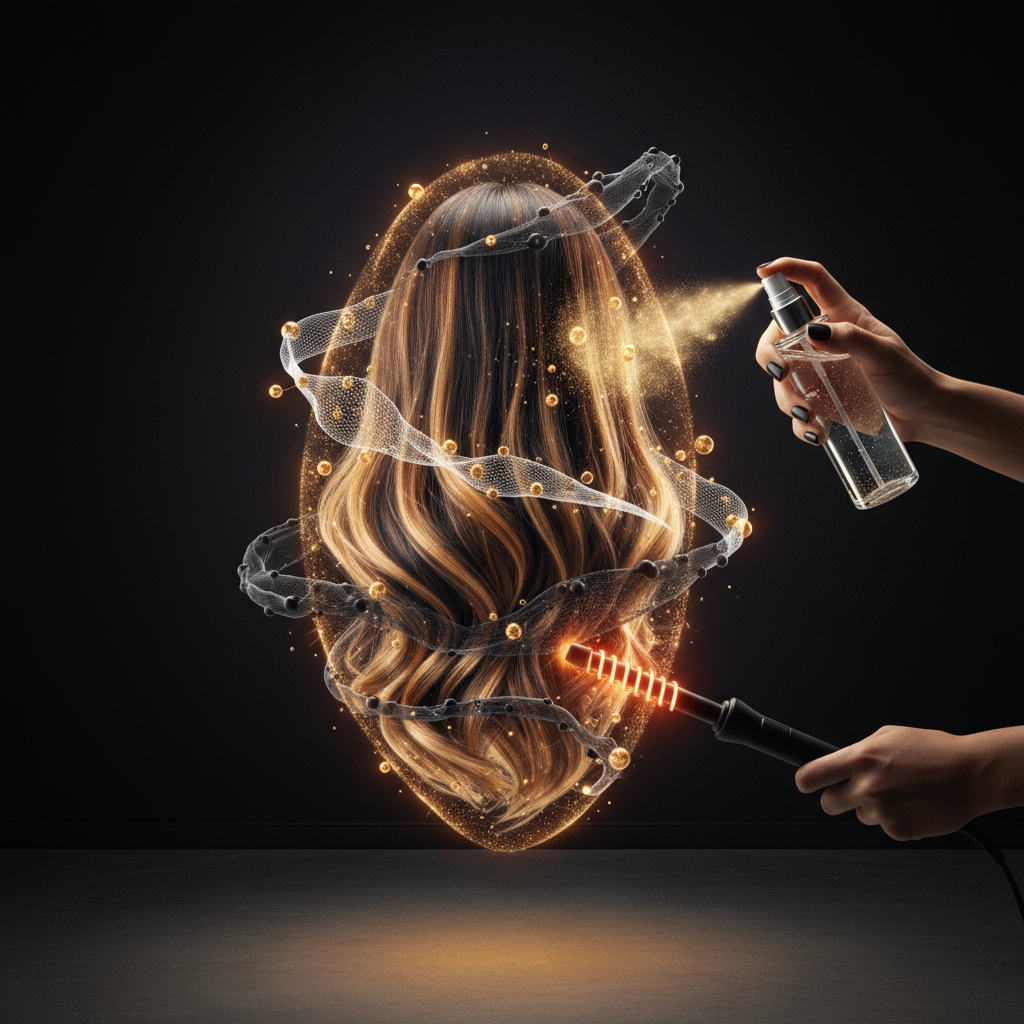
Quick answer: Heat Protection Mechanisms refer to the physical and chemical processes that shield the hair fibre from thermal degradation during heat styling. These mechanisms work primarily by slowing the rate of heat transfer, distributing thermal energy evenly across the hair shaft, and preserving internal structural proteins and moisture. However, the main limitation of all Heat Protection Mechanisms is that no cosmetic formulation offers complete thermal immunity. They reduce cumulative damage by roughly 30% to 50%, but they cannot stop burning at excessive temperatures.
Key takeaways
- Heat protectors work through thermal insulation, friction reduction, moisture buffering, and polymer film formation.
- Styling tools above 160°C cause the alpha-keratin in hair fibres to denature into disordered beta-sheet structures.
- Water trapped inside the hair shaft can flash boil above 100°C, causing internal cavitation bubbles known clinically as bubble hair.
- Silicones and specialised polymers lower thermal conduction, buying precious split seconds while the hair passes through hot tool plates.
- Protective products do not eliminate heat damage entirely; they simply raise the threshold and slow down the degradation rate.
Heat Protection Mechanisms: what the evidence shows
Scientific testing in cosmetic chemistry demonstrates that Heat Protection Mechanisms rely primarily on surface physics rather than chemical alteration of the hair's core. When thermal tools touch a hair fibre, heat transfers instantaneously via direct conduction. Heat styling tools typically operate between 150°C and 230°C, temperatures high enough to alter keratin, melt internal lipids, and evaporate structural water.
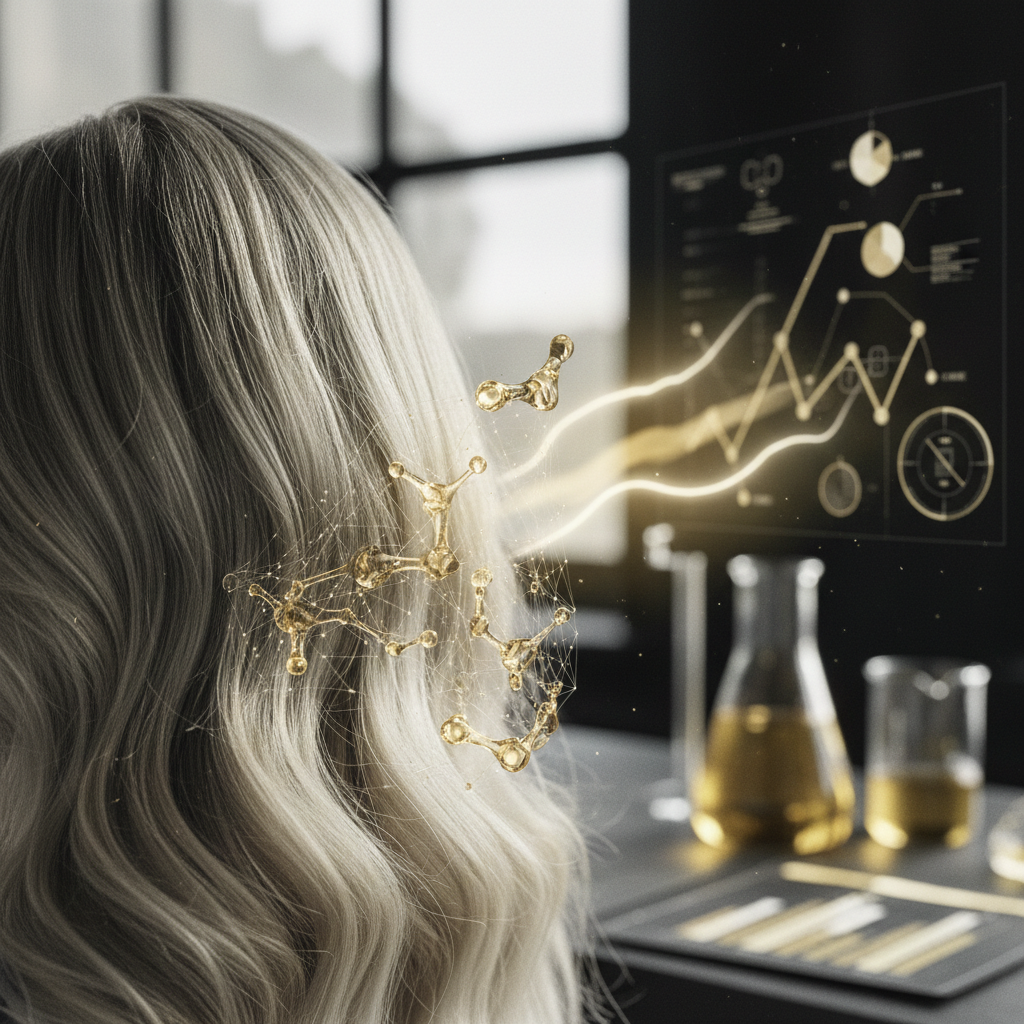
Cosmetic polymers and conditioning agents intercede in this process through several distinct physical pathways:
1. Thermal conduction delay
Ingredients such as dimethicone, amodimethicone, and polyquaternium polymers possess much lower thermal conductivity than bare keratin and water. By coating the hair shaft in an ultra-thin polymer film, these products reduce the rate of heat transfer into the cortex. The iron still transfers heat, but it does so more slowly. Because a flat iron plate usually remains in contact with any single section of hair for only one to three seconds, slowing that heat transfer curve prevents the internal cortex from reaching peak denaturing temperatures.
2. Moisture buffering and controlled evaporation
Hair contains roughly 10% to 15% water under ambient conditions. When heated past 100°C, unbound water rapidly turns to steam. If heated too rapidly, steam expands faster than it can diffuse out of the cuticle, blowing structural holes in the cortex. Film-forming heat protectants act as a semi-permeable thermal barrier. They slow down the rate of rapid water flashing, allowing water vapour to vent more uniformly while retaining plasticising moisture inside the core.
3. Surface lubrication and mechanical shear reduction
Thermal styling involves mechanical force alongside heat. Pulling a hot ceramic or titanium plate down a hair strand generates intense friction. Heat softens the hair cuticle, making it particularly vulnerable to being gouged, chipped, or stripped away. Polymeric lubricants dramatically decrease the dynamic coefficient of friction. This allows styling plates or round brushes to glide smoothly, preventing cuticle tearing while the keratin is softened and pliable.
4. Cross-linking and film resilience
Specialised heat-activated copolymers (such as hydrolysed wheat protein/PVP copolymers) cross-link slightly under heat to form a sacrificial protective mesh. Instead of your cuticle scales bearing the direct impact of high temperatures, the outer cosmetic film absorbs the thermal stress and surface oxidation.
| Protective Mechanism | Primary Ingredients Responsible | Main Structural Benefit | Protection Limit |
|---|---|---|---|
| Thermal Conduction Delay | Dimethicone, Cyclomethicone, Dimethiconol | Blunts temperature spikes in the cortex | Fails under sustained contact (over 4 seconds) |
| Friction Reduction | Amodimethicone, Behentrimonium Chloride | Prevents cuticle peeling and mechanical shear | Cannot prevent chemical protein denaturation |
| Moisture Buffering | Glycerin, Propylene Glycol, Panthenol | Slows explosive water vaporisation | Excess humectants can sizzle if wet |
| Film-Forming Shield | Polyquaternium-55, Hydrolysed Wheat Protein | Creates a sacrificial outer barrier layer | Degrades at temperatures exceeding 220°C |
What the evidence does not show
The science behind heat styling is clear on one critical point: there is no such thing as a heat shield that renders hair invulnerable. Marketing often describes heat protectants as creating an impenetrable barrier. Controlled laboratory tests using differential scanning calorimetry (DSC) and scanning electron microscopy (SEM) prove that even the best formulations only mitigate damage; they never eliminate it.
Keratin begins to denature irreversibly at approximately 160°C to 190°C depending on whether the hair is dry or damp. Once styling tools exceed 200°C, even heavily coated fibres experience protein breakdown, lipid extraction, and surface oxidation. Furthermore, heat protectants cannot repair split ends or reverse structural damage that has already severed disulfide bonds. They can glue cracked cuticle edges temporarily, but they cannot restore the fibre's biological integrity.
The physical signs of thermal damage
When Heat Protection Mechanisms fail or are omitted entirely, thermal stress manifests across the hair strand in unmistakable ways:
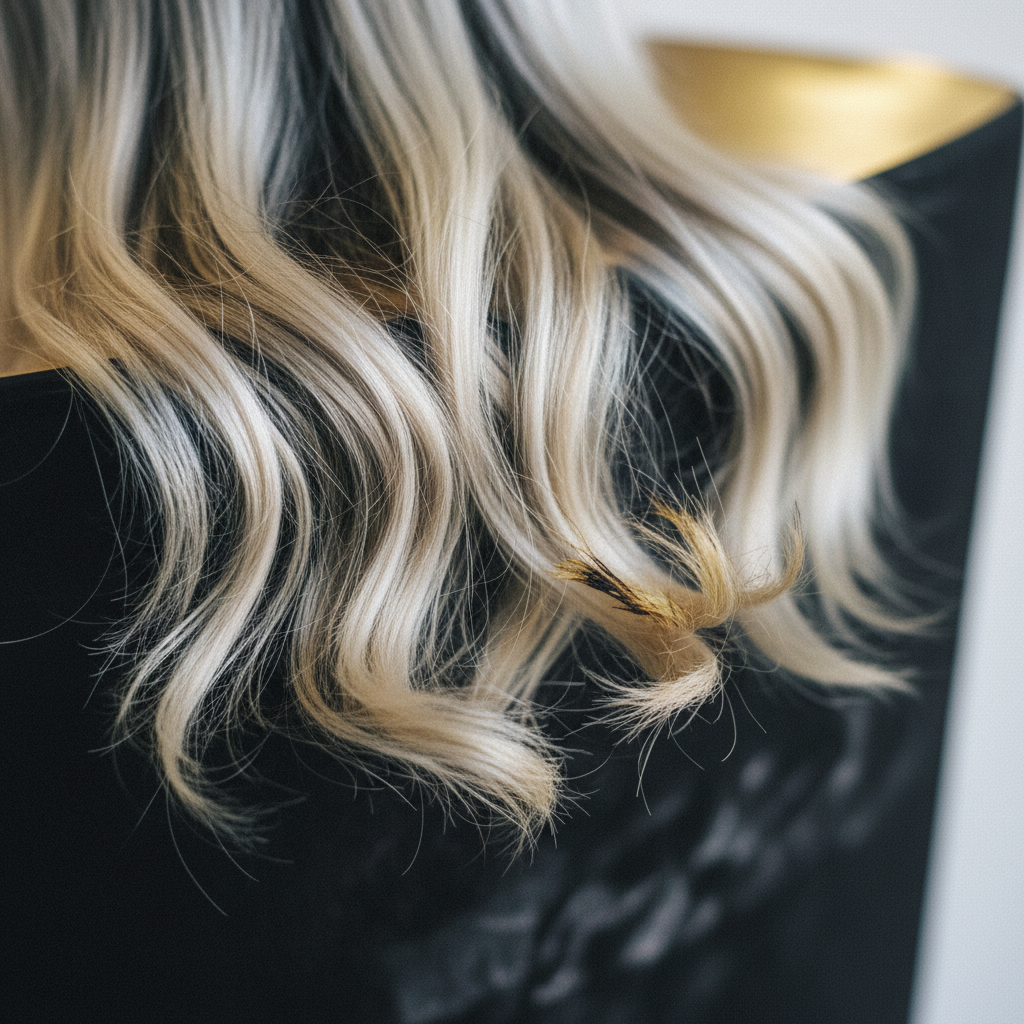
- Bubble hair deformity: Distinct microscopic voids and bubbles appear along the hair shaft, visible under magnification. This occurs when water trapped within the cortex vaporises instantaneously.
- Split ends and trichorrhexis nodosa: The hair fibre develops fragile, brush-like nodes where internal cortical cells fray and separate under minimal tension.
- Loss of natural curl pattern: The alpha-keratin helix unwinds into an irregular beta-sheet structure, permanently loosening or flattening natural wave and curl patterns.
- Surface roughness and dullness: The cuticle scales blister, lift, and chip off, eliminating the smooth, planar surface needed to reflect light.
- Extreme porosity: Cuticle loss exposes the cortex, causing hair to drink in water rapidly when wet yet dry out instantly into a rough, straw-like state.
What you can do to maximise heat protection
To give protective mechanisms the best opportunity to work, your application technique must be methodical:
- Dry your hair thoroughly before using direct iron heat: Never use a flat iron or curling tong on damp hair. Water expands by roughly 1,600 times its volume when converted to steam. Applying 200°C plates to damp hair forces that steam explosion directly into your cortex.
- Apply the product evenly across sections: Spraying a mist over the outer canopy of your hair leaves 80% of your strands unprotected underneath. Clip hair into neat sections and distribute the product using a wide-tooth comb before applying heat.
- Calibrate your tool temperature: Fine, chemically treated, or bleached hair should never face heat above 150°C to 170°C. Thick, coarse, or virgin hair should generally be styled between 175°C and 190°C. Avoid turning irons to 230°C; that threshold is designed for industrial treatments, not daily maintenance.
- Maintain steady movement: Keep the styling tool moving smoothly down the strand. Leaving a flat iron static on one section for even two seconds overwhelms the thermal buffer of any product, driving the internal cortex past its denaturation threshold.
When the cause may be something else
If your hair is breaking or snapping despite consistent heat protectant use, the root cause may not be thermal:
- Chemical over-processing: Bleaching, high-lift colours, and chemical relaxers break internal disulfide bonds. Weakened hair snaps under very low mechanical tension, which is often misidentified as iron damage.
- Mechanical damage: Vigorous rough drying with terry towels, aggressive backcombing, or detangling with fine-tooth combs causes mechanical cuticle loss that mirrors thermal wear.
- Telogen effluvium: If you notice hair coming out from the scalp with a small white bulb at the root, this is systemic shedding, not thermal breakage along the shaft. Heat tools break hair; they do not cause follicles to release strands prematurely.
Supporting hair health from the roots with Watermans
While Heat Protection Mechanisms preserve the hair shaft from external styling stress, resilient hair also benefits from a nourished scalp environment. Products like Watermans Grow Me Shampoo and Condition Me Conditioner are formulated to support the feel of fibre density and improve overall strand manageability. Enriched with biotin, rosemary extract, niacinamide, and hydrolysed lupin protein, these formulations help maintain soft, moisturised hair that resists the friction and wear that accompany daily styling routines.
Frequently asked questions about Heat Protection Mechanisms
How do Heat Protection Mechanisms prevent hair breakage?
Heat Protection Mechanisms prevent breakage by forming a thin lubricating polymer film over the cuticles. This film slows down the rate of heat absorption into the cortex, moderates rapid moisture loss, and reduces friction so hot styling plates slide smoothly without snagging or fracturing weakened keratin fibres.
Can natural oils replace cosmetic heat protectants?
No. Many pure plant oils lack the specialized thermal conductivity and uniform film-forming properties of engineered silicones and polymers. Some unrefined culinary oils smoke and oxidise at temperatures well below the operating heat of modern styling irons, potentially worsening thermal degradation.
Do heat protectants work on damp hair before blow-drying?
Yes, but you should choose a formula explicitly designed for blow-drying. These lotions or sprays distribute light thermal polymers and humectants to shield strands from hot airflow, which operates at lower temperatures (around 60°C to 100°C) than direct-contact flat irons.
At what temperature does hair suffer irreversible heat damage?
Hair proteins undergo irreversible changes starting between 160°C and 190°C. Above this temperature threshold, the alpha-helical keratin begins to melt and convert into disordered beta-sheet structures, leading to permanent loss of elasticity, moisture retention, and structural strength.
Summary
Understanding how Heat Protection Mechanisms work dispels the common myth that styling sprays provide total thermal immunity. By acting as sacrificial thermal buffers, lubricants, and evaporation regulators, these formulations substantially lower the rate of everyday styling damage. When paired with controlled tool temperatures, thorough drying, and gentle handling, protective formulations ensure your hair stays strong, pliable, and smooth over the long term.
Sources and references
- Journal of Cosmetic Science: McMullen, R. L., & Jachowicz, J. (2011). Thermal degradation of hair. Journal of Cosmetic Science, 62(4), 385 to 402.
- International Journal of Cosmetic Science: Ruetsch, S. B., Kamath, Y. K., & Weigmann, H. D. (2004). Photodegradation of human hair: a review. International Journal of Cosmetic Science, 26(2), 79 to 88.
- Society of Cosmetic Chemists: Robbins, C. R. (2012). Chemical and Physical Behavior of Human Hair (5th ed.). Springer.
- British Journal of Dermatology: Gummer, C. L. (1994). Bubble hair: a physical abnormality. British Journal of Dermatology, 131(6), 900 to 903.
Find these ingredients in Watermans products
- Niacinamide: you will find this ingredient in our Hair Mask.