Heat Damage and Keratin: Understanding Hair Protein Degradation
10 min read ·
Understand the science behind Heat Damage and Keratin. Learn how thermal styling alters hair protein structure, causes breakage, and how to protect hair fibres.
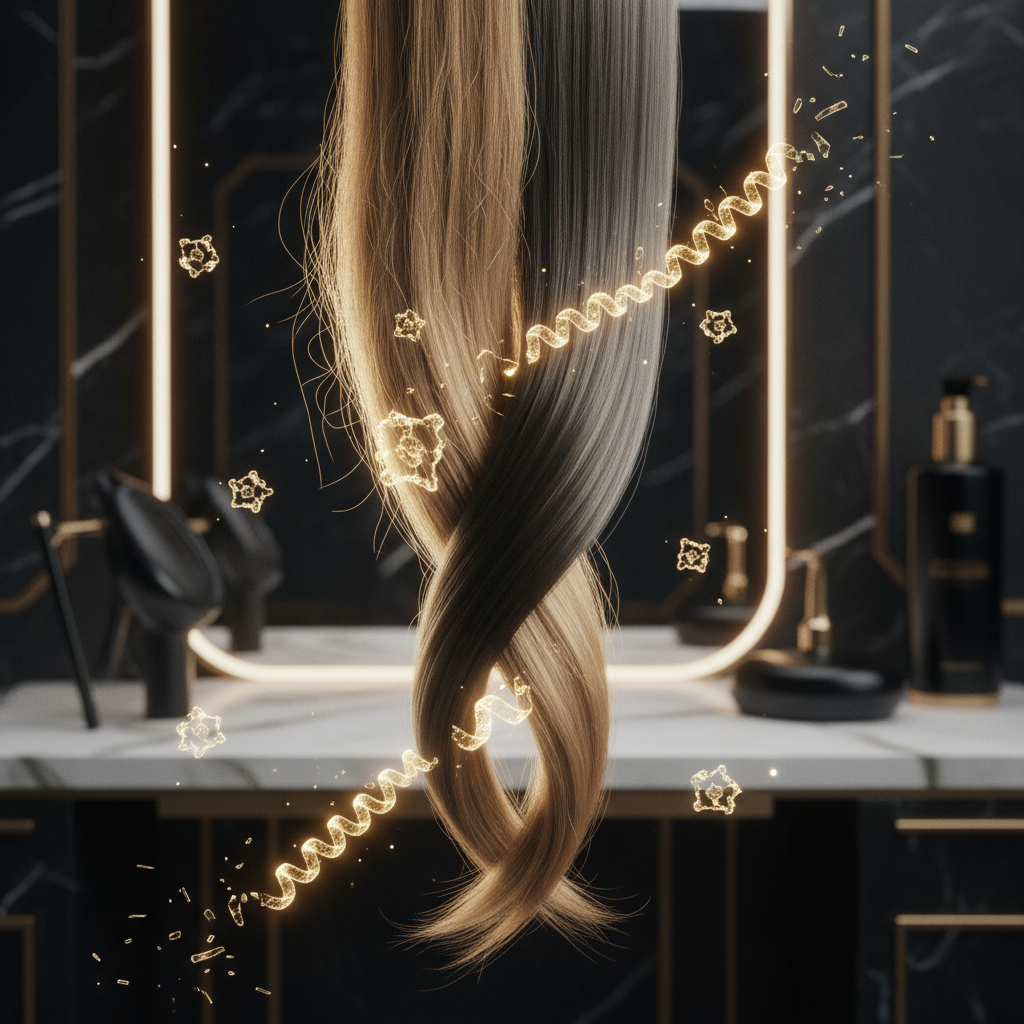
Quick answer: The relationship between Heat Damage and Keratin centres on thermal denaturation. Keratin is the fibrous structural protein that forms roughly 85% to 90% of the hair shaft. When heated above critical thresholds (starting around 140°C and accelerating sharply past 185°C), the protein's alpha-helical structure unravels into random coils, structural cystine bonds oxidize, and moisture flashes into steam. The main limitation is that denatured keratin cannot biologically regenerate; once heat breaks these molecular protein structures, cosmetic repair can only patch, coat, or temporarily reinforce the fibre.
Key takeaways
- Hair keratin begins irreversible structural changes (denaturation) at temperatures as low as 140°C, with rapid, severe degradation occurring above 185°C.
- Thermal styling can induce "bubble hair", where trapped water vaporises into steam within the cortex, leaving physical cavities that snap easily.
- Heat oxidises cystine, the sulfur-rich amino acid that creates hair's cross-linking disulfide bonds, leaving hair brittle, porous, and prone to breakage.
- Heat damage is hair fibre breakage, not follicular hair loss; it affects the dead hair shaft without altering your scalp's hair growth cycles.
- Cosmetic protein treatments and leave-in silicones help protect and reinforce weakened hair, but they cannot structurally regenerate melted or degraded keratin chains.
Heat Damage and Keratin: what the evidence shows
Research in cosmetic chemistry and biophysics shows that heat alters the molecular architecture of hair fibres through a multi-stage thermal process. Hair consists of three primary zones: the outer cuticle scales, the structural cortex, and the inner medulla. The cortex is packed with intermediate filament proteins composed of alpha-keratin. These protein coils are held together by hydrogen bonds, ionic salt bridges, and covalent disulfide bonds formed by the amino acid cystine.
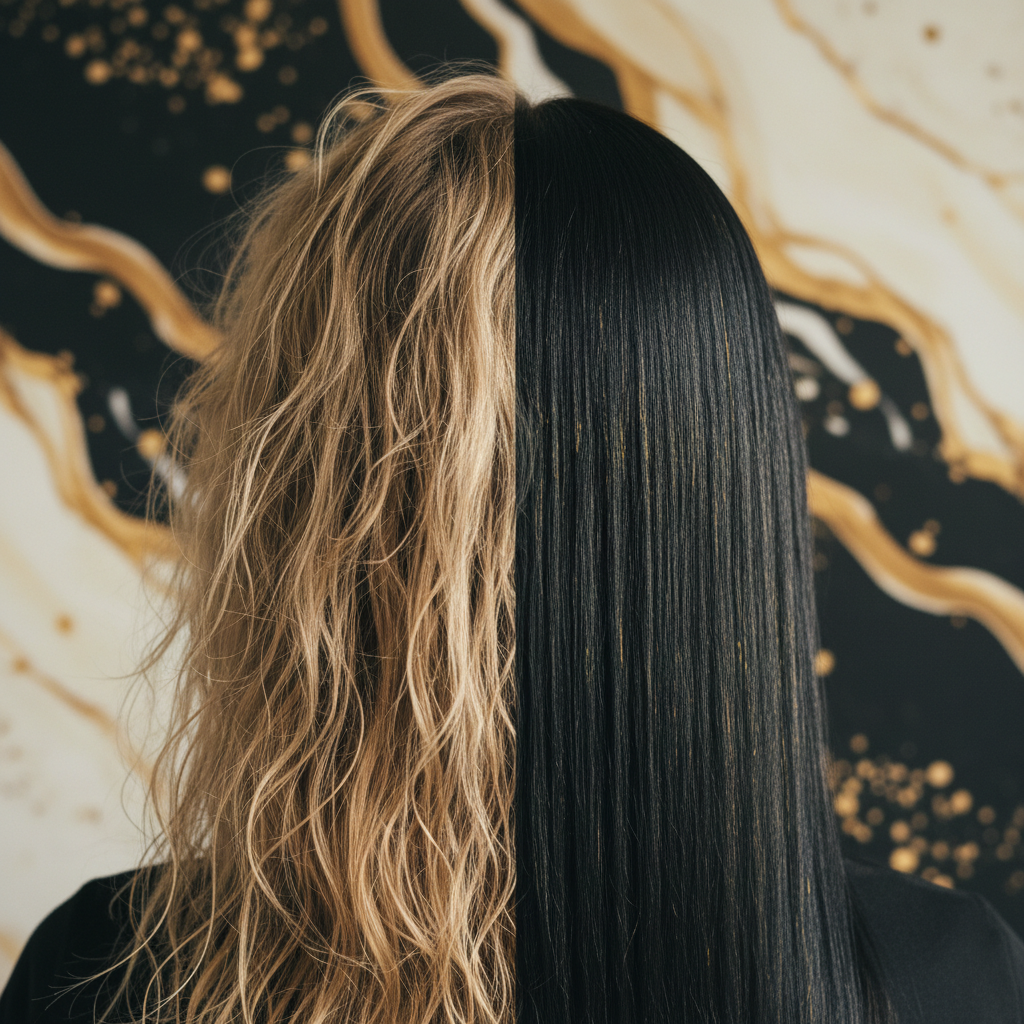
When you apply heat tools such as straighteners, curling wands, or high-heat hair dryers, you alter these bonds in stages:
- Hydrogen bond disruption (ambient to 100°C): Gentle heat breaks weak hydrogen bonds between keratin chains, allowing you to temporarily reform the hair's shape. As the hair cools and dries, these bonds re-set. This phase is largely reversible.
- Moisture vaporization (100°C to 140°C): Free water and bound moisture evaporate. If styling wet hair at high temperatures, moisture flashes to steam within the cortex faster than it can diffuse out, causing high internal pressure.
- Alpha-helix to beta-sheet transition (140°C to 185°C): The tightly coiled, spring-like alpha-keratin begins to unwind, transforming into flattened beta-sheet formations. This transition reduces hair elasticity, rendering the fibre stiff and weak.
- Disulfide bond cleavage and protein denaturation (above 185°C to 230°C): Covalent disulfide cross-links decompose, producing cysteic acid through oxidation. The cuticle melts, lifts, and develops micro-cracks. At 230°C and higher, keratin undergoes total pyrolysis, where the protein burns and structurally dissolves.
The physical mechanisms of thermal protein degradation
To understand how heat breaks hair down, you have to look at the micro-level physics occurring beneath the hair cuticle.
Thermal denaturation of the alpha-helix
Keratin's intermediate filaments resemble coiled micro-cables. These coils provide tensile strength and elasticity, which allow a healthy, wet hair strand to stretch up to 30% of its resting length without snapping. When heat unravels these coils into random amorphous structures, the hair permanently loses this elastic recoil. The strand feels dry, tangles readily, and fractures under regular brushing tension.
Vaporisation and bubble hair
Applying flat irons (frequently running between 180°C and 230°C) to damp or wet hair creates localized boiling within the cortex. As liquid water transitions into steam, its volume expands more than 1,000 times. This sudden volumetric expansion tears micro-cavities into the cortex, producing visible deformities known clinically as bubble hair. Under a microscope, these appear as regular voids along the fibre that act as stress concentration points, leading directly to mid-shaft breakage.
Oxidation of amino acids
Keratin contains high concentrations of cystine (approximately 16% to 18% of hair's total amino acid content), alongside tryptophan, tyrosine, and methionine. Thermal styling triggers oxidative breakdown of cystine into cysteic acid. This reduces the net negative charge barrier, increases hair porosity, and strips the hair shaft of the lipid-rich 18-methyleicosanoic acid (18-MEA) layer that naturally repels water and prevents surface friction.
Signs of keratin heat damage
Because hair is biologically non-living tissue, it cannot heal itself. Thermal degradation reveals itself through several distinctive cosmetic and physical signs:
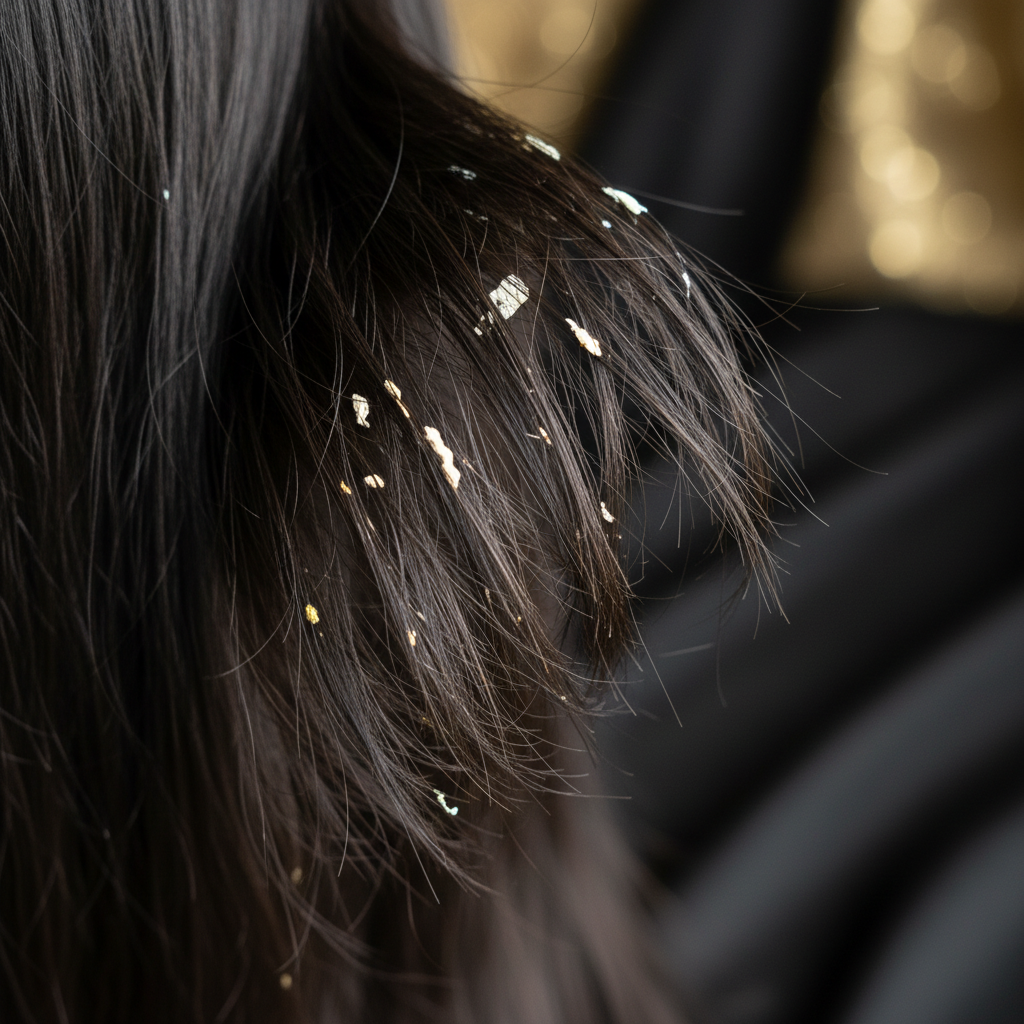
- Loss of natural curl pattern: In wavy, curly, or afro hair textures, destroyed keratin bonds cause curls to loosen, string out, or lay flat unevenly.
- Extreme porosity and water absorption: Damaged cuticles allow water to rush into the cortex rapidly, causing the hair to swell and feel mushy when wet, yet dry out into a brittle texture.
- Split ends and mid-shaft snapping: Mechanical stress snaps the weakened protein chains, leaving white flecks (trichorrhexis nodosa) along the length of the strand.
- Colour fading and brassiness: High heat oxidises both synthetic cosmetic pigments and natural melanin, causing rapid colour shift and premature yellowing on blonde, grey, or bleached hair.
- Dullness and rough texture: The loss of the 18-MEA protective lipid membrane and raised cuticle edges prevents light from reflecting evenly, producing a matte, rough finish.
Heat levels and their effects on keratin
The following table summarizes the structural changes that occur across common styling temperature ranges based on biophysical thermal analysis:
| Temperature Range | Structural Impact on Keratin | Hair Fibre Behaviour | Reversibility |
|---|---|---|---|
| Below 100°C | Temporary breakdown of weak hydrogen bonds. | Hair softens and temporarily adapts to a new shape when dried. | Fully reversible with washing. |
| 100°C to 140°C | Bound water begins evaporating; cuticle lipids begin to soften. | Slight reduction in moisture levels; surface friction increases. | Mostly reversible with conditioning agents. |
| 140°C to 185°C | Alpha-keratin denatures; begins transition to beta-sheet conformation. | Elasticity decreases; hair stretches poorly and feels dry. | Irreversible structural shift; manageable cosmetically. |
| 185°C to 230°C | Disulfide bonds crack and oxidise; 18-MEA lipid layer strips away; bubble hair forms if damp. | Extreme brittleness, severe porosity, split ends, loss of curl pattern. | Completely irreversible; requires structural patching or trimming. |
| Above 230°C | Complete thermal decomposition and pyrolysis of structural proteins. | Fibre melts, scorches, and fractures instantly under light load. | Terminal fibre death; hair snaps and breaks off. |
What you can do: protecting and patching damaged hair
Once keratin has undergone thermal denaturation, no cosmetic treatment can rejoin the cleaved peptide chains into their original biological configuration. However, you can prevent future trauma and reinforce existing weakened shafts using evidence-backed methods:
1. Apply thermal protectants
Heat-protectant formulations containing silicones (such as amodimethicone or dimethicone), polyquaterniums, and hydrolysed proteins reduce thermal transfer rates. These ingredients create a heat-insulating film across the cuticle, ensuring heat spreads more evenly rather than scorching distinct hot spots. They also lower surface friction, helping hot iron plates glide smoothly without snagging.
2. Lower styling temperatures
Keep thermal styling tools below 185°C whenever possible. For fine, chemically treated, or bleached hair, keep settings between 150°C and 165°C. Never apply heated irons to damp or wet hair; always ensure the hair fibre is 100% dry before using hot plates.
3. Incorporate hydrolysed protein treatments
Cosmetic protein treatments formulated with low-molecular-weight hydrolysed wheat, soy, or keratin proteins can penetrate micro-fissures in the cuticle and outer cortex. They temporarily deposit within voids, forming a supportive matrix that improves hair tensile strength and prevents sudden snapping until washed away.
4. Trim damaged ends
When thermal degradation progresses to trichorrhexis nodosa (nodes of structural failure) or severe split ends, physical shears are the only permanent fix. Trimming stops splits from travelling up the shaft toward the scalp.
When the cause may be something else
It is vital to distinguish between cosmetic hair breakage caused by heat and actual hair loss occurring at the follicle. Heat tools damage the fibre, causing it to snap off along the shaft. This creates short, broken pieces with blunt or frayed ends.
If you are noticing hair shedding from the scalp with the white bulb intact, the cause is follicular rather than thermal:
- Telogen effluvium: Diffuse shedding triggered by stress, illness, hormonal fluctuations, or nutritional deficiencies.
- Androgenetic alopecia: Pattern thinning caused by hormonal sensitivity to dihydrotestosterone (DHT), which shrinks the follicle over time.
- Traction alopecia: Hair loss caused by sustained mechanical pulling from tight hairstyles, which damages the follicle directly.
Heat styling does not cause pattern balding or biological shedding from the root, provided the styling tool does not physically burn the scalp tissue.
When to seek professional advice
Consult a qualified trichologist or dermatologist if you experience sudden scalp pain, burning, redness, or patches of scalp hair loss following heat styling. These symptoms point to thermal burns of the scalp skin, which can damage follicles and potentially result in permanent cicatricial (scarring) alopecia if left untreated. Stylists can assist with cutting away broken ends and adjusting your styling regimen, but medical experts must evaluate any symptom involving the scalp itself.
Supporting hair health with Watermans
When addressing heat damage, the priority is to protect the emerging hair shaft while maintaining a balanced scalp environment. Watermans Grow Me Shampoo and Condition Me Conditioner provide an evidence-informed routine for hair subjected to regular styling.
Grow Me is formulated with biotin, caffeine, rosemary extract, niacinamide, and argan oil, cleansing the scalp without harsh sulphates that strip fragile fibres. Condition Me introduces hydrolysed lupin protein, cholesterol, and essential fatty acids to coat and smooth thermally stressed cuticles, restoring slip, reducing mechanical friction, and helping prevent subsequent styling breakage.
Frequently asked questions about Heat Damage and Keratin
Can heat damage to hair keratin be permanently repaired?
No, heat damage to hair keratin cannot be biologically undone. Keratin is non-living protein tissue lacking cellular repair mechanisms. Once excessive heat denatures alpha-keratin helices and breaks covalent disulfide bonds, the structural changes are permanent. Treatments containing hydrolysed proteins and conditioning polymers can coat the fibre and fill structural voids temporarily, but they wash away over time and cannot reform original bonds.
At what temperature does hair keratin begin to denature?
Thermal analysis shows hair keratin begins denaturing around 140°C, where alpha-helical structures start unraveling into beta-sheets. Degradation accelerates sharply above 185°C as disulfide cross-links decompose and natural protective lipids break down. Above 230°C, keratin undergoes complete thermal pyrolysis and melts.
How does Heat Damage and Keratin degradation differ from chemical damage?
Heat damage and chemical damage both target keratin, but through different mechanisms. Heat uses thermal energy to physically melt cuticles, vaporise internal water, and oxidise cystine. Chemical processing (such as bleaching or relaxing) uses alkaline pH and reducing agents to intentionally break disulfide bonds across the cortex. Combining high heat with chemically lightened hair rapidly accelerates keratin failure.
Does a keratin treatment protect hair from heat damage?
Not necessarily. Professional keratin treatments coat hair with a liquid protein solution and seal it with high-heat flat irons (often at 230°C). While the protective coating provides slip and smoothness, the intense heat required to cure the treatment can actually denature the hair's underlying natural keratin if performed incorrectly or repeatedly on fragile hair.
Can heat damage cause hair to fall out from the roots?
Heat damage does not cause hair to shed from the follicle unless the heat source physically burns the scalp skin. Heat breaks the hair shaft along the length of the fibre, which is breakage rather than follicular hair loss. If you see whole hairs falling out with a small white bulb at the base, the issue originates inside the hair follicle, not from your styling iron.
Practical steps to preserve structural keratin
Managing the relationship between Heat Damage and Keratin comes down to thermal moderation and defensive hair care routines. Hair keratin provides impressive resilience against daily mechanical wear, but its structural proteins degrade when exposed to temperatures exceeding 185°C.
To protect your hair, keep styling tools at reasonable temperatures, ensure strands are completely dry before applying direct heat, use silicone-based thermal protectants, and nourish stressed lengths with targeted protein conditioning. Respecting the thermal thresholds of your hair keeps the keratin cortex strong, flexible, and resistant to breakage.
Sources and references
- Robbins, C. R. (2012). Chemical and Physical Behavior of Human Hair (5th ed.). Springer-Verlag.
- Lee, Y., Kim, Y. D., Hyun, H. J., Pi, L. Q., Jin, X., & Lee, W. S. (2011). Hair shaft damage from heat and drying time of hair dryer. Annals of Dermatology, 23(4), 455-462.
- McMullen, R. L., & Jachowicz, J. (1998). Thermal analysis of hair. Journal of Cosmetic Science, 49(4), 245-256.
- Tinoco, A., Martins, M., Cavaco-Paulo, A., & Ribeiro, A. (2021). Biotechnology of human hair: A review on keratin-based hair treatments. Biomolecules, 11(11), 1709.
- Christian, P., Winsey, N., Whatmough, M., & Drury, P. (2011). Reducing heat damage to hair using cosmetic formulations. International Journal of Cosmetic Science, 33(3), 234-242.
Find these ingredients in Watermans products
- Biotin: you will find this ingredient in our Hair Growth Shampoo.
- Niacinamide: you will find this ingredient in our Hair Mask.