Heat Damage and Hair Keratin: The Molecular Guide to Thermal Stress
9 min read ·
Explore the science of Heat Damage and Hair Keratin, how high temperatures degrade structural proteins, and evidence-based ways to protect hair.
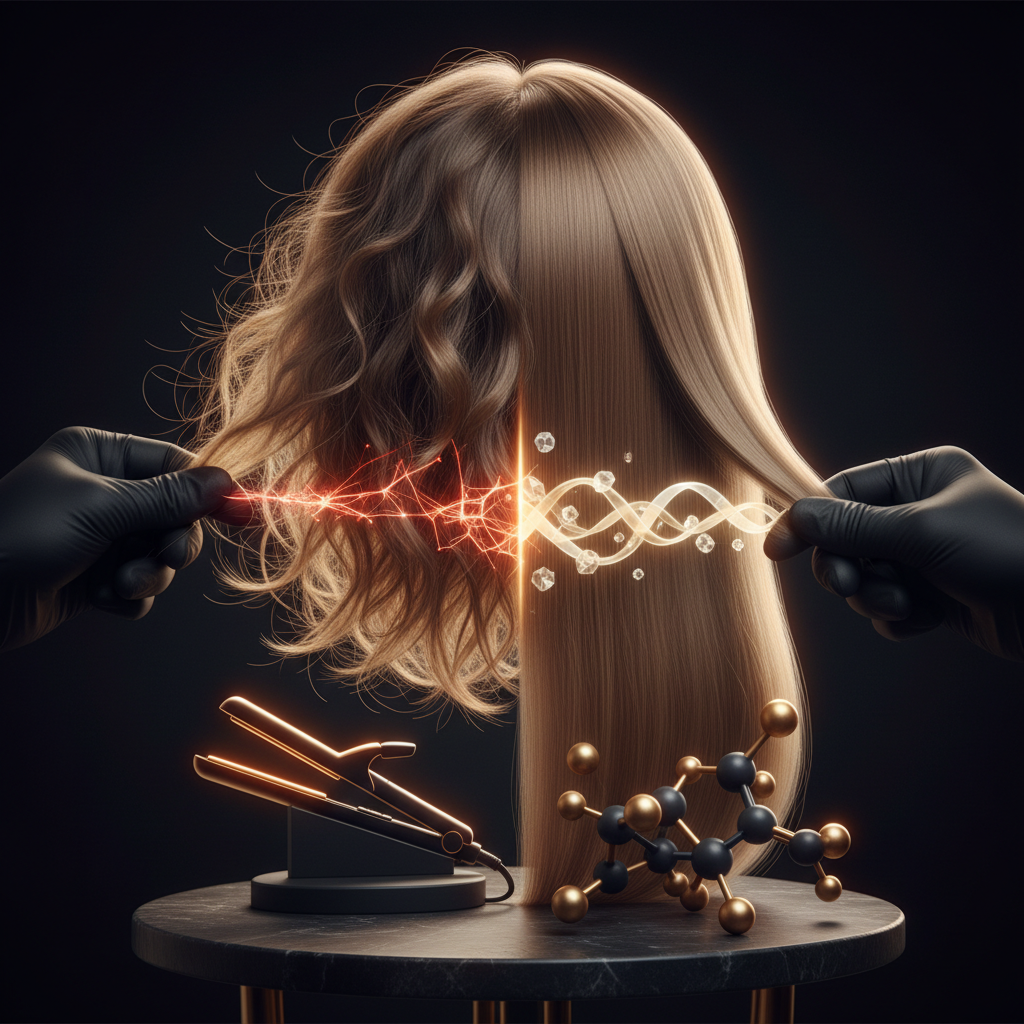
Quick answer: The relationship between Heat Damage and Hair Keratin centres on irreversible protein denaturation. Hair fibres consist of roughly 85% to 90% keratin, a fibrous structural protein stabilised by disulphide and hydrogen bonds. Temperatures above 140°C weaken these bonds, while heat exceeding 200°C permanently melts the crystalline alpha-keratin structure into disordered beta-keratin. While heat protectants reduce surface friction and slow thermal transfer, biological keratin cannot repair itself once structurally denatured, making prevention essential.
Key takeaways
- Hair keratin undergoes thermal denaturation between 140°C and 230°C, leading to irreversible loss of structural integrity.
- Thermal styling breaks hydrogen bonds temporarily, but excessive heat permanently oxidises disulphide bonds and destroys the hair's cuticular lipids.
- Wet or damp hair exposed to hot tools experiences bubble hair deformity, where trapped moisture flash-boils into steam inside the cortex.
- Heat protectants buffer thermal transfer and seal the cuticle, but they cannot make hair heatproof against extreme temperatures.
- Keratin treatments do not reverse thermal damage; damaged fibres require damage limitation, conditioning, and eventual trimming.
Heat Damage and Hair Keratin: what the evidence shows
Research published in cosmetic science and dermatology journals confirms that Heat Damage and Hair Keratin degradation are directly proportional to temperature and frequency of exposure. Hair is a complex composite material: the outer protective cuticle shields the inner cortex, which contains macrofibrils made of coiled alpha-keratin filaments packed in an amorphous protein matrix.
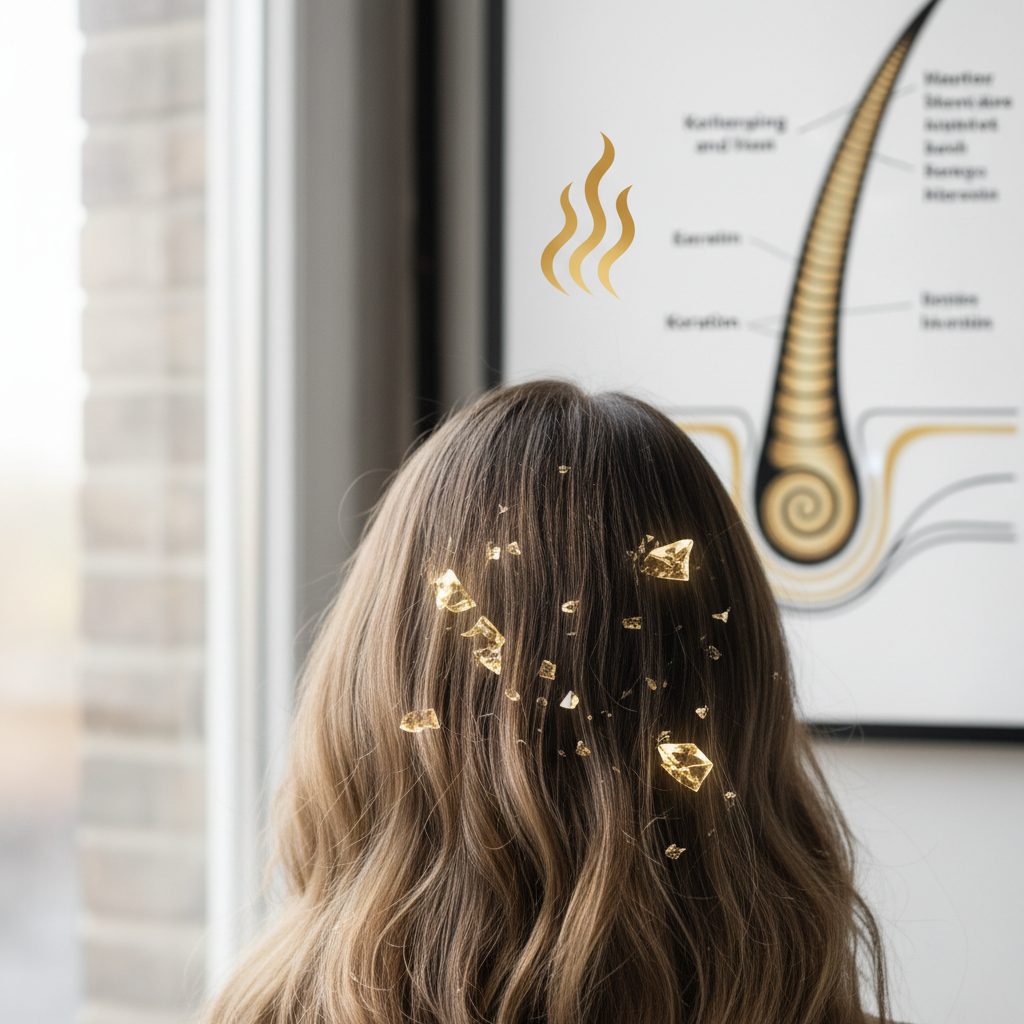
At baseline, alpha-keratin filaments maintain an organised, spring-like helical form. When heat styling tools apply temperatures between 150°C and 180°C, the hair fibre softens as it crosses its glass transition temperature. Above this threshold, moisture evaporates rapidly.
If temperatures surpass 200°C, standard straightener and curling iron territory, thermodynamic studies show that the crystalline alpha-keratin permanently transforms into disorganized, amorphous beta-keratin. The natural helical shape untwists. Once this structural denaturation happens, the hair loses its tensile strength, elasticity, and ability to hold moisture.
Thermal Stress Progression in Human Hair Keratin:

 Ambient to 100°C 120°C to 140°C 150°C to 180°C 200°C to 230°C+
[ Bound Water Loss ] -> [ Lipid Degradation ] -> [ Alpha-Helix Softening ] -> [ Permanent Denaturation ]
 [ (Alpha to Beta Transition) ]
The molecular mechanism: what happens to the fibre
Understanding how thermal styling alters hair requires a closer look at the chemical bonds supporting the keratin matrix.
1. Water evaporation and hydrogen bond manipulation
Hydrogen bonds are weak, temporary bonds responsible for roughly one-third of hair's daily flexibility. Hot tools work by driving out water and resetting these hydrogen bonds into a new shape (curled or straight). When applied at moderate heat on completely dry hair, this process is temporary and reversible with washing.
2. Lipid layer destruction
The outermost layer of the cuticle is coated with 18-methyleicosanoic acid (18-MEA), a protective fatty acid layer that provides hydrophobicity, water-repellence, and smooth slip. Temperatures as low as 120°C begin degrading 18-MEA. Without this lipid shield, hair becomes hydrophilic, absorbing ambient humidity and swelling unevenly, which causes frizz and dullness.
3. Disulphide bond cleavage and cystine oxidation
Cystine is an amino acid rich in sulphur that forms disulphide bonds, the strong covalent links that give hair its permanent strength and shape. Thermal stress above 160°C oxidises cystine into cysteic acid. This chemical breakdown reduces the fibre's tensile strength, making the hair brittle and prone to mid-shaft breakage.
4. Bubble hair formation from wet styling
Using hot tools on damp or wet hair is catastrophic for keratin. Trapped water has a boiling point of 100°C, well below the operating temperature of a 200°C straightener. The water flash-vaporises inside the hair shaft, expanding into steam bubbles within the cortex. Known clinically as "bubble hair deformity", this leaves hollow voids inside the fibre that snap under minimal tension.
| Temperature Range | Structural Effect on Keratin | Visible Hair Characteristics | Reversibility |
|---|---|---|---|
| Below 100°C | Loss of surface free water | Temporary dryness | Fully reversible with conditioning |
| 120°C to 140°C | Degradation of 18-MEA lipid layer | Loss of shine, increased porosity | Manageable with barrier oils and silicones |
| 150°C to 180°C | Softening of alpha-keratin helix | Rough cuticles, reduced elasticity | Partially manageable; minor structural loss |
| 190°C to 230°C | Alpha-to-beta protein denaturation; cystine oxidation | Extreme brittleness, split ends, loss of curl pattern | Irreversible; hair breaks easily |
| 100°C+ on damp hair | Flash boiling of water inside cortex (bubble hair) | Fragile, hollow fibres, sudden snapping | Irreversible physical cavitation |
Signs of thermal keratin degradation
Heat-damaged hair presents distinct physical characteristics that differentiate it from other forms of hair stress:
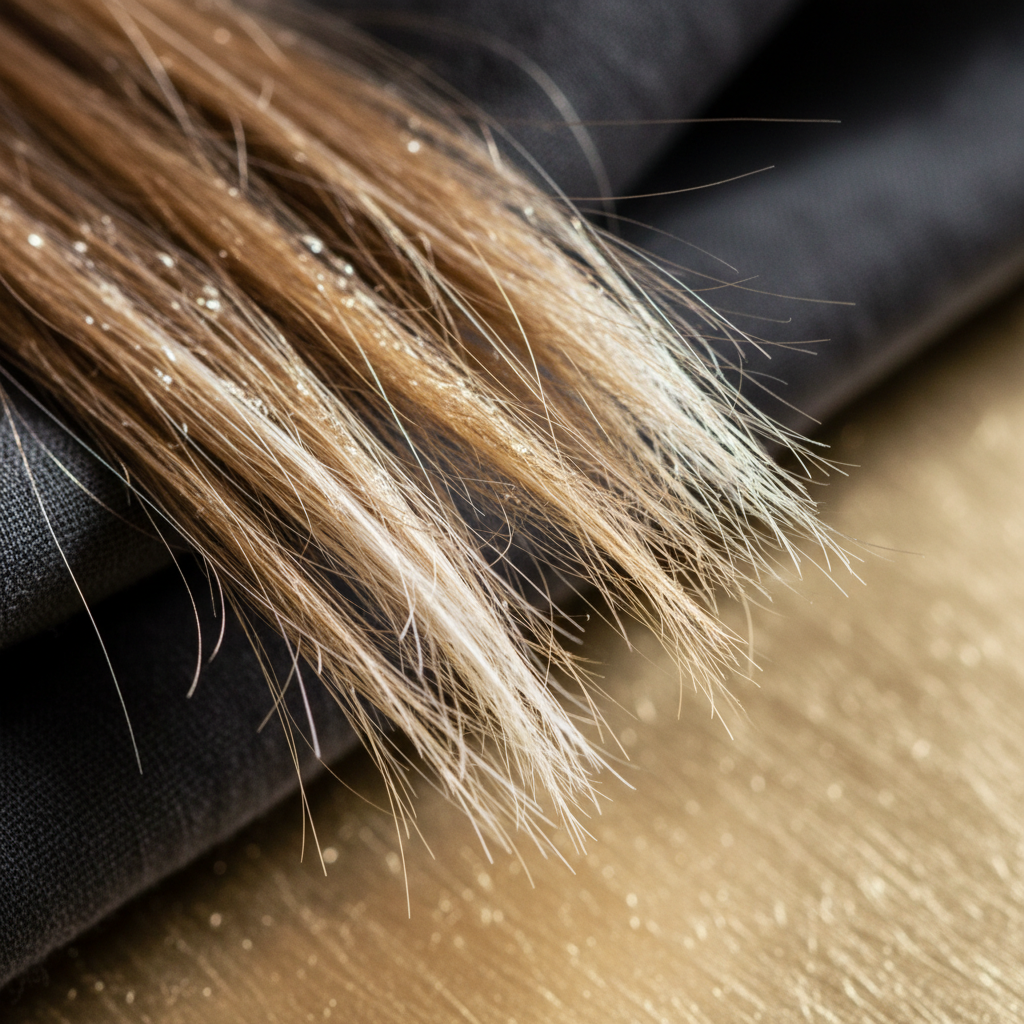
- Loss of natural curl pattern: Wavy, curly, and coily hair types show altered or uneven curl patterns that fail to bounce back after washing, caused by the collapse of the alpha-helical protein structure.
- High porosity and rapid drying: The hair absorbs water instantly in the shower but dries abnormally fast, as damaged cuticles cannot retain moisture inside the cortex.
- Split ends and white nodules: Trichorrhexis nodosa, where microscopic fraying forms tiny white dots along the hair shaft, indicates localized cortical rupture.
- Increased friction and knotting: Without the protective 18-MEA lipid coating, cuticle scales lift and snag against adjacent fibres, producing persistent tangles.
- Dullness and colour fading: Keratin oxidation and cuticle erosion scatter light unevenly rather than reflecting it, leading to a matte, lifeless appearance.
What the evidence does not show
There are several persistent myths regarding heat application and keratin integrity:
- Heat protectants do not make hair invulnerable: High-quality heat protectant sprays contain polymers and conditioning agents that distribute heat evenly, reduce friction, and slow thermal conductivity. However, cosmetic formulations cannot stop protein denaturation if a 230°C iron is held on the same section of hair for multiple seconds.
- Topical keratin cannot "cure" denatured hair: Hydrolysed keratin in shampoos and masks acts as a temporary patch. These proteins temporarily adhere to gaps in the damaged cuticle via electrostatic interactions, improving combability and smoothness. They do not cross-link into living keratin or re-establish disulphide bonds within the cortex.
- Blow-drying is not automatically worse than air-drying: A landmark 2011 study published in the Annals of Dermatology found that while high-heat blow-drying damages the surface cuticle, natural air-drying keeps the hair swollen with water for longer, stressing the delicate cell membrane complex (CMC). Using a hairdryer on a low-to-medium heat setting at a distance of 15 cm causes less overall internal structural damage than letting hair remain wet for hours.
Practical steps to protect hair keratin
To prevent severe degradation, adjust your styling habits using these evidence-based techniques:
- Lower the temperature: Never exceed 185°C. Research shows this is the critical threshold where thermal efficiency peaks before permanent keratin denaturation accelerates. Fine or chemically treated hair should stay below 160°C.
- Ensure the hair is 100% dry: Before using any flat iron, curling wand, or hot brush, verify that no moisture remains in the hair shaft to avoid steam-induced cavitation.
- Apply a certified heat protectant: Choose products with silicone polymers (such as amodimethicone or dimethicone) or specialized quaternary polymers. These create an insulating film that reduces heat transfer rates.
- Limit tool passes: Work in clean, small sections and pass the styling tool smoothly down the hair once or twice. Repeated passes over the same section concentrate heat and strip the protective lipid layer.
- Support the hair fibre with regular care: Incorporate deep conditioners rich in amino acids, fatty alcohols, and humectants to smooth the outer cuticle scales and reduce the mechanical friction that causes denatured hair to snap.
When the problem is not heat damage
If hair is breaking or changing texture without regular hot tool use, consider alternative mechanisms:
- Chemical over-processing: Bleaching, relaxers, and perms break disulphide bonds chemically. The symptoms mimic heat damage, but the root cause is pH extremes and oxidative stress.
- Mechanical trauma: Aggressive backcombing, rough towel drying, or tight elastic bands cause physical fractures along the hair shaft without heat involvement.
- Telogen effluvium or shedding: If hair is coming out from the scalp with the white bulb intact, this is shedding, not thermal breakage. Heat styling causes fibre fragmentation along the length of the shaft; it does not pluck hair from the follicle.
- Nutritional deficiencies: Inadequate protein intake, low ferritin, or thyroid imbalances can cause newly formed keratin fibres to emerge weaker from the follicle.
Caring for stressed hair with Watermans
When hair fibres suffer thermal stress, minimizing friction and supporting structural resilience becomes critical. Watermans focuses on scalp and hair wellness without making false promises about reversing biological protein denaturation.
Watermans GrowMe Shampoo and ConditionMe Conditioner deliver nutrient-dense, moisture-balancing formulations containing hydrolysed lupin protein, biotin, and natural oils. While these cosmetic formulations cannot fuse melted keratin back into its original helical shape, they deposit lightweight film-forming conditioning agents onto compromised cuticles. This reduces mechanical friction, enhances tensile resistance against everyday brushing, and creates a smoother, fuller-looking finish while you manage compromised lengths.
Frequently asked questions about Heat Damage and Hair Keratin
Can you reverse heat damage on hair keratin?
No. Once thermal stress denatures alpha-keratin into disorganized beta-keratin, the chemical and physical change is permanent. Hair contains no living cells to regenerate protein structures. While hydrolysed proteins and conditioning treatments temporarily smooth the surface and improve manageability, the only permanent remedy for thermally altered keratin is trimming away the compromised lengths.
At what exact temperature does heat damage to hair keratin begin?
Degradation begins subtly at lower temperatures. Cuticular surface lipids (18-MEA) degrade around 120°C to 140°C. Structural damage accelerates above 150°C as the alpha-keratin helix softens. Permanent denaturation of crystalline keratin, along with rapid cystine oxidation, occurs consistently between 190°C and 230°C.
Does a keratin treatment protect against heat damage?
No, salon keratin smoothing treatments do not immunise hair against thermal damage. In fact, many of these processes require flat ironing at 230°C to seal the cross-linking agents onto the cuticle. This intense thermal step often causes cumulative Heat Damage and Hair Keratin degradation inside the cortex, leaving the fibre weaker over time once the outer cosmetic coating washes away.
Is blow-drying safer for keratin than flat ironing?
Yes, provided it is done correctly. Traditional blow dryers operate between 60°C and 100°C at hair level, well below the protein denaturation threshold. Flat irons make direct, pressurized contact with the fibre at temperatures between 180°C and 230°C. Keeping a hairdryer 15 cm away on medium heat protects your internal keratin matrix far better than hot styling plates.
The bottom line on Heat Damage and Hair Keratin
Managing Heat Damage and Hair Keratin comes down to respecting the physical limits of fibrous proteins. Keratin is resilient and capable of handling everyday environmental stress, but it cannot withstand temperatures meant for industrial cooking without suffering irreversible structural changes. By capping your styling temperatures at 185°C, ensuring your hair is completely dry before applying tools, and using protective barrier formulations, you can retain your hair's natural strength, elasticity, and shine for years to come.
Sources and references
- Annals of Dermatology, "Hair Shaft Damage from Heat and Drying Procedures", 2011.
- Journal of Cosmetic Science, "Thermal Degradation of Hair Keratin", 2004.
- International Journal of Trichology, "Bubble Hair: A Thermal Abnormality", 2010.
- Journal of Investigative Dermatology, "The Structure and Degradation of Hair Keratin", 2008.
Find these ingredients in Watermans products
- Biotin: you will find this ingredient in our Hair Growth Shampoo.