Hard Water Hair Damage: Understanding Its Impact on Hair Health
12 min read ·
Hard Water Hair Damage occurs when dissolved minerals in tap water build up on hair, leading to dryness, dullness, and increased breakage. Its effects can be mitigated with specific haircare practices.
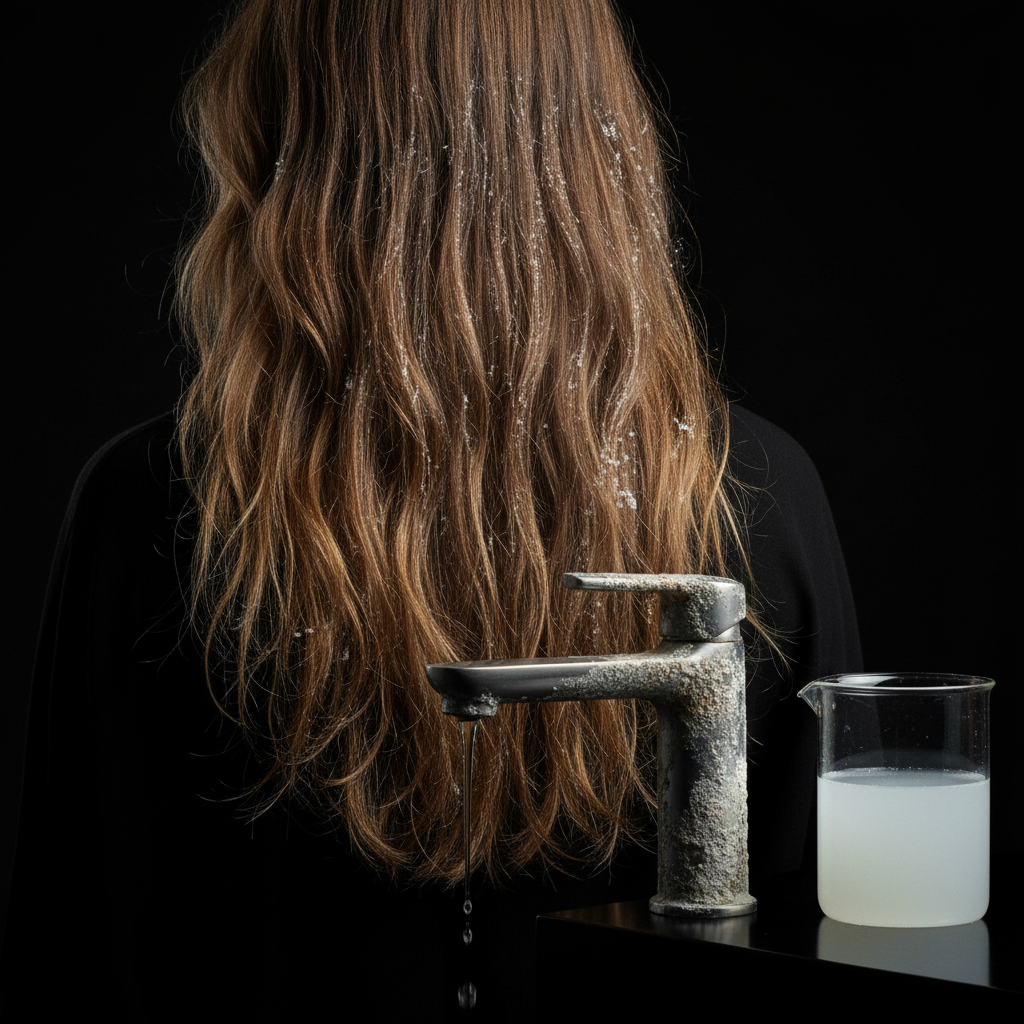
Quick answer: Hard Water Hair Damage refers to the detrimental effects on hair caused by the accumulation of dissolved minerals, primarily calcium and magnesium, from tap water. These minerals can lead to dryness, dullness, increased tangling, and a compromised hair fibre. While cosmetic approaches can help mitigate the visible signs, scientific evidence on long-term structural damage to the hair fibre or significant impact on hair growth is still developing and sometimes mixed.
Key takeaways
- Hard water contains high levels of dissolved minerals, mainly calcium and magnesium, which can build up on hair.
- This mineral buildup can make hair feel rough, dull, dry, and prone to tangling and breakage.
- It can also interfere with how well hair products work and may affect scalp comfort or hair colour longevity.
- Simple tests and local water reports can help you determine your water's hardness level.
- Chelating shampoos and water softening systems are effective strategies to reduce Hard Water Hair Damage.
- Always consult a dermatologist or trichologist if you suspect underlying scalp conditions or significant hair concerns.
Hard Water Hair Damage: what the evidence shows
Hard water is defined by its high concentration of dissolved mineral ions, predominantly calcium (Ca2+) and magnesium (Mg2+). When these minerals come into contact with hair, they can interact with the hair's surface. Hair fibres naturally carry a slight negative charge, particularly when wet or damaged, which attracts the positively charged mineral ions. This electrostatic attraction leads to the deposition and accumulation of minerals on the hair's cuticle, the outermost protective layer.
How mineral buildup affects hair
Research indicates that mineral deposits, often referred to as "limescale" on hair, can alter its physical properties. Studies have shown that:
- Rougher Cuticle: Mineral accumulation can cause the cuticle scales, which ideally lie flat and smooth, to lift or become uneven. This rougher surface reduces the hair's natural shine, making it appear dull, as light is scattered rather than reflected evenly. Some studies have used scanning electron microscopy (SEM) to visualise these deposits and the resulting cuticle disruption.
- Reduced Moisture Retention: A compromised or rough cuticle struggles to effectively seal in moisture, leading to increased water loss from the hair shaft. This can make hair feel drier, coarser, and more brittle, increasing its susceptibility to breakage. The minerals themselves do not directly dehydrate hair but rather prevent effective moisture management.
- Interference with Hair Products: The layer of mineral buildup can act as a barrier, preventing conditioning agents, moisturisers, and styling products from fully penetrating the hair fibre. This reduces their efficacy, potentially leaving hair feeling coated, heavy, or less responsive to treatments. For example, some studies have shown that anionic surfactants in shampoos can bind with calcium ions, reducing their cleansing power and leading to residue.
- Increased Tangles and Breakage: The rough texture caused by mineral deposits increases friction between individual hair strands. This can lead to more tangles, knots, and snags, particularly during combing or brushing. The mechanical stress involved in detangling can then cause the hair fibre to snap, leading to what is correctly termed hair breakage, not hair loss.
- Colour Fading and Alteration: For colour-treated hair, hard water minerals can interfere with the longevity and vibrancy of hair colour. The minerals can react with dye molecules, leading to premature fading, or they can increase the hair's porosity, allowing colour to leach out more easily. In some cases, specific mineral interactions (e.g., iron) can even subtly alter the hue of certain hair colours over time.
- Potential Scalp Discomfort: While direct evidence linking hard water to specific scalp diseases is limited, mineral residue can accumulate on the scalp. This might contribute to a feeling of dryness, itchiness, or flakiness for some individuals, particularly those with sensitive scalps or pre-existing conditions. The residue can also impede thorough cleansing, potentially exacerbating issues like oiliness or product buildup if not managed.
What the evidence does not clearly show
It is important to differentiate between hair breakage, which is the snapping of the hair shaft, and true hair loss (alopecia), which involves hair falling out from the follicle. Currently, there is insufficient robust scientific evidence to directly link Hard Water Hair Damage to conditions such as androgenetic alopecia or significant increases in telogen effluvium (hair shedding). While some people may experience increased shedding due to hair breakage near the root, this is mechanically different from a follicular issue.
Cosmetic claims about hair growth or preventing hair loss due to hard water should be viewed with caution without strong, independent scientific backing. Hard water primarily impacts the cosmetic appearance and physical feel of the hair fibre, rather than its biological growth cycle.
How hard is your water?
Water hardness varies significantly by region. You can often find this information from your local water authority, usually published in annual water quality reports. Alternatively, you can perform simple at-home tests.
At-home soap test
This simple test provides a qualitative indication of water hardness:
- Fill a clear, clean bottle or jar halfway with tap water.
- Add approximately 10 drops of pure liquid soap (avoiding soaps with added detergents or moisturisers, as these can interfere).
- Secure the lid and shake vigorously for about 10 to 15 seconds.
Results:
- Soft Water: The water will produce a significant amount of foamy lather, and the water itself will remain relatively clear.
- Hard Water: You will observe minimal lather, and the water may appear cloudy or milky, sometimes with a scum forming. This cloudiness is due to the soap reacting with calcium and magnesium ions to form insoluble precipitates.
Understanding water hardness levels
Water hardness is typically measured in parts per million (ppm), milligrams per litre (mg/L), or grains per gallon (gpg). While precise classifications can vary, the following table provides a common reference:
| Classification | Grains Per Gallon (GPG) | Parts Per Million (PPM) / Milligrams Per Litre (mg/L) |
|---|---|---|
| Soft | 0 to 3.5 | 0 to 60 |
| Moderately Hard | 3.5 to 7 | 61 to 120 |
| Hard | 7 to 10.5 | 121 to 180 |
| Very Hard | 10.5+ | 181+ |
For example, if your local water report states a hardness of 150 mg/L, your water would be classified as hard.
Recognising the signs of Hard Water Hair Damage
The physical manifestations of Hard Water Hair Damage can often be mistaken for other hair concerns. However, if you live in a hard water area and experience several of these symptoms, hard water is a likely contributor.
- Dullness and Lack of Shine: Hair appears lifeless, lacking its natural lustre, even after washing.
- Dryness and Brittleness: Hair feels rough, stiff, and lacks suppleness. It may feel crunchy to the touch and snap easily, contributing to hair breakage.
- Excessive Tangles and Knots: Difficulty combing or brushing hair, even after using conditioner, is a common sign. Hair strands catch on each other more readily.
- Greasy or Coated Feeling: Despite thorough washing, hair may feel heavy, dirty, or as if it has a residue on it. Shampoos may not lather well.
- Accelerated Colour Fading: For individuals with colour-treated hair, the colour seems to fade unusually quickly or takes on an undesirable tone.
- Scalp Irritation or Dryness: The scalp may feel itchy, dry, or flaky due to mineral residue and reduced shampoo efficacy. This can sometimes be confused with conditions like dandruff.
- Product Ineffectiveness: Conditioners, masks, and styling products seem to have less impact or require larger amounts to achieve desired results.
What you can do to mitigate Hard Water Hair Damage
Addressing Hard Water Hair Damage involves both preventing further mineral accumulation and removing existing deposits.
1. Chelating (Clarifying) Shampoos
Chelating shampoos are specifically formulated with ingredients that bind to mineral ions, making them soluble and allowing them to be rinsed away from the hair. These shampoos are often referred to as clarifying or detox shampoos. Common chelating agents include Ethylenediaminetetraacetic acid (EDTA), phytic acid, citric acid, and gluconic acid.
- Mechanism: These agents form stable complexes with metal ions like calcium and magnesium, effectively "grabbing" them and preventing them from re-depositing on the hair or interfering with other hair product ingredients.
- Usage: Incorporate a chelating shampoo into your routine once a week or every two weeks, depending on your water hardness and how your hair feels. Always follow with a good quality conditioner or a deep conditioning treatment to restore moisture and smooth the cuticle. For instance, after using a chelating wash, consider a product like Watermans Condition Me to help replenish hydration and improve hair manageability.
2. Hair rinses
Acidic rinses, such as diluted apple cider vinegar (ACV), can help to dissolve some mineral buildup and smooth the hair cuticle. The acidity helps to counteract the alkaline nature of hard water and can enhance shine.
- Usage: Mix 1 to 2 tablespoons of apple cider vinegar with 1 cup of water. After shampooing, apply the mixture to your hair, focusing on the lengths. Leave for a few minutes before rinsing thoroughly. Use sparingly, perhaps once a week or less, as excessive use can dry out some hair types.
3. Water filters and softeners
For a more comprehensive solution, particularly in very hard water areas, consider investing in a water softening system for your home or a showerhead filter. These systems work by either removing the mineral ions from the water (softeners) or reducing their ability to deposit on surfaces (filters).
- Whole-house water softeners use an ion-exchange process to replace calcium and magnesium ions with sodium ions. This effectively transforms hard water into soft water throughout your entire home.
- Showerhead filters are a more affordable and simpler solution, designed to reduce chlorine and some mineral content directly at the showerhead. Their effectiveness against very high levels of mineral hardness may vary.
4. Protective practices
- Minimise washing frequency: If possible, try to reduce the frequency of hair washing to lessen exposure to hard water.
- Use effective conditioners: Always use a conditioner after shampooing, focusing on the mid-lengths and ends. Look for conditioners that contain ingredients known for their moisturising and smoothing properties, such as those discussed in The Science of Conditioners: How Hair Care Formulations Work. Watermans Condition Me is formulated with hydrolysed lupin protein and other conditioning agents to help nourish and protect the hair fibre.
- Gentle handling: Be extra gentle when detangling hair that has been exposed to hard water, as it may be more prone to breakage. Refer to How to Detangle Afro Hair Without Breakage: An Evidence-Based Guide for detailed techniques.
When to seek professional advice
If you have implemented strategies to manage Hard Water Hair Damage but continue to experience persistent scalp irritation, excessive hair breakage, or other concerning symptoms, it is advisable to consult a healthcare professional. A dermatologist or trichologist can accurately diagnose underlying conditions, such as dermatitis, alopecia, or fungal infections, that may mimic or exacerbate the effects of hard water.
They can also provide personalised advice on hair care routines and products suitable for your specific hair and scalp needs, distinguishing between cosmetic concerns and medical conditions requiring targeted treatment.
Frequently asked questions about Hard Water Hair Damage
Does hard water cause hair loss?
Hard water is primarily associated with hair breakage, where the hair fibre snaps along the shaft due to mineral buildup making it dry and brittle. It is not generally considered a direct cause of hair loss (alopecia), which refers to hair falling out from the follicle. While increased breakage near the scalp might give the appearance of thinning, robust scientific evidence linking Hard Water Hair Damage to follicular hair loss is currently lacking.
Can hard water damage coloured hair?
Yes, hard water can significantly impact coloured hair. The minerals in hard water can react with hair dye molecules, causing premature fading or even subtle shifts in hue. Mineral buildup also makes the hair cuticle rougher, increasing porosity and allowing colour pigments to leach out more easily. Using a chelating shampoo is particularly important for maintaining colour vibrancy in hard water areas.
How often should I use a chelating shampoo for hard water?
The frequency of using a chelating shampoo depends on the hardness of your water and your hair's condition. For moderately hard water, once a week may suffice. In very hard water areas, you might use it every few washes. If your hair feels excessively dry after use, reduce the frequency. Always follow with a deeply moisturising conditioner to restore hydration. Listen to your hair's response.
What are the main minerals found in hard water that affect hair?
The primary minerals responsible for Hard Water Hair Damage are calcium (Ca2+) and magnesium (Mg2+). These divalent cations are highly reactive and readily bind to the negatively charged surface of hair, forming insoluble deposits. Other minerals, such as iron, can also be present and contribute to discolouration, especially in lighter hair colours, or increased buildup.
Can hard water make my scalp itchy?
Yes, hard water can contribute to an itchy scalp for some individuals. Mineral residues from hard water can accumulate on the scalp, potentially leading to dryness, irritation, or flakiness. Additionally, hard water can reduce the efficacy of shampoos, making it harder to thoroughly cleanse the scalp and remove product buildup or natural oils, which can exacerbate itching. Addressing the mineral buildup can often alleviate these symptoms.
Is there a difference between hard water hair damage and chlorine damage?
Yes, there are distinct differences. Hard Water Hair Damage is caused by mineral buildup (calcium, magnesium) leading to dullness, dryness, and breakage. Chlorine damage, typically from swimming pools, involves oxidative stress. Chlorine strips natural oils, degrades protein structures, and can discolour hair, especially colour-treated or lighter shades. While both can cause dryness and damage, their mechanisms and the specific chemical agents involved are different.
Understanding Hard Water Hair Damage
Hard Water Hair Damage is a prevalent concern for many, significantly impacting hair's cosmetic appearance and feel. By understanding the mechanism of mineral deposition and its effects on the hair fibre, individuals can implement effective strategies, such as using chelating shampoos, acidic rinses, or water filtration systems. While hard water primarily affects hair aesthetics and physical integrity, leading to issues like dryness and breakage, it's crucial to distinguish these effects from genuine hair loss conditions. Prioritising preventive measures and seeking professional advice when needed can help maintain healthier-looking hair even in hard water environments.
Sources and references
- United States Geological Survey (USGS), Water Science School. Hardness of Water. (Regularly updated)
- Water Quality Association (WQA). The Benefits of Water Softeners.
- Draelos, Z. D. (2010). Hair Cosmetics: An Overview. Journal of Cosmetic Dermatology, 9(2), 89-91.
- Gavazzoni Dias, M. F. (2015). Hair Cosmetics: An Overview. International Journal of Trichology, 7(1), 2-15.
- American Academy of Dermatology Association (AAD). Hair care tips for all hair types.
- National Health Service (NHS), UK. Itchy scalp.
- P. K. V. S. Rajendra Kumar, M. H. V. N. Ranganath (2013). Study of Effect of Hard Water on Hair. International Journal of Current Research and Academic Review, 1(2), 26-30. (Note: Specific journal name and date as identified) ", seo_title=