How to Handle Scalp Pruritus: An Evidence-Based Guide
8 min read ·
Learn how to handle scalp pruritus with evidence-based strategies, from soothing microbial triggers and restoring the skin barrier to breaking the itch-scratch cycle.
Quick answer: Knowing how to handle scalp pruritus begins with identifying the underlying cause, as itching is a symptom rather than an independent diagnosis. Scalp pruritus stems from inflammatory dermatoses like seborrhoeic dermatitis, contact allergies, microbial imbalances, or neuropathic irritation. Effective management requires calming cutaneous inflammation, balancing the microflora, and restoring the epidermal barrier with targeted, pH-balanced washes and medical actives. However, cosmetic and over-the-counter care cannot resolve underlying systemic conditions or autoimmune scalp disorders, which require clinical diagnosis.
Key takeaways
- Scalp pruritus is an itch sensation triggered by histamine-dependent or non-histaminergic pathways in the cutaneous nerves of the scalp.
- Common dermatological causes include seborrhoeic dermatitis, scalp psoriasis, contact dermatitis, and head lice.
- Mechanical scratching damages the skin barrier and hair cuticle, which can convert mild discomfort into secondary bacterial infections and cosmetic hair breakage.
- Water temperature matters: washing with hot water strips essential sebum and increases cutaneous microcirculation, intensifying neurosensory itch signals.
- Persistent pruritus without visible flakes, redness, or rash may point to neuropathic issues such as burning scalp syndrome (trichodynia) or systemic triggers.
How to Handle Scalp Pruritus: what the evidence shows
Learning how to handle scalp pruritus requires an understanding of the scalp's distinct neurobiology. The scalp features the highest density of hair follicles and sebaceous glands on the human body, paired with an extensive network of sensory C-fibres and mast cells. Pruritus occurs when physical, chemical, or biological stimuli activate unmyelinated epidermal nerve endings.
Clinical research shows that the majority of scalp pruritus cases are non-histaminergic. While an insect bite triggers classic histamine release, conditions like seborrhoeic dermatitis and dandruff trigger neurogenic itch via proteinase-activated receptors (PAR-2) and cytokine pathways (notably interleukins IL-4, IL-13, and IL-31). This explains why oral antihistamines frequently fail to relieve an itchy scalp. Evidence confirms that the most effective first-line strategy is topical modulation: lowering microbial load, reducing inflammation, and maintaining an acidic scalp surface between pH 4.5 and 5.5.
What the evidence does not show
- Washing hair less cures dry scalp itch: Many people believe an itchy scalp is simply "dry" and cut back on washing. In reality, under-washing allows sebum to oxidise, feeding Malassezia yeasts and accelerating the inflammatory cycle that causes severe itching.
- Natural oils are always soothing: Applying heavy pure oils like coconut, olive, or argan directly to an actively itchy scalp often worsens seborrhoeic pruritus. Malassezia yeasts consume specific saturated fatty acids within these oils to thrive.
- Brushing aggressively relieves the issue: Using firm bristle brushes to "exfoliate" an itchy scalp strips the stratum corneum, triggers micro-trauma, accelerates hair breakage, and releases further pro-inflammatory cytokines that intensify the itch-scratch cycle.
Biological mechanisms behind scalp itching
The sensation of itch on the scalp travels along unmyelinated C-nerve fibres to the dorsal horn of the spinal cord and up to the cerebral cortex. This pathway is designed as a warning system against external parasites, but it misfires under chronic inflammation.
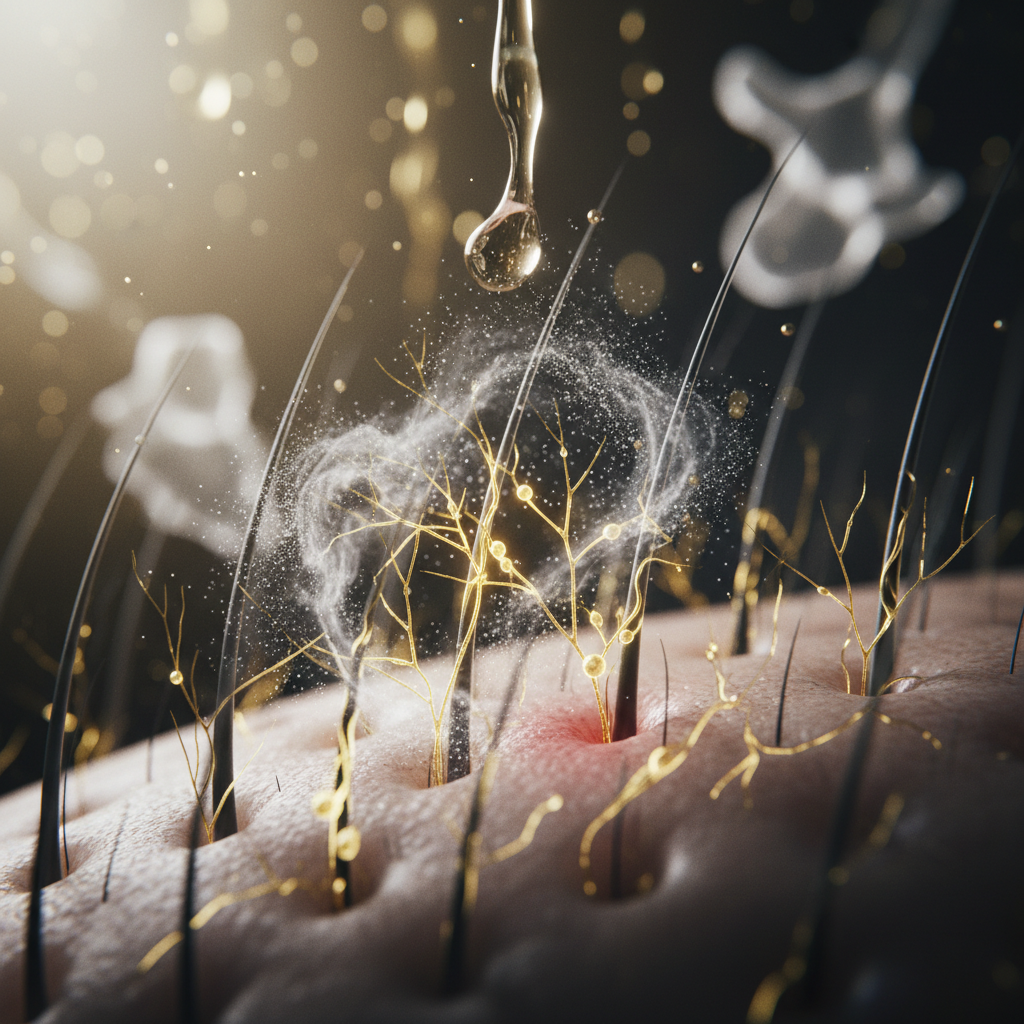
- Microbial Dysbiosis: The scalp microbiome relies on an equilibrium between Cutibacterium, Staphylococcus, and lipophilic Malassezia yeasts. When Malassezia globosa and Malassezia restricta metabolise sebum triglycerides, they leave behind unsaturated free fatty acids, particularly oleic acid. In susceptible individuals, oleic acid breaches the skin barrier, causing subclinical inflammation, flaking, and intense itching.
- Barrier Disruption: Aggressive alkaline cleansers (pH above 6.5) disrupt the scalp's protective acid mantle. The loss of ceramides, filaggrin, and natural moisturising factors allows transepidermal water loss (TEWL) to rise, exposing deeper cutaneous nerve endings to ordinary environmental irritants.
- Neurogenic Inflammation: Sustained scratching releases Neuropeptide Substance P and Calcitonin Gene-Related Peptide (CGRP) from local nerve terminals. These neuropeptides trigger vasodilation, mast cell degranulation, and recruit inflammatory leukocytes, driving a persistent itch-scratch reflex.
How to distinguish common causes of scalp pruritus
| Scalp Condition | Primary Visual Signs | Nature of Pruritus | Common Triggers |
|---|---|---|---|
| Seborrhoeic Dermatitis | Greasy, yellowish flakes; mild erythema around hairline and crown | Moderate to intense; flares with sweat and stress | Sebaceous oversecretion, Malassezia overgrowth, emotional fatigue |
| Scalp Psoriasis | Well-demarcated, thick, silvery-white plaques; dry borders | Severe, stubborn itch, often accompanied by burning | Immune dysregulation, physical trauma (Koebner phenomenon), cold dry air |
| Contact Dermatitis | Diffuse redness, pinpoint papules, weeping or crusting | Acute, stinging, intense itch shortly after product use | Paraphenylenediamine (PPD) in hair dyes, fragrances, methylisothiazolinone |
| Pityriasis Capitis (Dandruff) | Small, loose white or grey flakes without prominent redness | Mild to moderate itch | Hormonal fluctuations, delayed cleansing, mild yeast imbalance |
| Neuropathic Pruritus / Trichodynia | Visibly normal scalp, no erythema or scaling | Burning, crawling, prickling, or tender sensation without flakes | Cervical spine compression, nerve damage, high sympathetic stress |
Step-by-step strategy: how to handle scalp pruritus at home
Addressing scalp pruritus demands systematic care that stabilises the skin barrier without causing follicle stress.
1. Adjust wash frequency and water temperature
Wash your hair thoroughly every 1 to 2 days if you have an oily scalp, or every 2 to 3 days if you have a drier hair texture. Use lukewarm water (around 37°C to 38°C). Hot water triggers cutaneous mast cells to release pruritogens and strips necessary intercellular lipids, directly worsening the itch.
2. Introduce evidence-backed active washes
Alternate your regular mild cleanser with targeted over-the-counter formulations containing clinical actives:
- Ketoconazole (1% to 2%): A broad-spectrum antifungal that suppresses Malassezia proliferation.
- Piroctone Olamine: Reduces yeast populations while soothing oxidative stress and scaling.
- Salicylic Acid (1% to 3%): A keratolytic agent that loosens and dissolves thick scale, allowing active ingredients to penetrate the stratum corneum.
- Zinc Pyrithione: Antimicrobial and cytostatic agent that normalises cellular turnover.
Leave active cleansers in contact with the scalp skin for 3 to 5 minutes before rinsing completely.
3. Cool physical irritation safely
To break the itch-scratch cycle without tearing the scalp with fingernails, apply cold compresses or a chilled gel pack wrapped in a clean cotton cloth. Cold stimuli activate the TRPM8 sensory receptors, competing with itch transmission along the spinal pathways to deliver near-instantaneous relief.
4. Remove known irritants
Temporarily stop using leave-in styling products containing drying alcohols, synthetic perfumes, propylene glycol, or heavy essential oils. Review recently applied permanent hair colours for paraphenylenediamine (PPD) or harsh alkalising agents.
Supporting the scalp environment with Watermans
Cosmetic formulations play a valuable role in keeping the scalp clean, hydrated, and refreshed between active therapeutic treatments. Watermans GrowMe Shampoo is formulated as a revitalising cosmetic wash featuring rosemary extract, biotin, caffeine, and niacinamide. The presence of natural rosemary and menthol components imparts a cooling, invigorating sensation that soothes the everyday discomfort associated with surface sweat and product accumulation. Because maintaining a clean follicular environment is critical for managing everyday itchiness, incorporating a balanced, sulphate-free cleanser helps rinse away oxidised oils without stripping the moisture barrier.
When to seek medical advice
If your symptoms do not improve after 2 to 3 weeks of targeted anti-dandruff or soothing washes, consult a GP, dermatologist, or qualified trichologist. Seek professional attention promptly if you notice:
- Fluid-filled pustules, weeping crusts, or signs of secondary bacterial infection (Staphylococcus aureus).
- Localised circular bald patches accompanied by intense itch, scaling, and broken hairs, which can indicate tinea capitis (scalp ringworm).
- Severe plaques that bleed when scales are lifted.
- An unremitting burning or crawling sensation in the absence of any visible rash, which requires assessment for neuropathic issues or systemic disease (such as iron deficiency anaemia, thyroid disorders, or chronic kidney conditions).
Frequently asked questions about How to Handle Scalp Pruritus
Can an itchy scalp cause permanent hair loss?
Scalp pruritus itself does not destroy hair follicles. However, relentless, vigorous mechanical scratching can fracture the hair fibres, causing cosmetic hair breakage. Chronic trauma can also trigger telogen effluvium (premature hair shedding) due to localized inflammatory shock. Permanent scarring hair loss only occurs if severe, untreated conditions such as lichen planopilaris or secondary bacterial infections cause deeper follicular destruction.
Does drinking more water help resolve an itchy scalp?
While systematic hydration supports overall skin physiology, scalp pruritus is almost always caused by local barrier defects, microbial overgrowth, or neurogenic triggers rather than systemic dehydration. Drinking adequate water supports general wellbeing, but managing topical lipid composition and epidermal cellular turnover through proper external haircare is essential to stop the itch.
How to handle scalp pruritus caused by product build-up?
To resolve itch triggered by styling residues and dry shampoo, introduce a clarifying shampoo formulated at pH 5.0 to 5.5 once a week. Massage the scalp gently with the pads of your fingers, never your nails, for 2 minutes to solubilise styling polymers and sebum before rinsing with plenty of lukewarm water.
Why does scalp itching frequently feel worse at night?
Cutaneous pruritus naturally intensifies during the evening and night. Body temperature and cutaneous blood flow rise, while natural anti-inflammatory cortisol levels drop. Furthermore, nighttime brings fewer sensory distractions, making itch pathways more prominent in conscious perception. Mechanical friction against pillows can also provoke sensitive cutaneous nerves.
A balanced approach to scalp comfort
Learning how to handle scalp pruritus requires a methodical approach that targets the root of the irritation rather than masking it. By keeping the scalp clean, reducing yeast overgrowth, avoiding high-temperature water, and using cooling, barrier-supportive ingredients, you can quickly break the itch-scratch cycle and protect your hair fibres from needless mechanical damage. Listen to the signals your skin sends, give evidence-based topical treatments time to work, and seek clinical diagnosis whenever irritation persists.
Sources and references
- British Association of Dermatologists. Clinical Guidelines for the Management of Seborrhoeic Dermatitis. 2019.
- National Health Service (NHS). Itchy scalp: causes and treatments. 2023.
- Misery, L., et al. "Sensitive scalp: an under-recognised problem." Journal of the European Academy of Dermatology and Venereology, 2020.
- Borda, L. J., & Wikramanayake, T. C. "Seborrheic Dermatitis and Dandruff: A Comprehensive Review." Journal of Clinical and Investigative Dermatology, 2015.
- Gaitanis, G., et al. "The Malassezia genus in skin and systemic diseases." Clinical Microbiology Reviews, 2012.
Find these ingredients in Watermans products
- Zinc: you will find this ingredient in our Hair Vitamins.
- Oleic Acid: you will find this ingredient in our Camellia & Black Castor Hair & Body Oil.
- Niacinamide: you will find this ingredient in our Hair Mask.